Carrying a Safety Certificate on State Land
Riding your ATV or UTV on Massachusetts state land is an incredible experience, offering miles of trails and breathtaking scenery, but it comes with a strict set of rules designed to keep everyone safe. One of the most common points of confusion and frustration for riders, especially those with younger family members, revolves around the requirement for a safety certificate. It's not just a suggestion; it's a mandate, and failing to understand and adhere to it can quickly turn a fun day into a costly headache. This guide is here to untangle the complexities of carrying a safety certificate on state land, explaining exactly who needs one, how to get it, and what happens if you don't have it.
The Mandate: Why a Safety Certificate is Non-Negotiable on Massachusetts State Land
Navigating the rules for riding ATVs and UTVs in Massachusetts can feel a bit like sifting through a dense forest without a map. But when it comes to state land, one rule stands out as absolutely critical: the Massachusetts OHV Safety Certificate. This isn't just about good practice; it's a legal requirement, particularly for specific age groups, and it's enforced by the Environmental Police. The Commonwealth takes the safety of its off-highway vehicle (OHV) riders seriously, and this certificate is a cornerstone of that commitment. It ensures that riders, especially those under a certain age, have a fundamental understanding of safe operation, trail etiquette, and the specific laws governing OHVs in the Bay State. Without it, you're not just risking a fine; you're risking access to some of the state's most cherished riding areas.
Imagine planning a full day out at October Mountain State Forest, carefully loading your side-by-side, maybe even with some robust accessories from a company like SuperATV to enhance your ride, only to be stopped at a trailhead or on a fire road by an Environmental Police Officer. If you or a rider in your group doesn't have the required certificate, that adventure can come to a screeching halt. The state views this certificate as proof that you've undergone specific training to operate these powerful machines responsibly. It’s a measure to protect not only the rider but also other trail users and the natural environment we all share.
Who Needs to Carry This Certificate?
This is where many riders get tripped up, and it's essential to get it right. In Massachusetts, anyone under the age of 18 is generally required to possess and carry a valid OHV Safety Certificate when operating an ATV or UTV on public land, which includes state forests and parks. This isn't just a recommendation; it's a hard and fast rule designed to ensure that younger riders have received formal instruction on safe riding practices. The law distinguishes between different age groups, but the general principle is that if you're a minor, you need this certificate in your possession.
Consider a family outing where your 15-year-old is eager to take the reins of their quad. While they might be a skilled rider from years of experience on private land, without that physical certificate in their pocket, they are not legally allowed to operate on state trails. This applies to both resident and non-resident youth riders. For example, a visiting rider from Vermont who is 16 years old would still need to meet Massachusetts's certificate requirements if they want to ride on a state forest trail here, even if their home state has different rules. The certificate confirms they understand everything from proper helmet use to environmental awareness. You can read more about these specific requirements in [Massachusetts Safety Certificates Under 18].
The Rationale Behind the Requirement
The primary driving force behind the mandatory OHV Safety Certificate in Massachusetts is safety. Accidents involving ATVs and UTVs, particularly among younger, inexperienced riders, can be severe. The state implemented these measures to reduce injuries and fatalities, ensuring that operators are educated before they hit the trails. This focus on safety is deeply rooted in legislative actions, notably "Sean's Law," which significantly tightened regulations for youth ATV operation after a tragic accident. This law underscored the need for comprehensive training and supervision.
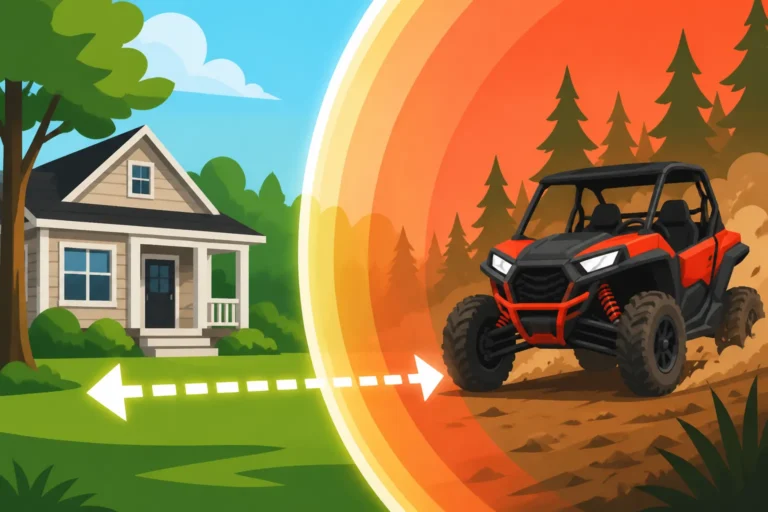
The training covered by the certificate goes far beyond just learning how to accelerate and brake. It encompasses understanding engine size limits for various age groups, respecting private property, knowing trail etiquette, and recognizing the signs and regulations specific to Massachusetts public lands. For example, riders learn about the "150-foot dwelling rule" and the importance of written landowner permission, even if they are primarily focused on state land. It's about instilling a sense of responsibility. The state isn't trying to hinder access; it's striving to make access safer and more sustainable for everyone. The certificate also plays a role in fostering respect for the environment, teaching riders about minimizing their impact on sensitive ecosystems found in places like Beartown State Forest. Understanding [Why Under-14 Riders Are Banned on Private Land Too] helps illuminate the state's stringent stance on youth safety.
Earning Your Certificate: The Two-Part Massachusetts Safety Course
So, you understand why the certificate is necessary, especially for younger riders, but how do you actually get one? The process in Massachusetts is structured into a two-part safety course, designed to cover both the theoretical knowledge and the practical skills needed for safe OHV operation. It's not a quick online quiz; it's a comprehensive program that demands attention and participation. The goal is to produce informed, capable, and responsible riders who can confidently and safely navigate the state's trails while adhering to all regulations. Many find the course surprisingly informative, even for experienced riders who might think they know it all. It often highlights nuances of Massachusetts law that aren't common in other states.
This two-part approach ensures that riders don't just memorize rules but also demonstrate the physical control required to operate an OHV safely. It's a testament to the state's commitment to reducing accidents and promoting responsible recreation. Think of it like getting your driver's license: there's a written test to ensure you know the rules of the road, and a road test to prove you can actually drive the vehicle. The OHV safety course follows a similar, logical progression.
The Online or Classroom Component
The first step in acquiring your Massachusetts OHV Safety Certificate typically involves an educational component, which can often be completed online or in a traditional classroom setting. This part of the course focuses on the foundational knowledge every rider needs. It covers a wide array of topics, from the basic mechanics of an ATV or UTV to critical safety principles, legal statutes, and environmental responsibility. Expect to learn about everything from proper riding gear, including helmet standards, to understanding trail signs, potential hazards, and how to respond in an emergency.
While online options offer flexibility, allowing you to complete the material at your own pace from home, the classroom setting provides an opportunity for direct interaction with instructors and other students. Both formats aim to impart the same core curriculum. Regardless of how you choose to complete this initial phase, the material is designed to be thorough. For instance, you'll learn about [Massachusetts Age and Engine Size Ladder], which dictates what size machine different age groups can operate, and the importance of never riding under the influence. This knowledge base is critical before you even think about starting the engine on a state trail. Details on this part of the process are available in [Massachusetts Two-Part Safety Course].
The Essential In-Person Skills Test
Completing the online or classroom portion is only half the journey. The second, and arguably most crucial, part of earning your certificate is the mandatory in-person skills test. This hands-on session is where you demonstrate that you can actually apply the knowledge you've gained to real-world riding scenarios. These tests are usually conducted by certified [Massachusetts Environmental Police Trainers] or other approved instructors, typically at designated locations like fairgrounds or training facilities that offer controlled environments for safe practice.
During the skills test, you'll be evaluated on your ability to perform a series of maneuvers, such as turning, braking, emergency stopping, ascending and descending hills, and navigating obstacles. It’s designed to assess your control over the machine and your decision-making abilities. For riders under 16, a parent or legal guardian is often required to attend this portion of the training, underscoring the shared responsibility for youth safety. This practical component is non-negotiable because safe riding isn't just theoretical; it's deeply practical. Even if your machine is equipped with advanced components, say, heavy-duty suspension from SuperATV, it won't make up for a lack of fundamental riding skill if an emergency arises. You can find more information about what this involves by looking up [Massachusetts In-Person Skills Test].
Real-World Scenarios: When and Where to Present Your Certificate
So, you've gone through the training, passed your skills test, and now you have that coveted piece of paper or card. What happens next? The key is to carry it with you every single time you ride on state land. It's not something to leave in your glove box at home or tucked away in a file cabinet. Just like you'd carry your driver's license when operating a car, your OHV Safety Certificate is your proof of compliance for off-road riding. Understanding when and where you might need to present it can save you a lot of hassle and potential penalties.
The state wants to ensure that its public lands are enjoyed responsibly, and part of that responsibility is showing that you've been properly trained. This proactive approach helps the Environmental Police maintain safety and enforce regulations efficiently. It’s about being prepared for routine checks and demonstrating your commitment to safe riding practices.
Encountering Environmental Police on the Trail
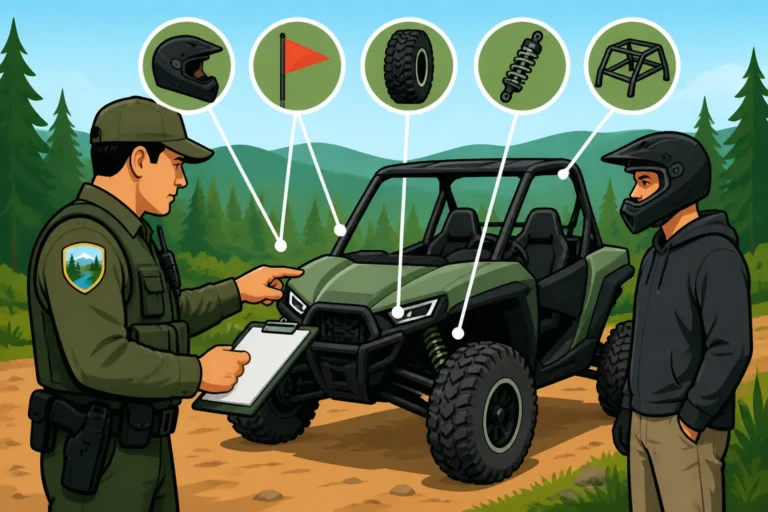
It’s not uncommon to encounter Environmental Police Officers (EPOs) on Massachusetts state trails, especially during peak riding seasons. These officers are specifically tasked with enforcing OHV laws and ensuring public safety and environmental protection. During a routine stop, an EPO might ask to see your OHV registration, proof of ownership, and, critically, your safety certificate, especially if you appear to be under 18. They are looking to confirm that all riders are in compliance with state law.
Imagine you're riding with your child through Pittsfield State Forest. An EPO might approach your group, politely ask for your papers, and confirm that everyone, particularly the younger riders, has their required documents. This isn't meant to be an interrogation; it's a standard check. Having your [Massachusetts Certificates Carried on Public Land] readily accessible, perhaps in a waterproof pouch in your jacket or attached to your machine, will make the encounter smooth and quick. If an officer finds a young rider without a certificate, it could lead to a citation for the rider and potentially the supervising adult. They might also check your machine for basic safety equipment like a spark arrester or proper lighting if you're riding near dusk.
Specific State Forests and Riding Areas
While the certificate requirement applies broadly to all state-owned land open to OHVs in Massachusetts, certain areas see more frequent enforcement simply due to their popularity and the volume of riders they attract. The three primary state forests open to ATVs and UTVs—Beartown, October Mountain, and Pittsfield State Forests—are prime examples where you should always expect to be asked for your certificate if you're a minor. These areas are actively patrolled by Environmental Police.
If you're planning a trip to one of these popular riding destinations, especially with younger riders, it's paramount that everyone who needs a certificate has it and is prepared to show it. Even if you're just driving from a parking area to the main trail network, the requirement still stands. These state forests are managed to provide recreational opportunities while also protecting natural resources, and compliance with all regulations, including the safety certificate, helps achieve that balance. Visitors from out of state should also be aware that Massachusetts honors no other state's OHV safety certificate for minors on its public lands; you need the Massachusetts one.
Here’s a quick overview of who needs a certificate:
| Rider Age Group | Certificate Requirement on Public Land | Supervising Adult Requirement |
|---|---|---|
| Under 14 | Required (even if riding in sanctioned events) | Required (18+ and in visual contact) |
| 14-15 | Required | Required (18+ and in visual contact) |
| 16-17 | Required | Not required if carrying a valid driver's license |
| 18+ | Not required | N/A |
This table highlights the crucial need for [Massachusetts Parents Must Attend Under 16] when their children are taking the skills test, reinforcing the adult's responsibility for ensuring youth compliance.
Consequences of Non-Compliance: Riding Without a Valid Certificate
Forgetting your safety certificate, or never bothering to get one, might seem like a minor oversight, but in Massachusetts, the consequences can be significant. The state's OHV laws, particularly those concerning youth riders and safety, are enforced with intent. It's not just about a stern warning; there are tangible penalties designed to deter non-compliance and reinforce the importance of safe operation. These consequences can impact not only the rider but also any supervising adults, potentially leading to fines, machine seizure, and even restrictions on future riding. It's far more than a slap on the wrist.
Many riders, especially those new to Massachusetts or visitors from states with different regulations, underestimate the strictness of these laws. They might assume that if they are responsible riders, the certificate is just a formality. However, to an Environmental Police Officer, a missing certificate for an underage rider is a clear violation of a safety regulation.
Penalties and Citations
The immediate repercussions for riding on state land without a required safety certificate can include a citation and a fine. The exact amount can vary, but it's certainly enough to put a damper on your riding day and your wallet. For repeat offenders or in cases where the violation is compounded by other unsafe practices, the penalties can escalate. More seriously, an Environmental Police Officer has the authority to order you off the trails or, in some situations, even seize your ATV or UTV until the violation is resolved or other conditions are met. This means your machine could be impounded, leaving you stranded and facing additional fees to retrieve it.
What’s more, if an underage rider is found operating without a certificate, the supervising adult present could also face legal consequences. This is because Massachusetts law holds adults responsible for the actions of minors they supervise on OHVs. This could mean a fine for the adult and could even lead to legal action in more severe cases. These penalties are clearly outlined in statutes concerning [Massachusetts Penalties for No Certificate]. It’s a stark reminder that adult supervision carries significant responsibility on public lands.
Impact on Your Riding Privileges and Future Access
Beyond immediate fines and potential impoundment, a citation for operating without a safety certificate can have longer-term implications for your riding privileges in Massachusetts. While it might not result in an outright ban after a first offense, it contributes to your record and signals a disregard for safety regulations. Future encounters with law enforcement could be viewed more harshly. It also reinforces the state’s position on limiting access for those who do not comply with safety requirements.
Consider a scenario where a rider consistently ignores the certificate requirement. Such actions could lead the state to review their access to public trails or even influence decisions regarding the allowance of OHVs in certain areas. The entire OHV community relies on responsible behavior from its members to maintain and expand trail access. Each violation, especially one related to fundamental safety, risks diminishing the recreational opportunities for everyone. It's a collective responsibility that underscores why complying with rules like [Massachusetts Rules for Young Riders on Public Land] is so vital for the sport's longevity and reputation in the state.
Beyond the Certificate: Other Documents to Keep On Hand
While the OHV Safety Certificate is paramount for certain riders on state land, it's not the only piece of paper you should have tucked away in your gear. Riding in Massachusetts requires adherence to several administrative requirements, and having all your ducks in a row can make any interaction with law enforcement smooth and stress-free. Think of it as preparing your complete travel portfolio for your off-road adventure. Just as you’d load up your side-by-side with useful accessories from SuperATV for a day of technical riding, you need to ensure your documentation is equally well-equipped. Being fully prepared means you can focus on the ride, not on worrying about compliance.
Many experienced riders develop a routine of packing their "document kit" alongside their tools and emergency supplies. It's a small habit that can prevent big problems. These documents confirm not only who you are and that you're trained, but also that your machine itself is legally allowed on the trails.
Proof of Registration and Ownership
Every ATV or UTV operated on public or some private lands in Massachusetts must be registered with the Massachusetts Environmental Police. This isn't just a suggestion; it's a legal requirement. When you register your machine, you'll receive a registration card and a decal. Both of these are crucial. Your [Massachusetts Registration Cards Carried on Board] must be with you whenever you're riding. The decal, showing your registration number and expiration date, must be properly affixed to your machine.
An Environmental Police Officer will almost always ask for your registration card during a stop. They will cross-reference this with your machine's VIN (Vehicle Identification Number) to ensure everything matches. This process confirms that the machine is legally registered and that you are the rightful owner or have permission to operate it. Failure to produce a valid registration card can result in a citation for operating an unregistered vehicle, a penalty that can be substantially more costly than a certificate violation. It's important to remember that while the certificate is about the rider, registration is about the machine.
Landowner Permission and Other Permits
While state forests have defined rules, many fantastic riding opportunities exist on private land, sometimes even connecting to public trails. If you plan to ride on any private land in Massachusetts, you absolutely must have [Massachusetts Landowner Permission in Writing]. This isn't a casual agreement; it should be a physical document that you can present if asked. Trespassing laws are strict, and riding without permission can lead to fines, your machine being impounded, and even legal action from the landowner. A handwritten note with dates and signatures is often sufficient, but a more formal permission form is always better.
Additionally, certain special events, organized rides, or specific access points might require unique permits beyond standard registration and safety certificates. For instance, if a local club organizes a poker run that uses a mix of private and public land, they might issue specific event permits or require you to sign waivers. Always check with event organizers or land managers before you ride to ensure you have all necessary documentation. This vigilance ensures you're always riding legally and respectfully, whether you're navigating a remote trail or participating in a community ride. Being prepared with all your papers, just like having the right tire pressure and a fully charged comms system, ensures a worry-free day on the trails.
Disclaimer
This article is for general informational purposes only and does not constitute professional advice. Laws, prices and regulations vary by location and change over time. Consult a qualified professional for guidance on your specific situation.