Getting Written Permission From a Berkshire Woodlot Owner
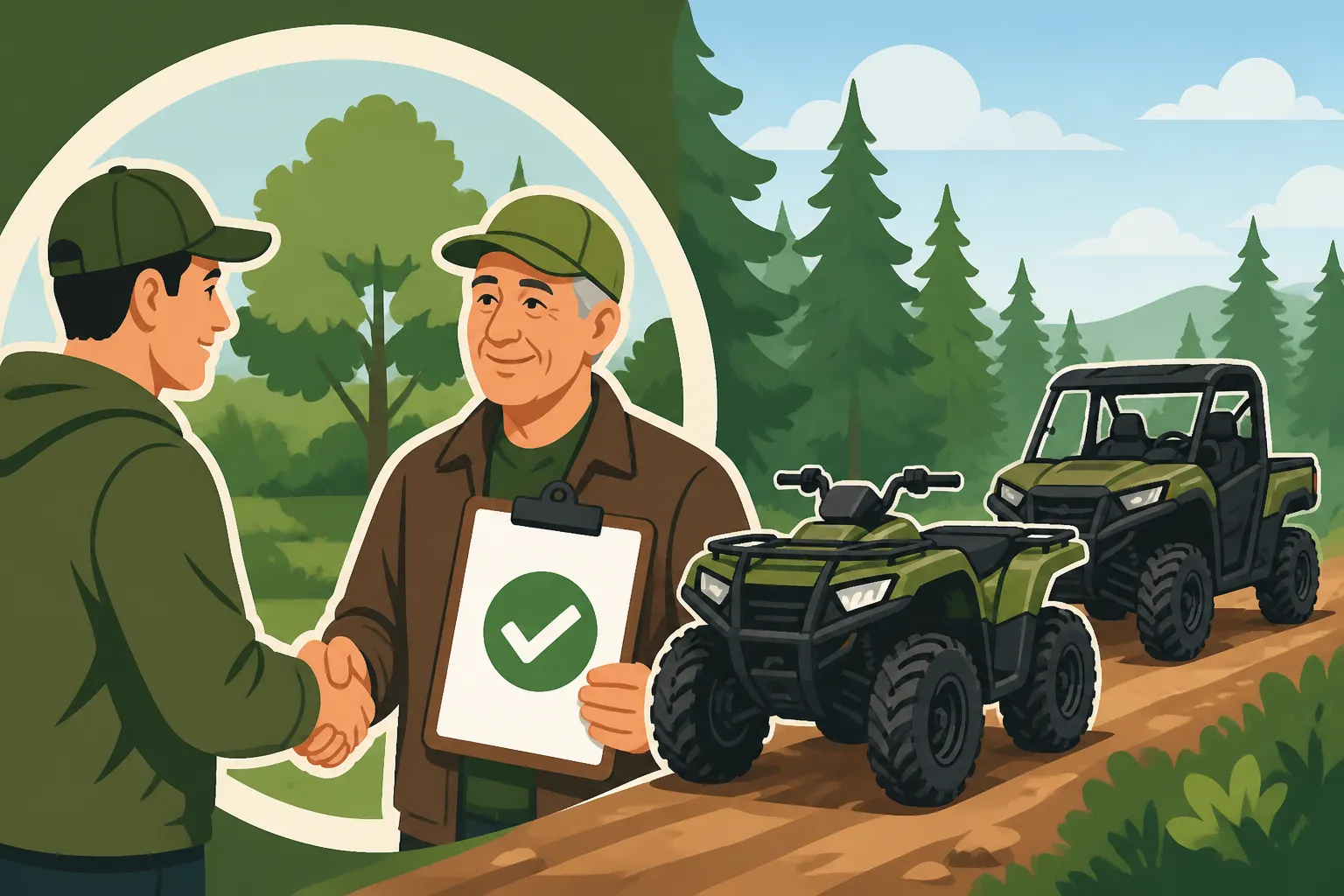
Oh, the dream of finding that perfect, secluded patch of woods where you can truly let loose on your ATV or UTV, away from the crowds and designated trails! It’s a vision many of us share, especially when looking at the vast, beautiful, and often privately owned woodlands across the Berkshires. But here in Massachusetts, that dream comes with a very clear, very important requirement: getting written permission from the landowner. This isn't just a polite formality; it's a legal necessity that can save you a world of trouble. This guide will walk you through the nitty-gritty of how to respectfully approach a Berkshire woodlot owner, what to discuss, and how to secure that crucial piece of paper.
Why Written Permission Isn't Just a "Good Idea" in Massachusetts
Let's be real, it's easy to look at a vast, seemingly unmaintained woodlot and think, "Nobody's going to care if I just ride through here." But that mindset can land you in a heap of trouble faster than you can say "Environmental Police." Massachusetts takes private property rights very seriously, and when it comes to off-highway vehicles (OHVs), the rules are particularly strict.
Understanding Massachusetts Trespass Laws and Penalties
Here in the Bay State, riding an ATV or UTV on private land without explicit, written permission from the owner is considered trespassing. It doesn't matter if there's no "No Trespassing" sign, or if the land seems abandoned. If you don't have that written permission, you're breaking the law. The consequences aren't just a slap on the wrist either. You could face significant fines, and in some cases, your beloved machine could even be impounded. Imagine the frustration of having your weekend fun turn into a court appearance and a hefty bill to get your quad back. It's a risk simply not worth taking.
Many riders, especially those new to the state or to OHV recreation, might not fully grasp the severity. They might come from states with more lenient rules or simply assume that unposted land is fair game. But here, the default is private, and permission is required. This is precisely why we stress the importance of understanding [Massachusetts Penalties for Illegal Riding] and [Massachusetts Trespass Law for Riders] before you even think about turning a wheel on someone else's property. The law protects landowners, and rightfully so. Your best bet is always to operate within those clear boundaries.
The "150-Foot Dwelling Rule" and Other Local Considerations
Beyond general trespass, Massachusetts has another layer of complexity that often surprises riders: the 150-foot dwelling rule. This regulation states that you cannot operate an OHV within 150 feet of a dwelling, occupied building, or structure without written permission from the owner of that dwelling or structure. Think about that for a moment: even if you own the vast majority of a woodlot, if your riding path brings you too close to a neighbor's house, you could still be in violation if you haven't secured their permission.
This rule becomes particularly tricky in the Berkshires, where large woodlots often border smaller residential parcels. A property line might run right through the woods, bringing your intended trail within that 150-foot radius of a quaint farmhouse or hunting cabin. It's not always obvious from a casual glance on a map. This is why when you're seeking [Getting an Owner's Consent to Ride Within 150 Feet], you might need to think beyond just the immediate woodlot owner and consider adjacent property owners too, depending on your planned routes. It's another hurdle, I know, but understanding [Massachusetts's 150-Foot Dwelling Rule] is key to riding responsibly and legally in our beautiful state.
How to Approach a Berkshire Woodlot Owner for Permission
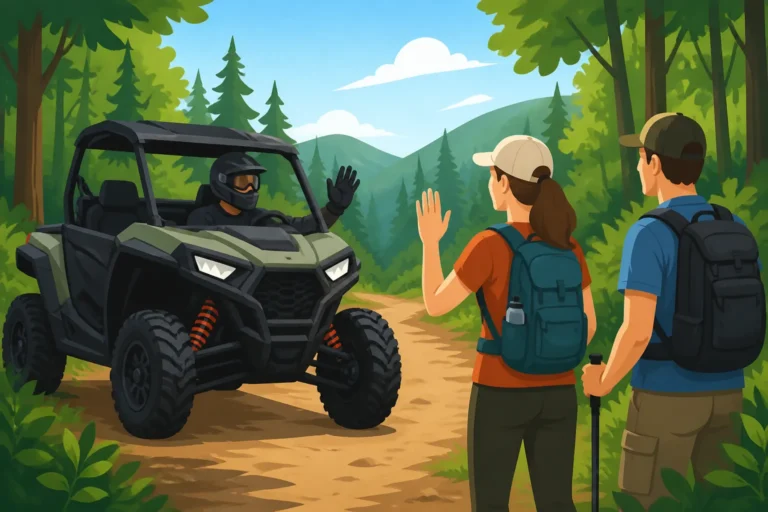
So, you've identified a promising woodlot in a Berkshire town like Lee or Becket, and you're ready to make your move. This isn't a task to be rushed. A thoughtful, respectful approach significantly increases your chances of success. Remember, you're asking for a privilege, not demanding a right.
Researching Ownership and Initial Contact
Your first step is to figure out who actually owns the land. This often means a trip to the local town assessor's office. Many towns in the Berkshires now have online Geographic Information System (GIS) maps where you can search by parcel and find owner names and mailing addresses. This is invaluable information. Resist the urge to just show up unannounced at someone's house. A formal letter or a phone call after you've identified the owner is usually a better first impression.
In your initial contact, be clear, concise, and respectful. Introduce yourself, mention your interest in responsible OHV riding, and briefly explain why you're reaching out. Maybe you're looking for a private spot for family rides, or perhaps you're a hunter who wants to use an ATV for deer retrieval. Knowing your purpose helps the landowner understand your intentions. This initial outreach sets the stage for a positive conversation.
Crafting Your Request: What to Include and How to Present It
When you formally make your request, whether in person or in a follow-up letter, be prepared with details. Landowners want to know:
- Who will be riding? Just you? Your family? A small group of friends?
- What kind of machines? ATVs? UTVs? Both?
- When will you ride? Specific dates? Weekends only? During hunting season?
- What is the intended use? Just trail riding? Deer retrieval? Accessing a remote fishing spot? Helping clear brush?
- What is your commitment to respect the land? "Leave no trace" principles, sticking to designated paths, noise considerations.
Be honest and upfront. If you're planning on doing some light trail maintenance to help out, mention it! If you've invested in quality gear like a SuperATV winch to ensure you can pull yourself out of a sticky situation without tearing up the ground, or robust skid plates to protect the terrain, it shows you're a serious and responsible rider. These details demonstrate that you're not just looking for a free-for-all, but that you genuinely care about the property and its preservation. This level of detail and transparency can go a long way in alleviating a landowner's concerns.
Addressing Landowner Concerns and Building Trust
Landowners often have valid worries, and it's your job to address them proactively. Their primary concerns usually revolve around:
- Liability: "What if someone gets hurt on my land?"
- Property Damage: "Will they tear up my trails, cut down trees, or leave trash?"
- Noise: "Will my peaceful woods be filled with loud engines?"
- Privacy: "Will strangers be riding too close to my home?"
For liability, while a simple waiver isn't a foolproof legal shield, offering to sign one demonstrates good faith and that you understand the risks involved. You can assure them of your commitment to responsible riding, perhaps even suggesting a walk-through of the property together to show them the routes you'd like to use. For noise, commit to using quiet mufflers and riding respectfully, especially near homes or during sensitive times. Remind them that [Massachusetts Noise Complaints About Quads] are a real issue, and you want to be a part of the solution, not the problem.
Emphasize that you will adhere to all regulations, including [Massachusetts Rules for Riding Private Land], and will always respect their property and privacy. Building this trust is paramount to securing and maintaining access to their woodlot. Perhaps offer to help them with some light property maintenance in exchange for riding access – clearing downed limbs, checking fence lines, or moving firewood. It shows you're not just taking, but willing to give back.
What a Good Written Permission Agreement Looks Like
Once a landowner agrees, the next critical step is to get everything in writing. A verbal agreement, while friendly, offers little protection for either party and can be easily misinterpreted or forgotten.
Key Elements to Include in the Document
A solid written permission agreement doesn't need to be a complex legal document, but it should cover the essential bases. Think of it as a clear understanding between two parties. Here are the crucial elements to include:
| Element | Description | Why It's Important |
|---|---|---|
| Names & Contact | Full names and contact information for both the landowner(s) and the rider(s) granted permission. | Establishes who is involved and provides means of communication. |
| Property Description | Specific address, parcel number, or clear description of the land where permission is granted. | Clearly defines the boundaries of access. |
| Dates/Duration | The specific period for which permission is valid (e.g., "May 1st, 2024 to November 30th, 2024," or "one year from signing date"). | Defines the timeframe of access. |
| Scope of Activity | Clearly states what activities are permitted (e.g., "ATV/UTV riding," "hunting access," "trail maintenance"). | Prevents misunderstandings about how the land can be used. |
| Permitted Vehicles | Specifies the types of OHVs allowed (e.g., "ATVs and UTVs under 1000cc"). | Ensures only appropriate vehicles are used. |
| Rider Responsibilities | Outlines expectations for the rider(s) (e.g., "stay on designated trails," "pack out all trash," "respect quiet hours," "no mudding"). | Sets clear rules of conduct and protects the property. |
| Liability Clause | A statement acknowledging the rider assumes all risks and releases the landowner from liability (consult legal advice for exact wording). | While not always bulletproof, it shows intent and awareness of risk. |
| Revocation Clause | States that the landowner can revoke permission at any time for any reason. | Protects the landowner's right to control their property. |
| Signatures & Date | Signatures of both the landowner(s) and the rider(s) with the date of signing. | Formalizes the agreement and confirms mutual understanding. |
Remember, this document is your proof of legal access. It shows that you have [Written Permission From a Bay State Owner], which is critical for legal and responsible riding. Don't be afraid to add specific rules the landowner might have, such as "no riding after dark" or "stay away from the old stone wall on the east side." The more specific, the better for everyone involved.
Carrying Your Permission Document While Riding
This might sound obvious, but it's often overlooked: once you have that written permission, you must carry it with you whenever you ride on that specific property. Whether it's a laminated copy tucked into a SuperATV cargo bag, or a clear digital copy on your smartphone, it needs to be accessible.
Why is this so important? Because an Environmental Police Officer, a local police officer, or even a concerned neighbor might approach you and ask about your presence on the land. Having that document handy provides immediate proof that you are there legally. It turns a potentially tense situation into a brief, polite exchange. Without it, even with the best intentions, you could find yourself in a difficult spot, facing questions and needing to prove your innocence later. Just like you need to have [Massachusetts Registration Cards Carried on Board] when riding on designated trails, having your written permission for private land is equally vital. It provides peace of mind and keeps you out of unnecessary trouble.
Maintaining the Relationship and Long-Term Access
Securing written permission is a fantastic first step, but it's the ongoing relationship and your actions that will determine if that access becomes a long-term privilege. Think of yourself as a guest in someone's home – your behavior impacts whether you get invited back.
Respecting the Land and the Owner's Trust
This is where the rubber meets the road, quite literally. If you promised to stay on designated trails, then stay on them. If you said you'd pack out all trash, then make sure not a single wrapper is left behind. Avoid sensitive areas like wetlands, stream crossings where erosion could be an issue, or freshly planted saplings. Excessive noise, aggressive riding, or disrespect for the natural environment will quickly sour the relationship and lead to revoked permission.
Think about the long game. A good reputation as a responsible rider can open doors, not just with this landowner, but potentially with others through word-of-mouth. Conversely, a bad reputation can quickly close them. This means embodying [Massachusetts Trail Etiquette Locals Expect] even on private land, perhaps even more so. You're not just representing yourself; you're representing the entire OHV community to this landowner.
Offering Assistance and Giving Back
One of the best ways to foster a long-lasting relationship with a woodlot owner is to offer help, not just ask for access. These landowners often have a lot of work to do on their property. Could you help them clear downed trees after a storm, especially if you have an ATV-mounted chainsaw or a good old hand saw? Perhaps you could use your UTV to haul firewood for them, or help maintain fire roads. Many landowners are grateful for an extra set of hands.
If you're using the land for hunting, consider sharing some of your harvest, if appropriate. If you spot anything amiss on their property – a downed fence, signs of illegal dumping, or unusual activity – letting them know can demonstrate your vigilance and care for their land. Products like SuperATV utility boxes or specialized attachments for your UTV can even make you more effective at these tasks, showing you're truly equipped to be a helpful hand, not just a joyrider. By actively contributing and showing appreciation, you move from being just a rider to being a trusted steward of their property, making it far more likely you'll enjoy access for years to come.
Disclaimer
This article is for general informational purposes only and does not constitute professional advice. Laws, prices and regulations vary by location and change over time. Consult a qualified professional for guidance on your specific situation.