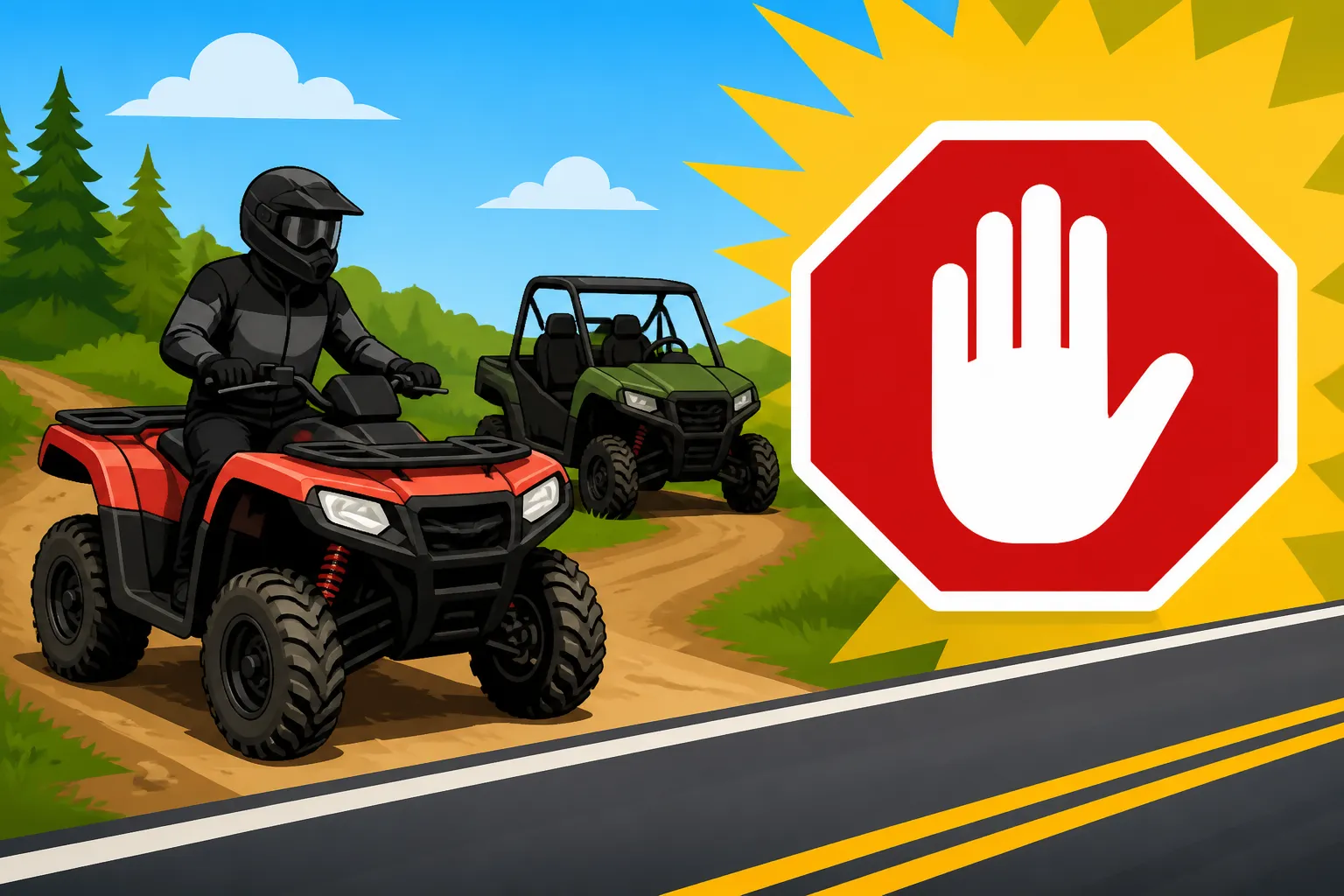
You Must Stop Before Crossing Any Public Way
It's incredibly frustrating when you're out enjoying the trails on your ATV or UTV in Massachusetts and suddenly, a public road pops up, blocking your path. You know you can't just ride down the street like a car, but how exactly are you supposed to get to the next section of trail without breaking the law? This guide will dive deep into the specific rules and best practices for legally crossing public ways in the Bay State, helping you navigate these tricky situations with confidence and stay on the right side of the Environmental Police.
The Harsh Reality of Massachusetts Public Way Crossings
Let's be blunt: Massachusetts is one of the strictest states when it comes to off-highway vehicles (OHVs) and public roads. Unlike some other places, there's no real gray area or loophole for making your ATV or UTV "street legal" in the traditional sense. This reality often catches riders off guard, especially those new to the state or visiting from neighboring regions with more lenient laws. Understanding this foundational principle is critical before you even think about putting a tire on pavement.
Why "Street Legal" Isn't an Option Here
Many riders, fresh from buying a new machine or moving from another state, look into options like turn signals, mirrors, or special tires, hoping to gain permission to ride on public roads. Unfortunately, Massachusetts law is quite clear: there is no conversion path to make an ATV or UTV street legal for general road use. Your shiny new side-by-side, no matter how many accessories you bolt onto it, cannot legally be operated as a regular vehicle on Massachusetts public roads. This isn't just a minor technicality; it's a fundamental difference in how the state views these machines compared to cars, trucks, or even motorcycles. [Massachusetts Has No Street Legal Path] for OHVs. This means that any time your wheels touch a public way, you are operating under very specific, narrow exceptions, not as a street-legal vehicle. It’s a point of frequent confusion and a common reason why riders inadvertently get into trouble, simply because they assume some modifications or a special plate will grant them broader access.
The state's legislature has consistently maintained this stance, prioritizing safety and distinct separation between off-road recreation and public road traffic. This strict interpretation means that you cannot, under any circumstances, ride your ATV or UTV along a public road to connect trails, visit a gas station, or run a quick errand, even for a short distance. The only legal interaction your machine can have with a public way is a direct, perpendicular crossing, executed with extreme caution and under specific conditions. Trying to push these boundaries, even with the best intentions, can quickly lead to citations and penalties, putting a serious damper on your riding day or even your ability to ride in the future.
The Strict Definition of a "Public Way"
When we talk about "public ways" in Massachusetts, it's easy to think only of paved, multi-lane highways. However, the legal definition for OHVs is much broader and often includes types of roads you might not initially consider. A public way isn't just a main street; it can be a small town road, a dirt road maintained by the municipality, or even a public easement through private land. Essentially, if a road is open to public travel, owned by a city or town, or maintained by the state, it falls under the "public way" umbrella for ATV and UTV regulations. This means even seemingly innocuous dirt paths that connect two sections of state forest could still be considered public ways if they are under municipal jurisdiction. [Massachusetts Bans Riding on Public Ways] is a key statute here.
This broad definition highlights the importance of checking maps and understanding local designations before you ride. What looks like a private path to you might, in fact, be a town road where OHVs are strictly prohibited, except for a direct crossing. The Environmental Police, who enforce these regulations, are well-versed in these distinctions and expect riders to know them too. A common mistake riders make is assuming that because a road isn't paved, it's fair game for continuous OHV travel. This is a dangerous assumption that can lead to fines and machine impoundment. Always assume a road is a public way unless you have explicit, verifiable information to the contrary, and even then, remember that riding along it is almost always prohibited.
Step-by-Step Guide to Legal Crossings
Given the strict rules, knowing how to execute a legal crossing is paramount for any Massachusetts ATV or UTV rider. It's not just about getting from point A to point B; it's about doing it safely, responsibly, and in full compliance with the law. There's a specific procedure you must follow every single time you encounter a public way, no matter how deserted it may seem. Failing to adhere to these steps can turn a simple crossing into a costly citation or, worse, a dangerous accident.
Coming to a Complete Stop and Yielding
The absolute first and most crucial step before attempting to cross any public way is to come to a complete and utter stop. This isn't a rolling stop, nor is it merely slowing down; your machine must be stationary, with your foot on the brake. Think of it exactly like stopping at a stop sign or a red light in a car. This halt should occur at the very edge of the public way, where you have a clear view of approaching traffic but are not yet obstructing the road. Take your time here. This isn't a race.
Once stopped, you must yield the right-of-way to all traffic. This includes not just cars and trucks, but also bicycles, pedestrians, and even horses if you're in an area where they might be present. Look left, look right, and look left again. Wait for a clear, safe opening in traffic before proceeding. If there's any doubt, wait longer. This principle of yielding is non-negotiable and exists for your safety and the safety of others. [Yielding Before You Cross] is a core part of Massachusetts OHV law. The moments you spend ensuring the path is clear are infinitely better than the consequences of rushing. Many accidents at road crossings occur because a rider misjudged the speed of an oncoming vehicle or failed to see a bicycle rider approaching quietly. Err on the side of extreme caution, every single time.
The Direct Line: Straight Across, Not Down
Once you've stopped and confirmed the way is absolutely clear, your next critical step is to cross the public way by the most direct route possible. This means crossing at as close to a 90-degree angle to the road as conditions allow. You are permitted only to traverse the public way to continue your ride on the opposite side. You are not allowed to ride along the public way, not even for a few feet, to find a more convenient crossing point or to avoid a puddle. This "direct line" rule is fundamental to differentiating a legal crossing from illegal road riding.
Imagine a perfectly straight line from where you stopped on one side to where you intend to resume riding on the other. That's your path. You cannot deviate from it. This rule applies even if the shoulders are wide, or if there's a paved section before the dirt trail picks up again. Your ATV or UTV should remain on the pavement for the absolute minimum time required to cross. The Environmental Police are very watchful for riders who try to "cheat" this rule by riding a short distance down the road before cutting back into the woods. This is considered illegal operation on a public way, which carries significant penalties. This restriction is another reason why robust off-road equipment, even something like a durable winch or a sturdy set of A-arms from SuperATV, is built for the trails, not for cruising on asphalt. Your machine is meant for the rough stuff, and the state wants to keep it there, with public way crossings as a very limited exception.
Age and Supervision Rules for Crossings
Massachusetts not only dictates how you cross a public way but also who can do it and under what circumstances, especially concerning younger riders. The state has some of the most stringent youth ATV laws in the nation, collectively known as Sean's Law, and these apply directly to road crossings. Understanding these age-specific requirements is crucial for parents and guardians, as they carry significant liability for young riders.
Special Rules for Young Riders Under 16
For any rider under the age of 16, executing a public way crossing requires not just caution but also the direct supervision of an adult. This isn't merely having an adult somewhere in the vicinity; the supervising adult must maintain "continuous visual contact" and "direct verbal communication" with the young rider during the crossing. This means the adult needs to be close enough to see and talk to the child at all times, guiding them through the stop, yield, and cross procedure. The intent here is to ensure immediate intervention if the young rider makes a mistake or hesitates in traffic.
Furthermore, riders under 16 are also subject to engine size restrictions, particularly if they are between 14 and 16 years old, where machines must be 90cc or less. While this primarily pertains to general operation, it's worth noting as part of the overall youth rider framework. If a young rider attempts a crossing without proper adult supervision, both the rider and the supervising adult (who is held liable) could face penalties. This is not just about a technical violation; it's about ensuring that the least experienced riders are protected during the most hazardous part of their journey on a public trail system. Parents, please remember that your responsibility is significant here, and understanding [Massachusetts Rules for Crossing a Road] for young riders is paramount.
How a Driver's License Changes Things at 16 and a Half
The rules for crossing a public way do become a bit less restrictive once a rider turns 16 and a half years old and possesses a valid motor vehicle operator's license. At this specific age, with a license in hand, the requirement for direct adult supervision during a public way crossing is lifted. This means a 16.5-year-old with a license can perform a legal crossing on their own, provided they still adhere to all the other rules: complete stop, yielding to all traffic, and crossing directly across the road.
This change in the law at 16 and a half recognizes the increased maturity and driving experience that comes with holding a driver's license. It’s a significant milestone for young riders, granting them more independence on the trails. However, it's vital to remember that a driver's license does not make their ATV or UTV street legal for general road use. It simply modifies the supervision requirement for a crossing. All other restrictions, such as not riding along a public way and the general prohibition of OHVs on roads, remain firmly in place. [Road Crossings Change at 16 and a Half] is a specific detail that many riders overlook, so be sure to know if it applies to you or your young rider. A rider over this age still needs to carry their valid driver's license, along with their OHV registration card, when riding on public lands.
Equipment and Safety Considerations for Crossings
Beyond knowing the rules, having your machine properly equipped and maintaining a high level of personal vigilance are critical for safe public way crossings. While Massachusetts doesn't require a slew of modifications for simply crossing a road, certain basic equipment is legally mandated for all OHV operation, and some additional safety practices are just plain smart. This is where investing in quality components, perhaps even from a brand like SuperATV, can truly pay off, not just for performance on the trails but for safety during these brief but critical moments on pavement.
Essential Equipment: Lights, Brakes, and Mufflers
Every ATV and UTV operating in Massachusetts, whether on a trail or making a quick road crossing, must meet certain equipment standards. First and foremost, working brakes are non-negotiable. Your machine must be capable of stopping safely and effectively. This sounds obvious, but many riders neglect brake maintenance, which can be disastrous when you need to stop suddenly at the edge of a busy road. Regularly inspect your brake pads, fluid, and lines.
Next, lights are mandatory, especially if there's any chance you might be riding or crossing a road after sunset or during periods of reduced visibility. This includes at least one working headlight and a red taillight or reflector. While a single headlight might suffice for trail riding, consider additional auxiliary lighting from a brand like SuperATV to enhance your visibility to oncoming traffic during a crossing, even in daylight. The brighter and more conspicuous your machine is, the safer you'll be. [Massachusetts Lighting After Sunset] covers these requirements in detail.
Finally, your muffler must be in good working order and comply with state noise regulations. Loud, modified exhausts can draw unwanted attention from residents and law enforcement, and while it might not seem directly related to safety, it's part of being a responsible rider and avoiding unnecessary stops by officers. [Massachusetts Muffler Requirements] are in place to ensure machines aren't excessively loud.
Visibility and Vigilance: Your Best Defense
Even with all the right equipment, your personal vigilance and commitment to being seen are your strongest defenses during a road crossing. Always wear a DOT-approved helmet; it's the law in Massachusetts for all OHV riders, regardless of age. [Massachusetts Helmet Law for Every Rider] is strictly enforced. Brightly colored riding gear, especially a high-visibility vest or jacket, can significantly increase your profile to drivers, even on a sunny day. Remember, drivers often aren't expecting to see an ATV or UTV at the edge of a road, and anything you can do to stand out helps.
Beyond what you wear, your actions speak volumes. When you approach a public way for a crossing, actively scan the road for traffic well in advance. Make eye contact with drivers if possible, to ensure they've seen you. Don't assume they will slow down or give you space. Be prepared for unexpected movements from other vehicles or pedestrians. This heightened sense of awareness needs to be maintained throughout the entire crossing procedure. Never let your guard down. Even if you're on a remote dirt road and think you're alone, you might be surprised by a passing car or a jogger. Always anticipate the unexpected, and ride defensively.
Common Mistakes and Penalties to Avoid
It’s easy to think a quick, illegal maneuver won’t matter, especially if you believe nobody is watching. However, the Environmental Police in Massachusetts are specifically tasked with enforcing OHV laws, and they patrol trailheads, state forests, and known crossing points regularly. Making even seemingly minor mistakes can lead to significant consequences, ranging from fines to impoundment of your machine. Understanding these pitfalls is crucial for staying out of trouble.
The Lure of the "Quick Hop" and Its Consequences
One of the most common and dangerous mistakes riders make is attempting a "quick hop" or a "shortcut" down a public way instead of executing a legal crossing. This might involve riding a few hundred feet on the shoulder to reach an easier trail entrance, or even briefly riding on the paved road to bypass a particularly muddy section of trail. The temptation can be strong, especially when you're familiar with an area and think you know where officers patrol, or when you're simply trying to avoid backtracking. However, these seemingly minor deviations are clear violations of Massachusetts law.
The consequence for such actions is not just a slap on the wrist. Operating an unregistered or illegally operated OHV on a public way can result in fines that quickly add up, and in more serious cases, your machine can be impounded. An Environmental Police officer doesn't need to see you riding for miles; even a short distance down a public road is enough for a citation. These penalties are designed to deter riders from blurring the lines between off-road recreation and public road use, reinforcing the state's strict stance. Don't underestimate the resolve of law enforcement; they are committed to keeping public ways safe from unauthorized OHV traffic.
What Happens If an Environmental Police Officer Sees You
If an Environmental Police Officer observes you violating the public way crossing rules, they have the authority to stop you and issue citations. The interaction will likely begin with them requesting your OHV registration card, any required safety certificates (for younger riders), and possibly your driver's license if you're old enough to have one. They might also check your machine for basic equipment compliance, like working brakes or a proper muffler. [What an Environmental Police Officer Can Ask] is a common question, and they are within their rights to verify your compliance.
Depending on the nature and severity of the violation, you could face a range of penalties. Fines for illegal operation on a public way can be substantial. For repeated offenses or particularly egregious violations, there's the possibility of your ATV or UTV being seized and impounded. Reclaiming an impounded machine involves additional fees, storage costs, and a significant amount of paperwork and hassle. For younger riders, their supervising adult can be held directly liable for their violations, incurring the same fines and potential machine impoundment. [Massachusetts Penalties for Illegal Riding] are not to be taken lightly. These consequences can be a major financial burden and a serious disruption to your riding activities, serving as a stark reminder of the importance of adhering to the letter of the law.
Planning Your Ride to Minimize Road Crossings
The best way to avoid issues with public way crossings is to minimize them as much as possible. While some crossings are unavoidable when connecting segments of a trail system, careful planning can help you choose routes that keep you almost entirely off public roads, enhancing both your safety and your peace of mind. Massachusetts offers fantastic riding opportunities, particularly in the Berkshire forests, but navigating them responsibly requires homework.
Utilizing Trail Maps and Designated Crossings
Before you even load your ATV or UTV onto your trailer, spend time studying maps of your intended riding area. State forests like October Mountain, Beartown, and Pittsfield, which offer extensive OHV trails in the Berkshires, often have official maps that clearly mark designated trail systems. Look for maps that indicate where trails intersect with public roads and, crucially, if there are designated crossing points. These maps are invaluable tools for planning a legal and enjoyable ride. [Massachusetts ATV Trails: Three Berkshire Forests] offer many miles of riding, and their maps are available from the Department of Conservation and Recreation (DCR).
If a map shows multiple ways to connect two trail sections, prioritize routes that avoid public roads entirely or have fewer crossing points. Some trail systems might even have underpasses or bridges specifically designed for OHVs, completely eliminating the need to interact with vehicular traffic. Always check with the local ranger station or DCR office for the most up-to-date information on trail conditions and any temporary closures or reroutes that might affect your planned crossings. A little planning goes a long way in ensuring a seamless and legal riding experience, keeping you off the pavement and in the woods where your machine, perhaps with its SuperATV suspension and tires, truly belongs.
Riding Etiquette and Respect for All Users
Beyond legal compliance, a critical aspect of minimizing issues at public way crossings is demonstrating good riding etiquette and respect for all other users of public and private lands. This includes other trail users like hikers, mountain bikers, and equestrians, as well as the residents who live near trail access points and crossing areas. When you approach a public way, slow down well in advance, even before you come to your full stop. This signals your intention to drivers and pedestrians, making your presence less alarming.
During the crossing itself, be swift but controlled. Don't speed across the road once it's clear. Once you've completed the crossing and are back on the trail, be mindful of noise, especially if you're near residential areas. Excessive noise can lead to complaints, which in turn can lead to increased law enforcement presence and even trail closures. Being a good neighbor and a responsible rider helps maintain positive relationships between the OHV community and the general public, which is essential for preserving access to the trails we all love. Carrying your [Massachusetts Registration Cards Carried on Board] is not just a legal requirement, but a sign of your adherence to the rules, demonstrating your commitment to responsible riding to anyone who asks.
| Crossing Rule | Under 16 Years Old (No Driver's License) | 16.5 Years Old & Up (With Valid Driver's License) |
|---|---|---|
| Complete Stop Required | Yes | Yes |
| Yield to All Traffic | Yes | Yes |
| Cross Directly (90 Degrees) | Yes | Yes |
| Ride Along Public Way Allowed? | No | No |
| Adult Supervision Required? | Yes (continuous visual/verbal contact) | No |
| Carry Safety Certificate? | Yes | Yes (if under 18) |
| Carry Driver's License? | No | Yes |
| Helmet Required? | Yes | Yes |
| Operating Headlight/Taillight? | Yes | Yes |
| Working Brakes? | Yes | Yes |
| Legal Muffler? | Yes | Yes |
Disclaimer
This article is for general informational purposes only and does not constitute professional advice. Laws, prices and regulations vary by location and change over time. Consult a qualified professional for guidance on your specific situation.