Massachusetts Rules for Riding a Rail Trail
It’s a common dream for many ATV and UTV enthusiasts across Massachusetts: envisioning a scenic ride down a sprawling rail trail, enjoying the natural beauty without the challenges of dense woods or complicated single-track. However, if you’ve been hoping to explore the state’s beautiful rail trail network on your off-highway vehicle, I have to be the bearer of some challenging news. This guide will meticulously break down the reality of riding ATVs and UTVs on Massachusetts rail trails, covering the legal landscape, rare exceptions, and the significant penalties for non-compliance.
The Harsh Reality: Why ATVs and UTVs Are Generally Banned on Massachusetts Rail Trails
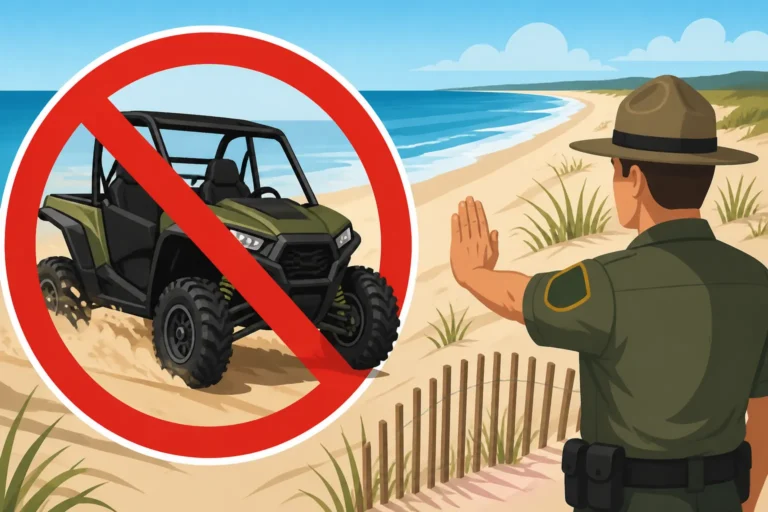
Let's get right to it: the vast majority, if not all, of Massachusetts's designated rail trails are unequivocally closed to ATVs, UTVs, dirt bikes, and other motorized off-highway vehicles. This isn't just a suggestion; it's a legal directive that carries significant weight and consequences. The romantic idea of cruising along these repurposed railway lines on your quad or side-by-side unfortunately doesn't align with the state's intent for these recreational pathways.
The Legislative Intent Behind Rail Trails
Rail trails in Massachusetts, like many across the country, were primarily developed with non-motorized recreation in mind. Think walking, jogging, cycling, horseback riding, and cross-country skiing. They are designed to offer a peaceful, accessible corridor for people to enjoy nature and connect communities without the noise, speed, and potential impact of motorized vehicles. The Massachusetts Department of Conservation and Recreation (DCR) and various municipal and private land trusts manage these trails with this core purpose at heart. Allowing ATVs and UTVs would fundamentally alter the user experience, creating safety hazards for pedestrians and cyclists, and causing undue wear and tear on surfaces not built to withstand the weight and power of these machines.
Chapter 90B and the Definition of an OHV
Massachusetts General Laws, specifically [Massachusetts ATV Laws Under Chapter 90B], govern the operation of off-highway vehicles. This chapter clearly defines what constitutes an OHV and where they may be legally operated. The overarching principle is that OHVs are generally restricted to designated, marked trails on private land with permission, or specific state forest lands managed for OHV use. Rail trails typically fall outside this permissible use category. While your machine might be registered and legal to ride in places like October Mountain State Forest or Beartown State Forest, that legality doesn't magically extend to a local rail trail. There's a fundamental difference in how these various types of public and quasi-public lands are managed and regulated. It’s crucial to understand that simply having a valid OHV registration card, which you should always be [Massachusetts Registration Cards Carried on Board], does not grant you blanket access to all public pathways.
Understanding the "Public Way" Definition and Its Impact
The term "public way" is critical in Massachusetts law, and its interpretation significantly impacts where you can and cannot ride your ATV or UTV. While rail trails feel like public property, their classification often puts them in a tricky grey area that typically excludes OHVs.
What Constitutes a Public Way in Massachusetts?
In Massachusetts, a "public way" generally refers to any street, road, highway, or other public thoroughfare that is open to the public for vehicular travel. This definition is central to laws governing all vehicles, including off-highway vehicles. However, the legal definition can be nuanced. Many rail trails might be considered "public" in terms of access for walking or biking, but not necessarily for motorized vehicles. The distinction is key: public access for non-motorized uses does not equate to public access for motorized vehicles.
A paved rail trail, for instance, might look like a smooth, inviting road, but it is not typically maintained or designated as a public way for ATVs or UTVs. Even unpaved sections, which might resemble a dirt road in a state forest, are generally treated differently under the law due to their specific designation as a rail trail. It’s a very common mistake for riders to assume that because a path is open to the public, it’s open to all uses. This isn't the case, especially with the state's stringent [Why Massachusetts Law Says You May Not Ride] on many types of public ways.
The Impact on ATV/UTV Operation
Because rail trails are not designated as public ways for OHVs, operating an ATV or UTV on them is generally considered illegal. This aligns with the broader principle that [Massachusetts Has No Street Legal Path] for ATVs and UTVs. These machines are purpose-built for off-road environments, not for shared-use paths intended for quieter, slower-moving traffic. The legal framework is designed to prevent conflicts, preserve the integrity of the trail surface, and maintain the intended recreational experience for the majority of users.
This prohibition means you cannot use a rail trail to connect two legal riding areas, nor can you ride it to access private property. It’s a hard line, and Environmental Police Officers are well-versed in enforcing these distinctions. They are also aware that modifications, even high-quality ones from companies like SuperATV, that might enhance your machine for legitimate trail riding elsewhere, do not somehow grant you permission to ride where motorized vehicles are prohibited.
Are There Any Exceptions? When a Rail Trail Might Be Accessible (Rare Cases)
While the general rule is a resounding "no," it's worth exploring if there are any incredibly rare, specific circumstances where an ATV or UTV might legally interact with a rail trail in Massachusetts. These are not common riding opportunities, but rather extremely limited scenarios.
Designated Crossings of a Public Way
The most common (and almost only) scenario where an OHV might legally touch a rail trail is during a designated crossing of a public way. For example, if a rail trail intersects a legal public road, and you are operating your ATV or UTV legally on that public road to cross it to another legal trail, you might briefly pass over the rail trail at that intersection. However, this is strictly a crossing, not an opportunity to ride on the rail trail. You must follow all rules for [Massachusetts Rules for Crossing a Road], including coming to a complete stop, yielding to traffic, and minimizing the distance traveled on the public way. This is a very different scenario from intentionally riding down the rail trail itself. Even in these crossing situations, riders under specific ages have additional requirements, as outlined in laws like [Massachusetts Fines for Riding Under 14] for certain violations related to age and operation.
Extremely Rare Shared-Use Designations
In theory, a small, highly localized segment of a rail trail could be designated for shared motorized use if a municipality or land manager specifically approved it. However, this is exceptionally rare for ATVs and UTVs in Massachusetts. Such a designation would require specific signage, clear demarcation, and often, a special permit system, making it distinctly different from the vast network of non-motorized rail trails. To my knowledge, such segments for ATVs/UTVs are practically non-existent. Snowmobiles have some shared-use trails, particularly in the western part of the state, which sometimes overlap with rail trails in winter, but this is a completely different classification and vehicle type.
It is absolutely critical to check local regulations and signage before even considering such a possibility. Never assume that a lack of "No ATV" sign means "ATVs allowed." The default assumption for rail trails should always be "No Motorized Vehicles." If you are unsure about a specific trail, contacting the managing authority (e.g., DCR, town conservation commission) is the only way to get a definitive answer. Relying on anecdotal information or the actions of others is a risky gamble.
Here's a quick summary of common trail types and OHV access in Massachusetts:
| Trail Type | Primary Intended Use | ATV/UTV Access | Common Examples |
|---|---|---|---|
| Rail Trail | Walking, Biking, Horseback | No | Ashuwillticook Rail Trail, Mass Central Rail Trail |
| State Forest OHV Trail | ATV, UTV, Dirt Bike | Yes | October Mountain State Forest, Beartown State Forest |
| Town Conservation Land | Walking, Hiking, Nature | No | Generally prohibited, specific exceptions rare |
| Private Land | Owner's Discretion | Yes | With written permission from landowner |
| Public Roads/Highways | Licensed Motor Vehicles | No | No street-legal path for ATVs/UTVs |
This table clearly illustrates the typical restrictions you'll face. Even if you've got your machine decked out with heavy-duty components from SuperATV for serious off-road adventures, those upgrades are best utilized on designated OHV trails, not rail trails.
Consequences of Illegal Riding: What to Expect if You Break the Rules
Riding an ATV or UTV on a Massachusetts rail trail isn't just a minor infraction; it can lead to serious legal and financial repercussions. Environmental Police Officers patrol these areas, and they take violations seriously to protect public safety and preserve these valuable resources.
Fines and Penalties
The penalties for operating an OHV illegally in Massachusetts can be substantial. You could face significant fines for trespassing, operating an unregistered vehicle (if applicable), and operating on prohibited lands. These fines can quickly add up, turning a quick, unauthorized ride into a very expensive mistake. It's not just about getting a ticket; it's about the broader implications of violating state law. For example, [Massachusetts Penalties for Riding Unregistered] can be steep, and even if your machine is registered, riding it where it's not allowed still constitutes a violation.
Vehicle Seizure
One of the most severe consequences is the potential seizure of your ATV or UTV. Environmental Police Officers have the authority to confiscate machines operated illegally. Getting a seized machine back can be a lengthy, costly, and frustrating process, often involving court appearances, payment of all fines, and potentially storage fees. This isn't just an inconvenience; it can mean losing access to your valuable machine for an extended period, or even permanently in some cases if you cannot meet the requirements for its return. [What an Environmental Police Officer Can Ask] you for includes proof of registration and permission to ride on the land. If you're on a rail trail, you won't have the latter.
Property Damage and Liability
Beyond legal penalties, there's the issue of property damage and civil liability. ATVs and UTVs can cause significant damage to unpaved trail surfaces, particularly in wet conditions, leading to ruts, erosion, and increased maintenance costs. If your riding causes damage, you could be held financially responsible for repairs. Furthermore, if you injure a pedestrian, cyclist, or horse rider on a rail trail, you could face civil lawsuits, regardless of whether you carry optional [Does Massachusetts Require Insurance on a Registered ATV?] (which, by the way, is not legally mandated in Massachusetts, but often a very smart investment). Operating your machine with parts designed for rugged use, like those from SuperATV, is great for authorized trails, but it also means your machine is capable of causing significant damage if used improperly.
In short, while the allure of an open rail trail might be strong, the risks far outweigh any perceived reward. Stick to the designated OHV parks and trails, secure written permission for private land, and enjoy your machine responsibly.
Disclaimer
This article is for general informational purposes only and does not constitute professional advice. Laws, prices and regulations vary by location and change over time. Consult a qualified professional for guidance on your specific situation.