Massachusetts Lighting Requirements for an OHV
Navigating the rules for riding your ATV or UTV in Massachusetts can feel like trying to untangle a ball of yarn, especially when it comes to something as seemingly straightforward as lighting. Many riders wonder if their machine's factory lights are truly enough, or when exactly they need to be turned on. This guide will shine a light on the specific Massachusetts lighting requirements for off-highway vehicles, helping you understand what's needed to stay safe and legal on the trails.
The Core Massachusetts Lighting Requirements for OHVs
When you're out on the trails, whether you're kicking up dirt in October Mountain State Forest or cruising through Beartown State Forest, visibility is paramount. It’s not just about seeing where you’re going; it’s also about ensuring other riders, hikers, or even wildlife can see you. Massachusetts law, specifically Chapter 90B, has clear guidelines for what constitutes legal lighting on your ATV or UTV. These aren't just suggestions; they're mandates designed to keep everyone safe.
Headlights: Illuminating Your Path Forward
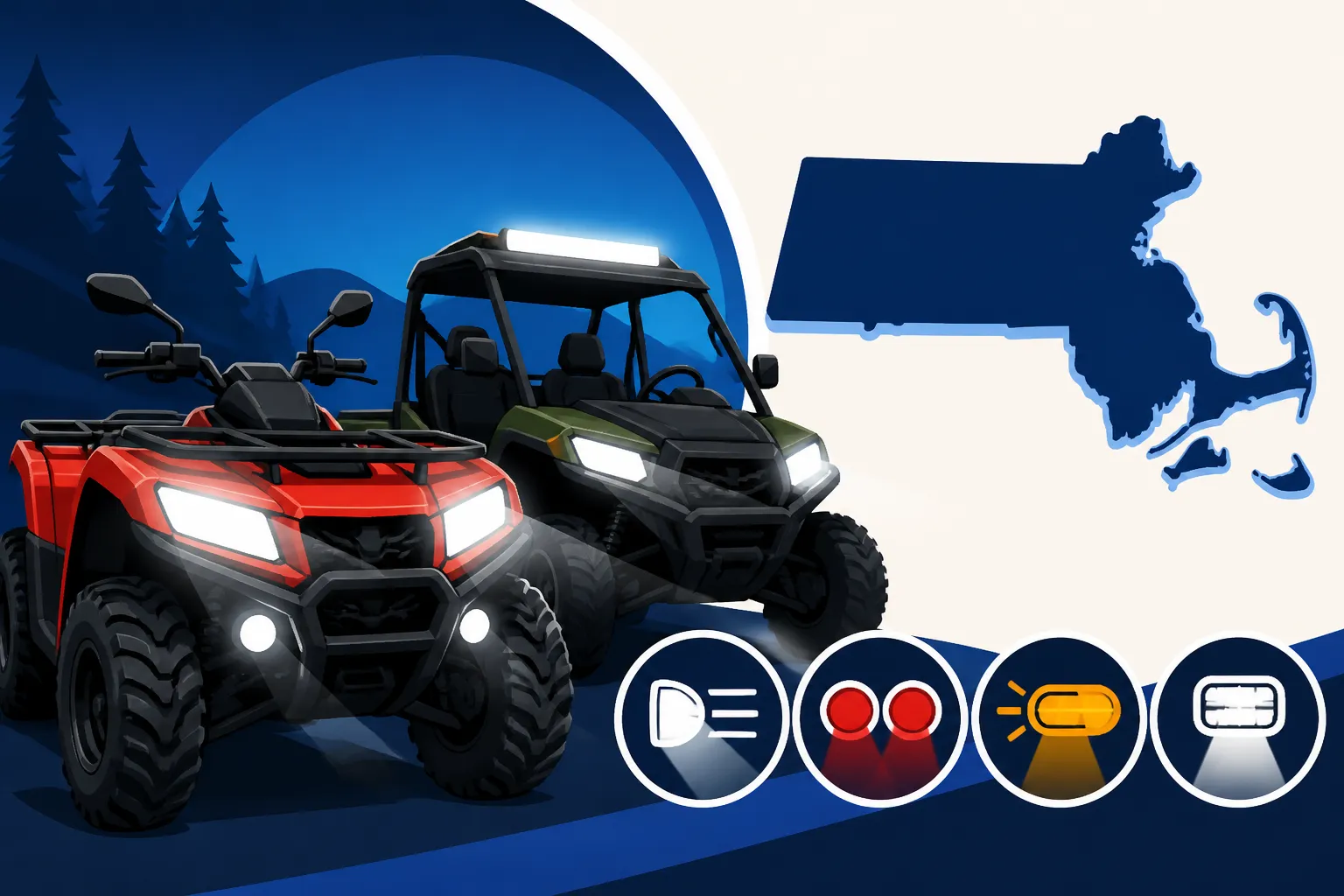
Every off-highway vehicle (OHV) in Massachusetts, whether it's an ATV, a dirt bike, or a side-by-side, must be equipped with at least one headlight. This isn't just a dim glow; the law specifies that this headlight must be capable of illuminating persons and vehicles at a safe distance ahead. Think about those moments when you're on a winding trail after the sun has dipped below the horizon, or when an unexpected fog rolls in. A strong headlight is your primary tool for navigating safely. It needs to cast enough light to let you react to obstacles, sudden dips, or turns in the trail.
For many stock machines, the factory headlight provides adequate illumination for legal compliance. However, some riders choose to upgrade, especially those who frequently ride in very dark conditions or who traverse challenging terrain. Aftermarket options like LED light bars, often found from brands like SuperATV, can significantly increase your forward visibility, turning night into a much more manageable experience. While these upgrades aren't required by law unless your stock light is somehow deficient, they're a common and smart addition for many serious riders. Remember, the goal is always clear sightlines so you can make informed decisions while riding.
Taillights and Brake Lights: Being Seen from Behind
Just as crucial as seeing where you're going is ensuring you can be seen by others following behind you. Massachusetts law requires your OHV to have at least one red taillight. This taillight must be visible from a reasonable distance to the rear, helping to prevent rear-end collisions, especially in dusty conditions or low light. The taillight serves as a constant indicator of your presence on the trail.
In addition to a taillight, a functional brake light is also a critical safety feature. When you apply your brakes, this light must illuminate brightly, signaling to anyone behind you that you are slowing down or stopping. This is particularly vital when riding in groups, where sudden stops can lead to pile-ups if riders aren't adequately warned. Ensuring your brake light is always working isn't just about passing an inspection; it's about protecting yourself and those you ride with. If your taillight or brake light isn't working, you could be cited by an Environmental Police Officer, and more importantly, you're putting yourself and others at risk. Many riders forget to check these lights regularly, so make it a habit before each ride. For a detailed overview of what's expected, check out [Massachusetts Equipment Requirements].
Reflectors: Passive Visibility for Off-Road Machines
Beyond active lighting, Massachusetts law also mandates passive visibility measures. Your OHV must be equipped with at least one red reflector on the rear, positioned to be visible from a reasonable distance. Think of reflectors as your machine's backup visibility system. Even if your taillight fails, or your machine is parked without its engine running, a reflector can catch the light from another source and make your OHV visible. This is especially important if you have to stop on the side of a trail for a breakdown or a quick break, where other riders might not anticipate your presence.
These reflectors are usually small, inexpensive, and easy to replace if they get damaged or fall off. It’s a small detail that makes a big difference in terms of safety, particularly if you're riding through areas where visibility can suddenly drop, such as deep woods or at dusk. Make sure your reflectors are clean and not obscured by mud or debris, as their effectiveness relies on their ability to reflect light efficiently. [Why You Need a Red Light or Reflector] delves deeper into this often-overlooked but crucial component.
When Your Lights Must Be On: Understanding the Conditions
Knowing what lights you need is one thing, but knowing when to use them is equally important. Massachusetts law is clear about the circumstances under which your OHV's lighting system must be fully operational and turned on. It's not just about avoiding a ticket; it's about making sound judgment calls for your safety and the safety of others.
After Sunset and Before Sunrise: The Standard Rule
The most obvious time to have your lights on is during periods of darkness. Massachusetts law requires OHV lights to be on from one-half hour after sunset until one-half hour before sunrise. This is the standard rule for all vehicles on public ways, and it extends to OHVs operating on designated trails and lands. This means if you're planning a sunset ride or an early morning adventure, you need to factor in the twilight hours. Don't wait until it's pitch black to flip on your switch. Get into the habit of turning your lights on as dusk approaches and keeping them on until the sun is fully up.
Even if you feel like there's still plenty of ambient light, the legal requirement is tied to the clock. This rule helps ensure a consistent standard across all riders, removing ambiguity. For those who enjoy night rides, having robust lighting, possibly including additional aftermarket lights from a provider like SuperATV, becomes even more critical. Think about the changing seasons: sunset can be much earlier in the fall and winter months, catching some riders off guard. Always be aware of the time and the natural light conditions. For more on night riding, see [Massachusetts Rules for Riding After Dark].
Reduced Visibility: Fog, Rain, Snow, and More
Beyond the specific times of day, your OHV's lights must also be on whenever atmospheric conditions reduce visibility. This includes common scenarios like fog, heavy rain, falling snow, or even dense dust clouds kicked up by other riders. The general guideline is that if you can't clearly see people or vehicles at a distance of 500 feet, your lights need to be on. This is a crucial safety measure, as these conditions can appear suddenly and drastically reduce reaction time.
Imagine riding a trail in the Berkshires, and a sudden downpour hits, or you climb into a higher elevation where fog is clinging to the trees. In these moments, your lights become essential for both seeing the trail ahead and allowing others to see you. It's not just about headlights; your taillight is equally important to prevent someone from colliding with you from behind. Always err on the side of caution. If you're questioning whether your lights should be on, the answer is almost always yes. Being proactive in poor visibility conditions can prevent accidents and ensure a safer ride for everyone.
Special Considerations for Public Way Crossings
While ATVs and UTVs are generally prohibited from riding on public roads in Massachusetts, there are specific instances where crossing a public way is permitted. For example, if you need to get from one section of a trail to another, or access a designated parking area. During these crossings, your machine must be operated safely and your lights must be on, regardless of the time of day or ambient light conditions. This is a non-negotiable safety protocol.
When making a public way crossing, it's not just about your lights. You must come to a complete stop, yield to any oncoming traffic, and proceed only when it's safe to do so. The presence of your lights, even in broad daylight, enhances your visibility to motorists who might not be expecting an OHV. This brief interaction with road traffic is a high-risk moment, and maximizing your visibility through proper lighting and [Reflective Gear Worth Adding to Your Quad] is paramount. For full details on these specific maneuvers, refer to [Massachusetts Rules for Crossing a Road].
Beyond the Basics: Enhancing Visibility and Safety
While meeting the minimum legal requirements is essential, many riders choose to go above and beyond for enhanced safety and performance. The off-road environment can be unpredictable, and improving your machine's visibility can make a significant difference in your riding experience and safety.
Auxiliary Lighting for Trail Riding
Many experienced riders add auxiliary lighting to their ATVs and UTVs. This can include powerful LED light bars mounted on the front bumper or roof, cube lights for wider peripheral vision, or even rock lights that illuminate the terrain directly beneath your machine for technical crawling. These additional lights are not typically required by law for trail riding, but they can dramatically improve your ability to see obstacles, anticipate turns, and navigate challenging terrain at night.
For instance, if you're tackling rocky sections or dense woods after dark, the extra spread and intensity of an LED light bar can reveal hazards that your stock headlight might miss. Brands like SuperATV offer a wide array of auxiliary lighting options designed specifically for the rugged demands of off-road use. While these are enhancements rather than legal necessities, they represent a smart investment for riders who frequently explore trails in low-light conditions or want an extra layer of confidence during their adventures.
Turn Signals and Horns for UTVs: A Smart Addition
While ATVs and UTVs are not street-legal in Massachusetts, some UTV owners choose to install turn signals and horns. These are not required for off-road use by Massachusetts law, but they can be incredibly useful for communication when riding in groups, or during those brief moments when crossing a public way. A horn can alert other riders or even wildlife to your presence, and turn signals make your intentions clear to those behind or around you.
Consider a situation where you're leading a group of riders on a dusty trail. Hand signals might get lost in the dust or in dense foliage. A clear, audible horn or flashing turn signal can convey your next move more effectively. While not legally mandated for OHVs on trails, these additions certainly contribute to a safer, more communicative riding environment. They are investments in better group dynamics and personal safety on the trail.
The Importance of Maintenance and Proper Aiming
Having the right lights is only half the battle; maintaining them and ensuring they are properly aimed is the other half. Over time, bulbs can dim, connections can corrode, and lenses can become cloudy or scratched. Regularly inspect all your lights—headlight, taillight, and brake light—to ensure they are fully functional and clean. A muddy lens can significantly reduce light output and visibility.
Proper aiming of your headlight is also crucial. If your headlight is aimed too high, it might blind oncoming riders; too low, and it won't illuminate far enough down the trail. Consult your machine's owner's manual for guidance on adjusting headlight aim, or have a reputable dealer assist you. Regular maintenance checks, along with ensuring proper aiming, guarantee that your lighting system is always performing at its best, maximizing your safety and compliance. [Massachusetts Equipment Checks by Officers] often include visual inspections of your lighting.
Here's a quick summary of core lighting requirements:
| Component | Requirement | Purpose | When Required |
|---|---|---|---|
| Headlight(s) | At least one, capable of illuminating persons/vehicles at a safe distance. | See obstacles, navigate terrain. | 1/2 hour after sunset to 1/2 hour before sunrise; reduced visibility; public way crossings. |
| Taillight(s) | At least one red taillight, visible from a reasonable distance to the rear. | Be seen by others, indicate presence. | 1/2 hour after sunset to 1/2 hour before sunrise; reduced visibility; public way crossings. |
| Brake Light(s) | Must illuminate brightly when brakes are applied. | Signal slowing/stopping to those behind. | Always, when brakes are applied. |
| Reflector(s) | At least one red reflector on the rear, visible from a reasonable distance. | Passive visibility, especially if active lights fail or machine is off. | Always present and visible. |
| Auxiliary Lights | (e.g., light bars, cube lights) Not required by law. | Enhanced visibility, wider spread, specific task illumination. | Rider's discretion, for improved safety/performance. |
| Turn Signals/Horn | (Typically UTVs) Not required by law for OHV use. | Communication of intent, alert others. | Rider's discretion, for improved communication/safety. |
Penalties and Enforcement for Lighting Violations
Ignoring the lighting requirements in Massachusetts for your OHV isn't just a minor oversight; it can lead to penalties and put a significant damper on your riding experience. The Environmental Police are responsible for enforcing OHV laws, and they take safety regulations seriously.
What an Environmental Police Officer Looks For
When an Environmental Police Officer encounters riders on trails, they are not only looking for proper registration, safety certificates, and age compliance but also for operational safety equipment, including lights. They will typically check to ensure your headlight, taillight, and brake light are all functioning correctly. They'll also verify the presence and condition of your rear reflector. If you're pulled over or stopped at a trail check, expect them to ask you to demonstrate your lighting system.
Officers are trained to spot non-compliant machines. This includes missing lights, lights that are too dim, improperly aimed headlights that could pose a hazard to others, or even lights obscured by mud or damage. They're looking for common sense adherence to the law that ensures a safe riding environment for everyone. Being prepared means not just having the lights, but having them work and being aware of when to use them. For a broader understanding of what to expect during an interaction, review [What an Environmental Police Officer Can Ask].
Consequences of Non-Compliance
Operating an OHV in Massachusetts without the required functional lighting, or failing to use your lights when mandated, can result in a citation. While the exact fine amount can vary, it's typically an expense no rider wants to incur. Beyond the financial penalty, being cited can be a frustrating and time-consuming experience, potentially cutting your ride short. Repeated offenses or more egregious violations could lead to more severe consequences.
More importantly, non-compliance puts you and others at serious risk. Riding without adequate lighting in low visibility conditions drastically increases your chance of an accident. An accident could lead to injuries, damage to your machine, or even damage to state property. These are consequences far more severe than any fine. Adhering to the lighting laws is about mitigating these risks and ensuring everyone can enjoy the trails safely. For a look at various enforcement actions, consider [Massachusetts Penalties for Illegal Riding].
Avoiding Common Lighting Mistakes
One of the most common mistakes riders make is simply forgetting to turn their lights on at dusk or in adverse weather. Another is assuming that because their machine has lights, they are necessarily functional. Bulbs burn out, wires fray, and switches can fail. Before every ride, especially if you anticipate low light conditions, do a quick walk-around and test all your lights.
Ensure your lenses are clean. Mud, dust, and debris can significantly reduce the effectiveness of your lights. Carry a small cloth to wipe them down if needed. If you've recently performed maintenance or added accessories, double-check that no wires have been inadvertently disconnected or pinched. By taking a few minutes before each ride to verify your lighting, you can avoid citations and, more importantly, stay safe on the beautiful trails Massachusetts has to offer.
Disclaimer
This article is for general informational purposes only and does not constitute professional advice. Laws, prices and regulations vary by location and change over time. Consult a qualified professional for guidance on your specific situation.