Yielding on a Narrow Berkshire Trail
A narrow Berkshire trail can turn a relaxed ride into an awkward standoff when an ATV meets hikers, another machine, or a horse with nowhere obvious to pass. The safest response is usually to slow early, communicate calmly, and use a firm, durable pullout rather than pushing past or widening the trail. This guide explains how to make that choice safely and respectfully.
How to yield on a narrow Berkshire trail
Slow down before the trail gets tight
When you see another trail user ahead, ease off the throttle well before you reach them. A bend, rise, dust cloud, or patch of brush can hide someone until the last moment, so travel at a speed that lets you stop within the distance you can see clearly. On a narrow route, slowing down early gives everyone more time to decide what to do.
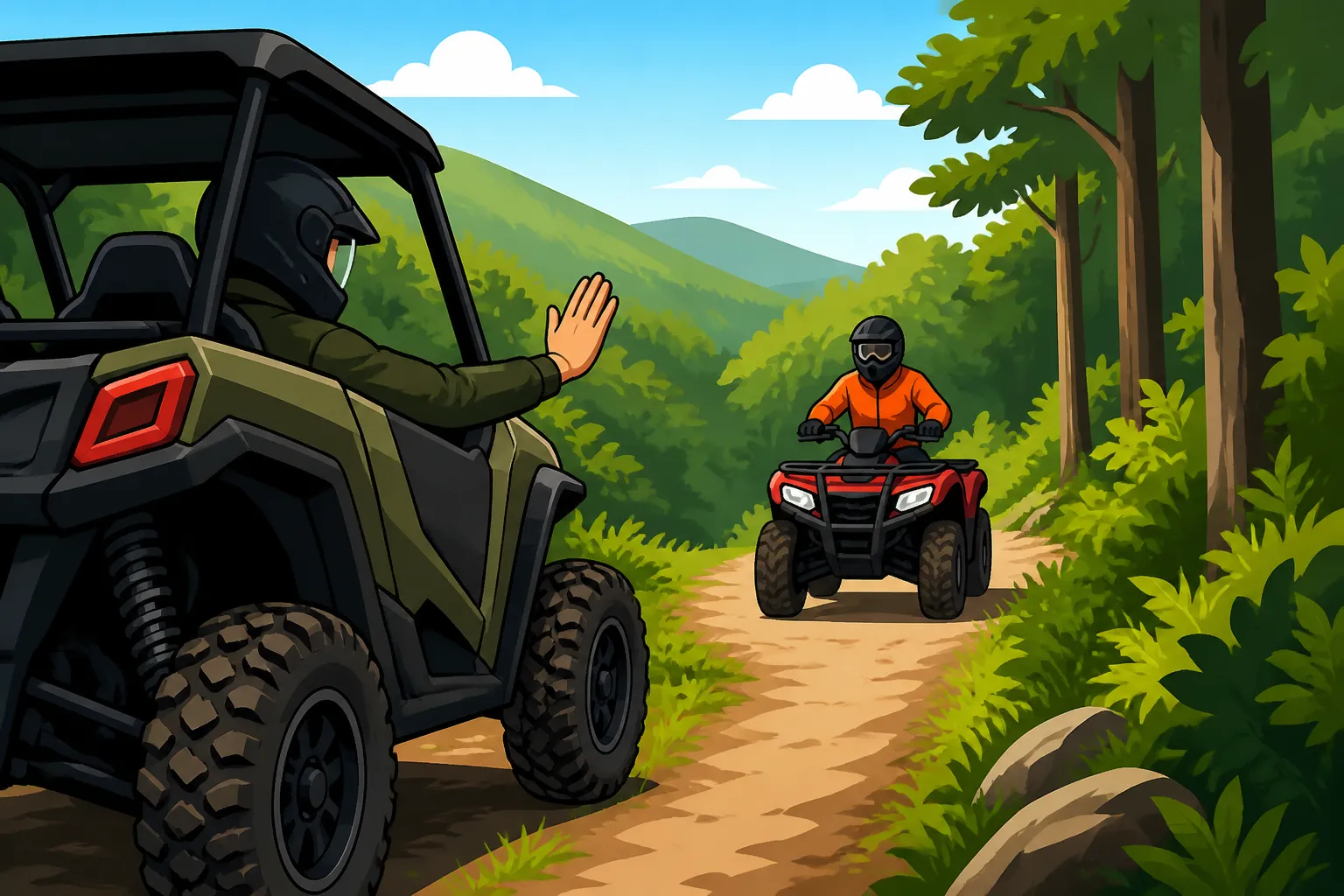
If you meet another ATV or UTV, stop where both people can see one another and speak plainly about who has room to move. Don’t assume the other rider can reverse safely, or that they have spotted you. A short exchange such as “I’ll back up to that wider spot” is often enough to prevent a tense guessing game.
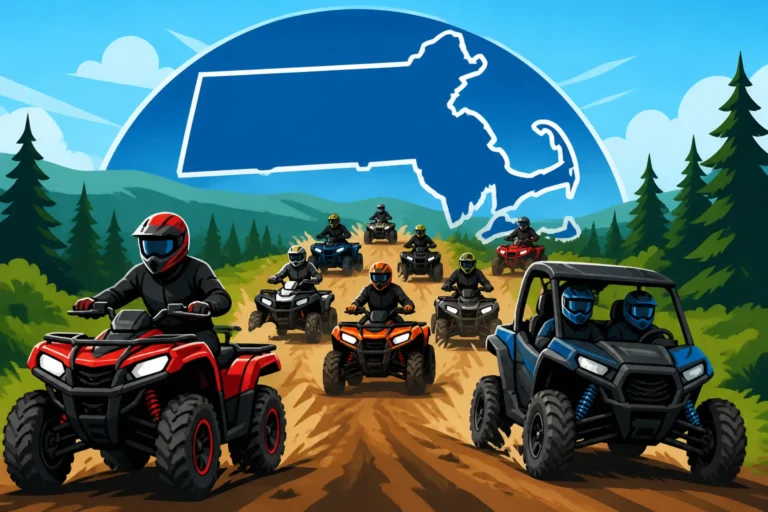
Dust and engine noise make communication harder. If you’re riding with a group, keep enough space between machines that the lead rider can stop without the others piling up behind them. Pass the message back through the group, and don’t let a machine at the rear keep rolling forward just because the riders up front have stopped.
Look for a safe place to pass, not just any gap
A good passing spot is wide enough for the machines and riders involved, firm underfoot, and clear of steep edges, loose rocks, deep mud, and hidden obstacles. Pull into an existing turnout or durable open area if one is available. Avoid squeezing against a tree, dropping a tire into a rut, or putting a machine where it could slide toward another person.
If no safe pullout is immediately available, one rider may need to reverse slowly to a wider section. Agree on the plan first. Use a spotter if visibility is limited, move at walking pace, and stop if the person guiding you can’t be seen or heard. A UTV may need more room to turn or back up than an ATV; don’t assume a maneuver that works for one will work for the other.
The key is not to create a new passing lane by driving around brush or over the edge of the trail. That can damage vegetation, worsen erosion, and make the trail even wider for the next group. If the only possible maneuver feels unsafe, pause and work out another option rather than forcing a pass.
Use courtesy rules without confusing them with trail law
Yielding etiquette helps people share space, but courtesy conventions aren’t a substitute for posted rules, land-manager requirements, or directions from an official. Trail access and permitted uses can vary by location. Before riding, review the rules for the specific area and follow signs on the ground. Massachusetts Trail Etiquette Locals Expect offers more context on considerate riding habits.
On a shared trail, slow down for hikers and give them room to choose a comfortable place to stand. Don’t crowd people from behind or expect them to step into brush. With horses, be especially patient: stop at a safe distance, speak so the horse and rider know you’re there, and follow the rider’s directions. Sudden revving or a fast pass can frighten an animal. For additional horse-specific guidance, see Meeting Horses on an October Mountain Fire Road. You can also review Sharing a State Forest Trail With Hikers.
| Trail encounter | A considerate response | Avoid |
|---|---|---|
| Another ATV or UTV | Stop, communicate, and agree on a safe passing spot | Assuming the other rider will reverse |
| Hikers | Slow well ahead and give them room to move comfortably | Rushing past or making them step into brush |
| Horse and rider | Stop at a safe distance, speak calmly, and follow directions | Revving, approaching quickly, or passing without warning |
| Group of riders | Keep spacing, relay the stop signal, and pass one machine at a time | Letting the group bunch up in a blind spot |
| Machine that cannot turn around easily | Find a wider section and use a spotter if needed | Forcing a tight turn or backing blindly |
What to do in common passing situations
When two machines meet head-on
Stop before the narrowest point if you can. If one machine is already close to a safe pullout, it may be simplest for that rider to use it. Make the decision together rather than relying on an automatic rule about which direction a machine should move. The right choice depends on the surface, slope, visibility, and each machine’s ability to maneuver.
If one rider backs up, the other should remain stopped and give them space. Use short, clear directions and avoid walking directly behind a reversing vehicle. On a steep, loose, or off-camber section, don’t pressure anyone to back down a slope if they’re uncomfortable. Find a safer place to coordinate the move.
For a group, avoid sending every machine through the gap at once. Let one rider pass, confirm there’s room, then continue with enough spacing to prevent a pileup. If you’re the lead rider, make sure the last person in your group knows when the trail is clear before they move.
When the trail is too narrow for your vehicle
A wide UTV can be a poor fit for a tight trail even when the route appears passable at first. If branches, rocks, or a narrow bridge leave too little room for a safe encounter, don’t force your way through. Back out to a suitable turnaround or choose another permitted route. Check the specific vehicle restrictions and trail information before setting out; Massachusetts Trail Difficulty Ratings can help you think about whether a route matches your riding ability and equipment.
Planning ahead matters especially when several vehicles are traveling together. Compare the route with the width and turning needs of the largest machine in the group, not just the smallest ATV. A map app such as onX Offroad can help you review a planned route, but it should be treated as a planning aid—not a replacement for official access information or signs at the trail.
If a trail becomes narrower or rougher than expected, stop and reassess rather than continuing because you’ve already come this far. A short detour or an early turnaround is frustrating, but it’s usually better than damaging the trail, getting stuck in a blind corner, or blocking access for other users.
When you meet a horse, hiker, or larger group
The safest approach is to make your presence known without startling anyone. Reduce speed, stop well before you reach them, and wait for a clear signal about how they’d like you to proceed. Keep your machine steady and avoid repeated throttle blips. If the trail is steep or visibility is poor, remain stopped until there is enough space to pass safely.
With a group of hikers, wait until the whole group has noticed you and can move together if they choose. Passing one person and then accelerating toward the rest can catch them off guard. For a horse, give the rider time to settle the animal and direct the encounter. If they ask you to wait, do so patiently.
A small courtesy can prevent a big problem: acknowledge the other user, keep a calm distance, and don’t treat a shared trail as a race course. If you’re unsure whether the trail allows a particular use, stop and check the local rules rather than debating it in the middle of a narrow passage.
Plan ahead to avoid trail conflicts
Check access, conditions, and signs before you unload
A route that appears on a map may have seasonal limits, temporary closures, or restrictions on vehicle type. Review current information from the relevant land manager before making the drive, and read posted signs at the trailhead. Massachusetts ATV Trails: Three Berkshire Forests is a useful starting point for understanding the region’s designated riding areas, while Massachusetts Trail Conditions Before You Tow can help you plan before hauling your machine.
onX Offroad can be useful for previewing a route and keeping track of where you are, especially when trail junctions are confusing. Still, a digital map can’t tell you that a sign has been changed, a route is closed, or a local restriction applies. Follow posted directions and the land manager’s rules even if an app shows a line continuing ahead. If you’re uncertain, turn around or contact the relevant office before riding.
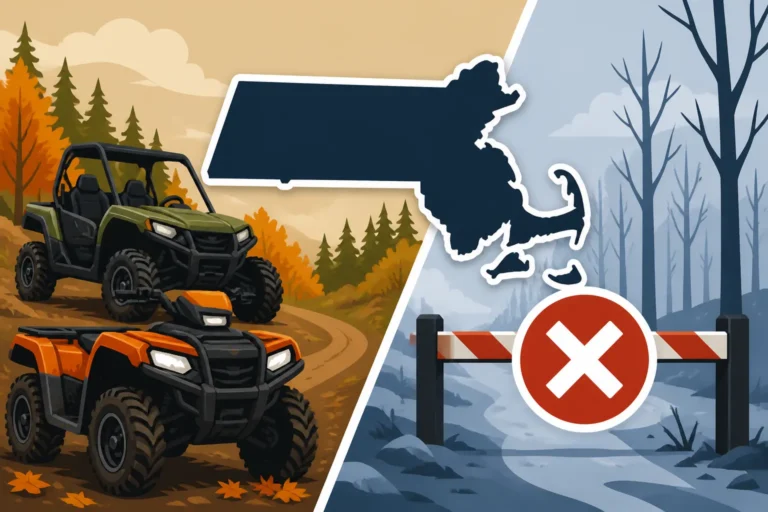
Pay attention to weather, too. Heavy rain can make a narrow trail slick, wash out a shoulder, or turn a passing spot into a muddy trap. A route that felt manageable in dry conditions may be unsafe after a storm. Avoid riding around closures or barriers; they may be protecting a damaged section or limiting access for a reason. See Massachusetts Trail Closures After a Storm for more on why conditions can change.
Ride in a way that leaves room for the next person
Keep your machine on the established trail and use existing pullouts instead of making your own. Don’t park around a blind bend, block a junction, or leave a vehicle in a place where other riders can’t see it in time to stop. If you need to wait for your group, choose a wide, visible location away from the main travel line.
When you use onX Offroad or another navigation tool, check your position before an intersection rather than stopping suddenly at the junction. If you need to consult a map, pull fully out of the way where it’s safe. A rider who stops in a blind spot to look at a phone can create the same hazard as a fast rider who doesn’t slow down.
Respect posted boundaries and nearby land. A trail edge isn’t extra passing space if using it means crossing into vegetation, a closed route, or private property. Reading Posted Land Signs in the Berkshires can help riders think through what a sign means before they continue. If an officer or land manager gives directions, follow them and ask questions once you’re safely out of the way. What an Environmental Police Officer Checks at a Trailhead provides more background on trailhead checks.
A simple routine for narrow-trail encounters
Before each ride, agree on a few group habits: who leads, how riders will signal a stop, and how the group will respond if it meets another trail user. Keep enough distance to stop without hitting the machine ahead. Make sure everyone knows not to leave the established trail just to get around a blockage.
When you see someone approaching, slow down early, stop where you can both be seen, and communicate. Pick a durable passing spot or reverse carefully to one. Give hikers and horses extra time and space, and don’t let impatience turn a manageable encounter into an unsafe one.
If you can’t pass without forcing a machine, damaging the trail, or putting someone at risk, wait or turn around. A careful retreat may feel inconvenient, especially after a long tow into the Berkshires, but it’s a far better outcome than a collision or a damaged trail. Respectful yielding keeps the route safer and more enjoyable for everyone who uses it.
Disclaimer
This article is for general informational purposes only and does not constitute professional advice. Laws, prices and regulations vary by location and change over time. Consult a qualified professional for guidance on your specific situation.