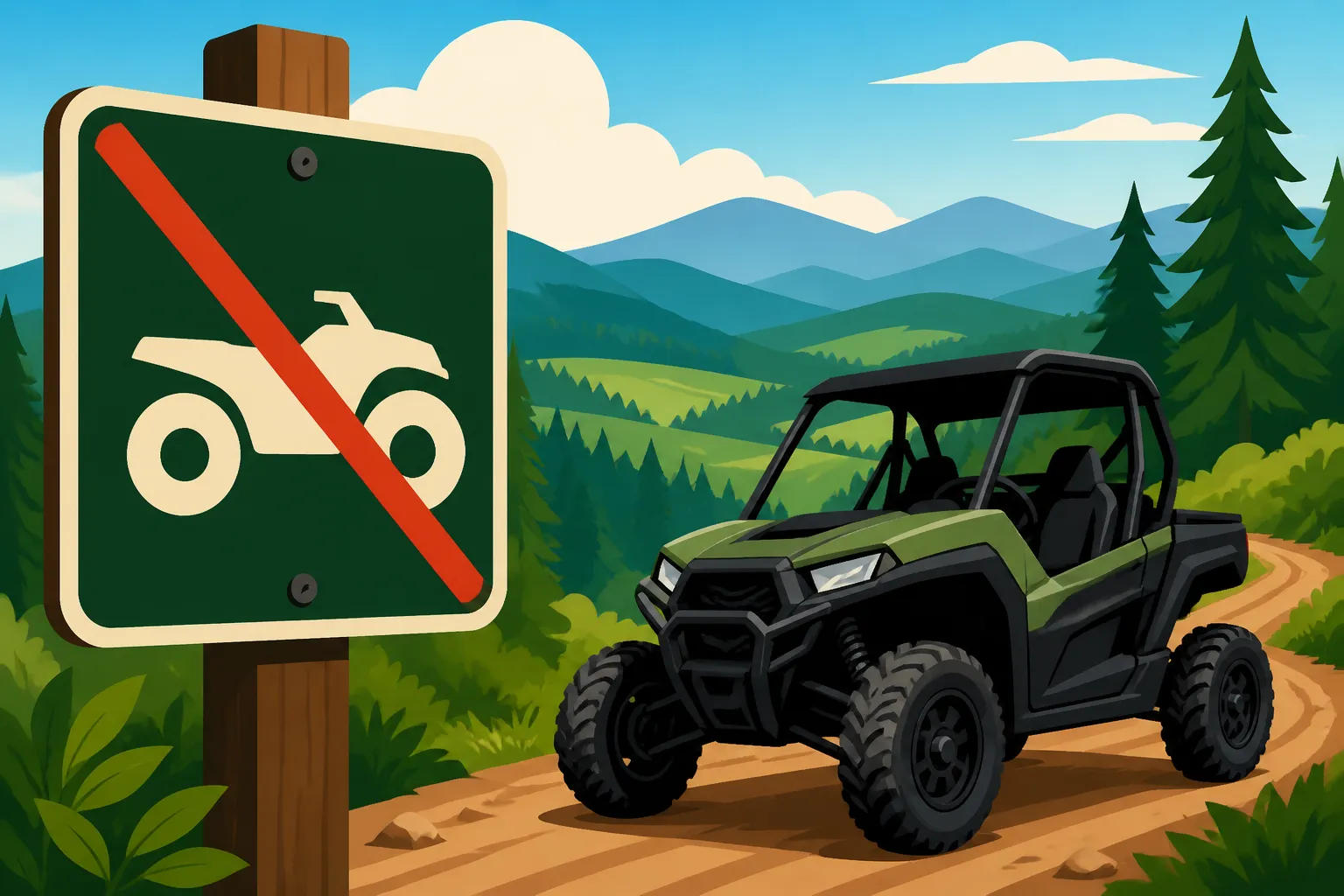
Reading Posted Land Signs in the Berkshires
There’s nothing quite like the allure of the Massachusetts wilderness, especially the stunning landscapes of the Berkshires, calling to us with the promise of adventure on our ATVs and UTVs. Yet, a common frustration many riders face is encountering a "Posted Land" sign, turning what should be a carefree ride into a moment of uncertainty and anxiety. This guide is all about helping you understand what those signs mean for your off-road adventures, how to interpret them, and most importantly, how to ensure you're always riding legally and respectfully in the Bay State.
The Absolute Truth of Posted Land in Massachusetts
Let's get one thing straight right from the start: "Posted Land" in Massachusetts is private property, full stop. It doesn't matter if it looks like an abandoned logging road, a forgotten dirt track, or just a wide-open field that would make for an epic ride. If there's a sign, or even if there isn't and it's clearly not public access, it's private. This can be a tough pill to swallow, especially when legal riding areas feel few and far between, but understanding this fundamental truth is the first step toward responsible riding.
The laws governing trespassing are quite clear in Massachusetts, largely falling under Chapter 266 of the General Laws. While not specifically written for OHVs, these laws mean that if you enter or remain on private land without the express permission of the owner, you are trespassing. For us riders, this isn't just a minor inconvenience; it carries real consequences. Many landowners in the Berkshires, and indeed across the state, have a deep connection to their land, and unauthorized vehicle traffic can cause damage, disturb wildlife, and frankly, erode trust within the community. What might seem like a harmless detour to you could be a critical habitat for animals, a carefully managed woodlot, or simply a private sanctuary for the owner. It’s why you often hear pleas for riders to seek [Massachusetts Landowner Permission in Writing] before venturing onto private parcels.
Why Landowners Post Their Property
You might wonder why so much land seems to be posted. Is it just to keep us out? Often, it's more complex than that. Landowners post their property for a variety of reasons, many of which are practical and protective. Sometimes it’s about liability; they worry about someone getting hurt on their land and suing them. Other times, it's to prevent damage from unauthorized vehicles, illegal dumping, or nuisance behaviors. They might be managing timber, cultivating crops, or simply want privacy for their family.
We've all seen areas that look enticing, maybe a little path leading off into a beautiful stand of pines. But that path is somebody's property, and respecting that boundary is paramount. The dense patchwork of private and public land, especially in more rural areas of the Berkshires, makes it incredibly challenging for riders to discern what's open and what's not. This is why official trails in places like [Massachusetts ATV Trails: Three Berkshire Forests] are so crucial – they offer clear, legal pathways for enjoyment without the constant worry of inadvertently crossing into forbidden territory.
Decoding the Language of Posted Signs
Not all posted signs are created equal, though for the most part, they all convey a similar message: stay out. However, understanding the nuances can sometimes give you a better idea of a landowner's intent, even if the legal implication remains the same. Being able to read these signs quickly and accurately is a vital skill for any responsible OHV operator.
Common Signs and Their Meanings
Let's look at some of the signs you're most likely to encounter while exploring Massachusetts:
| Sign Text | Common Interpretation for OHV Riders |
|---|---|
| "No Trespassing" | This is the clearest and most unambiguous sign. It means absolutely no entry without explicit permission. Riding your ATV or UTV past this sign is a direct violation of Massachusetts law and will likely result in penalties if caught. |
| "Private Property" | Similar to "No Trespassing," this sign indicates the land is not public. While it might sound slightly less aggressive, the legal implications are the same: you need permission to enter. |
| "No Motorized Vehicles" | This sign directly addresses our kind of activity. It often appears on shared-use trails or areas where hiking/biking is allowed but motorized use is explicitly prohibited, even if the land isn't entirely private. |
| "No Hunting" / "No Fishing" | These signs typically mean no access for those specific activities. However, it's a strong indicator that the land is private and not open for general recreational use, especially with vehicles, unless otherwise stated. Assume no OHV access. |
| "Posted: Keep Out" | Another unequivocal command. This leaves no room for doubt – the owner wants no one on their land. |
| "Posted: 150 Feet from Dwelling" | This specific type of posting relates to [Massachusetts's 150-Foot Dwelling Rule], which prohibits riding within 150 feet of any dwelling without written permission. A sign like this reinforces the owner's desire for quiet and privacy. |
| "Hunting By Permission Only" | While it grants hunting by permission, it does not imply permission for motorized vehicles. Always clarify directly with the landowner if you believe OHV use is included. |
It’s crucial to remember that even if a sign looks old, faded, or half-hidden by vegetation, it’s still legally binding. Landowners aren’t required to maintain pristine signage, just to have it present. Moreover, homemade signs or even painted trees can serve as markers of private property in some areas. The essence of it is that if you see any indicator that the land might be private, treat it as such.
Understanding the 150-Foot Rule
The [Massachusetts Riding Within Sight of a House] rule and the "150-Foot Dwelling Rule" are critical pieces of legislation that riders must respect. Even if you have permission to ride on a large parcel of private land, you still cannot operate your OHV within 150 feet of a dwelling (house, camp, etc.) without specific written consent for that proximity. Landowners often post signs explicitly mentioning this distance to remind riders of the law and their right to privacy and peace. Ignoring these signs or the underlying law can quickly lead to neighbor disputes and involvement from local authorities, further straining relations between riders and residents.
Navigating Posted Land While Riding
So, you're out on the trails in the Berkshires, enjoying the crisp air and the rumble of your machine, and then you see it: a "No Trespassing" sign. What do you do? The most important thing is to have a plan and the right mindset before you even hit the trails.
The Golden Rule: When in Doubt, Turn Around
This is probably the single most important piece of advice for riding in Massachusetts. If you come across a sign, or even if the terrain just feels like private property and you can't confirm it's public access, do not proceed. Turn your machine around, find an alternative route, or simply head back the way you came. It’s never worth the risk of a fine, vehicle impoundment, or a confrontation with a landowner.
A significant part of responsible riding is diligent pre-ride planning. Before you even load your machine onto the trailer, study maps – both digital and physical. The Department of Conservation and Recreation (DCR) offers maps of state forests and parks where OHV riding is permitted. While these maps aren't foolproof for every private boundary, they give you a clear picture of authorized public riding areas. Tools that assist in navigation, perhaps robust GPS mounts or enhanced lighting systems from SuperATV, can be invaluable. They help you stay aware of your surroundings, especially if you're exploring new territory.
Seeking Permission: The Right Way
We've talked about [Getting Written Permission From a Berkshire Woodlot Owner], and it's truly the only way to legally ride on private land. But how do you actually do it? It's not always easy.
- Identify the Owner: This can be done through town assessor's offices, which are often public record. You can look up property owners by address or parcel ID.
- Make a Respectful Approach: Once you know who owns the land, a polite letter or phone call is usually the best approach. Explain who you are, what kind of machine you ride, why you're interested in their land, and that you understand and will respect their rules. Offer to provide proof of insurance or demonstrate safe riding practices.
- Be Prepared for "No": Many landowners will simply say no, and you must respect that. Their land, their rules. Don't argue or try to persuade them. A single negative encounter can sour future opportunities for the entire riding community.
- Get It in Writing: If you do receive permission, ensure you get it in writing. This protects both you and the landowner. It should detail exactly where and when you're allowed to ride, any specific conditions (e.g., no riding after dark, stick to existing trails), and who is covered by the permission. Always carry this document with you when riding on their property. This links back to [Written Permission from a Bay State Owner] and why it's so vital.
Practical Tips for Identifying Boundaries
Beyond explicit signs, there are other cues that indicate private property:
- Fences and Stone Walls: These are classic boundary markers throughout New England. Even if they're old and partially collapsed, they usually denote a property line.
- Property Line Blazes: Trees might be marked with paint (often red or blue) or old tags, indicating a property line. These are often used by surveyors.
- Changes in Land Use: A sudden change from dense forest to a cultivated field, or from wilderness to a neatly mowed lawn, is a strong signal you're entering private land.
- No Trespassing Paint: Sometimes, landowners use purple paint on trees or fence posts to mark property lines where entry is prohibited. While not universally recognized as a legal "no trespassing" sign like a physical sign, it's a strong indicator of private ownership and intent.
Remember, your best defense against inadvertently trespassing is a good offense in planning and awareness. Keeping your machine well-maintained and equipped, perhaps with durable aftermarket accessories from SuperATV that enhance visibility or protection, also helps you focus on safe and legal riding, rather than worrying about equipment failure in unknown territory.
The Serious Ramifications of Ignoring Posted Signs
It’s tempting to think that a quick hop onto a private trail won't hurt anyone, or that you won't get caught. But the reality in Massachusetts is that ignoring posted signs carries serious consequences, not just for you individually, but for the entire OHV community. The Environmental Police, who register our machines and enforce our laws, are serious about protecting private property and natural resources.
Legal and Financial Penalties
Riding on posted land without permission is trespassing, plain and simple. If an Environmental Police Officer catches you, the penalties can range from significant fines to the impoundment of your ATV or UTV. These fines can quickly add up, and getting your machine back from impound can involve towing fees, storage costs, and a lengthy administrative process. This is outlined clearly in Massachusetts law, and officers are within their rights to enforce it. For instance, [Massachusetts Penalties for Illegal Riding] can be quite steep, and there's no guarantee of a lenient warning.
Furthermore, if you cause any damage to the property – whether it’s rutting a field, damaging a fence, or disturbing sensitive areas – you could be held civilly liable for those damages, adding another layer of financial burden. In extreme cases, repeated offenses could even lead to your machine's registration being revoked. While [Massachusetts Has No Insurance Mandate] for ATVs, having personal liability coverage might protect you in civil lawsuits, but it won't prevent the legal consequences of trespassing.
Eroding Trust and Losing Access
Beyond individual penalties, every instance of illegal riding contributes to a larger problem: the erosion of trust between landowners, the public, and the OHV community. When landowners experience damage or disrespectful behavior, they become less likely to grant permission, and more likely to advocate for stricter laws or even the closure of existing legal trails. This directly impacts the future of our sport in Massachusetts.
Think about it: if a landowner sees OHV tracks on their property after explicitly posting it, their immediate reaction isn't usually "Oh, they just made a mistake." It's often "They deliberately disregarded my wishes and the law." This perception can spread, leading to a broader negative view of all ATV and UTV riders, even the responsible ones. This is why respecting posted signs is not just about following the law; it's about protecting our collective privilege to ride. Every responsible rider who respects private property is an ambassador for the sport, helping to ensure that we retain and potentially expand access to trails.
Disclaimer
This article is for general informational purposes only and does not constitute professional advice. Laws, prices and regulations vary by location and change over time. Consult a qualified professional for guidance on your specific situation.