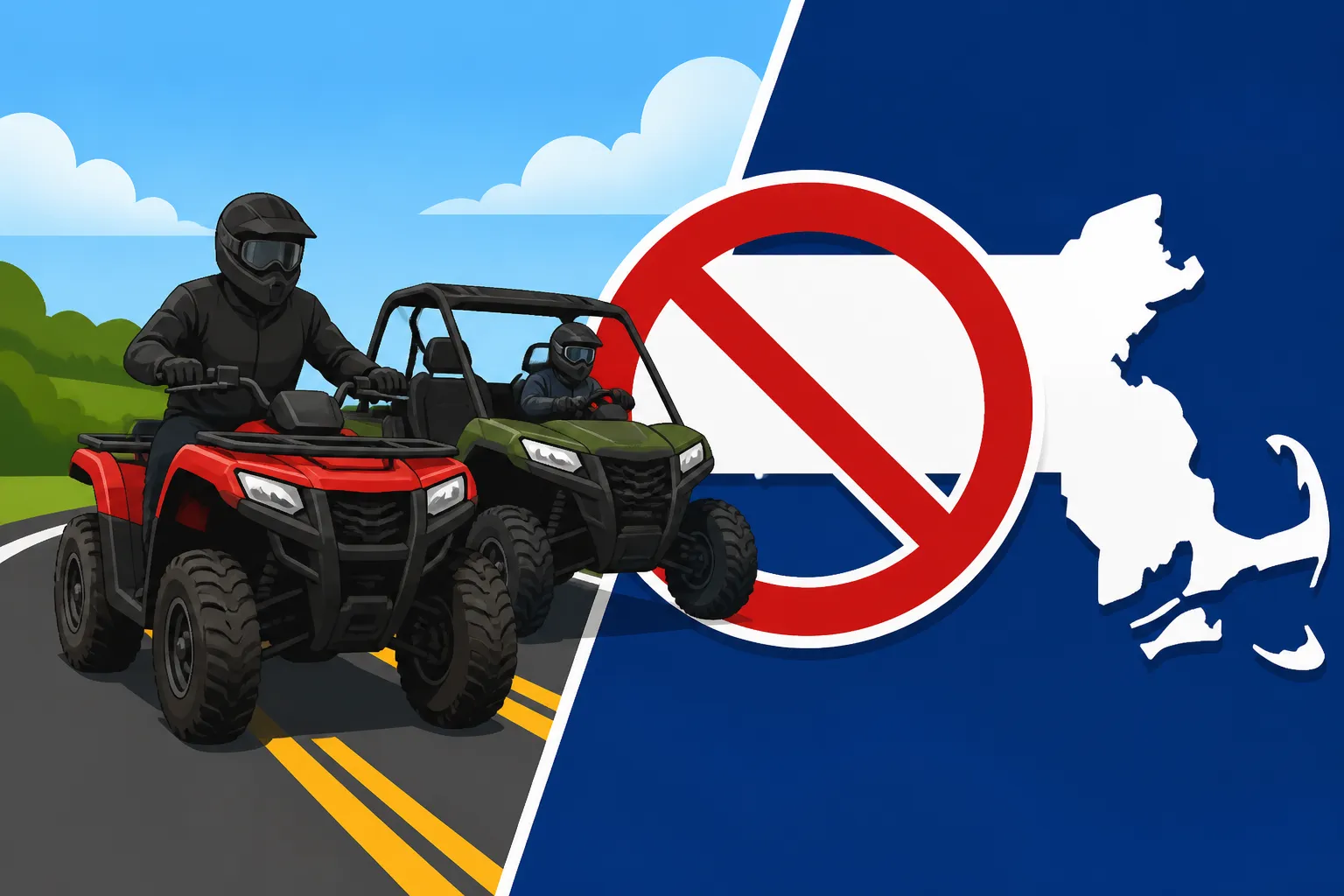
Massachusetts Bans Riding on Public Ways
It's incredibly frustrating when you invest in a powerful ATV or UTV, dreaming of exploring the open road, only to find out that a fundamental rule in Massachusetts puts a hard stop to those plans. Many riders, especially those new to the Bay State or coming from other areas, are often surprised and disappointed to learn that, for the most part, you absolutely cannot ride your off-highway vehicle (OHV) on public roads or ways here. This guide will walk you through exactly why this ban exists, what "public way" truly means, and where you can legally and safely enjoy your machine in Massachusetts, helping you avoid costly mistakes and ensuring you ride within the bounds of the law.
The Core Rule: Why Massachusetts Bans Riding on Public Ways
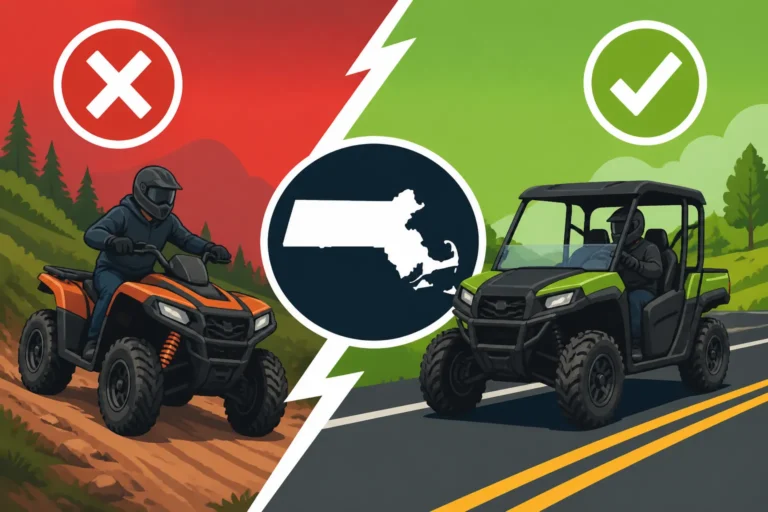
Let's get right to the heart of the matter: Massachusetts has a very clear and strict stance against operating ATVs and UTVs on public roads. This isn't just a suggestion; it's a fundamental aspect of the state's OHV laws, designed to keep everyone safe. It can feel restrictive, especially if you’re used to different rules in other states, but understanding the "why" can help frame your riding experiences in Massachusetts.
Understanding Chapter 90B: The Foundation of OHV Law
The legal framework governing ATVs, UTVs, and snowmobiles in Massachusetts is primarily found within Chapter 90B of the Massachusetts General Laws. This isn't some obscure, rarely enforced statute; it's the very bedrock upon which all OHV regulations are built. When you hear about registration requirements, age restrictions, or safety courses, they all stem from this chapter. And critically, Chapter 90B explicitly defines where these machines are allowed to operate, and public roads are overwhelmingly excluded.
The intent of Chapter 90B is clear: to regulate the use of these powerful machines in a way that minimizes conflict with other road users, protects natural resources, and ensures the safety of riders themselves. It distinguishes off-highway vehicles as fundamentally different from street-legal automobiles, requiring separate rules for their operation. This means that unlike a car or motorcycle, your ATV or UTV isn't built to meet the same safety standards for public road use, nor is it intended to share lanes with cars, trucks, and buses. The Environmental Police, who enforce these regulations, are very familiar with the nuances of Chapter 90B, so understanding its core principles is vital for any rider. [Massachusetts ATV Laws Under Chapter 90B] offers a deeper dive into the specifics.
What Constitutes a "Public Way" in Massachusetts?
This is where some confusion often arises. When the law talks about "public ways," it's not just referring to major highways or busy city streets. In Massachusetts, the definition is broad and encompasses a surprising number of routes you might think are fair game. A public way generally includes any street, road, highway, trail, or other path maintained by the state, a county, or a municipality, or that is open to the public for vehicular travel. This can include paved roads, dirt roads, gravel roads, and even certain paths or easements that are considered public access.
Think about it: even that quiet, unpaved back road that seems perfect for a casual ride might very well be classified as a public way if it’s maintained by the town or accessible to the public for general vehicle use. The key is its status as a publicly managed or accessible thoroughfare, regardless of its surface or traffic volume. This means that trying to sneak a ride on a "less-traveled" road could still land you in hot water. It's crucial not to assume a road is private just because it's unpaved or lightly used. When in doubt, it’s always best to assume a road is public and therefore off-limits.
The Rationale Behind the Ban: Safety and Infrastructure
The primary reasons Massachusetts maintains such a firm ban on OHVs on public ways boil down to two critical factors: safety and infrastructure. From a safety perspective, ATVs and UTVs are designed for off-road environments. They handle differently than traditional vehicles, often have higher centers of gravity, different braking capabilities, and lack standard safety features like turn signals, rearview mirrors, or even headlights and taillights that meet road-specific illumination standards. Mixing these machines with cars, trucks, and pedestrians on shared public roads dramatically increases the risk of serious accidents.
Furthermore, these machines can be quite destructive to road surfaces and shoulders, especially unpaved ones not designed for their specific type of tire and weight distribution. The noise levels can also be a significant nuisance to residents living along public ways. So, while you might see riders on public roads in other parts of the country, Massachusetts has made a clear policy decision that the risks outweigh any perceived benefits. The ban is a proactive measure to prevent accidents, reduce property damage, and maintain peace within communities.
Navigating the Grey Areas: Limited Exceptions and Misconceptions
While the general rule is "no riding on public ways," there are specific, limited situations that sometimes create confusion or lead riders to believe they have more leeway than they actually do. It's vital to understand these nuances to avoid unintended violations.
Crossing a Public Way: Strict Rules for Connecting Trails
This is perhaps the most common point of misunderstanding. While you cannot ride down a public way, Massachusetts law does allow for a very specific, limited exception for crossing one. This is typically permitted when you're moving from one section of a legal trail to another, and a public road lies in between. However, this isn't a free-for-all. The rules for crossing are extremely strict and must be followed precisely.
First, you must come to a complete stop before entering the public way. You must yield to all vehicular and pedestrian traffic. The crossing must be made at approximately a 90-degree angle to the public way, meaning you go straight across, not diagonally. You must cross in the shortest, most direct manner possible. There's no stopping on the road, no riding along the shoulder, and absolutely no meandering. This is a quick, purposeful traverse from one side to the other. And critically, if you are under 16 and a half years old, you cannot cross any public way unless you possess a valid motor vehicle operator's license and have completed a Massachusetts Environmental Police-approved OHV safety course. [Crossing a Public Way in Massachusetts] provides all the details you need to ensure you cross legally and safely.
The Myth of "Street Legal" Conversions in Massachusetts
Many riders come to Massachusetts thinking they can simply add a few accessories – turn signals, mirrors, a horn – and transform their ATV or UTV into a "street legal" vehicle. This is a pervasive myth, and unfortunately, it's not how it works in the Bay State. There is currently no recognized pathway in Massachusetts to make an ATV or UTV street legal for general public road use. Unlike some other states that might allow for specific modifications and inspections to grant street-legal status, Massachusetts does not.
Even if you outfit your machine with a full suite of aftermarket parts, perhaps from a reputable company like SuperATV, to enhance its performance or add utility features for the trails, these additions do not change its classification in the eyes of Massachusetts law. The state's Department of Transportation (MassDOT) and the Environmental Police do not have a process to inspect or certify these machines as street legal. Any ATV or UTV, regardless of its modifications, remains an off-highway vehicle subject to the Chapter 90B restrictions on public ways. Investing in "street legal" conversion kits will only make your machine more capable off-road; it won't allow you to legally ride it on public roads here.
Special Circumstances: Emergency, Agricultural, or Municipal Use
While the general ban is firm, there are very narrow, specific exceptions for certain types of operations. These are not for recreational riders and require official authorization or specific job duties. For instance, ATVs and UTVs are sometimes used by law enforcement, fire departments, or emergency medical services for official duties, especially in remote areas or during search and rescue operations where traditional vehicles cannot go. They might briefly operate on public ways when responding to an emergency or for transport to an incident site.
Similarly, farmers may operate ATVs or UTVs on public ways for agricultural purposes, such as moving between fields, but this is typically limited to specific routes and requires careful consideration of local ordinances. Municipal workers might also use these machines for specific tasks like park maintenance or utility work. However, these are highly regulated exceptions tied to essential services or agricultural operations, not general recreational riding. For the average rider, these exceptions simply do not apply, and attempting to claim them without legitimate cause will not hold up.
Consequences of Illegal Road Riding
Ignorance of the law is never an excuse, and riding your ATV or UTV illegally on public ways in Massachusetts can lead to a host of unpleasant and costly consequences. The Environmental Police take these violations seriously, and the penalties can extend far beyond a simple ticket.
Fines and Penalties for Violations
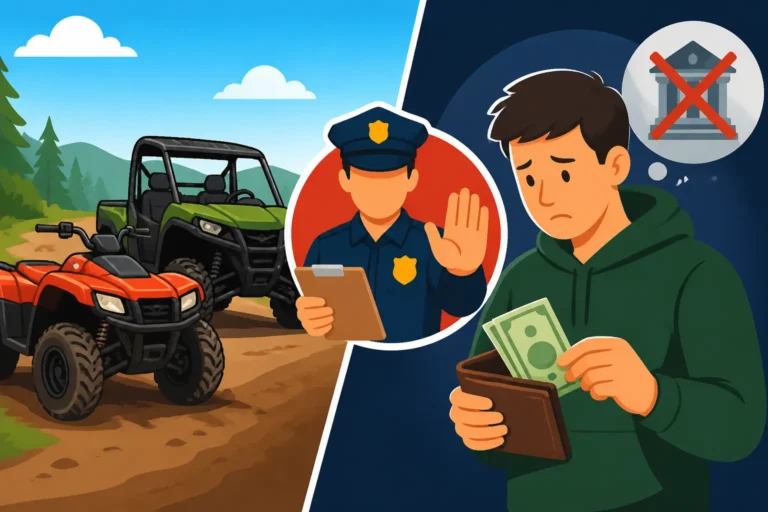
If you're caught riding your OHV on a public way where it's not explicitly permitted (such as during a legal crossing), you're likely to face significant fines. These aren't just minor slaps on the wrist; they can quickly add up, draining your wallet and putting a damper on your riding enjoyment. A single violation can easily cost you hundreds of dollars. These fines can escalate for repeat offenders or if other violations are tacked on, such as operating without proper registration or allowing an underage, uncertified rider to operate.
For example, a first offense might come with a specific fine, but subsequent offenses could see that fine increase substantially. An Environmental Police Officer (EPO) also has the discretion to issue citations for other related offenses, such as reckless operation, disturbing the peace, or even trespassing if you're found leaving a public way onto private land without permission. It's a risk that simply isn't worth taking. [Massachusetts Penalties for Illegal Riding] details the various enforcement actions you could face.
Machine Seizure and Other Enforcement Actions
Beyond monetary fines, one of the most severe consequences of illegal OHV operation on public ways in Massachusetts is the potential for your machine to be seized. Yes, you read that right – the Environmental Police have the authority to confiscate your ATV or UTV on the spot if you're found violating serious provisions of Chapter 90B, especially repeated offenses or egregious violations like operating on a public way. Getting your machine back from seizure can be a lengthy, expensive, and often frustrating process, involving impound fees, storage costs, and sometimes even court proceedings.
In some cases, the machine might even be subject to forfeiture, meaning you could permanently lose ownership. This is a stark reminder of how seriously Massachusetts treats illegal OHV activity. Imagine showing up to ride, having your machine taken away, and then facing the monumental task of recovering it, all while dealing with fines. It's a nightmare scenario that can easily be avoided by sticking to legal riding areas.
Impact on Insurance and Liability
While Massachusetts does not mandate insurance for ATVs or UTVs used off-road, if you do carry an optional policy, riding illegally on a public way can have serious repercussions. Most insurance policies have clauses that void coverage if the vehicle is being operated in an illegal manner or outside its intended use. This means if you have an accident while riding on a public way, your insurance company might refuse to cover the damages or liability. You would then be personally responsible for any medical bills, property damage, or legal fees that arise from the incident, which could easily run into tens or even hundreds of thousands of dollars.
Consider a scenario where you're illegally riding on a public road and swerve to avoid a pothole, hitting a parked car or even a pedestrian. Without insurance coverage, you're on the hook for everything. This financial risk alone should be enough to deter any thoughts of taking your OHV onto public ways. Even if you have comprehensive coverage for your machine from companies that offer it for off-road use, that coverage is designed for legal off-road riding, not for flouting the law on asphalt. This is a risk no responsible rider should take.
Where You Can Ride Your ATV or UTV in Massachusetts
With all the "don't do this" information, it's easy to get discouraged. But don't despair! Massachusetts actually offers fantastic opportunities for legal and exhilarating ATV and UTV riding. The key is knowing where to go and adhering to the specific regulations for those areas.
Designated State Forest Trails and Permitted Areas
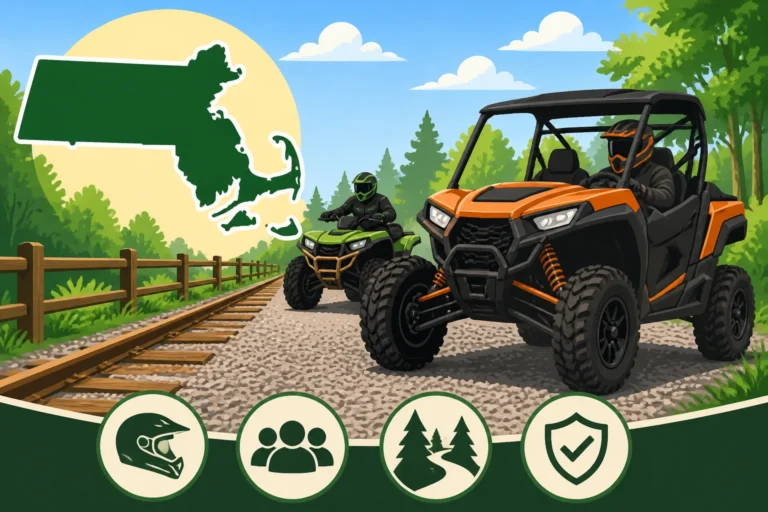
Massachusetts boasts several state forests that offer miles of designated trails specifically for ATVs and UTVs. These aren't hidden secrets; they are well-maintained, clearly marked trail systems managed by the Department of Conservation and Recreation (DCR). The primary riding areas in the state are located in the western part of Massachusetts, offering diverse terrain from wooded trails to challenging climbs.
For instance, places like [Beartown State Forest Riding in Massachusetts], [October Mountain State Forest Riding in Massachusetts], and [Pittsfield State Forest Riding in Massachusetts] are popular destinations, each offering a unique riding experience. These trails are generally open seasonally, typically from May through November, depending on weather and trail conditions. Before you head out, always check the DCR website or call the specific state forest office for the most up-to-date information on trail status, permits (some areas require a free day-use permit, like Tolland State Forest for street-legal bikes, though ATVs generally just need registration), and any temporary closures. Remember that even on these authorized trails, you must have your machine properly registered and carry your registration card, and youth riders must have their safety certificate. [Massachusetts ATV Trails: Three Berkshire Forests] delves into these locations in detail.
| Feature / Location | Beartown State Forest | October Mountain State Forest | Pittsfield State Forest |
|---|---|---|---|
| Location | Lee, Berkshire County | Washington, Berkshire County | Pittsfield, Berkshire County |
| Approx. Miles | 25 miles | 30 miles | 14 miles |
| Terrain | Varied, some rocky | Extensive, diverse | Hilly, wooded |
| Permits | State Registration | State Registration | State Registration |
| Best For | Intermediate riders | All skill levels | Shorter, challenging rides |
| Side-by-Sides | Yes, on designated trails | Yes, on designated trails | Yes, on designated trails |
Riding on Private Land with Permission
Another excellent avenue for legal riding is on private property, provided you have explicit, written permission from the landowner. This is a critical point: "written permission." A verbal okay, a nod, or an assumed invitation is not sufficient under Massachusetts law, especially if you happen to encounter an Environmental Police Officer. The written permission should clearly state the landowner's consent for you to ride your OHV on their specific property.
Riding on private land can open up a vast array of opportunities, from exploring personal woodlots to using a friend's expansive acreage. However, even on private land, you still must adhere to safety regulations, including age restrictions for riders and helmet laws. It's also important to be a good neighbor; be mindful of noise, dust, and don't trespass onto adjacent properties. Landowner relations are key to keeping these private riding opportunities open for everyone. [Massachusetts Landowner Permission in Writing] explains exactly what you need.
The Role of OHV Clubs and Sanctioned Events
For many passionate riders, joining a local OHV club is a fantastic way to find legal riding opportunities and connect with the community. These clubs often work closely with the DCR to maintain trails in state forests, and they frequently organize sanctioned rides and events on private land or within designated areas. These organized events offer a controlled and often safer environment to enjoy your machine.
Club activities might include poker runs, charity rides, or even competitive events, all conducted within the bounds of Massachusetts law. Participation in sanctioned events can sometimes have specific rules regarding age limits (especially for younger riders participating in races), safety gear, and event-specific permits, but these are always communicated clearly by the organizers. Being part of a club not only provides access to legal riding but also fosters a sense of camaraderie and shared responsibility for advocating for OHV access and responsible riding practices.
Essential Preparations for Responsible Riding
Before you even think about putting your key in the ignition, responsible OHV ownership in Massachusetts requires some upfront preparation. This isn't just about avoiding tickets; it's about ensuring your safety and the longevity of riding opportunities for everyone.
Registration and Decal Requirements for Massachusetts OHVs
Every ATV and UTV operated in Massachusetts, whether on state trails or private land, must be registered with the Massachusetts Environmental Police. This is a non-negotiable requirement. Unlike cars, these machines are not registered with the Registry of Motor Vehicles (RMV) but specifically with the Environmental Police, who oversee all OHV and snowmobile activities. The registration process involves submitting an application, proof of ownership (like a bill of sale or Manufacturer's Certificate of Origin for new machines), and paying the required fee.
Once registered, you'll receive a registration card and a decal that must be prominently displayed on your machine. The decal helps Environmental Police Officers quickly identify legally registered vehicles. Riding an unregistered OHV, even on private land, is a violation and can lead to fines. Make sure your registration is current and that your decals are properly affixed. [Massachusetts Requires Its Own Registration] and [Massachusetts Decal Placement Rules] offer more details on these vital steps.
Safety Certification and Age Restrictions
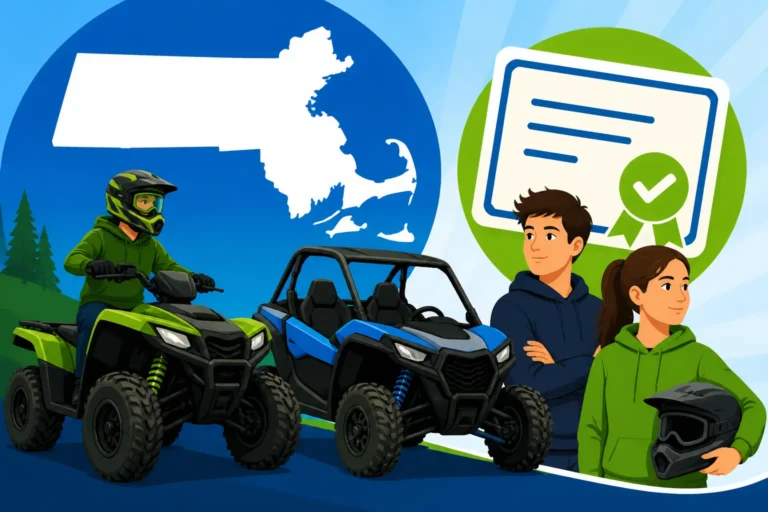
Massachusetts takes youth rider safety very seriously, and its laws are among the strictest in the nation. Anyone under the age of 18 operating an ATV or UTV on public land must possess a valid OHV safety certificate issued by the Massachusetts Environmental Police. This certificate proves the rider has completed an approved safety course, which includes both classroom instruction and a hands-on skills test.
Furthermore, there are strict age and engine size restrictions. For instance, riders under 14 years old are generally prohibited from operating ATVs, even on private land, except in specific sanctioned events. Riders between 14 and 16 years old have engine size limitations (typically under 90cc) and must be supervised. These rules are designed to protect young riders, who are statistically at higher risk of injury. Parents are often required to attend parts of the safety course with their younger children. It's crucial to understand and adhere to these regulations to ensure the safety of all riders and avoid significant penalties. [How to Get a Massachusetts Safety Certificate] and [Massachusetts ATV Age Requirements] are essential reading.
Required Equipment for Off-Road Use
Even though your ATV or UTV isn't going on public roads, it still needs certain equipment to be legally and safely operated in Massachusetts's off-road environments. A helmet is absolutely mandatory for all riders and passengers, regardless of age, whenever the machine is in operation. The helmet must be properly fitted and meet specific safety standards.
Beyond helmets, your machine itself must be equipped with functional brakes, a muffler that keeps noise within legal limits (no excessively loud aftermarket exhausts are permitted), and a spark arrester to prevent forest fires. If you plan to ride after sunset or before sunrise, your machine must also have a working headlight and taillight. These requirements are in place for both rider safety and environmental protection. While you might consider adding performance parts from companies like SuperATV to enhance your trail experience, always ensure any modifications comply with Massachusetts's equipment regulations and do not exceed sound limits. An Environmental Police Officer may conduct an [Massachusetts Equipment Checks by Officers] at a trailhead, so it's wise to ensure your machine is always compliant.
Disclaimer
This article is for general informational purposes only and does not constitute professional advice. Laws, prices and regulations vary by location and change over time. Consult a qualified professional for guidance on your specific situation.