Road Crossings Change at 16 and a Half
It can be incredibly confusing to understand where and how you can actually ride your ATV or UTV in Massachusetts, especially when it comes to crossing a public road. So many riders, and especially parents of young riders, worry about doing the right thing, only to find the rules feel like a tangled web. This guide will untangle the specific regulations surrounding road crossings, focusing on the critical age threshold of 16 and a half and what it means for your ride.
The Baseline: Why ATVs Aren't Road Machines in Massachusetts
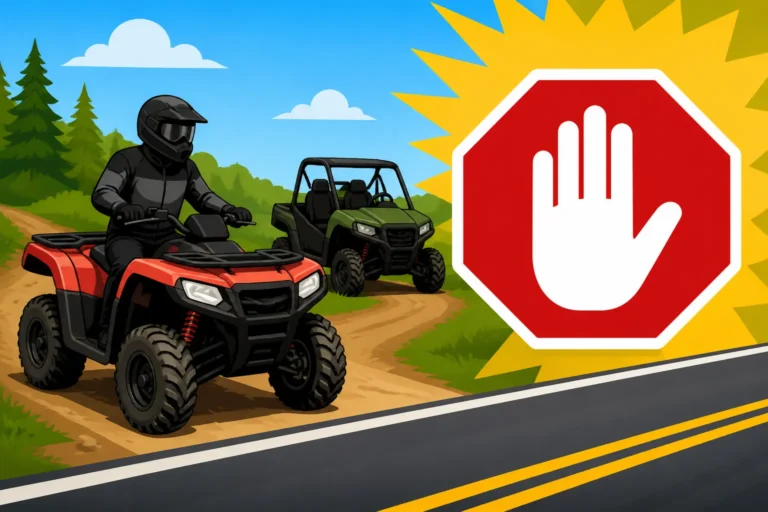
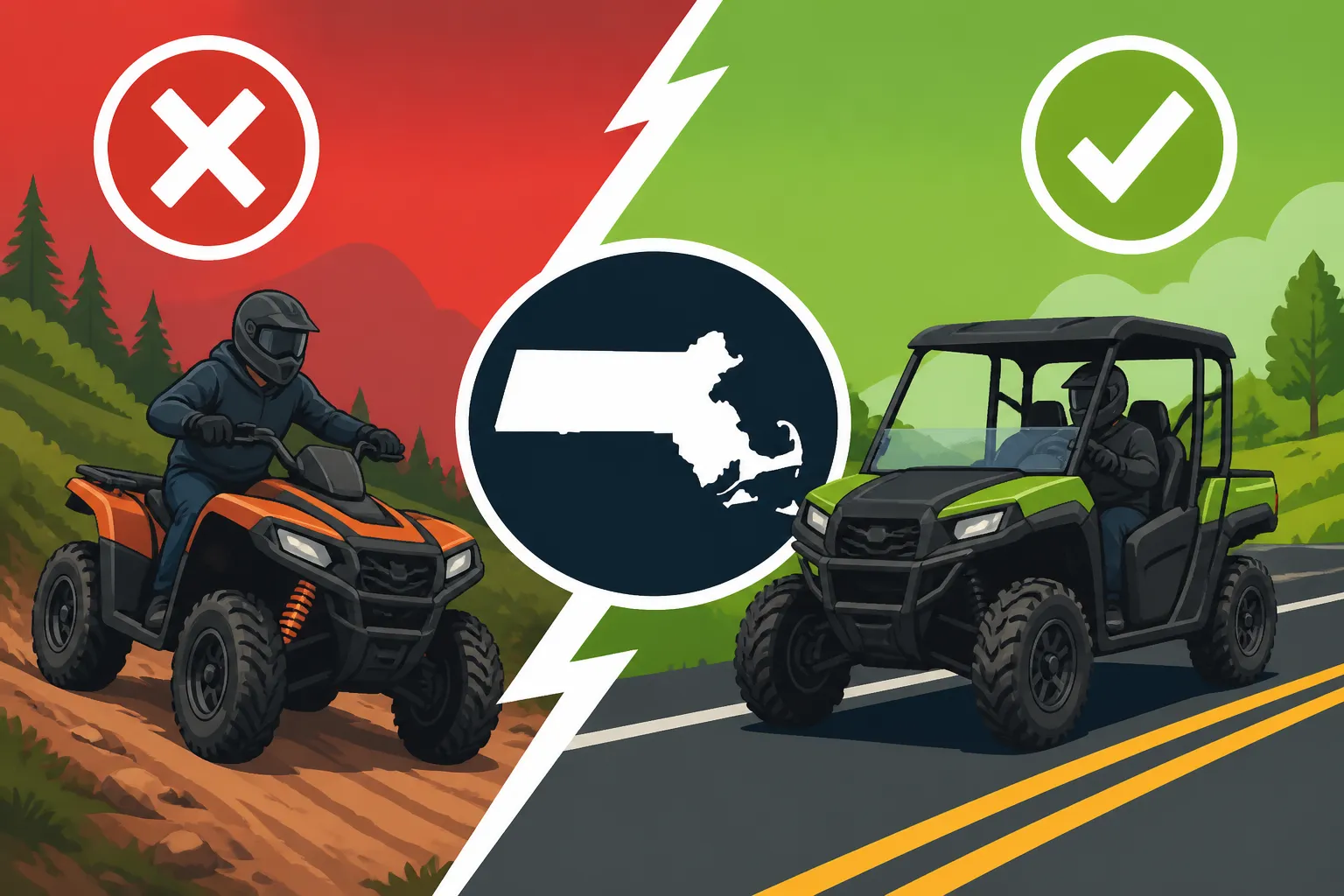
Let's start with the fundamental truth that often trips up new riders or those visiting from other states: off-highway vehicles (OHVs), which include ATVs and UTVs, are generally not street legal in the Bay State. You can't just slap a license plate on your quad and head down Route 9. This isn't like some other states where certain modifications can grant you road-legal status for limited use. In Massachusetts, the law is pretty clear: these machines are designed for off-road environments, and that's where they belong. Trying to treat an ATV like a car or motorcycle on public roads will quickly land you in hot water with law enforcement.
The Core Prohibition: No Street Legal Path
The reason for this strict prohibition boils down to safety and vehicle design. ATVs and UTVs lack many of the safety features standard in passenger vehicles, such as airbags, crumple zones, and often, enclosed cabins. Their suspension systems, tire designs, and steering mechanisms are optimized for uneven terrain, not paved asphalt. When you take these machines onto public roads with other traffic, you're creating a significant hazard. The state's stance is that the risks far outweigh any potential convenience for riders, hence the blanket ban on street-legal conversions. There's no special permit, no set of aftermarket modifications, and no waiver that will allow your ATV to become a registered on-road vehicle here. You can find more details on this in [Can You Ride an ATV on the Road in Massachusetts?].
This can be frustrating, especially if you live in an area where trails might be connected by short stretches of road, or if you simply want to ride from your property to a nearby trail system. However, the law is designed to protect not just ATV riders, but also other motorists, cyclists, and pedestrians who share the roads. It's a tough pill to swallow for some, but it's the reality of riding in Massachusetts. Accepting this baseline understanding is the first step in riding legally and safely within the state's framework.
Understanding the "Public Way" Definition
When we talk about "public ways" in Massachusetts, it's crucial to understand what the law considers such. It's not just major highways or paved roads. A "public way" can encompass a much broader category, including any street, road, highway, alley, avenue, private way laid out under the provisions of law, or other way open to the public that is controlled and maintained by the government. This means dirt roads, unpaved town roads, and even some gravel paths that are officially maintained by a municipality can be considered public ways. The key is public access and government maintenance or control.
This broad definition is why riders often get into trouble. They might assume a quiet dirt road leading to a power line cut is fair game, only to discover it's officially a public way where their OHV is prohibited. It's not always intuitive, and signage isn't always perfectly clear in every instance. When in doubt, it’s always best to err on the side of caution or to consult local town regulations in addition to state law. The general rule is that if a way is open to the public and maintained by any level of government, assume it's a public way where your ATV or UTV generally cannot operate, except under very specific crossing conditions.
Navigating the Nuance: Legal Road Crossings Explained
While outright riding on public ways is forbidden, Massachusetts law does make very specific provisions for crossing public ways. This isn't an open invitation to ride down the middle of a street for a block; it's a carefully defined exception to allow riders to move between authorized riding areas that might be bisected by a road. The rules are strict, and adherence is paramount to avoid fines and other penalties. Understanding these nuances is critical for any ATV or UTV enthusiast in the state, especially concerning age restrictions. The good news is that these rules are designed for safety, not to simply hinder your fun. This section delves into the detailed conditions for a legal crossing and how a rider's age plays a significant role.
Strict Conditions for a Permitted Crossing
Before we even get to the age aspect, let's nail down the absolute requirements for any legal crossing of a public way in Massachusetts. These aren't suggestions; they are mandates from Chapter 90B of the Massachusetts General Laws.
- Full Stop: You must bring your ATV or UTV to a complete and total stop before entering the traveled portion of the public way. This isn't a rolling stop; it's a full halt, as if you were at a stop sign. This gives you a moment to assess traffic and ensures you're not rushing into a dangerous situation.
- Perpendicular Crossing: The crossing must be made at an angle of approximately 90 degrees to the public way. You can't turn onto the road and ride alongside it, even for a few feet. The goal is to minimize your time on the public way and get directly to the other side. Think of it as drawing the shortest possible line across.
- No Obstruction to Traffic: You cannot obstruct or impede the flow of vehicular traffic. This means waiting until there's a clear opening, with plenty of time and distance for you to cross safely without forcing any approaching vehicles to slow down or swerve.
- Yield to All Traffic: You must yield the right-of-way to all vehicular traffic on the public way. The burden is entirely on the OHV rider to ensure the crossing is safe and does not interfere with other road users.
- Visibility: While not explicitly stated as a condition for the crossing itself, you should always ensure you have clear visibility of oncoming traffic, and that you are visible to them. This might mean choosing a crossing point that isn't on a blind curve or over a hill crest. Items like wide-view mirrors from brands like SuperATV can significantly improve your situational awareness before and during a crossing, even if not legally mandated.
- No Dwelling Rule: This is a crucial one for all riding, including crossings. You cannot operate within 150 feet of a dwelling (house) without written permission from the owner or legal occupant. This applies even if you're just crossing a road that runs past a residence. Make sure your crossing point respects this distance, or you have explicit permission.
If any of these conditions cannot be met, the crossing is illegal. It's better to find an alternative route or even trailer your machine a short distance than to risk a citation or, worse, an accident. Remember, the Environmental Police are very familiar with these rules and will enforce them strictly. For more details on safe crossing procedures, check out [You Must Stop Before Crossing Any Public Way] and [Crossing a Public Way Without Getting Ticketed].
The Critical Age: How 16.5 Changes Everything for Crossings
Now, let's dive into the core of the matter: how the age of 16 and a half dramatically alters the rules for road crossings. This is where a lot of confusion lies, and understanding it is key for parents and young riders alike.
Before 16 and a Half Years Old (and Without a Valid Driver's License):
If a rider is under 16.5 years old, or is 16.5 or older but does not possess a valid motor vehicle operator's license (like a learner's permit or full driver's license), they are subject to strict supervision requirements for any operation of an OHV, including a road crossing.
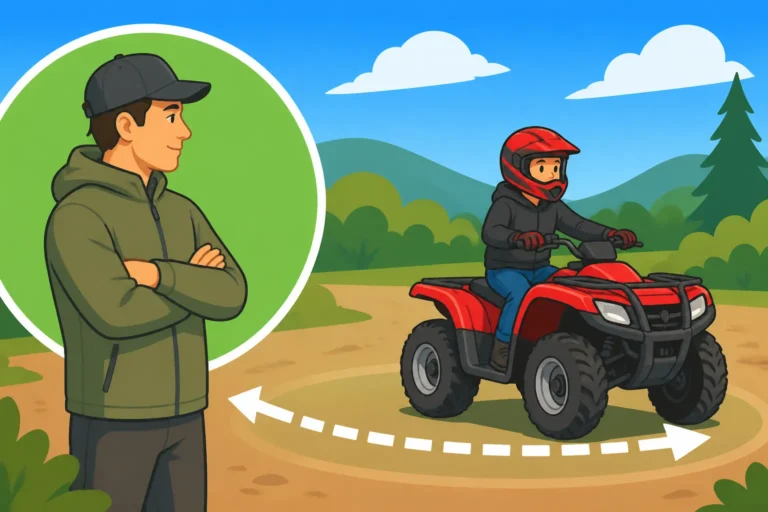
- Direct Adult Supervision is Mandatory: For riders under 16.5, they must be under the direct supervision of an adult at least 18 years of age. This adult must be within continuous visual contact and capable of verbal communication. This means the adult must be close enough to see and talk to the young rider at all times.
- Adult Liability: The supervising adult is held directly liable for any violations committed by the young rider. This is a significant responsibility, and it means the adult needs to be actively engaged in overseeing the crossing.
- Safety Certificate: Riders between 14 and 16 years old must also possess a valid OHV safety certificate to ride anywhere, including performing a crossing.
At 16 and a Half Years Old (and With a Valid Driver's License):
Here's the game-changer. Once a rider reaches 16.5 years of age and possesses a valid motor vehicle operator's license issued by the Registry of Motor Vehicles (RMV), the direct adult supervision requirement for road crossings is waived.
- Independent Crossings: A rider who is 16.5 or older and holds a valid driver's license can legally execute a road crossing without needing a supervising adult in immediate attendance. This grants them a level of independence for this specific maneuver that younger riders do not have.
- Still an OHV Rider: It's critical to understand that even with a driver's license, the rider is still operating an OHV, and all other OHV laws apply. They still cannot ride on the public way; they can only cross it under the strict conditions outlined above. The driver's license simply removes the need for an adult chaperone for the act of crossing.
- The "Why": The legislative intent here is that a person who has demonstrated the maturity and knowledge to pass a driver's license exam is deemed capable of exercising sound judgment when performing the limited maneuver of crossing a public way on an OHV. It's about recognizing a certain level of driving responsibility.
This distinction is extremely important for families who ride together. Parents often struggle to understand when they can let their teenager cross a road alone. The 16.5 age with a valid driver's license is the exact threshold. For more information on how a driver's license changes these rules, see [How a Driver's License Replaces Adult Supervision]. You can also review [Massachusetts Rules for a 16-Year-Old Rider] for a broader context of rules for this age group.
What "Supervision" Means Before 16.5
When a rider is under 16 and a half and doesn't have a valid driver's license, the concept of "supervision" isn't just a suggestion; it's a legal requirement with serious implications. The law specifies that the supervising adult (who must be at least 18 years old) needs to be in "continuous visual contact" and "capable of immediate oral communication" with the youth rider. This means more than just being somewhere in the same general area or periodically checking in.
Let's break down what "continuous visual contact" truly means in practice. It implies the adult must be able to see the youth rider at all times, especially during critical maneuvers like road crossings. If the trail twists or dips out of sight, or if there's heavy brush, that's not continuous visual contact. The adult often needs to be riding either directly in front of the youth (to scout for hazards and clear the path) or directly behind them, maintaining that line of sight. This might mean the adult has to slow their own pace or even stop at certain points to ensure the younger rider remains visible.
"Capable of immediate oral communication" means you can talk to each other without significant delay. Yelling across a vast field might technically be oral communication, but if there's a roaring engine or a strong wind, it's not "immediate." Many riding groups use helmet communication systems to ensure clear, instant communication, which is an excellent way to meet this requirement in challenging environments. Without such systems, it means riding close enough that a raised voice can be clearly heard and understood. Keep in mind that the supervising adult is held liable for any violations committed by the supervised rider, making active and effective supervision critical. This legal responsibility is why it’s so important for adults to truly understand their role, as explained in [Supervising Adults Are Liable for a Rider's Violation]. It’s not just about watching; it’s about active guidance and immediate intervention if needed.
Practical Strategies for Safe and Legal Crossings
Understanding the law is one thing, but putting it into practice safely and effectively is another. Legal road crossings, while permitted, remain one of the riskiest maneuvers an OHV rider will perform. This is where good habits, proper equipment, and a thorough understanding of the local environment come into play. It's not enough to simply know the rules; you need to embrace strategies that minimize risk and maximize compliance every time you approach a public way.
Essential Gear and Preparedness for a Crossing
Beyond simply following the law, being prepared for a road crossing involves a combination of personal readiness and appropriate equipment. Think of it as a brief, high-stakes moment where everything needs to align for safety.
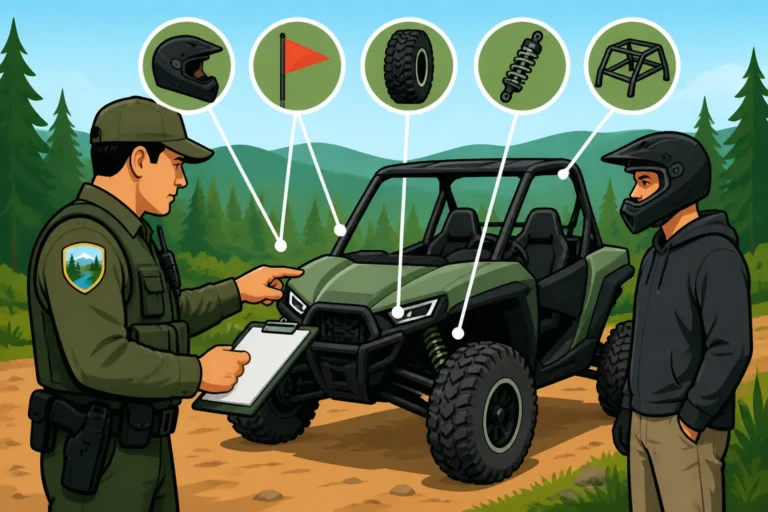
- Helmet: This is non-negotiable for all riders in Massachusetts, regardless of age or experience, whenever operating an OHV. A proper, DOT-approved helmet could literally be the difference between life and death in an unforeseen incident, especially near a road. Always check that your helmet fits properly and is securely fastened. More on this crucial law can be found in [Massachusetts Helmet Law for Every Rider].
- Eye Protection: Goggles or a face shield are essential to protect your eyes from dust, debris, or insects that could impair your vision, especially at a critical moment like a road crossing.
- Visibility Gear: While not explicitly mandated for ATVs in the same way as motorcycles, wearing bright, high-visibility clothing (neon green, orange, yellow) can significantly increase your chances of being seen by approaching motorists. Consider adding reflective elements to your helmet or clothing, particularly if you're riding near dawn, dusk, or in inclement weather.
- Machine-Mounted Lights and Reflectors: Even in daylight, having your headlights on can make your machine more visible. Massachusetts law requires adequate lighting after sunset and before sunrise, including a white headlight and a red taillight or reflector. While not always legally required for a daytime crossing, turning on your lights is a smart safety practice. You might consider aftermarket LED lighting from brands like SuperATV to ensure maximum brightness and visibility, even if you’re just crossing during the day.
- Mirrors: Although not universally required on ATVs, adding mirrors (if your machine doesn't have them) can drastically improve your ability to check for traffic behind you without turning your head completely away from the path ahead. SuperATV offers a range of durable, off-road specific mirrors that can be a real asset for situational awareness.
- Documentation: Always carry your OHV registration card and, if applicable, your safety certificate. For riders 16.5 and older, your driver's license is also essential. An Environmental Police officer might stop you even for a legal crossing to check your paperwork. Keeping these documents on your person, not just tucked away in a storage compartment on the machine, is highly recommended. [Why Your Registration Card Must Ride With the Machine] explains this further.
Before you even approach a road for a crossing, take a moment to pause. Mentally rehearse the process: stop, look left, right, left again, listen, ensure clear communication with any supervising adult, and only then proceed when the way is absolutely clear. Being prepared physically and mentally is your best defense against accidents.
Consequences of Ignoring Crossing Regulations
Ignoring the road crossing regulations in Massachusetts isn't just about bending the rules; it can lead to serious consequences, both legal and personal. The Environmental Police take these laws very seriously because illegal road use is a major safety hazard.
Let's talk about the legal repercussions first. Operating an unregistered OHV or violating any of the rules under Chapter 90B can result in significant fines. These aren't just minor slaps on the wrist; they can easily run into hundreds of dollars. On top of that, there's the very real possibility of your ATV or UTV being impounded. Imagine having your machine towed away, having to pay impound fees, and then potentially fines to get it back. That can quickly add up to a substantial financial burden that far outweighs any perceived convenience of cutting corners.
Beyond fines and impoundment, there's the issue of operator liability. If you're involved in an accident while illegally crossing or operating on a public way, you could be held solely responsible for damages and injuries, even if another driver contributed. Because ATVs are not intended for road use, your personal auto insurance policy will almost certainly deny coverage. This means you could be personally liable for medical bills, vehicle repairs, and potential lawsuits, which could be financially devastating. For a deeper dive into the penalties for illegal riding, refer to [Massachusetts Penalties for Illegal Riding].
Finally, there's the risk of injury or worse. Public roads are unpredictable environments with cars traveling at high speeds. An OHV offers very little protection in a collision with a passenger vehicle. The consequences of an illegal crossing could tragically alter your life or the lives of others. It’s simply not worth the risk for the sake of convenience. Always prioritize safety and legal compliance.
The Role of Accessories: Enhancing Safety for Crossings
While many accessories are about performance or comfort, some play a vital role in enhancing safety, particularly during the vulnerable act of crossing a public way. Investing in certain gear can provide an extra layer of protection and visibility.
- Upgraded Lighting: Factory headlights are often designed for off-road visibility, which is different from being seen by oncoming traffic at speed. Upgrading to brighter LED headlights or adding auxiliary light bars, like those offered by SuperATV, can significantly increase your front-facing visibility, making you stand out to motorists, especially in less-than-ideal lighting conditions. Remember, you need to be seen, not just see.
- Turn Signals and Horns: While not typically required on ATVs for trail use, adding turn signals and a horn can be incredibly beneficial for signaling your intentions during a crossing. If you plan to turn onto the opposite side of the road, a clear turn signal can communicate your movement to drivers, reducing ambiguity. A horn can also be a crucial alert device in an emergency situation. These are safety features commonly associated with street-legal vehicles, and their absence on OHVs is part of why road riding is prohibited, but adding them for crossing can be a proactive safety measure.
- Wider Mirrors: We touched on this earlier, but it bears repeating. Standard ATV mirrors might be small or prone to being knocked out of adjustment on the trail. Investing in larger, more stable mirrors from a reputable aftermarket provider like SuperATV can give you a better field of view for checking traffic from both directions before and during a crossing. Situational awareness is key, and good mirrors are a big part of that.
- Reflective Tape and Decals: Adding reflective tape to the front, sides, and rear of your ATV can make it much more visible at night or in low light conditions when headlights might not be sufficient. This passive safety measure is a simple, cost-effective way to boost your profile to other road users.
- Visibility Flags: For UTVs, especially those with roll cages that might sit lower or be less visible from a distance, a brightly colored flag mounted high on the machine can significantly improve your profile to other drivers. This is often required in certain dune riding areas but is a smart addition for any situation where increased visibility is a goal.
Remember, while these accessories enhance safety, they do not change the legal status of your OHV. You are still operating an off-highway vehicle, and all rules, including the age restrictions and crossing conditions, still apply. These are supplementary tools to help you navigate a legally permissible but inherently risky maneuver as safely as possible. It’s all about being as proactive as possible when you briefly share space with road traffic.
Disclaimer
This article is for general informational purposes only and does not constitute professional advice. Laws, prices and regulations vary by location and change over time. Consult a qualified professional for guidance on your specific situation.