Crossing a Public Way Without Getting Ticketed
It's a common scenario for many of us who love hitting the trails in Massachusetts: you're out riding your ATV or UTV, having a blast, and suddenly, you hit a gap. There's another section of trail just across that little paved road, or maybe a gravel road, and you think, "Can I just dart across?" The fear of getting a ticket or worse for what seems like such a quick, harmless maneuver is a very real frustration. This guide is here to clear up the confusion and help you understand exactly how to cross a public way in Massachusetts legally, without landing yourself in hot water with the Environmental Police.
Understanding Massachusetts' Strict Stance on Public Ways
Massachusetts has some of the most stringent laws regarding off-highway vehicles (OHVs) in the nation, and nowhere is this more apparent than with public roads. It's not like some other states where you might have a bit more leeway or designated "street legal" routes. Here in the Bay State, the rules are very clear, and they are strictly enforced. Trying to connect two segments of a trail by riding even a short distance down a road is a surefire way to invite trouble.
Why the Law is So Tight
The strictness really boils down to public safety and the desire to prevent accidents involving OHVs on roads designed for traditional motor vehicles. ATVs and UTVs, while incredibly fun and capable off-road, aren't built for asphalt. Their tires, suspension, and handling characteristics are optimized for dirt, mud, and uneven terrain, not hard pavement. They don't typically have the same visibility, signaling, or protective features as a car or truck, making them a hazard in traffic. Beyond that, there's the noise factor, dust, and general disruption to residential areas. The laws aim to keep OHVs where they belong: off-road.
This isn't just a casual suggestion; it's deeply embedded in state law, specifically [Massachusetts ATV Laws Under Chapter 90B]. The intent is to clearly separate off-road recreation from on-road transportation. For anyone who's ever witnessed an accident involving an OHV and a car, the reasons behind this firm stance become painfully clear. It’s about preventing tragedies.
Defining "Public Way" in Massachusetts
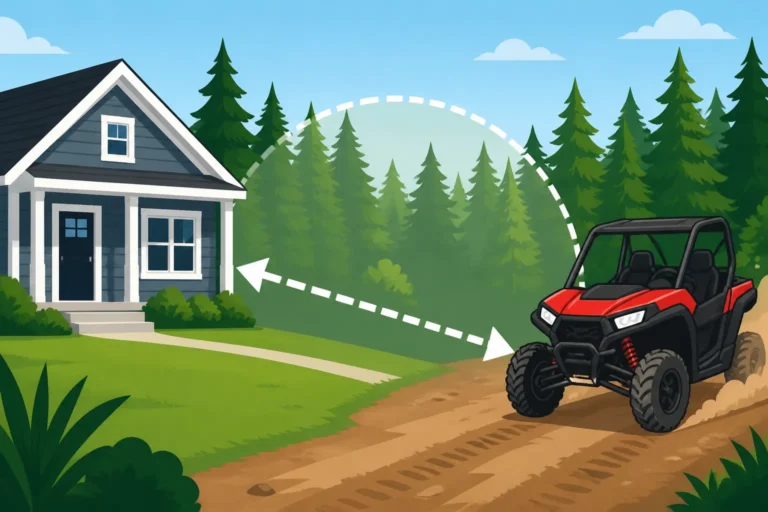
This is where a lot of riders get tripped up. What exactly constitutes a "public way" in Massachusetts? It's not just the big, paved highways or state routes you might immediately think of. The term is quite broad and encompasses virtually any road or street maintained by the state, a county, or a municipality that is open to public travel.
This includes:
- Paved town roads
- Gravel or dirt roads maintained by the town or state
- Publicly accessible park roads
- Certain private roads that have been accepted for public use
A common misconception is that a dirt road, especially one that looks like a trail, might be exempt. However, if that dirt road is maintained by the town and serves as a public thoroughfare, even for just a few houses, it’s a public way. You need to know for sure before you even think about putting a tire on it. A good rule of thumb is: if a car can drive on it and it's not explicitly a private driveway or a designated OHV trail, treat it as a public way. For more clarity, you can check out [Which Dirt Roads Count as a Public Way].
The Core Prohibition: No Riding On Public Ways
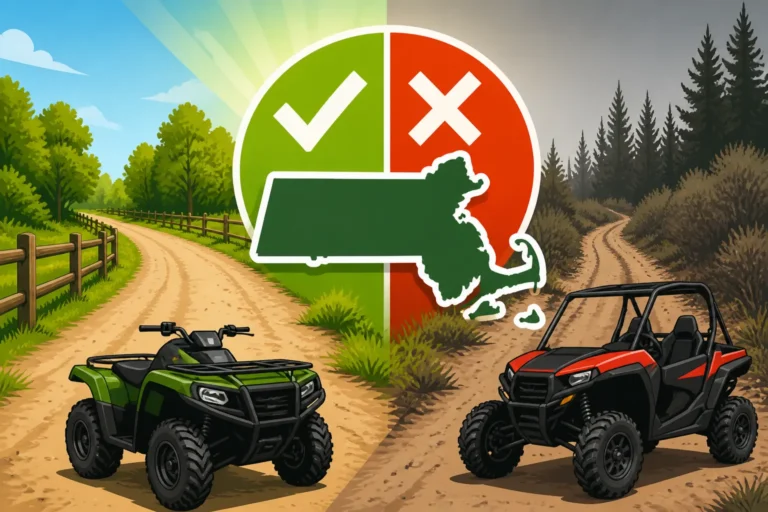
Let's be absolutely crystal clear: you cannot operate an ATV or UTV on a public way in Massachusetts. This means no riding down the shoulder, no cruising along the edge of the pavement, and no using it to get from one trail system to another for any sustained distance. The law is absolute on this point. Even if you're just trying to get to a gas station that's "right there" down the road, it's illegal. This is a tough pill to swallow for riders who come from states with more relaxed rules, but it's the reality here.
This prohibition is why planning your rides in Massachusetts is so critical. You have to know your route and ensure that trail segments don't require any form of illegal road travel. If you encounter a situation where you'd have to ride along a public way to continue your journey, you must turn back or find an alternative, legal route—which often means trailering your machine to the next legal access point.
The ONLY Legal Way to Cross a Public Way
Given the strict rules, many riders wonder if there's any way to legally get from one side of a public road to the other. The good news is, yes, there is a very narrow exception for crossing. It's not a free pass to weave through traffic, but a tightly regulated maneuver designed to allow legitimate trail connections.
Stop, Yield, and Proceed Safely
To legally cross a public way in Massachusetts, you must adhere to a very specific set of actions:
- Come to a Complete Stop: Before entering the roadway, you must bring your machine to a full, complete stop. This isn't a rolling stop sign kind of stop; it's a full halt.
- Yield to All Traffic: You must yield the right-of-way to all vehicular and pedestrian traffic on the public way. This means waiting until the road is completely clear in both directions, or until you are absolutely certain that any approaching traffic will stop or yield to you. Do not assume others see you or will stop. Safety is paramount.
- Cross at Approximately a Right Angle: The crossing must be made as directly and perpendicularly as possible. This means you should aim for a straight line across the road, minimizing the time you spend on the paved surface. No diagonal crossings, no lingering.
- Use the Quickest, Most Direct Route: Your intention must be to traverse the road as swiftly and directly as possible to reach the trail on the other side. This isn't an opportunity for a joyride across town; it's purely for connecting trail segments.
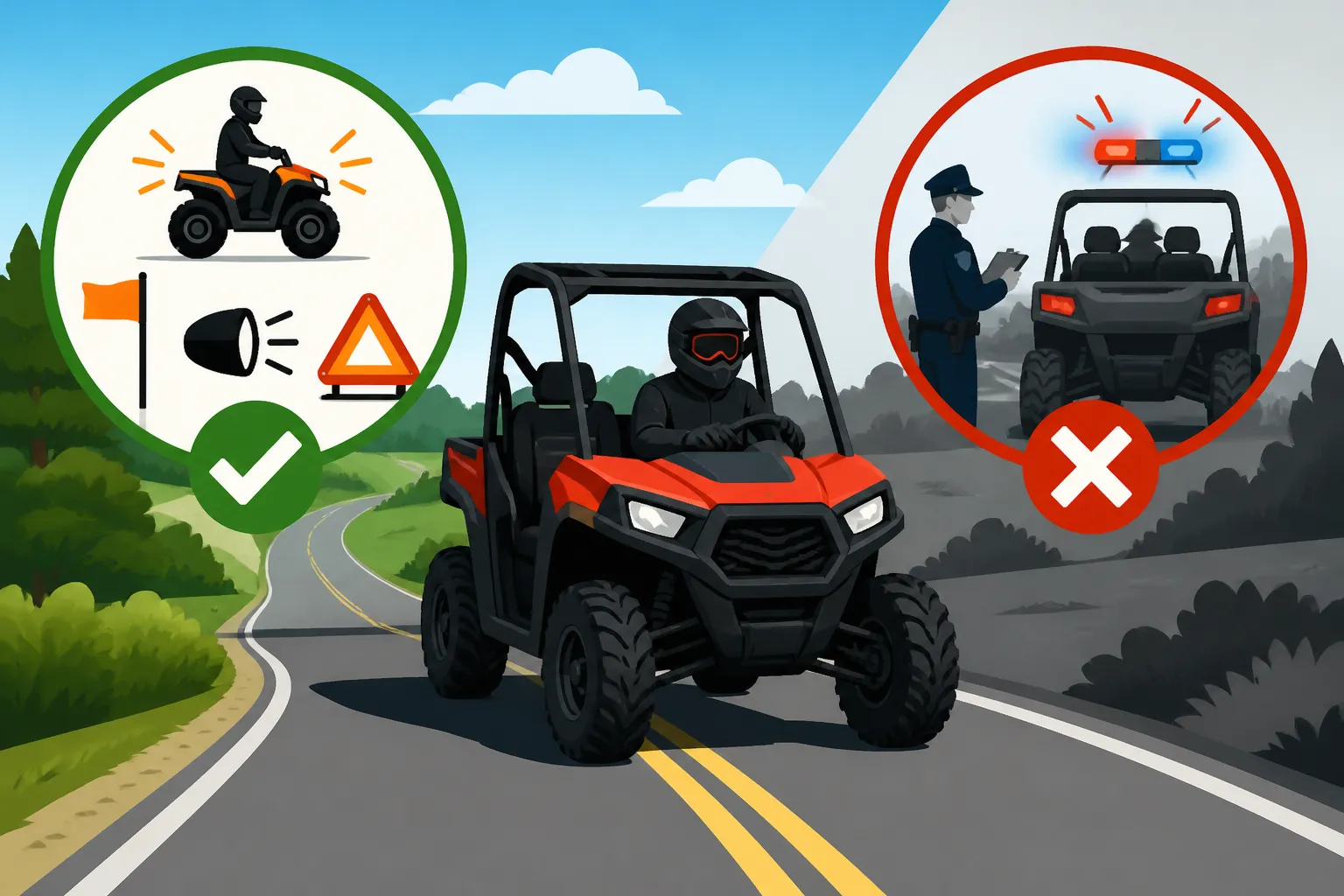
Remember, the goal is to be on the public way for the absolute minimum amount of time required to get from one side to the other. Think of it like a pedestrian crossing the street, but with much more responsibility due to the machine you're operating. The Environmental Police are specifically looking for people who abuse this exception, so make sure your actions are beyond reproach. For more on this specific action, refer to [Yielding Before You Cross].
The Importance of a Registered Machine and Rider Certification
A legal crossing isn't just about how you drive. It also critically depends on the legality of your machine and, if applicable, your status as a rider.
- Machine Registration: Your ATV or UTV must be properly registered with the Massachusetts Environmental Police. If your machine isn't registered, any operation on any public land or attempt to cross a public way is illegal. Make sure you have your [Massachusetts Registration Cards Carried on Board] with you whenever you ride. You don't want to get caught without it. Many riders have added small, waterproof storage compartments, perhaps from a brand like SuperATV, to ensure their documents are always protected and accessible.
- Decal Placement: Ensure your registration decals are correctly displayed. [Massachusetts Decal Placement Rules] require decals to be clearly visible on both sides of the forward half of the machine.
- Rider Certification (for youth): If you are a young rider, or supervising one, the rules regarding safety certificates are crucial. Riders under 16 years old must possess a valid OHV safety certificate to operate on public land, which would include the act of crossing a public way. Riders between 16 and 18 also need this certificate unless they hold a valid motor vehicle operator's license. [Carrying a Safety Certificate on State Land] is not just a suggestion; it's a requirement for many riders. This also ties into [Massachusetts Age and Engine Size Ladder] and [Massachusetts Supervising Adult Defined] for younger riders. The supervising adult is held liable for a minor's violations, so every crossing by a youth rider needs careful, compliant execution.
If any of these fundamental requirements are not met, even if you execute the crossing perfectly, you're still operating illegally and are subject to fines and penalties.
Quickest Path Straight Across: No Parallel Riding
This point cannot be stressed enough: the only legal maneuver on a public way is a direct crossing. You absolutely cannot ride parallel to the public way, even for a short distance, to reach a better crossing point or to access a different trail.
Imagine you're at the edge of a trail, ready to cross a paved road to another trail segment. The optimal crossing might be 50 feet down the road where visibility is better. You cannot ride those 50 feet along the shoulder to get to that spot. You must cross directly from where you meet the public way. If the spot where your trail meets the road isn't safe or practical for a direct crossing, then that trail segment, for you, ends there, and you'll need to find another access point or simply turn back. This is a common point of contention and frustration for riders, but it's a non-negotiable aspect of Massachusetts law. An officer will not view "just a few feet" along the road any differently than a mile; it's still illegal operation on a public way.
Common Mistakes That Lead to Tickets
Despite the clear rules, the Environmental Police still encounter numerous violations related to public way crossings. Many of these stem from misunderstanding or underestimating the strictness of Massachusetts law.
Thinking Dirt Roads Are Exempt
As mentioned earlier, this is a huge one. Many riders, especially those new to Massachusetts or visiting from out of state, assume that if a road is unpaved, it's fair game or at least subject to looser rules. This is simply not true. If a dirt or gravel road is maintained by the town or state and open to public vehicular traffic, it is a "public way" under Massachusetts law.
Picture this: you're riding through a beautiful section of state forest, and your trail suddenly empties onto what looks like an old logging road – unpaved, a bit rutted, but clearly passable by a truck. If that road is a municipal or state-maintained artery, even if it feels remote, operating your ATV on it for anything other than a direct, perpendicular crossing is illegal. Environmental Police frequently patrol these types of roads because they know riders often mistake them for informal trails. Don't fall into this trap. When in doubt, assume it's a public way.
Riding Even a Short Distance Along a Road
This is another common mistake, driven by convenience or a lack of understanding. A rider might see a trail continue just 100 feet down the road and think, "It's just a quick hop, nobody will notice." This is a gamble that rarely pays off in Massachusetts. The Environmental Police are highly vigilant about this.
Even a few yards parallel to a public way is considered illegal operation. It's not about the distance; it's about the act of operating on the public way. You might be spotted by an officer on patrol, or even by a concerned citizen who then reports you. With advances in aftermarket parts like wider fender flares from SuperATV, your machine might stand out more, increasing visibility to the wrong kind of observer if you're riding where you shouldn't be. The consequences, as we'll discuss, are significant and far outweigh the perceived convenience of riding a short stretch of road.
Ignoring Age and Supervision Rules During a Crossing
For younger riders, the rules about age, engine size, and supervision are always in effect, even during a brief road crossing. [Massachusetts Rules for Crossing a Road] explicitly states that all the general OHV laws apply.
If a rider under 16 is attempting a crossing without their required safety certificate, or without continuous visual contact and verbal communication from a supervising adult (who themselves must be at least 18 and meet specific criteria), that crossing is illegal. The supervising adult can be held directly liable for any violations. Imagine a scenario where a 14-year-old, excited to get to the next trail, darts across a road slightly ahead of their supervising adult, or without coming to a full stop. Not only is the crossing itself a violation, but the lack of proper supervision compounds the issue, leading to potential fines for both the rider (if of age to be ticketed) and the adult.
Penalties and What to Expect If Caught
The consequences of illegally operating an OHV on a public way in Massachusetts are not minor. They are designed to deter such behavior and can significantly impact your wallet and your riding privileges.
Fines for Illegal Operation
The most immediate consequence is typically a fine. Massachusetts law carries specific penalties for operating an unregistered OHV, operating on a public way, or violating age/supervision requirements. These fines can quickly add up, especially if multiple infractions are cited during a single stop. For example, you could be fined for operating on a public way and for not having your registration card readily available.
While specific amounts can change, rest assured that these are not minor slaps on the wrist. They are substantial enough to make you think twice about cutting corners. An Environmental Police officer has the authority to issue these citations on the spot. If you decide to dispute the ticket, you’ll be looking at court costs on top of potential fines if you're found guilty. For a comprehensive overview of potential penalties, see [Massachusetts Penalties for Illegal Riding].
Potential Machine Seizure
This is perhaps the most dreaded outcome for any OHV owner: the seizure of your machine. Massachusetts law does allow for the impoundment of ATVs and UTVs operated illegally. If you are caught operating your machine on a public way, especially if it's unregistered or you're a repeat offender, an Environmental Police officer has the discretion to seize your ATV or UTV.
Imagine having your machine, which represents a significant investment and source of recreation, loaded onto a flatbed and taken away. You'll then face not only fines but also impoundment fees, storage fees, and potentially a lengthy process to get your machine back, assuming it's even returned to you. This is a very real possibility and a stark reminder of the seriousness of the law. Nobody wants to be calling a tow truck from the middle of a trail, let alone explaining why their machine was confiscated.
The Broader Impact on Massachusetts Riding
Beyond the personal fines and potential loss of your machine, illegal operation, particularly on public ways, has a detrimental impact on the entire OHV community in Massachusetts. Every citation, every complaint from a landowner or concerned citizen, adds to the narrative that ATVs and UTVs are a nuisance or a danger. This perception makes it incredibly difficult for advocates to push for new trails, expand existing riding areas, or even maintain current access.
When riders disregard laws, it fuels opposition to OHV recreation and can lead to further restrictions or even closures of riding areas. The Environmental Police are often asked questions about riders, and their answers are influenced by the behavior they observe on the trails and roads. If you love riding in Massachusetts, part of being a responsible rider means adhering to all laws, not just for your own sake, but for the future of the sport in the state. [What an Environmental Police Officer Can Ask] is a good read to understand the power they wield and how your behavior can influence their actions.
Let's make sure we're all doing our part to enjoy the trails responsibly and legally, ensuring that our access points, like those found in the Berkshire forests, remain open and enjoyable for years to come.
Disclaimer
This article is for general informational purposes only and does not constitute professional advice. Laws, prices and regulations vary by location and change over time. Consult a qualified professional for guidance on your specific situation.