Supervising Adults Are Liable for a Rider’s Violation
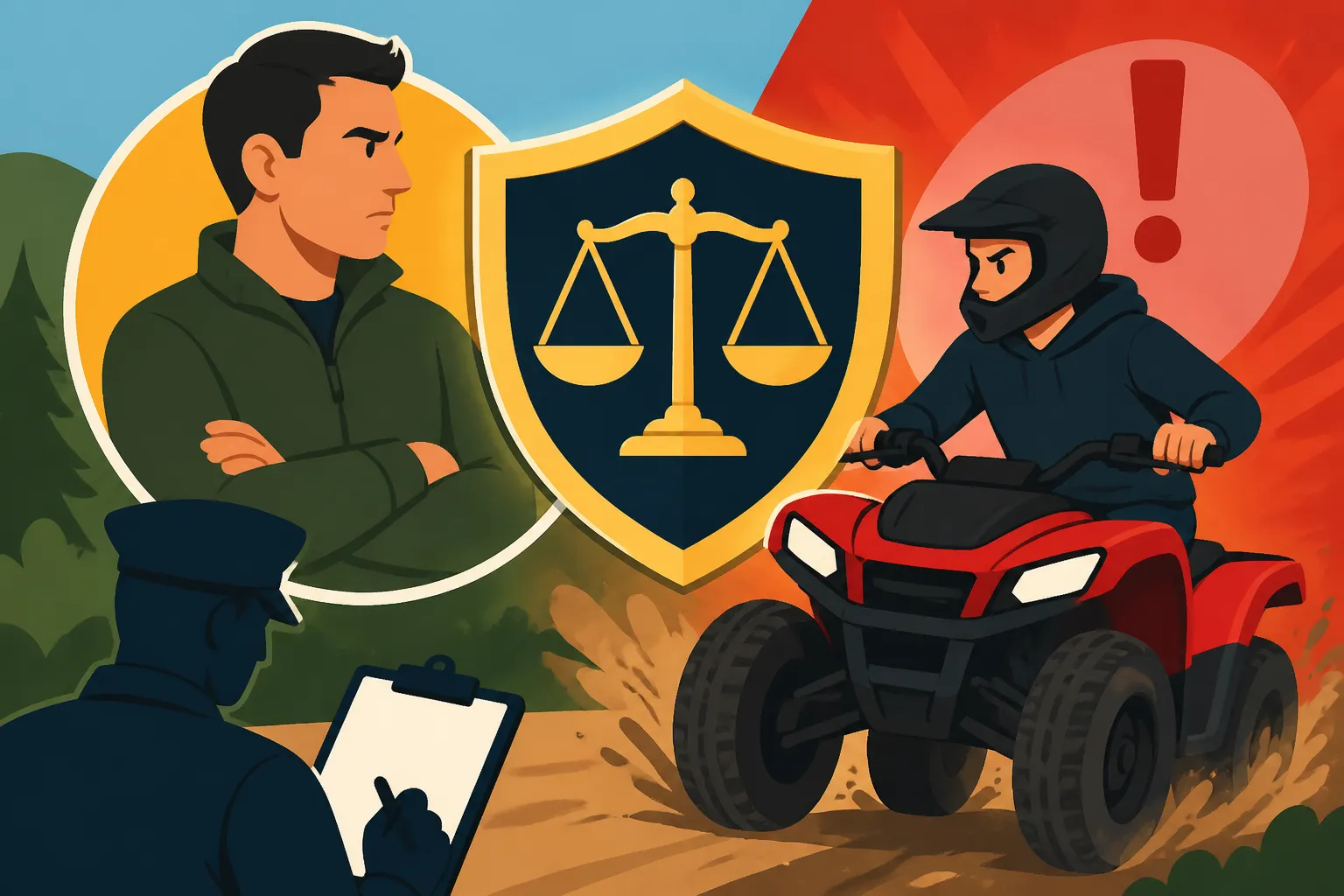
Let's talk about something incredibly important, and often, quite stressful for parents and guardians of young ATV and UTV riders here in Massachusetts: the legal responsibility that falls squarely on your shoulders. It’s not just about teaching them to ride safely; it’s about understanding that if a minor under your supervision breaks the rules, the consequences can extend directly to you. This guide is going to walk you through exactly what "supervising adult" means in the eyes of Massachusetts law, the specific violations that can lead to adult liability, and how you can proactively protect both your young rider and yourself from legal trouble.
Understanding "Supervising Adult" and Liability in Massachusetts
When it comes to off-highway vehicle (OHV) operation, Massachusetts has some of the strictest youth rider laws in the nation, and for good reason. These laws, particularly those found in [Massachusetts ATV Laws Under Chapter 90B], are designed to prevent serious accidents and fatalities. A core component of this legal framework is the concept of a "supervising adult" and the direct liability they assume for any violations committed by a minor under their charge. It's not a suggestion; it's a legal mandate that carries significant weight.
Defining the Supervising Adult Under Massachusetts Law
So, who exactly counts as a "supervising adult"? It’s crucial to know this because simply being present isn't always enough. In Massachusetts, a supervising adult is generally defined as someone at least 18 years of age who is accompanying and observing a rider under the age of 16. This isn't a casual babysitting arrangement; the law implies a direct, active responsibility for the minor's actions on the machine. This means you need to be within continuous visual contact and verbal communication distance, able to intervene immediately if necessary. You can't just drop them off at the trail and go do your own thing. The expectation is that you are actively engaged in their ride, guiding them, and ensuring they adhere to all regulations. [Massachusetts Supervising Adult Defined] elaborates on the specifics, but the takeaway is clear: if you’re the adult in charge, you are accountable.
The Legal Basis for Adult Liability: Chapter 90B and Sean's Law
The foundation of adult liability for young riders in Massachusetts largely stems from Chapter 90B of the Massachusetts General Laws, specifically sections related to OHVs. This chapter outlines everything from registration requirements to operating restrictions. However, the intensity of youth rider laws, and consequently, adult liability, was significantly amplified by "Sean's Law" in 2010. [Sean's Law and Massachusetts Youth Riders] was enacted after a tragic accident involving a young rider and fundamentally reshaped how Massachusetts approaches youth ATV operation.
Before Sean's Law, the focus was more on the individual minor's actions. After, the lens expanded to include the adult who permits or supervises that action. This means that if a rider under 16 violates any part of Chapter 90B, the supervising adult can be held directly responsible, facing the same penalties the minor would, and sometimes even more. It's a powerful deterrent designed to ensure adults take their supervisory role with the utmost seriousness. The law's intent is to create a safety net for young riders by placing a legal imperative on adults to enforce safe and legal riding practices.
The Specifics: What Actions Trigger Adult Liability?
It's one thing to know that you can be held liable, but what specific actions by a young rider will trigger that liability for you, the supervising adult? Massachusetts has a comprehensive list of rules for OHV operation, and many of these have specific implications for minors and their supervisors. Understanding these common pitfalls is your first line of defense. It’s not just about preventing accidents; it's about preventing citations and legal entanglements.
Age and Engine Size Violations
One of the most frequently enforced violations involves age and engine size restrictions. Massachusetts has a strict ladder system designed to gradually introduce riders to more powerful machines as they mature. For instance, [Massachusetts Bans Riders Under 14] on any public or private land, unless it's a sanctioned event and under very specific conditions. If you, as the supervising adult, allow a 12-year-old to ride an ATV on a public trail in Massachusetts, you are directly liable for that violation. Similarly, there are engine size caps for certain age groups, such as the 90cc limit for riders aged 14 to 16. If a 15-year-old under your supervision is found operating a 250cc machine, you could face penalties. It's not the minor who gets the brunt of the legal action initially; it's the adult who permitted it.
Here’s a quick overview of the age and engine size rules that directly impact adult liability:
| Age of Rider | Engine Size Limit | Supervision Requirement | Riding Location Rules |
|---|---|---|---|
| Under 10 | None (Banned) | None | Sanctioned event only (very specific rules) |
| 10 – 14 | None (Banned) | None | Sanctioned event/race only (very specific rules) |
| 14 – 16 | Up to 90cc | Yes (Adult 18+) | With certificate, public/private land |
| 16 – 18 | No limit | Yes (Adult 18+) | With certificate, public/private land |
| 18+ | No limit | None | Public/private land as permitted |
Note: These are general guidelines; always refer to current Massachusetts Chapter 90B for precise details and any exceptions, especially regarding sanctioned events.
Lack of Required Safety Equipment and Certificates
Massachusetts is unwavering on safety equipment. Helmets, in particular, are non-negotiable. Every rider, regardless of age, must wear a helmet that meets certain safety standards. If your young rider isn't wearing a proper helmet, or if it's not fastened correctly, you, as the supervising adult, are in violation. [Massachusetts ATV Helmet Law] makes this abundantly clear. Beyond helmets, there are also requirements for safety certificates for young riders on public land. Riders under 18 must complete a two-part safety course and carry their certificate when riding on public property. If your 15-year-old is tearing up October Mountain State Forest without their [Massachusetts Safety Certificates Under 18], that citation is coming your way. Ensuring their machine is also properly equipped, perhaps with robust aftermarket accessories from brands like SuperATV that meet or exceed safety standards, is also a good practice for overall safety, even if not directly tied to a specific equipment violation.
Riding in Prohibited Areas or Without Permission
Massachusetts has strict rules about where OHVs can and cannot be operated. Public roads, paved paths, and certainly highways are universally off-limits. If your young rider is caught zipping down a paved access road in a state forest, that’s a direct violation. Even on private land, you need [Massachusetts Landowner Permission in Writing]. If a minor under your supervision is riding on private property without documented consent, both they and you could face trespass charges in addition to OHV violations. Moreover, riding in environmentally sensitive areas, like dunes or cranberry bogs, is often prohibited, and allowing a minor to do so would again trigger adult liability. These rules are not just about protecting people, but also protecting the delicate ecosystems of the Bay State.
Protecting Yourself and Your Rider: Best Practices for Supervision
The responsibility placed on supervising adults in Massachusetts is substantial, but it’s not insurmountable. By taking proactive steps and consistently applying best practices, you can ensure your young rider enjoys the trails safely and legally, while also protecting yourself from potential liability. It's about being informed, prepared, and present.
Prioritizing Safety Education and Training
The first and most critical step is ensuring your young rider has the proper education. The Massachusetts Environmental Police offer comprehensive safety courses that cover everything from basic operation to trail etiquette and the specific laws of the Commonwealth. For any rider under 18 who plans to ride on public land, obtaining this [Massachusetts Safety Certificates Under 18] is mandatory. But even for those riding exclusively on private land, the knowledge gained is invaluable. As the supervising adult, consider taking the course with them, or at least familiarizing yourself deeply with the curriculum. Knowing what they've learned will help you reinforce those lessons on the trail. Understanding things like proper braking, how to navigate different terrains, and emergency procedures will equip both of you for safer rides.
Equipping for Safety: Machine and Rider
Beyond education, proper equipment is non-negotiable. This means not just any helmet, but one that is DOT-approved and fits correctly. Protective gear like goggles, gloves, sturdy boots, and long pants/sleeves should be standard attire for every ride. For the machine itself, ensure it is age-appropriate in terms of engine size and physically fits the rider. A machine that's too big or too powerful for a young person can quickly become uncontrollable. Regular maintenance is key – check tires, brakes, lights, and ensure all safety features are functioning. If you're looking to enhance safety and durability, exploring quality aftermarket parts from brands like SuperATV can provide peace of mind, ensuring the machine is built to handle the rigors of Massachusetts trails while prioritizing rider protection. Things like sturdy skid plates or enhanced roll cages for UTVs, while not always legally mandated, significantly boost safety.
Active and Engaged Supervision on the Trail
Remember the definition of a "supervising adult"? It emphasizes continuous visual contact and verbal communication. This isn't just a legalistic phrase; it’s a practical necessity. When you're out riding, be present. Ride close enough to intervene, offer instruction, and identify potential hazards. Avoid distractions, and don't assume your young rider will always make the best decision. [Massachusetts Parent Riding With a Child] provides more insights into what this active supervision looks like.
Consider these practical tips for engaged supervision:
- Ride within earshot: Even if you can see them, being able to yell instructions or warnings quickly can prevent an incident.
- Lead by example: Always follow all laws and safety guidelines yourself. Your actions speak louder than words.
- Regular check-ins: Stop periodically to discuss trail conditions, their riding technique, and any concerns.
- Know the terrain: Familiarize yourself with the trails or riding area before letting a young rider loose. Are there hidden obstacles, steep drops, or areas with poor visibility?
- Establish clear rules: Before you even leave the staging area, review your family's rules for riding, emphasizing speed limits, following distances, and what to do if they get separated.
Navigating the Nuances: Common Pitfalls and Misconceptions
Even with the best intentions, it's easy to fall into traps or misunderstand certain aspects of Massachusetts' OHV laws. Many of these misconceptions can inadvertently lead to liability for supervising adults. Let's clear up some common areas of confusion so you can ride with greater confidence and compliance.
The Myth of "Private Land, No Rules"
One of the most persistent misconceptions is that if you're riding on private property, you're exempt from all OHV laws. This simply isn't true in Massachusetts, especially when it comes to youth riders. While some rules might be relaxed on private land (like not needing registration if the machine never touches public ways), many core safety and age restrictions still apply. Sean's Law specifically states that a minor under 14 cannot operate an ATV even on private land, unless under specific sanctioned event conditions. If you allow your under-14 child to ride on your own private woodlot, you are still liable if an incident or violation occurs. Furthermore, if you’re riding on someone else's private land, you absolutely need [Massachusetts Landowner Permission in Writing]. Without it, you’re trespassing, which adds another layer of legal trouble to any OHV violation.
Misinterpreting "Continuous Visual Contact"
We've talked about "continuous visual contact," but what does that really mean? It doesn't mean you can see a tiny dot in the distance. It means you are close enough to react, close enough to see nuances in their riding, and close enough to shout instructions. If your child rounds a bend and is out of sight for more than a few seconds, you're likely outside the bounds of continuous visual contact. This is especially challenging on winding trails or in dense woods. The spirit of the law requires you to be actively monitoring, not just vaguely aware of their presence somewhere on the property. Consider how quickly an accident can happen, or how fast a young rider might make a poor decision. Your ability to intervene quickly is paramount.
The Consequences of Adult Liability
It's important to understand the very real consequences if you are found liable for a rider's violation. These aren't just slaps on the wrist. [Massachusetts Penalties Under Sean's Law] can include significant fines, potentially hundreds of dollars for a single violation. In some cases, repeat offenses or severe incidents could lead to the confiscation of the OHV. Beyond the immediate legal penalties, there’s the potential for civil liability. If your young rider causes property damage or injury to another person or animal due to a violation under your supervision, you could be sued in civil court, facing claims for medical bills, property repair, and other damages. This is why some riders choose to carry optional [Massachusetts Insurance Worth Buying Anyway], even though it's not mandated by the state. While not required for registration, it offers a layer of financial protection in case of an accident or liability claim. The costs associated with fines, court appearances, and potential civil judgments can quickly add up, making responsible supervision not just a moral imperative, but a financial one as well.
Disclaimer
This article is for general informational purposes only and does not constitute professional advice. Laws, prices and regulations vary by location and change over time. Consult a qualified professional for guidance on your specific situation.