Which Dirt Roads Count as a Public Way
It’s a common scenario for many Massachusetts ATV and UTV enthusiasts: you’re out exploring the scenic backroads, perhaps in the Berkshires, and you come across a tempting dirt path winding off into the woods. Your heart races a little at the thought of a new adventure, but then a wave of uncertainty hits you. Is this a private road? Is it part of a state trail system? Or is it a public way, just unpaved, and therefore off-limits to your machine? Getting this distinction wrong can lead to costly fines and a ruined day, and the rules in Massachusetts can feel like navigating a maze. This guide is here to help you unravel the complexities of what legally counts as a "public way" for your off-highway vehicle in the Bay State.
The Legal Labyrinth of "Public Ways" in Massachusetts for OHVs
Massachusetts has some of the stricter laws in the country when it comes to off-highway vehicles (OHVs), and understanding what constitutes a "public way" is absolutely paramount to legal and responsible riding. Unlike many states where unpaved roads might automatically be considered fair game for certain vehicles, Massachusetts operates under a very clear premise: if it’s a public way, you generally cannot ride your ATV or UTV on it. The challenge is that "public way" isn't always obvious just by looking at the surface of the road.
The legal framework for OHVs in Massachusetts is found primarily in Chapter 90B of the Massachusetts General Laws. This chapter specifically defines what an OHV is and, critically, places significant restrictions on where these machines can be operated. The core principle is that OHVs are intended for off-road recreational use on designated trails or private property with permission, not for general transportation on public roads, even if those roads are unpaved.
What Chapter 90B Defines (and Excludes) for OHVs
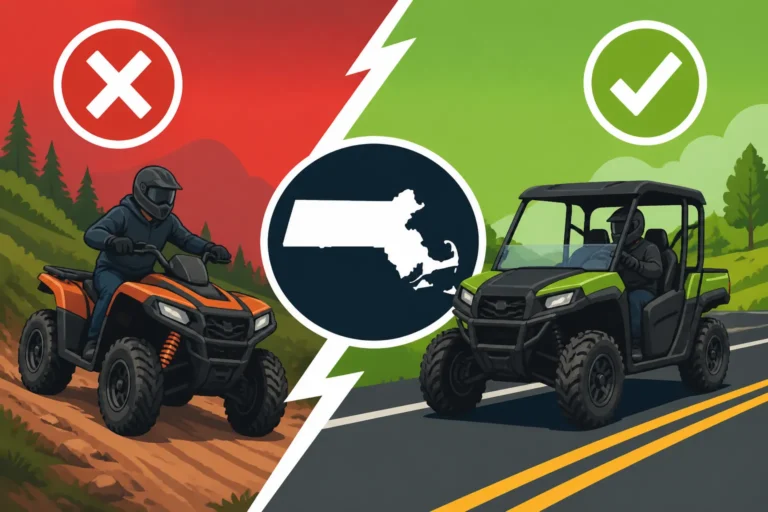
Chapter 90B explicitly states that no person shall operate an OHV "upon any public way," except under very specific, limited circumstances. This broad prohibition is the foundational rule. A "public way" in this context refers to any road, street, highway, or other land laid out as a public way, whether paved or unpaved, maintained by the state or a municipality. This means that a dirt road that your town maintains – plows in winter, grades in summer, or provides other services for – is almost certainly considered a public way.
The law is designed to separate OHV recreational use from conventional vehicular traffic, largely for safety reasons. The Environmental Police, who enforce these regulations, are particularly vigilant about keeping OHVs off public ways. They understand that the design and operation of ATVs and UTVs are simply not suited for sharing space with cars and trucks, even on quiet dirt roads. It’s also important to note that unlike some states that allow OHVs on certain unpaved county roads, Massachusetts generally does not have such provisions, making it critical to know exactly where you are riding.
The Nuance of Paved vs. Unpaved Public Ways
It’s tempting to think that a dirt road, because it’s not paved, somehow falls outside the definition of a "public way." Unfortunately, this is a common misconception that can lead to a ticket. In Massachusetts, the surface material of a road does not determine its legal status as a public way. A road that is publicly owned, maintained by the town or state, and open for general vehicular travel, regardless of whether it's asphalt, gravel, or packed dirt, is considered a public way.
For example, many small towns in Massachusetts, particularly in rural areas, have extensive networks of unpaved roads that serve as residential access or connect different parts of the community. These roads are often charming and seem perfect for a leisurely ride on your UTV. However, if the town maintains these roads for public travel, they are indeed public ways, and operating your ATV or UTV on them is generally prohibited. The law isn't concerned with whether a road is busy or quiet, only with its legal classification. This means that [Massachusetts Bans Riding on Public Ways] broadly applies to both paved and unpaved public roads.
Common Dirt Road Scenarios and Their OHV Status
Navigating the various types of dirt roads you might encounter in Massachusetts requires a careful eye and a good understanding of land ownership and regulations. Not all dirt roads are created equal when it comes to OHV access.
Town-Maintained Dirt Roads and OHV Access
As discussed, any dirt road that a town actively maintains—be it through grading, plowing, or other municipal services—is almost always considered a public way. This includes scenic country roads that might feel isolated but are still part of the town’s infrastructure. Unless there is specific, clear signage indicating that OHVs are permitted (which is exceptionally rare on town roads for general travel), you should assume these roads are off-limits.
Riding on these roads, even for a short distance to get to a trail, is a violation. The only exception often allowed is for crossing a public way, and even then, there are strict rules to follow, such as coming to a complete stop and yielding to traffic. [Massachusetts Rules for Crossing a Road] outlines these specific requirements, emphasizing that a crossing is not the same as riding on the public way. Your best bet is to avoid using any dirt road that appears to be part of a municipal road network, even if it looks like the perfect shortcut.
Private Roads, Driveways, and Landowner Permission
Many dirt paths you encounter might actually be private roads, driveways, or logging trails on private property. While these are not "public ways" in the sense of town-maintained roads, they are still private land. This means you absolutely must have explicit permission from the landowner to ride there. Even if a private road appears abandoned or unkept, it still belongs to someone, and riding on it without permission is trespassing.
Always seek [Massachusetts Landowner Permission in Writing] before venturing onto any private dirt path. A simple verbal agreement can be misunderstood or forgotten, leading to uncomfortable situations or even legal trouble. It's not uncommon for landowners in rural Massachusetts to be protective of their property, and unauthorized OHV use can quickly sour relationships between riders and residents. Even if you're just looking for a spot to test out some new SuperATV accessories on your machine, always confirm the land's status first.
State Forest Roads and Designated Trails
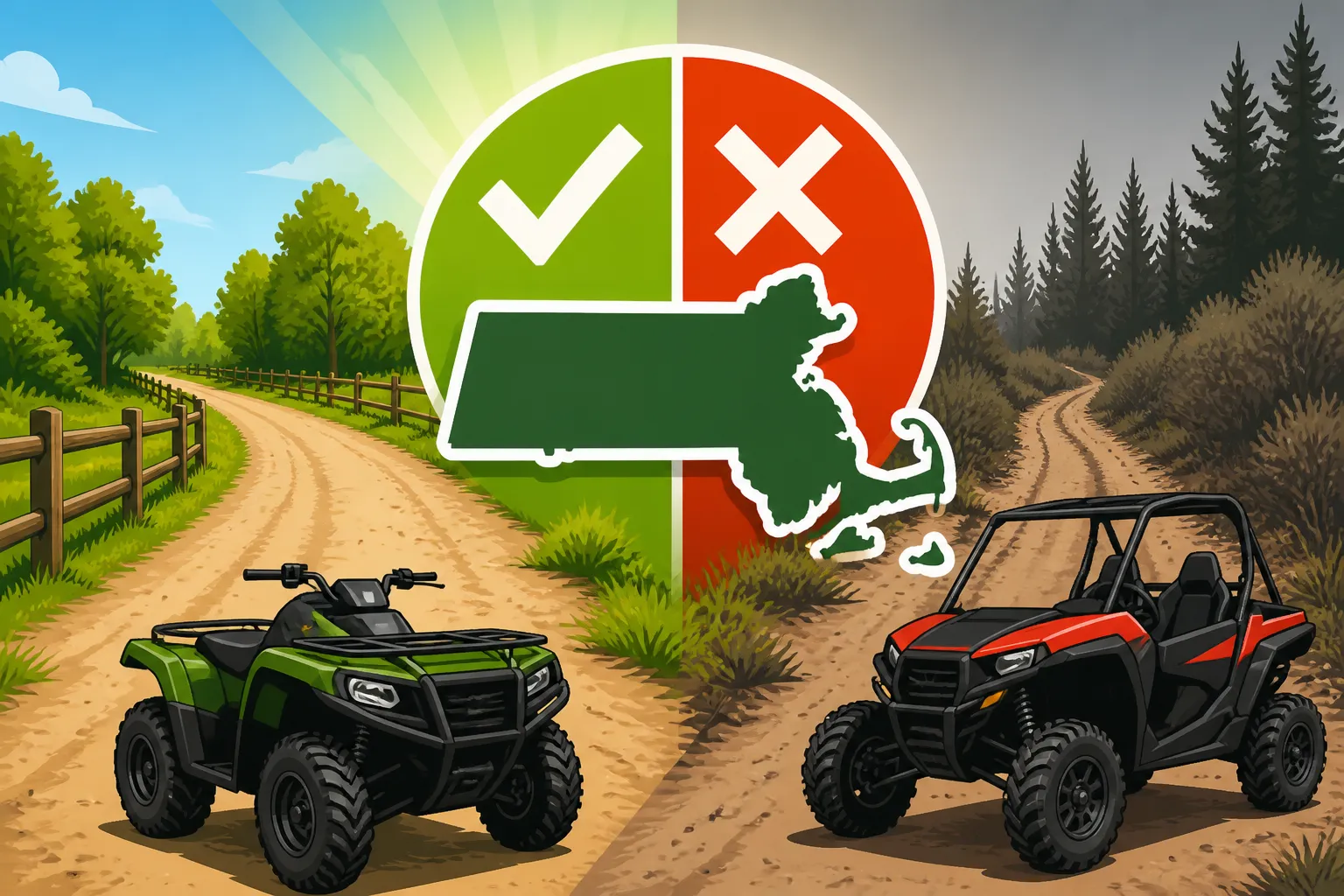
This is where Massachusetts OHV riding truly shines. The state, through the Department of Conservation and Recreation (DCR), designates specific areas within state forests for OHV use. These areas often include a network of dirt roads and trails that are legally accessible to registered ATVs and UTVs. For example, [Massachusetts ATV Trails: Three Berkshire Forests] are well-known spots where you can legally ride on designated dirt paths.
It’s important to understand that even within a state forest, not all dirt roads or paths are open to OHVs. There are usually clearly marked entrances and designated trail systems. Roads that serve as access points for DCR facilities, ranger stations, or other non-OHV recreational uses within a state forest may still be considered public ways or otherwise restricted. Always consult official DCR maps and signage at the trailhead. These are the places where your registered machine and a valid safety certificate (if required for your age) will serve you best. For more on general access, you can look into [Massachusetts Riding and Trail Access].
How to Identify and Verify a Dirt Road's Status
Knowing the rules is one thing, but practically applying them on the ground can be tricky. There are several steps you can take to determine whether a dirt road is a public way or a permissible trail.
Checking Town Maps and By-laws
Before you even load up your machine, a little research can save a lot of headaches. Town halls in Massachusetts often have maps that delineate public roads, including unpaved ones. You can also inquire with the local Department of Public Works (DPW) or town planner. They can often clarify the status of specific roads or paths. Some towns also have local by-laws that further restrict OHV use, even on private land, so it’s wise to check these as well.
The goal here is proactive investigation. Don’t wait until you’re facing an Environmental Police officer to try and figure out if you’re in the right. A quick call or visit to the town office can provide definitive answers and ensure your ride is worry-free. This is particularly important if you’re exploring an area for the first time or if you're planning a trip to a new part of the state where you're unfamiliar with local nuances.
Observing Signage and Maintenance Clues
When you’re actually out in the field, look for visual cues. Signage is your first and most obvious indicator. "No Trespassing" signs, "Private Road" signs, or even official-looking street signs (even if they're for a dirt road) are strong signals to stay off. Conversely, signs that explicitly welcome OHVs, like "Authorized ATV Trail" or "DCR OHV Area," clearly mark areas where you can ride.
Beyond signs, observe how the road is maintained. Does it look regularly graded? Are there culverts that appear to be professionally installed and maintained? Is there evidence of snow plowing in winter? These are all strong indicators that the road is a publicly maintained thoroughfare, even if it's unpaved. A trail that is solely for OHVs will often show signs of specific trail maintenance, like trail markers for shared use, rather than general road upkeep.
When in Doubt, Don't Go
This is perhaps the most critical piece of advice for any Massachusetts OHV rider. If you are unsure about the legal status of a dirt road, the safest and smartest course of action is to simply not ride on it. The consequences of operating your ATV or UTV illegally on a public way can range from significant fines to having your machine impounded. [Massachusetts Penalties for Illegal Riding] are not to be taken lightly, and ignorance of the law is rarely an acceptable defense.
It's better to stick to known, clearly marked OHV trails within state forests like October Mountain, Beartown, or Pittsfield State Forest. These areas are specifically designated for your enjoyment and have clear boundaries. Avoid the temptation of exploring ambiguous dirt roads, no matter how inviting they look, unless you have absolutely confirmed their legal status for OHV use. Remember, the Environmental Police are out there, and they know these areas well.
Here’s a quick overview of typical dirt road statuses for OHV riders in Massachusetts:
| Type of Dirt Road | Typical OHV Status | Key Indicators |
|---|---|---|
| Town-Maintained Roads | Generally Prohibited | Regular grading/plowing, street signs, residential access |
| State Forest Designated Trails | Permitted (with registration) | Official DCR trail markers, maps, specific "OHV Trail" signs |
| Private Roads/Logging Paths | Prohibited (without permission) | "Private Road" signs, gated, no maintenance, remote |
| "Unimproved" Public Ways | Generally Prohibited | Marked on town maps as public, serves as a throughway |
Equipping Your Machine for Legal Riding (and Avoiding Road Use)
While the focus here is on identifying legal riding areas, it's also worth a moment to consider how your machine and its accessories fit into this picture. Many riders, myself included, often turn to companies like SuperATV for durable skid plates, winches, or suspension upgrades that are crucial for tackling the challenging terrain found in places like October Mountain. These are the kinds of modifications that enhance your machine's capability where it's actually designed and permitted to be ridden – off-road.
Trail-Specific Gear vs. Road-Legal Mods
It’s important to distinguish between accessories that improve off-road performance and those that might seem to make your OHV "street legal." While SuperATV offers fantastic aftermarket parts for off-road performance, remember that adding accessories like turn signals or mirrors doesn't magically make a machine street legal in Massachusetts. The state has [Massachusetts Has No Street Legal Path] for ATVs and UTVs. Even if your side-by-side has headlights and seatbelts, it is not designed or licensed for general road use.
Instead, focus your modifications and gear choices on safe and effective trail riding. This means investing in proper helmets (which are legally required, as detailed in [Massachusetts ATV Helmet Law]), protective riding gear, and the kind of sturdy components, like those from SuperATV, that can withstand the rigors of actual trail conditions. If you're thinking about adding a new light bar from SuperATV, consider its use for night riding on approved trails, rather than illuminating a public road where your machine shouldn't be anyway.
The Importance of Maintenance for Off-Road Use
Responsible riding isn't just about knowing where to go; it's also about ensuring your machine is in top condition. This includes regular maintenance of your brakes, tires, and, importantly, your muffler system. Massachusetts has noise regulations, and an excessively loud machine can draw unwanted attention, especially if you're mistakenly riding too close to residential areas or on inappropriate paths.
Ensuring your machine is in top condition for trail use often means investing in quality components, and SuperATV has a wide range of options to consider for enhancing your quad's capabilities where it's actually allowed to be ridden. A well-maintained OHV is not only safer but also reduces your impact on the trails and minimizes the chances of attracting attention from the authorities for mechanical issues, leaving you free to enjoy the designated riding areas Massachusetts has to offer. For an idea of what an officer might check, refer to [What an Environmental Police Officer Can Ask].
Disclaimer
This article is for general informational purposes only and does not constitute professional advice. Laws, prices and regulations vary by location and change over time. Consult a qualified professional for guidance on your specific situation.