Massachusetts Bans Beach and Dune Damage
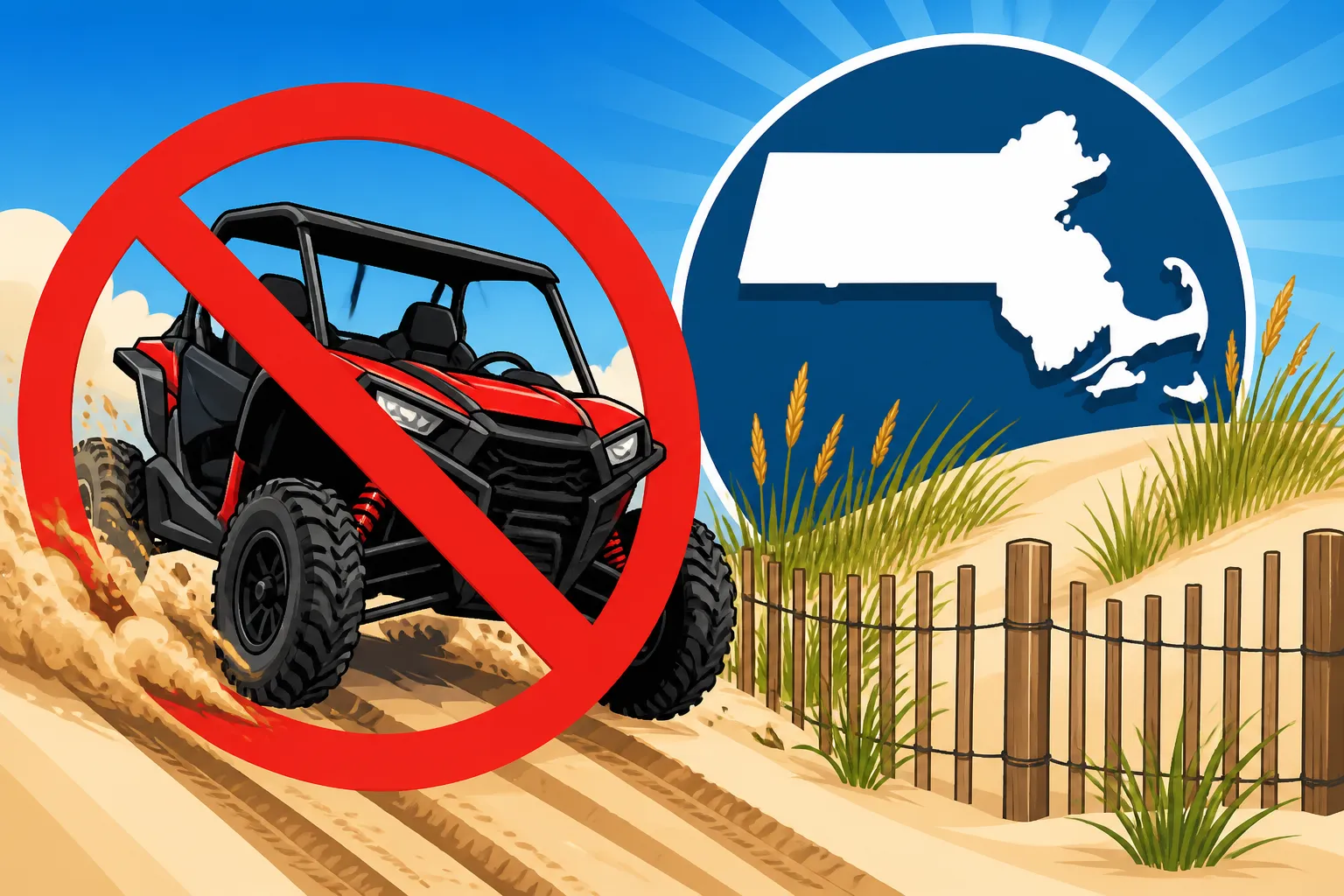
It's a common dream for many ATV and UTV enthusiasts to imagine cruising along the beautiful Massachusetts coastline, feeling the ocean breeze and exploring unique terrains. However, the reality is that riding off-road vehicles on beaches and dunes in Massachusetts is largely prohibited, and for very good reason. This comprehensive guide will break down why these restrictions are in place, what constitutes illegal activity, the serious consequences of non-compliance, and crucially, where you can legally and responsibly enjoy your ATV or UTV in the Bay State.
Understanding Massachusetts' Stance on Beach and Dune Riding
Let's face it, the image of an ATV tearing across an open beach or climbing a sandy dune is often romanticized in media. But here in Massachusetts, that vision clashes directly with critical environmental protections. The state has very strict regulations governing off-highway vehicles (OHVs), and these rules are designed to protect fragile ecosystems, public safety, and the natural beauty that draws so many to our shores. The frustration of not being able to explore every scenic vista with your machine is understandable, but the reasoning behind these bans is rooted in long-term ecological preservation.
The Fragile Ecosystem of Coastal Areas
Beaches and dunes aren't just piles of sand; they are vibrant, delicate ecosystems that serve crucial roles in our coastal environment. Dunes, especially, act as natural barriers against storm surges and erosion, protecting inland properties and habitats from the destructive power of the ocean. Their stability relies heavily on specialized vegetation, like beach grass, which has extensive root systems that bind the sand together.
When an ATV or UTV drives over these areas, the impact can be devastating. Tires crush vegetation, disrupting the root structure that holds the sand. This seemingly minor damage can lead to rapid erosion, making dunes more vulnerable to wind and water, and significantly reducing their effectiveness as natural flood defenses. Beyond the plants, these areas are home to a diverse array of wildlife, from nesting birds like the endangered Piping Plover to various insects and small mammals. The noise and disturbance from OHVs can disrupt breeding cycles, destroy nests, and displace wildlife, pushing them into less suitable habitats. The ruts left behind by vehicles can also trap small animals, leading to injury or death.
Legal Framework Protecting Coastal Lands
Massachusetts law, particularly under Chapter 90B, which governs the use of recreational vehicles, explicitly addresses the protection of these sensitive areas. The overarching goal is to prevent damage to public and private lands, with special emphasis on environmentally vulnerable zones. While the exact wording might not always say "no ATVs on beaches," the intent and enforcement are clear: activities that cause damage or disruption to natural resources are prohibited. This extends to any land, public or private, where such damage would occur without written permission.
Local municipalities often have their own bylaws that further restrict access to beaches, coastal wetlands, and conservation areas, sometimes even for pedestrians, let alone motorized vehicles. These local rules supplement state law and reflect a strong commitment to preserving Massachusetts' unique coastal character. [Massachusetts Bans Beach and Dune Damage] is not just a suggestion; it’s a foundational principle embedded in environmental protection efforts, acknowledging the irreversible harm that can come from unregulated vehicle access.
Specific Prohibitions and What Constitutes Damage
It's not just about actively trying to destroy a dune. The law is broad and covers any action that harms these sensitive environments. Understanding the specifics can help you avoid accidental violations and appreciate the reasoning behind the rules.
Direct Damage to Dunes and Vegetation
Any action by an OHV that directly impacts the physical structure of a dune or the vegetation growing on it is considered illegal. This includes, but isn't limited to:
- Driving over dunes: This is perhaps the most obvious violation. Even a single pass can compact sand, disrupt root systems, and create ruts that accelerate erosion. The delicate ecosystem simply isn't built to withstand the weight and traction of an ATV or UTV, especially with accessories from companies like SuperATV that might enhance traction for other terrains but would only amplify damage on soft, vegetated dunes.
- Crushing beach grass or other dune flora: These plants are vital. Their deep root systems are the unsung heroes of dune stability. Driving over them, even if you don't feel like you're "damaging" the dune itself, is still destroying the very thing that protects it.
- Creating ruts or erosion channels: Vehicle tires leave distinct tracks. On stable ground, this might be harmless. On sand, especially on a slope, these tracks can become channels for wind and water, leading to rapid erosion and undermining the dune's structure.
The law isn't waiting for a dune to collapse before it considers damage done. The act of driving in a way that causes or contributes to potential damage is often enough for a citation. It’s about protecting the long-term health and stability of these natural barriers.
Riding on Beaches Below the High Tide Line
While dunes are clearly off-limits, what about the wide-open beach itself, below the high tide line? The rules here can be a bit more nuanced, but generally, motorized vehicle access is severely restricted or entirely prohibited.
- Ecological Impact: Even on the seemingly barren sand of the intertidal zone, life thrives. Numerous species of invertebrates burrow just beneath the surface, feeding shorebirds and other marine life. OHVs can crush these organisms, disrupt feeding patterns, and leave behind pollutants.
- Public Safety: Beaches are popular recreational areas for swimming, sunbathing, and walking. Introducing fast-moving, heavy vehicles creates a significant safety hazard for other beachgoers. The unpredictability of the sand's surface, combined with potential hidden debris, also poses risks to riders themselves.
- Specific Prohibitions: Many beaches, both state-owned and municipal, explicitly ban vehicles. You'll often see signs detailing these prohibitions. In areas where vehicles are permitted (usually for specific purposes like fishing access or commercial activities), it's typically under strict controls, permits, and often only for street-legal vehicles or trucks, not ATVs or UTVs. The concept of [Massachusetts Bans Beach and Dune Damage] extends to the entire coastal zone.
Disturbing Wildlife and Nesting Areas
This ties closely with the ecological impact but deserves its own emphasis. Massachusetts is home to numerous coastal bird species, many of which nest directly on beaches or in dune grasses. These ground-nesting birds, like the Piping Plover and Tern species, are highly vulnerable.
- Nesting Season: During nesting season, typically spring through late summer, areas are often roped off to protect nests and fledglings. Driving an OHV into or near these areas is a severe violation, as it can crush eggs or chicks, or cause adult birds to abandon their nests.
- General Disturbance: Even outside nesting season, the presence and noise of OHVs can scare away resting or feeding birds, forcing them to expend valuable energy seeking new, undisturbed areas. This can impact their overall health and survival, especially during migration periods.
The state takes these protections seriously, and violations regarding protected species can carry especially harsh penalties.
Penalties for Violating Beach and Dune Riding Laws
Ignorance of the law is never a defense, especially when it comes to environmental protection. The penalties for riding an ATV or UTV on prohibited coastal lands in Massachusetts can be substantial, impacting your wallet, your riding privileges, and potentially even your freedom. It's not just a slap on the wrist; these are serious infractions.
Fines and Court Costs
First and foremost, you're looking at fines. These can vary depending on the severity of the damage, whether it's a first offense, and local ordinances. State fines for OHV violations can range from hundreds to thousands of dollars. Local communities might add their own fines on top of that.
Consider a scenario: you're out for a ride with your new UTV, perhaps outfitted with some enhanced suspension or a custom sound system from SuperATV, thinking you'll just take a quick spin down to the beach near Provincetown. An Environmental Police Officer spots you. You could be issued a citation for a number of violations. Not only will you face a significant monetary fine, but there will also be court costs and administrative fees if you choose to dispute the ticket or if it goes to court. These quickly add up, turning what seemed like a harmless adventure into a very expensive lesson. [Massachusetts Penalties for Illegal Riding] often include these types of environmental infractions.
Loss of Riding Privileges
Beyond the financial hit, a violation can lead to the suspension or revocation of your OHV registration. If your registration is suspended, you cannot legally operate any OHV in Massachusetts for that period. If it's revoked, you might lose the ability to register a machine for an extended time or even permanently, depending on the severity and frequency of the offenses.
Imagine investing in a new side-by-side, going through all the proper steps for [Massachusetts Registration for a Side-by-Side], only to lose the privilege to ride it because of a poor decision to take it onto a restricted beach. This effectively takes your machine out of commission for legal riding, making your investment a costly ornament.
Vehicle Seizure and Impoundment
In egregious cases, particularly those involving significant environmental damage or repeat offenses, your ATV or UTV could be seized by law enforcement. This means your machine is impounded, and you'll incur storage and towing fees to get it back, in addition to any fines. In some instances, the vehicle could even be forfeited to the state.
The hassle and expense of retrieving an impounded vehicle are considerable. It involves navigating bureaucracy, paying accumulated fees, and potentially facing additional legal proceedings. This is a far cry from the carefree ride you might have envisioned.
Environmental Restoration Costs
If your riding causes demonstrable damage to dunes or sensitive habitats, you could be held liable for the costs of environmental restoration. This could involve paying for specialized equipment, labor, and materials to repair erosion, replant vegetation, or mitigate other ecological harm. These costs can easily run into the tens of thousands of dollars, far exceeding any initial fine.
This is where the law truly reflects the value of these natural resources. The state isn't just punishing you; it's seeking restitution for the damage done to public lands and ecosystems. This responsibility falls directly on the offender, making illegal beach and dune riding a gamble with potentially ruinous financial consequences.
Criminal Charges and Record
While less common for a first-time, minor infraction, severe or repeated violations, especially those involving significant damage to protected lands or endangered species, could escalate to criminal charges. A criminal record can have long-lasting implications, affecting employment, housing, and other aspects of your life.
This underscores the seriousness with which Massachusetts treats its environmental protection laws. What might seem like a bit of harmless fun can quickly turn into a legal nightmare with profound personal repercussions. It's a stark reminder that while the thrill of riding is appealing, it must always be balanced with legal compliance and environmental responsibility.
Where to Legally and Responsibly Ride Your OHV in Massachusetts
Okay, so beaches and dunes are out. That might feel like a bummer, but don't despair! Massachusetts still offers fantastic opportunities for ATV and UTV enthusiasts, provided you know where to go and follow the rules. The key is to seek out designated trails and riding areas that are specifically managed for OHV use.
State Forests with Designated OHV Trails
Massachusetts is home to several state forests that welcome ATVs and UTVs on designated trail systems. These areas are managed by the Department of Conservation and Recreation (DCR) and offer a variety of terrain, from winding woods roads to more challenging trails. The DCR works hard to maintain these trails and ensure they are sustainable for OHV use, often in partnership with local clubs.
Here are some prime examples in the western part of the state:
- October Mountain State Forest: Located in Lee and Washington, this is Massachusetts' largest state forest and offers around 30 miles of marked ATV and UTV trails. The terrain can be varied, with some challenging sections, climbs, and descents. It’s a fantastic place to test your machine, maybe with some robust A-arms or heavy-duty axles from a brand like SuperATV, knowing you're on a legal, maintained trail.
- Beartown State Forest: In Monterey and Great Barrington, Beartown provides about 25 miles of trails. Riders often praise its scenic beauty, especially during the fall foliage season. These trails are generally rated for intermediate to experienced riders, offering a good mix of climbs and rocky sections.
- Pittsfield State Forest: Near the city of Pittsfield, this forest has approximately 14 miles of trails open to OHVs. While perhaps not as extensive as October Mountain, it still offers a solid day of riding with diverse landscapes.
Before heading out to any state forest, always check the DCR website for current trail conditions, closures, and specific regulations. The riding season for OHVs in these forests typically runs from May 1st to November 30th. Remember, [Massachusetts DCR Riding Season] is strict, and trails may close temporarily due to weather, mud, or maintenance.
Permitted Private Lands
While public lands offer the most accessible options, riding on private land is also permissible, provided you have explicit, written permission from the landowner. This is a critical distinction. Simply knowing the landowner isn't enough; you need a signed document stating their consent.
- Farm Use: Some farmers might permit riding for specific agricultural tasks, though this is less about recreation and more about utility.
- Club Properties: Some private clubs or organizations might own land and operate their own closed-course or trail systems for members. These are excellent options for consistent, legal riding, often with well-maintained facilities.
- Personal Property: If you own a large enough piece of land, you can ride your OHV on your own property. However, you must still adhere to local noise ordinances and the 150-foot dwelling rule, which dictates you cannot ride within 150 feet of a dwelling (other than your own) without written permission. [Massachusetts Requires Written Permission] is a fundamental rule for private land access.
It's crucial to understand that even with written permission, you must still follow all other Massachusetts OHV laws, including registration, age restrictions, and helmet requirements.
Table of Legal vs. Prohibited Riding Areas
To make it easier to understand, here's a quick reference table for general riding areas in Massachusetts:
| Riding Area Type | Legal for OHVs? | Important Considerations |
|---|---|---|
| State Forests | Yes | Only on designated, marked trails; seasonal closures; DCR regulations apply. Check conditions beforehand. |
| Municipal Forests/Parks | No (Generally) | Most local parks and forests prohibit OHVs unless explicitly designated. Always check local bylaws. |
| Private Land (with permission) | Yes | Written permission from landowner is mandatory. Must respect 150-foot dwelling rule and other state OHV laws. |
| Beaches & Dunes | No | Strictly prohibited. Highly sensitive ecosystems. Penalties are severe. |
| Public Roads/Highways | No | Never. OHVs are not street-legal in Massachusetts. [Massachusetts Has No Street Legal Path] for ATVs and UTVs. |
| Power Line Cuts/Utility Corridors | No (Generally) | Often private property or restricted access. Treat as private land, requiring written permission. |
| Rail Trails | No | Designed for non-motorized use (walking, cycling). OHVs are typically prohibited. |
| Snowmobile Trails (Winter) | No (Generally) | Snowmobile trails are for snowmobiles. OHVs (ATVs/UTVs) typically not allowed, even if snow-covered. |
This table provides a broad overview, but always double-check specific area regulations before you ride.
How to Prevent Accidental Damage and Stay Compliant
Staying on the right side of the law and being a responsible rider is about more than just avoiding fines; it's about preserving the environment for everyone and ensuring the future of OHV riding in Massachusetts. A proactive approach is always best.
Pre-Ride Research and Planning
The most crucial step in preventing accidental damage and staying compliant is thorough research before you even load your machine onto the trailer.
- Check Official Sources: Always consult the Massachusetts DCR website for the latest information on state forest OHV trails, including maps, rules, and any temporary closures. For private parks or club trails, visit their official websites or contact them directly. Never rely on old forum posts or word-of-mouth for legal information.
- Understand Local Bylaws: If you're considering riding near a specific town or conservation area, even if it's not a beach, investigate their local bylaws regarding OHVs. Some towns have stricter rules than the state.
- Review Your Route: Even on designated trails, pay attention to signage. Trails can be rerouted, or specific sections might be closed for maintenance or environmental protection. Don't assume a path is legal just because it "looks like a trail." [Massachusetts Trail Conditions Before You Tow] is a wise step.
Equipping Your Machine Responsibly
While aftermarket parts like those from SuperATV can significantly enhance your riding experience, choosing and using them responsibly is key. For instance, specific tire treads designed for aggressive mud or rock crawling might cause excessive damage on softer, less robust trail surfaces, even if they're not beaches.
- Appropriate Tires: Select tires that are suitable for the designated trails you'll be riding. Avoid overly aggressive treads that could churn up soil and cause erosion on sensitive dirt paths.
- Spark Arrestors: Massachusetts law requires all OHVs to be equipped with a spark arrester in good working order. This is a crucial safety device that prevents hot carbon particles from escaping the exhaust and potentially starting a wildfire, especially in dry forest conditions. [Does a Massachusetts Trail Machine Need a Spark Arrester?] Yes, it absolutely does.
- Mufflers: Your OHV must also have an adequate muffler system to prevent excessive noise. Respecting noise limits helps maintain good relationships with nearby residents and other trail users. [Massachusetts Muffler Requirements] are in place for a reason.
Responsible Riding Practices
Once you're on a legal trail, your riding behavior directly impacts the environment and the longevity of the trail system.
- Stay on Marked Trails: This is paramount. Do not create new trails, cut corners, or venture off designated paths. Veering off-trail can lead to erosion, damage vegetation, and disturb wildlife in unmanaged areas.
- Tread Lightly: Practice responsible riding techniques. Avoid excessive wheel spin, especially on climbs or in wet conditions, as this can dig ruts and accelerate erosion.
- "Pack It In, Pack It Out": Leave no trace. Carry out everything you carry in, including all trash, broken parts, and fluids. Litter pollutes the environment and detracts from the natural beauty of the trails.
- Respect Other Users: Massachusetts trails are often multi-use. You might encounter hikers, mountain bikers, or horseback riders. Always yield to non-motorized users, slow down, and pass with caution and courtesy. [Massachusetts Riding Etiquette Locals Expect] dictates this shared-use philosophy.
- Be Aware of Conditions: If trails are excessively muddy due to heavy rain, consider postponing your ride. Riding in very wet conditions can cause significant damage to trails, leading to deeper ruts and accelerated erosion, which then requires more maintenance or even closures. [Massachusetts Trail Riding After Heavy Rain] can be very destructive.
By adopting these preventative measures and riding with a strong sense of environmental stewardship, we can all contribute to the sustainable future of OHV recreation in Massachusetts, ensuring that designated trails remain open and enjoyable for years to come, without ever needing to risk the delicate beauty of our beaches and dunes.
Disclaimer
This article is for general informational purposes only and does not constitute professional advice. Laws, prices and regulations vary by location and change over time. Consult a qualified professional for guidance on your specific situation.