The Registration Card You Must Carry in Massachusetts
A registration card is easy to forget because it is small, but it matters when you ride an ATV or UTV in Massachusetts. The card is your proof that the machine is registered; it is not the same as the sticker, a safety certificate, or a title. Here’s what to carry, where to keep it, and what to do if it is missing or doesn’t match your machine.
What the registration card proves
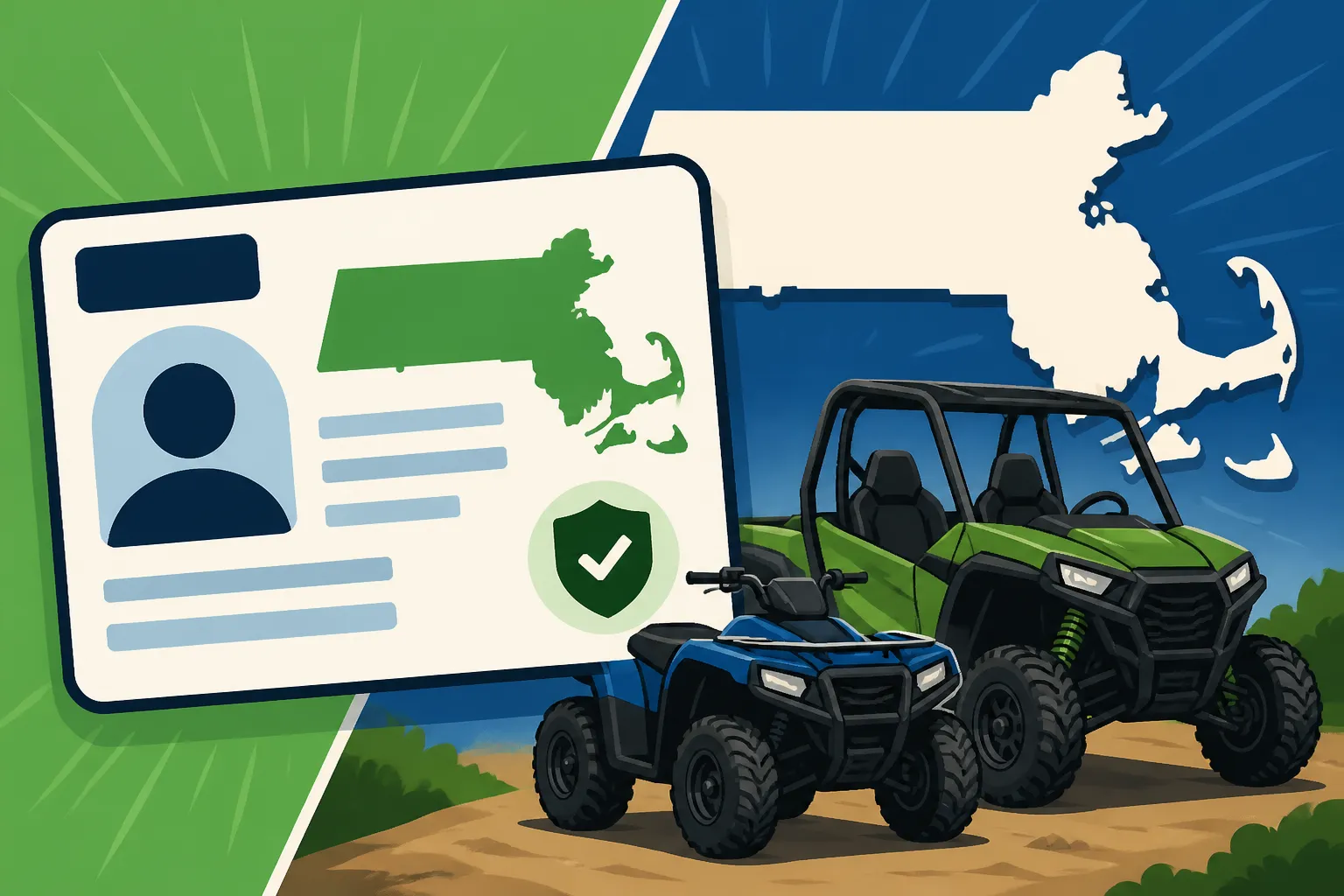
The registration card is the document associated with your Massachusetts off-highway vehicle registration. When you operate a registered ATV or UTV, keep the card with the machine so you can produce it if an officer asks to see it. Massachusetts guidance treats the card as something to carry on board, not as paperwork to leave at home or in the vehicle you used to tow your machine.
The card and the decal have different jobs:
- The card carries the registration information and serves as documentation for the registered machine.
- The decal is displayed on the machine as required by the placement rules.
- A safety certificate, when required for a rider, documents completion of the relevant safety requirements.
- A bill of sale or manufacturer’s certificate of origin may help establish how you acquired a machine, but neither replaces its registration card.
The registration card does not turn an ATV or UTV into a road-registered vehicle. Nor does it give you permission to ride on land where off-highway vehicles are not allowed. Registration is one part of being ready to ride; land access, rider rules, equipment requirements, and trail-specific conditions remain separate.
Massachusetts issues a registration card for an off-highway vehicle rather than a conventional vehicle title. That distinction can be confusing, especially if you are accustomed to registering a car. A card is evidence of registration, but it should not be treated as a title or as a substitute for purchase records. For background on the state’s system, see Why the Environmental Police Register ATVs, Not the RMV and Why the Environmental Police Issue a Card, Not a Title.
A useful quick comparison:
| Document or item | What it is for | Does it replace the registration card? |
|---|---|---|
| Registration card | Documents the machine’s Massachusetts OHV registration | No; this is the card you carry |
| Registration decal | Shows registration on the machine as required | No; it is displayed, not carried instead of the card |
| Safety certificate | Shows that a rider has met applicable safety-course requirements | No |
| Bill of sale | Records a purchase or transfer between parties | No |
| Manufacturer’s certificate of origin | Documents a new machine’s origin and initial ownership paperwork | No |
| Insurance card | Shows coverage if you have a policy | No; insurance is separate from registration |
The practical rule is straightforward: keep the registration card with the ATV or UTV whenever it is being operated. Do not assume that having a visible decal makes the card unnecessary, and do not assume that a photo of the card on your phone will be accepted in place of the physical card. If you want to rely on an electronic copy, confirm that the relevant authority accepts it before you ride; a phone image is best treated as a backup, not a replacement.
When you need to carry it
Carry the card whenever you are operating the registered machine, including during a short ride close to home or a trip on a familiar trail. The obligation does not become less important because you are riding with friends, using a private property entrance, or believe you are unlikely to encounter an officer.
A registration check can arise in more than one setting. An officer may ask to see documentation while checking a machine or investigating a concern. You may also need to show the card if there is a question about the registration number, the machine’s identity, or whether the machine is registered in Massachusetts. Keeping the card accessible makes that interaction simpler.
This applies to riders using different kinds of off-highway machines, including ATVs and side-by-sides, when the machine is subject to Massachusetts OHV registration requirements. If you are unsure which registration rules apply to a particular vehicle, check the requirements for its type rather than assuming that every off-road machine follows the same process. The rules and paperwork can differ for a dirt bike, snowmobile, or other vehicle category.
A card stored in the tow vehicle is not a dependable solution. Once you unload and ride away, the paperwork may be miles away or inaccessible. The same problem arises if the card is left at a campsite, in a garage, or with another member of the group. The safest routine is to check for the card before the machine leaves the trailer, then keep it with the machine for the ride.
If your machine is used by more than one person, decide where the card will stay and tell every operator. For example, a family might keep it in a secure pouch attached to the machine and make the rider responsible for checking it before departure. That arrangement is more reliable than assuming someone else has packed the documents.
A registration card is also useful when it is not being shown to an officer. It can help you verify that the registration details belong to the machine you are riding. Before a trip, compare the card with the machine and its decal. If the information appears inconsistent, do not wait for a trailhead check to investigate it.
For a fuller overview of the documents and steps involved in registering, use Massachusetts Registration Paperwork Checklist. If you are still preparing to ride after registering, Massachusetts Registration Before Your First Ride can help you think through the other requirements that registration alone does not cover.
How the card fits with the sticker and other paperwork
Owners sometimes treat the card and decal as interchangeable because both relate to registration. They are not. The decal is placed on the vehicle according to Massachusetts rules; the card stays available as documentation. One does not replace the other.
Follow the instructions supplied with your registration and check the current decal rules for your vehicle type. Placement matters because a decal that is missing, damaged, or displayed incorrectly may create avoidable questions. See Massachusetts Decal Placement Rules for the placement requirements and Massachusetts Registration Cards Carried on Board for more on keeping the card with the machine.
Do not put the card on the machine in place of the decal. Likewise, do not assume that carrying the card excuses you from displaying a required decal. Think of the two as complementary: one is carried, the other is displayed.
The registration card is also not the same as a safety certificate. Some riders—particularly young riders—may have safety-certificate requirements in addition to registration requirements. Having the registration card does not prove that a rider has completed a required course. A parent or supervising adult should check the rider’s age-related rules and make sure the appropriate documentation is available when required.
Registration is not a trail pass, either. A valid card and decal do not automatically authorize riding on every public forest, town property, private parcel, or trail. You still need to confirm that the place allows your type of machine and that it is open for riding. Similarly, landowner permission and any site-specific permit remain separate matters.
A registration card should not be used as the sole proof of ownership in a purchase dispute. Keep your purchase documents, such as a bill of sale or original manufacturer paperwork, with your personal records. The card helps document registration, but it is not a substitute for keeping a clear record of how the machine came into your possession.
That difference matters when you sell, transfer, inherit, or replace a machine. Registration records can identify a machine and its registered information, while purchase and transfer documents help explain the transaction. If the machine changes hands, follow the applicable registration process rather than simply handing the buyer your card and assuming the record has changed. For a private sale, see Massachusetts Registration After a Private Sale.
How to keep the card with the machine
The card needs to be available during the ride, but it should also be protected from water, mud, vibration, and loss. A loose card in a pocket can become soaked or fall out when you stop. A card kept in an unsealed compartment may be exposed to rain or spray. Choose a secure storage method that keeps the document legible and stays with the machine.
Practical options include a small waterproof document sleeve, a sealed pouch, or a secure compartment designed to hold paperwork. If you shop for a sleeve or pouch on Amazon, check the dimensions, closure style, and whether it can be fastened securely; a container that opens easily or swings loose can be more trouble than it is worth. A local outdoor or powersports shop may also carry suitable storage accessories.
Whichever option you use, make sure the card can be retrieved without dismantling equipment or searching through a packed cargo area. A card should be protected, but not buried beneath tools, straps, or riding gear. If an officer asks to see it, you want to be able to find it promptly.
Consider these points when choosing a place:
- Keep it attached to the machine or in a clearly assigned on-board compartment. Avoid a location that leaves it behind when someone else operates the ATV or UTV.
- Protect it from water and abrasion. A torn or unreadable card may be harder to use when you need it.
- Keep it separate from items that may spill or leak. Fuel containers, chain lubricant, wet gloves, and muddy tools can damage paper.
- Avoid a location that can be removed and forgotten. A storage box or pouch that is routinely transferred between vehicles can easily be left at home.
- Make sure it is secure but accessible. A pouch that is difficult to open with gloves may slow you down at the wrong moment.
Some owners like to keep a backup image of the card on a phone or save a copy with their household records. That can help if the original is damaged or misplaced, but it should not be assumed to satisfy the requirement to carry the card. The physical card remains the practical choice unless the appropriate authority confirms another format is accepted.
If you make a backup, protect personal information. Registration records may include details you would not want casually shared. Store an image in a secure place rather than posting it in a group chat or leaving it in a public photo album.
Avoid altering the card. Do not write over printed information, cover details with tape, or make changes yourself if a name or address is wrong. Ask about the official correction process. Keeping the original intact makes it easier to establish what the registration document says and to resolve discrepancies properly.
A small card pouch can be a sensible accessory, but it does not need to be elaborate. If comparing options on Amazon, focus on water resistance, a dependable closure, and a way to secure it to the machine. The goal is simply to keep the card dry, readable, and available—not to create another piece of gear that can be detached and lost.
Check the card before you ride
Before each trip, take a moment to confirm that the registration card is present and that its information appears to match the machine. This is especially worthwhile after buying a used vehicle, transferring the registration, replacing a decal, or moving the document to a different storage location.
Check the following:
- The card is physically with the machine. Do not rely on memory or on the fact that it was present on the last ride.
- The registration information appears consistent with the vehicle. Check the identifying details against the machine and any registration decal.
- The card is legible and in usable condition. If it is badly damaged or details cannot be read, ask the registration authority what to do.
- The decal is present and displayed as instructed. A card does not excuse a missing or improperly placed decal.
- The machine’s registration has not been confused with another vehicle’s paperwork. This is an easy mistake when a household owns multiple ATVs or UTVs.
If you have more than one machine, give each card a clearly assigned place. Do not keep several similar cards together in one pocket and sort them out only when someone asks. You can use separate labeled sleeves or dedicated compartments, while making sure the labels do not obscure the official documents.
Before a group ride, each operator should confirm their own machine’s card is on board. A group leader’s paperwork does not cover the other machines in the group. The same applies when you lend a machine to a friend: make sure the card stays with it and that the person knows where it is stored.
When buying a used ATV or UTV, inspect the card as part of the paperwork review, but do not treat it as proof that every registration detail is settled. Confirm that the machine’s identification information matches, and ask the seller about any discrepancy before completing the transaction. Keep the bill of sale and other purchase records separately. For broader registration questions after a purchase, see What a Bill of Sale Must Show to Register and Massachusetts Registration Processing Time.
If the card names a prior owner, do not assume that carrying it makes the registration current in your name. Find out what steps are required to register or transfer the machine. The correct process can depend on how you acquired it and what documents are available. A card that belongs to a different machine or reflects outdated details can cause confusion even if it has been kept carefully.
Residents, visitors, and machines from another state
Massachusetts registration rules matter to visitors as well as residents. A rider visiting from another state should not assume that a home-state sticker or registration is automatically accepted in Massachusetts. The state’s visitor requirements are separate, and Massachusetts does not offer general reciprocity for another state’s OHV registration. Confirm what is required before loading the machine and traveling.
For visitor-specific information, see Massachusetts Has No Reciprocity for Visitors and Massachusetts Visitors Buy a One-Year Sticker. The important point for this article is that, once you are riding under a Massachusetts registration, you should carry the associated Massachusetts card with that machine. A home-state card is not a substitute for a Massachusetts document if the Massachusetts registration requirement applies.
Residents should also keep the card with the machine even if it is ordinarily ridden only in Massachusetts. Do not rely on the idea that the registration is already in the state’s system, that the decal is visible, or that you can look up the information later. The card is the on-board document intended to accompany the registered vehicle.
If you move into Massachusetts with an ATV or UTV, check the registration requirements for a new resident rather than assuming your former state’s paperwork will remain sufficient. A move may affect where the machine must be registered, what supporting documents are needed, and what registration information must be updated. Massachusetts Registration for a New Resident and Massachusetts Registration Address Change cover those situations.
Likewise, if you have a machine registered in Massachusetts but keep it at a camp, seasonal property, or another address, make sure the registration details are accurate and that the card travels with the machine. Storage location does not change the basic carrying habit. If the machine is used by relatives or guests, tell them where the card is and remind them that registration does not authorize riding on land without permission.
There is also an important distinction between a registration card and a permit issued for a particular riding area. Some places may have their own access procedures or operating conditions. A registration card does not replace those. Before traveling, check the rules for the specific property or trail system, including seasonal closures, vehicle-type restrictions, parking procedures, and whether a separate permit is needed.
If your card is lost, damaged, or incorrect
If the card is missing, do not treat the decal as a complete substitute. Find out how to request a replacement and what documentation or steps are required. The replacement process may depend on the type of registration and current agency procedures, so check official instructions rather than relying on an old form or advice from another rider. For the basic replacement issue, see Replacing a Card You Lost.
If the card is damaged, keep the remaining document and contact the registration authority for guidance. Do not try to recreate the card, edit the information, or rely on a handwritten note as an official replacement. A photo or scan may be useful for reference while you arrange a replacement, but do not assume it is accepted for riding unless that has been confirmed.
If your card is lost while away from home, take practical steps to avoid losing track of the problem. Check the machine’s storage areas and the gear you carried. If you cannot find it, contact the relevant registration office and ask what options are available before continuing to ride. Do not assume that showing a decal, a phone photo, or a payment receipt will meet the card requirement.
If the card has the wrong name, address, or vehicle information, ask how to correct the record and obtain an updated document. Do not alter the card yourself. Keep copies of relevant paperwork and make a note of whom you contacted and what steps they gave you. The process may take time, so do not leave it until the morning of a planned trip.
An address change may not automatically change every record tied to the vehicle. Check the current process for updating registration information, particularly if you have moved or if the card is being sent to an old address. The article Massachusetts Registration Address Change can help you identify the issue to resolve.
A card that does not match the ATV or UTV deserves attention before the next ride. Do not swap cards between machines just because they are the same make or model. Registration documents are associated with particular vehicles. Contact the appropriate office to understand whether the machine has been registered incorrectly, whether a record needs correction, or whether you need to submit additional paperwork.
If you have just applied for registration and are waiting for the card, do not guess about whether you may ride. Processing times and temporary-document rules can vary. Confirm what the agency allows in your specific situation before operating the machine. A payment confirmation or submitted application may show that you started the process, but it should not automatically be treated as proof that all requirements are satisfied. See Massachusetts Registration Processing Time for more on the waiting period.
A simple routine that prevents most card problems
The easiest way to avoid a forgotten or unusable registration card is to make it part of the same routine as checking the machine and loading the trailer. Pick one secure storage place and leave the card there. Before a ride, confirm it is present, confirm the decal is displayed, and make sure the paperwork matches the machine.
A useful pre-ride sequence is:
- Check the machine’s condition and required equipment.
- Confirm the registration decal is present and placed according to the rules.
- Check that the registration card is in its assigned on-board holder or compartment.
- Confirm that the card belongs to the machine you are about to ride.
- Check any separate rider, land-access, or site-specific requirements.
This habit is especially helpful when multiple people share a machine, when several ATVs are stored together, or when you ride only a few times each season. The card can be easy to overlook precisely because it is small and rarely needed during an ordinary ride.
Keep your personal copies and purchase paperwork in a separate, secure place at home. That way, if the on-board card is lost or damaged, you have useful records when contacting the registration office. A backup image can also help you remember the registration details, but keep it private and do not treat it as a confirmed substitute for the original.
For many riders, a simple waterproof pouch is enough. If you are looking for one on Amazon, choose a compact option that closes securely and can stay attached to the machine without interfering with safe operation. Check it periodically: a pouch can wear out, come loose, or fill with mud just like any other accessory.
The key distinction is worth remembering: the decal is displayed, the card is carried, and neither one replaces permission to ride. Keep the card with the registered ATV or UTV, protect it from damage, and check the current official requirements when your registration changes or a document is missing.
Disclaimer
This article is for general informational purposes only and does not constitute professional advice. Laws, prices and regulations vary by location and change over time. Consult a qualified professional for guidance on your specific situation.