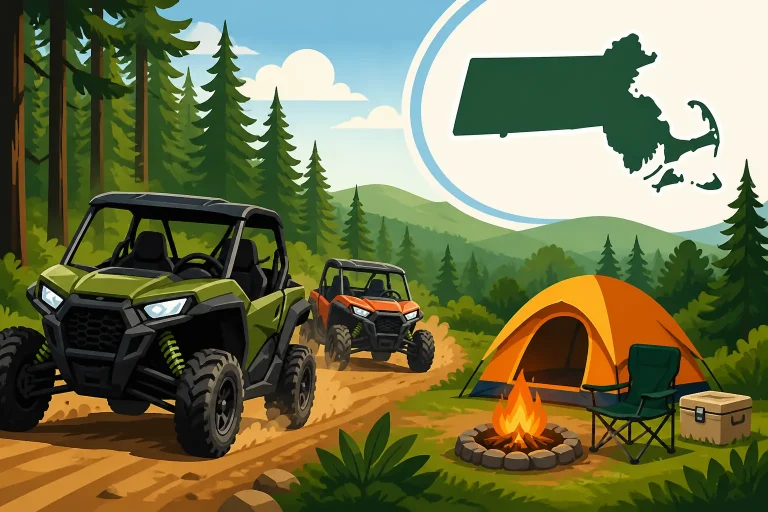
Massachusetts Private Park Camping Rules
Private riding parks can make an overnight ATV or UTV trip easier, but a campsite reservation does not automatically settle the riding rules. Massachusetts state requirements still matter, and each private park can set its own conditions for camping, noise, guests, and trail access. The key is to confirm what your booking covers before you tow in.
A campsite reservation is not automatically a riding permit
Private parks set their own booking and access procedures. One may sell a camping package that includes riding; another may require separate trail access, vehicle registration details, or a check-in at the office. Ask exactly what your reservation includes before you treat it as permission to unload and ride.
Keep the distinction clear:
- The campsite reservation gives you permission to occupy a designated camping spot under the park’s terms.
- Riding access may require a separate pass, waiver, vehicle check, or other park-specific approval.
- Massachusetts registration and riding laws apply independently of the park’s own rules.
A park’s private-property status does not mean riders can ignore state requirements. Massachusetts has its own registration rules, and an out-of-state registration or sticker should not be assumed to satisfy them. Check Massachusetts Requires Its Own Registration and Out-of-State OHV Stickers Are Not Valid in Massachusetts before planning a trip with a machine registered elsewhere. If you are visiting from another state, confirm which registration you need and whether it covers the machine you intend to ride.
Likewise, permission to camp is not necessarily permission to ride every trail, at every time, or in every direction. Ask whether the park limits access by vehicle type, rider age, trail condition, noise, or operating hours. A route that is open to an ATV may not be suitable or approved for a wider side-by-side. Get a clear answer for the exact machine you plan to bring.
Ask these questions before you book
A quick call or written message can prevent a long drive with the wrong expectations. Ask:
- Does the camping reservation include riding access, or is a separate riding permit required?
- Which machines are permitted, including side-by-sides and youth-sized quads?
- What registration documents, safety certificates, or proof of permission must riders carry?
- Are there rules for arriving, unloading, trailering, or riding after a certain hour?
- Are campfires, generators, pets, alcohol, or extra guests restricted?
- What happens if trails close because of weather or maintenance?
Save the park’s written reply, reservation confirmation, and any waiver or permit instructions. These documents can help if there is a misunderstanding at check-in. They are not substitutes for required state documents, but they give you a record of what the park authorized.
For broader park-specific conditions, see Massachusetts Private Park Waivers and Rules. If your trip involves riders under 18, review Massachusetts Rules for Young Riders on Public Land and check the park’s own age policies as well. Park rules can be stricter than the minimum legal requirements.
| Item to confirm | What to ask the park | Why it matters |
|---|---|---|
| Camping | Is the site reserved for your dates and group size? | A campsite booking may not include additional guests or riding access. |
| Riding access | Is trail use included or sold separately? | Camping and riding may be treated as separate permissions. |
| Vehicle type | Are your ATV or UTV dimensions and type allowed? | Some trails or facilities may not accommodate every machine. |
| Registration | Which Massachusetts documents must you show or carry? | A park check-in does not replace state registration requirements. |
| Quiet hours | When must engines and generators be off? | The park may impose limits beyond your normal riding schedule. |
| Weather closures | Are refunds, credits, or rescheduling available? | Trail access can change even when the campsite remains open. |
Massachusetts requirements still apply at a private park
A private park can control access to its property, set conditions of entry, and ask visitors to follow facility rules. It cannot give a rider permission to disregard state law. Before your trip, confirm your machine is properly registered and that you have any required documents with you.
Massachusetts OHV registration is separate from a campground reservation, a park waiver, or a pass sold by a private business. Keep the registration card with the machine as required, and display decals as directed. The practical details are covered in The Registration Card You Must Carry in Massachusetts and Massachusetts Decal Placement Rules. If you need to register a visiting machine, use Massachusetts Visitors Buy a One-Year Sticker as a starting point and verify the current process with the official registration office.
Do not assume a sticker issued by another state is accepted simply because the park is private. State registration rules and the park’s entry rules are separate questions. Ask the park what it checks at the gate, then confirm the state requirement directly. A park’s approval is not a substitute for the registration Massachusetts requires.
Rider age and supervision rules also remain relevant. Private parks may set their own minimum ages, require an adult to accompany a young rider, or restrict certain machines. State law may impose additional limits. Before bringing a child, compare the park policy with the applicable state requirements rather than relying on the age rule for a different park or trail. Massachusetts Private Park Age Minimums explains why the park’s own minimum age is worth checking separately.
If a youth rider needs a safety certificate for the type of riding or land involved, confirm the requirement before arrival and carry the certificate when required. See Massachusetts Safety Certificates Under 18 for the state’s certificate framework. A waiver signed by a parent does not automatically replace a certificate, supervision requirement, or other state rule.
Written permission is another point to clarify. A park’s reservation confirmation or riding pass may document that the property owner authorized access, but do not assume a campsite receipt proves permission to ride. Ask the park what document it provides for riding, whether it applies to all riders in your party, and whether each rider should carry a copy. This is especially useful when the campsite and riding area have separate check-in points or when a group arrives in more than one vehicle.
Finally, follow equipment and operating rules. A park may inspect machines or refuse entry for a condition that creates a safety or noise concern. State requirements can apply too. Check Massachusetts Equipment Requirements and Massachusetts Sound Limits on State Land for background, while asking the private park which specific checks it performs. The park’s rules are the ones that govern access to its property, but they do not erase state obligations.
Camping rules vary from park to park
There is no single set of private-park camping rules that applies to every Massachusetts riding facility. Each operator may define where you can pitch a tent or park a camper, how many people may stay at a site, and whether machines can be parked beside the campsite. Read the confirmation and any posted rules carefully; if a key detail is missing, ask before making the trip.
Site limits and arrival plans
Check the maximum number of people, tents, vehicles, and machines allowed at your site. Find out whether the park assigns sites or lets guests choose from a designated area. Ask about arrival and departure windows, late check-in, and whether trailers can remain at the campsite. If you are towing a machine, confirm where the tow vehicle and trailer may be parked after unloading.
Group size deserves special attention. A large riding party might need more than one campsite or a separate group area, and the park may limit visitors who are not staying overnight. Confirm the total headcount, including children and guests who plan to visit only during the day. For organized rides, do not assume ordinary campsite reservations cover event requirements; review Massachusetts Group Size on a Forest Trail for the different considerations that can apply to larger groups.
Quiet hours, engines, and generators
Ask when riding must stop and when engines must be off near campsites. A park may have a quiet period that begins before the trails close, and it may limit generator use or require generators to be switched off overnight. Do not assume that a generator is acceptable simply because it is portable or quiet. Review [Massachusetts Private Park Quiet Hours] and Generator Rules at a State Forest Campsite for related planning points, while treating the private park’s posted schedule as the authority for its own property.
Be considerate when starting a machine early, warming it up, or loading it after a ride. Campsites can be close together, and engine noise travels. Keep unnecessary revving to a minimum, secure loose equipment, and avoid using a trail as a shortcut through a camping area unless the park directs you to do so.
Fires, alcohol, pets, and shared facilities
Never assume a fire is allowed just because the site has a fire ring. Ask whether the park permits campfires, what fuel may be used, and whether a temporary fire restriction is in place. Follow the park’s instructions for extinguishing a fire completely. Dry conditions can change what is allowed, so check again shortly before departure. Campfire Rules in a Dry Berkshire Autumn offers general planning context, but the private park’s current directions control at its site.
Alcohol policies also differ. Some facilities restrict alcohol throughout the property; others may limit it in certain areas or during particular events. Check before packing it, and make sure no one operates a machine after drinking. The park may remove guests who violate its policy, while state law remains a separate concern. See Massachusetts Private Park Alcohol Rules for more on this distinction.
If you plan to bring a dog, ask whether pets are permitted at campsites and on trails, whether they must be leashed, and whether they can be left unattended. A park may allow a pet at the campground but prohibit it in riding areas. Check [Massachusetts Private Park Pet Rules] and Bringing a Dog to a Private Riding Park before you travel.
Also ask about bathrooms, showers, drinking water, rubbish disposal, and quiet hours. Facilities can vary, and a basic campsite may not include the services you expect. Pack out what the park requires you to remove and leave the site in the condition its rules specify.
Pack and plan for an overnight riding trip
A little preparation makes check-in easier and helps keep camping separate from trail compliance. Keep documents in a waterproof folder or bag, and make sure the person responsible for the group knows where they are. If the park requests information in advance, send it before arrival rather than trying to sort it out at the gate.
A useful pre-trip checklist includes:
- Park reservation and written confirmation of riding access
- Any required riding pass, waiver, or permission document
- Massachusetts registration card and properly displayed decals
- Safety certificates or other rider documents required for your situation
- Contact information for the park and its check-in location
- Trailer and campsite details, including site limits
- A plan for fuel, food, water, and rubbish
- Flashlights, weather-appropriate bedding, and basic first-aid supplies
- A safe way to secure helmets, riding gear, and valuables overnight
For small camping items or document storage, shoppers may use Amazon to compare options, but check product dimensions and weather resistance rather than relying on a listing title alone. The right gear depends on whether you are tent camping, using a camper, or staying in a facility with shared amenities.
Plan your riding day around the park’s schedule, not just the time you expect to reach camp. Ask where to unload, whether machines may be driven through the campground, and where trailers should be parked. At the end of the day, follow posted routes back to your site and respect any engine cutoff time.
Weather can affect both trail access and camping comfort. A storm may close a riding area while the campground remains open, or the park may suspend access to protect trails. Ask how closures are announced and whether a reservation can be moved or credited. Do not ride around a closure sign or assume that a trail shown on an old map is open. Massachusetts Trail Planning and Closures and Massachusetts Trail Conditions Before You Tow can help you plan, but confirm conditions with the park before setting out.
A private riding park can be a convenient base for a weekend, provided you treat camping, riding permission, and state compliance as separate checks. Get the park’s rules in writing, carry the documents that apply to your machine and riders, and confirm the details again before departure. That approach avoids the most common mismatch: arriving with a campsite booked but no clear authorization or paperwork for the ride.
Disclaimer
This article is for general informational purposes only and does not constitute professional advice. Laws, prices and regulations vary by location and change over time. Consult a qualified professional for guidance on your specific situation.