Massachusetts Has No Reciprocity for Visitors
A visitor can arrive in Massachusetts with a valid ATV or UTV registration from home and still discover that it does not meet the state’s requirements for riding here. That extra step is easy to miss when you are planning a Berkshire weekend or visiting friends. This guide explains what reciprocity means, what out-of-state riders need to check, and how to avoid a wasted trip.
What Massachusetts no reciprocity means for visitors
Your home-state registration is not a Massachusetts registration
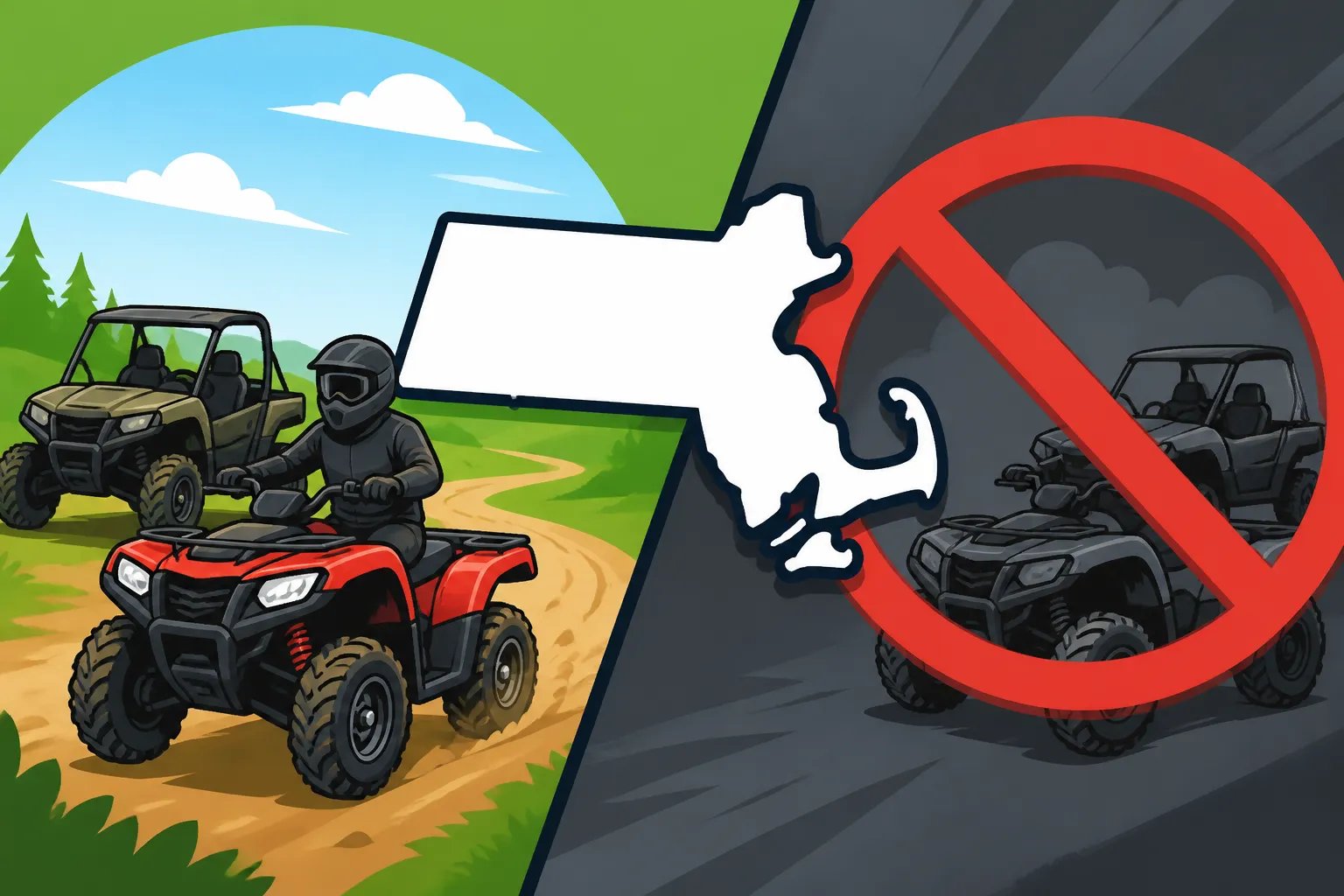
Reciprocity usually means one state accepts a vehicle registration or permit issued by another state. For off-highway vehicles, Massachusetts does not treat a registration from another state as a substitute for its own registration. A rider visiting from New Hampshire, Rhode Island, Connecticut, New York, or elsewhere should not assume that a home-state sticker is enough.
This can be confusing because your ATV or UTV may be properly registered where you live. You may have the card, the decal, and the paperwork you normally carry on local trails. But those documents do not automatically satisfy Massachusetts’s separate registration requirement. The key distinction is that your machine’s registration status at home and its eligibility to be operated in Massachusetts are not the same question.
For a closer look at the state requirement, see Massachusetts Requires Its Own Registration. The practical takeaway is simple: before you haul a machine across the state line, find out whether you need to apply for Massachusetts registration rather than relying on the sticker already attached to it.
The rule applies even if your visit is short
A weekend trip can feel too brief to justify dealing with another state’s paperwork. That is exactly when riders are most likely to assume their home sticker will carry them through. But a short stay does not necessarily create an exception. Visitors should check the Massachusetts requirement before loading up, whether they are coming for one day, a holiday weekend, or a longer stay.
This matters especially for riders who travel with a group. One person may have completed the registration process while another assumes their out-of-state decal is equivalent. If an officer checks the machines, each rider’s paperwork may be considered individually. A group’s trip plans or a shared reservation do not replace each machine’s registration obligations.
The state’s position is summarized in Out-of-State OHV Stickers Are Not Valid in Massachusetts. Treat that as a planning issue, not something to sort out at a trailhead. Even if you already have an out-of-state sticker, confirm whether Massachusetts requires a separate one for your machine.
Registration does not grant permission to ride everywhere
A Massachusetts registration is not a general trail pass, land-use permit, or guarantee that every forest road is open to ATVs and UTVs. It addresses the vehicle-registration side of the problem. You still need to confirm that the specific place you plan to ride allows your type of machine and is open for riding.
That distinction can be frustrating. You may finish the paperwork and assume the hard part is done, only to find that a particular trail system is closed, restricted to another vehicle type, or subject to separate access conditions. Registration and trail access are related, but they are not interchangeable.
Before setting out, check both questions separately: “Is this machine registered as required?” and “Is this place open to this machine today?” For broader route planning, Massachusetts Trail Conditions Before You Tow is a useful companion topic. A valid registration cannot make a closed or prohibited route legal.
Who needs to pay attention to the rule
Riders visiting from another state
The no-reciprocity issue is most direct for non-residents who bring a registered ATV or UTV into Massachusetts. If your machine is registered in your home state, do not assume that registration travels with you as permission to ride in Massachusetts. The state has a separate process for visiting machines.
That can apply to a recreational rider coming from a neighboring state, someone hauling a machine to a Berkshire riding weekend, or a seasonal visitor who keeps an ATV at a camp. The distance traveled does not change the basic question: does the Massachusetts requirement apply to this machine and this use? Check before the first ride rather than after arrival.
Massachusetts has separate information for visitors, including Massachusetts Visitors Buy a One-Year Sticker. The term and process are distinct from the registration you may hold at home, so make sure you understand what is required for the dates you intend to ride.
Residents who recently moved to Massachusetts
A recent move can create a similar paperwork gap. You may still have a valid sticker or registration from your former state, and it may be tempting to treat it as sufficient while you settle in. Instead, check the Massachusetts rules for a machine you brought with you and determine whether you need a Massachusetts registration.
This is especially easy to overlook when the ATV or UTV is stored at a second home, a family property, or a seasonal camp. The machine may not be used often, so you might not think about registration until the first warm weekend. By then, you may have already booked lodging, arranged a trailer, and promised friends you would meet them at a trailhead.
A move can also change which address you use on applications and other records. If your circumstances are unusual, such as a recent move, multiple owners, or a machine kept at a Massachusetts property while you live elsewhere, clarify the application requirements before submitting paperwork. The goal is to have the registration information accurately reflect the owner and machine, not simply to get a sticker quickly.
Owners with machines registered in more than one place
Some households own multiple off-highway vehicles, or maintain machines at different properties. A family may bring one ATV from out of state while another is already registered in Massachusetts. Do not assume that completing paperwork for one machine covers the others.
Registration is generally associated with the individual machine, not with a household’s riding group or a trailer carrying several vehicles. Check the requirements for each ATV or UTV, and keep the documents matched to the correct machine. Mixing up cards, decals, or proof of ownership can turn a manageable registration issue into a confusing one during a roadside or trailhead check.
If you are traveling with several machines, make a simple list of each vehicle’s make, model, VIN, owner, and registration status before departure. That small bit of organization helps you identify missing paperwork at home, when you still have access to the documents, rather than in a parking area after a long drive.
How a visitor can prepare for Massachusetts registration
Identify the right registration route before applying
Start by confirming which process applies to your machine and your residency status. Massachusetts registration information is handled through the appropriate state office for off-highway vehicles, rather than being interchangeable with your home state’s paperwork. Visitors should review the process specifically for an out-of-state machine and follow the application instructions provided for that situation.
A good first step is to use Where a Visiting Rider Applies for a Massachusetts Sticker as a reference point, then confirm the application details through the state’s official registration channel. Do not assume that a process used for a resident, a newly purchased ATV, or a renewal is identical to the visitor process. The documents requested can depend on the machine’s history and the applicant’s circumstances.
If you are uncertain, write down the questions you need answered before contacting the registration office. For example: “Does my out-of-state machine need a Massachusetts registration for this trip?” “Which ownership documents should I submit?” and “What registration term applies to a visitor?” Clear questions can help you avoid making assumptions based on someone else’s experience.
Gather machine and ownership information
Before beginning an application, locate the machine’s identifying information and documents that show how you acquired it. The VIN is particularly important because it identifies the specific ATV or UTV. Make sure the number on the machine is legible and matches the number on your paperwork.
Your proof of ownership may look different depending on whether you bought the machine from a dealer, purchased it privately, inherited it, or brought it from another state. A new machine may come with a manufacturer’s certificate of origin, while a used machine may have a bill of sale and earlier registration documents. Do not assume one document will work for every situation; check the application instructions for your specific ownership history.
It helps to keep clear photographs or scans of important paperwork as a backup, while retaining the originals when the process requires them. Store the documents together and label them by machine. If you are registering a family’s machines at the same time, do not place every bill of sale in one unmarked stack and expect to sort it out later. A few minutes of organizing can prevent delays and repeat trips.
Apply early enough to resolve paperwork problems
Even when an application seems straightforward, missing information can slow things down. A buyer might discover that the bill of sale does not identify the seller clearly, or that the VIN on an old document is difficult to read. An out-of-state visitor may need to clarify which proof is appropriate for a machine already registered elsewhere.
Apply with enough lead time to respond if the registration office asks for additional information. Avoid planning a first ride around the assumption that the application will be processed immediately. Keep confirmation records and any instructions you receive, and do not treat a submitted application as proof that the machine is fully registered unless the state’s process says it is.
The trip can still be enjoyable even if you plan carefully. The difference is that you are solving the paperwork questions before you have a trailer behind the truck and a group waiting at the forest entrance. For a useful overview of the visitor requirement, see [Massachusetts Rules for an Out-of-State Sticker].
Registration, trail access, and other costs are separate
A registration sticker is not a trail pass
A frequent source of confusion is the assumption that a registration sticker also pays for access to riding areas. Registration and trail access are separate matters. A machine can be properly registered while the rider still needs to follow a particular forest’s access rules, seasonal schedule, or local restrictions.
Massachusetts does not have a separate OHV trail pass that automatically opens every eligible riding area. That means you should not look at a registration decal as a universal access ticket. A sticker addresses registration; each location may have its own rules about whether riding is allowed, which vehicles can use the trails, and when access is available.
The distinction is laid out in Massachusetts Has No Separate Trail Pass. When planning your visit, make a separate check for the riding area itself. Confirm that the trails allow your machine type, that the area is open, and that you understand any parking or day-use requirements.
Parking and camping may involve separate charges
A visitor may have a valid Massachusetts sticker and still encounter a parking or camping fee. Those charges are tied to the facility or activity, not necessarily to the vehicle registration. This is why a rider should budget for the whole outing rather than treating registration as the only expense.
For example, imagine you are towing a UTV to a state forest for a day ride. The machine’s registration may be in order, but the parking lot could have its own rules or charges. If you turn the day into an overnight trip, camping arrangements may be subject to separate reservation and payment requirements. These are different steps, and one does not automatically include the other.
Review Why the Sticker Does Not Cover Your Parking and Massachusetts DCR Parking and Access Fees before leaving. Check the specific forest or facility information as well, because the arrangements can vary by location. A quick call or official-page check can save an awkward surprise at the entrance.
Use this checklist to separate the requirements
A compact pre-trip checklist helps keep registration, safety, access, and travel logistics from getting blended together. Each item answers a different question, so completing one does not necessarily complete the rest.
| Check | What it answers | What to do before leaving |
|---|---|---|
| Massachusetts registration | Is the machine registered as required for Massachusetts use? | Confirm whether your out-of-state machine needs Massachusetts registration and carry the required documents. |
| Ownership documents | Can you show the machine’s identity and ownership history if needed? | Match the VIN and ownership papers to the correct ATV or UTV. |
| Safety certificate | Does the rider have a certificate required for their age or use? | Review the rules that apply to each rider, especially anyone under 18. |
| Trail access | Is this machine allowed on the specific route or property? | Check the area’s current rules, permitted vehicle types, and closures. |
| Parking and camping | Are there separate charges or reservations? | Check the forest or facility’s parking and camping information. |
| Transport | Can you get the machine and trailer to the riding area legally and safely? | Plan the route, loading, tie-downs, fuel, and parking location. |
Use the list for every trip, even if you have visited the same area before. Seasonal conditions, access rules, or your group’s machines may have changed since the last visit.
Safety certificates and documents for riders
Age-specific safety rules still matter to visitors
Registration is not the only requirement a visiting rider may need to consider. Massachusetts has safety-certificate rules that can apply to riders under 18, and a certificate from another state should not automatically be assumed to satisfy every Massachusetts requirement. Check the state’s rules for the rider’s age and planned activity.
This can be particularly important for families. A parent may have all the vehicle paperwork ready but overlook the separate rules affecting a teenager. If the family has more than one young rider, check the requirements for each person individually; age thresholds can make the rules different from one sibling to another.
For a starting point, review Massachusetts Safety Certificates Under 18. Make sure you understand whether the certificate must be carried while riding, what type of certificate is accepted, and whether any course or skills requirements apply. Do not rely on a general statement that a child has “taken an ATV class” without confirming what Massachusetts recognizes.
Keep required documents accessible
Once registration and rider requirements are in order, decide where each document will be kept. A registration card should be accessible during the ride, not left in a vehicle parked far from the trail or buried under gear in a trailer. If a required certificate must be carried by a young rider, plan for that before the group departs.
Some riders use a small waterproof sleeve or document pouch to protect cards from rain, mud, and spilled drinks. If you are shopping for one, a general retailer such as Amazon may offer options, but choose a pouch that closes securely and does not make the card difficult to retrieve. The useful part is not the brand or style; it is keeping the document dry and available.
Avoid putting every important paper in one place if several machines are traveling together. A pouch in one rider’s jacket may be convenient until that rider takes a different route or gets separated from the group. Decide who carries which documents, and make sure each vehicle’s paperwork remains identifiable.
Carrying a phone is not a substitute for preparation
A phone photo of a registration card or certificate can be a helpful backup, but do not assume it replaces a document that Massachusetts requires you to carry in a particular form. Check the specific document rules and carry the required originals or approved records accordingly.
Phone access can also be unreliable on a remote ride. A device may lose battery, get wet, or have no signal exactly when you need to look up directions or confirm a trail rule. Save important details before driving to the trailhead, and consider carrying a paper map if the area is unfamiliar. A screenshot of a forest notice is more useful when it has been saved than when you are trying to load a page with no reception.
For young riders, put the certificate and any required identification somewhere secure but accessible. A parent can help check the paperwork at the start of the day, but the rider should know where it is and what it is for. That small habit reduces the chance of a frantic search at a checkpoint or during a routine document check.
Planning a trip from out of state
Confirm the riding area before choosing a destination
Massachusetts has riding opportunities, but not every public forest or trail allows ATVs and UTVs. Some places restrict machine types, some have designated routes, and others prohibit OHV riding. Do not choose a destination simply because it appears on a map or because a road looks wide enough for a machine.
Start with the specific area you hope to visit. Check the official rules for its trails, dates, parking, and vehicle restrictions. Then compare those requirements with your machine’s size and configuration. This matters for side-by-sides in particular: a trail that allows some OHV use may still have restrictions that make a wider UTV unsuitable.
If you are considering a forest, see Massachusetts Forests That Ban ATVs as a reminder to verify access rather than assuming. A good trip plan includes an alternative location in case the first choice is closed, restricted, or unsuitable for your vehicle.
Plan for the actual trailhead and transport
A visitor’s trip starts well before the machine reaches the trail. Consider where you will park the truck and trailer, whether the lot can accommodate your setup, and how you will unload without blocking other users. A destination that is suitable for a single ATV may be awkward for a large trailer or a group arriving in several vehicles.
Check fuel and supply options along the route, especially if you are traveling into a rural area. Do not assume there will be fuel close to the forest entrance or that a phone will reliably guide you to a station after the ride. Bring enough supplies for the planned route, and avoid stretching a machine’s range because the trail appears shorter on a map than it feels on the ground.
For a document pouch or basic riding accessories, shoppers sometimes use Amazon to compare general options, but choose equipment based on fit, durability, and the conditions you expect. A pouch that keeps a registration card dry or a properly fitted reflective item can help with practical trip preparation. Neither product replaces compliance with registration, trail, or safety rules.
Recheck details close to departure
A trip planned weeks ahead can be affected by closures, weather, or access changes. Recheck the riding area’s information shortly before leaving, and do not rely only on an old social-media post or a friend’s memory of last season. If the forest has an office or contact number, ask focused questions about current access and the type of machine you are bringing.
Build a little flexibility into the schedule. If the trailhead is full, the route is closed, or an access condition is different than expected, having a backup plan can keep the day from turning into a long drive home. It also helps to know whether nearby areas permit the same vehicle type rather than improvising at the last minute.
If you are traveling with a group, share the key information before everyone leaves home: registration status, documents to carry, meeting point, route plan, parking arrangement, and any age-related requirements. That way, one person does not arrive prepared while another has to turn around over a missed sticker or missing paperwork.
Common mistakes visitors can avoid
Assuming a valid home sticker settles the question
The most important mistake is also the easiest to make: seeing a current home-state sticker and deciding that no further registration check is needed. That assumption is understandable, but it is the very issue that no reciprocity creates. Massachusetts has its own requirements, and visitors should confirm them rather than infer them from another state’s rules.
A related mistake is treating what worked for a friend as a universal answer. Their machine may have been registered differently, their visit may have involved a different property, or they may have completed a Massachusetts registration without mentioning it. Ask what process they used, but verify your own situation.
If a rider discovers the issue at the trailhead, they may have few practical options. They could be unable to ride that day, and the other parts of the trip—lodging, fuel, time off, and transport—may already be committed. A short registration check at home is much less frustrating than trying to resolve everything after arrival.
Treating registration as permission to use any land
Another common mistake is assuming that registration means the machine is allowed anywhere an ATV can physically travel. It does not. Land ownership, trail designation, seasonal closure, and vehicle restrictions all matter. A visible dirt road or open gate is not necessarily an invitation to ride.
Private property requires particular care. Never assume that land is open because there are tire tracks, because a route connects two public areas, or because someone in the group rode there in the past. Get the necessary permission and respect posted signs and barriers. A lawful registration does not override a landowner’s rules or a closure notice.
The same caution applies to public lands. A state forest may permit some forms of recreation while restricting motorized riding, or it may designate only particular routes for OHV use. Confirm the rules for the exact area and vehicle rather than relying on the broad label “state forest.”
Leaving paperwork until the day of the ride
Waiting until the morning of departure to gather documents is a recipe for unnecessary stress. A missing bill of sale, a hard-to-read VIN, or a forgotten certificate can be difficult to fix when offices are closed and the group is already on the road. Make a folder for each machine well before the trip.
If you purchase a general-purpose waterproof sleeve from somewhere such as Amazon, use it to protect the paperwork, not as a substitute for checking the actual document requirements. Keep the card readable, make sure the closure works, and avoid storing papers in a place that becomes inaccessible once the machine is loaded.
A useful routine is to do a final check the evening before departure: registration, ownership papers, rider certificates if applicable, trail rules, parking details, and the route to the trailhead. That routine takes less time than searching through glove compartments while everyone waits.
A practical visitor checklist
Before you load the machine
First, determine whether your out-of-state ATV or UTV needs Massachusetts registration. Do not treat the home-state decal as proof of reciprocity. Review the visitor process and apply with enough time to address questions or missing documents.
Next, confirm that the machine’s VIN and ownership paperwork are clear and consistent. Check the documents against the vehicle itself, not just against an old application. If you are bringing multiple machines, prepare a separate packet for each one.
Then check the rider requirements. If someone in the group is under 18, confirm the applicable safety-certificate rules and make sure required documents will be carried. Discuss who is responsible for each item so the paperwork does not end up in a truck that is parked miles from the ride.
Before you leave for the trailhead
Verify that the destination allows your machine type and that the trails are open. Check parking and camping arrangements separately from registration. If the destination is remote, plan fuel, food, water, and a route back to the main road.
Make sure your group understands the trail plan, meeting point, and backup option. Riders should know how to regroup if they become separated, and each machine should carry the supplies appropriate to its route and conditions. A visitor who has planned for both paperwork and trail logistics is less likely to be caught off guard.
At the end of the trip
Before leaving the area, check that you have all documents and personal belongings. Mud, wet gear, and a rushed loading process can make it easy to leave a card or pouch behind. Confirm that the registration documents are back in their usual safe place once the machine is secured.
If anything about the registration process was unclear, write down the question while it is fresh. Contact the appropriate office before your next trip rather than relying on memory or an informal answer. Requirements can depend on residency, ownership history, machine type, and the specific riding location, so keeping accurate notes makes repeat visits easier.
Disclaimer
This article is for general informational purposes only and does not constitute professional advice. Laws, prices and regulations vary by location and change over time. Consult a qualified professional for guidance on your specific situation.