Replacing a Card You Lost
Oh, the sheer panic that can set in when you reach for that crucial piece of paper – your Massachusetts ATV or UTV registration card – and it's simply… gone. We've all been there, rifling through pockets, tearing apart the junk drawer, or retracing our steps from the last ride, only to come up empty. It’s more than just an annoyance; it's a real barrier to enjoying our trails legally and confidently. This guide is here to walk you through exactly what to do when your registration card goes missing, ensuring you can quickly and smoothly get a replacement and get back to riding.
The Frustration of a Missing Registration Card
Losing any important document can be a major headache, but when it’s your ATV or UTV registration card, it comes with a unique flavor of anxiety. It's not just about a missing piece of paper; it's about potentially being sidelined from the trails, facing questions from law enforcement, or even incurring a penalty. The freedom of off-road riding in Massachusetts is a privilege, and that little card is your official ticket to enjoy it.
Why Your Registration Card is So Important
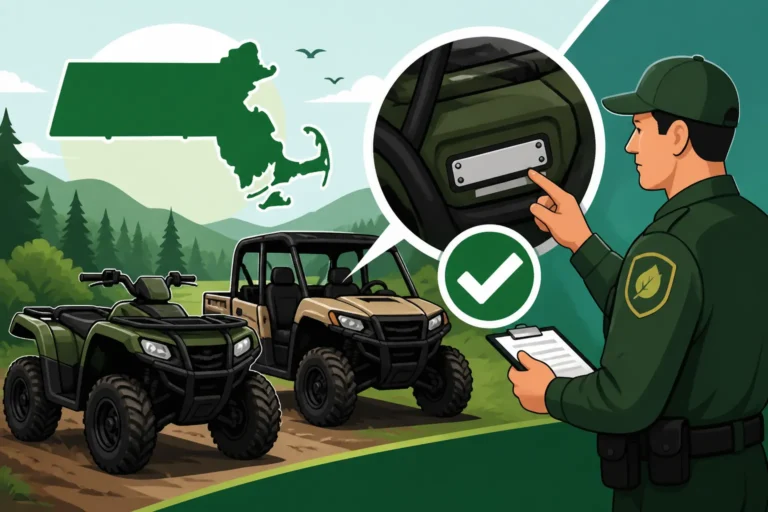
Think of your registration card as the machine's birth certificate and current license rolled into one. It's the official proof that your ATV or UTV is legally registered with the Commonwealth of Massachusetts. Chapter 90B, the state law governing recreational vehicles, explicitly states that you must carry this card whenever you're operating your machine. Imagine being deep in Beartown State Forest, enjoying a beautiful fall day, and an Environmental Police Officer pulls up for a routine check. You reach for your wallet, only to find an empty slot where your registration card should be. That instant feeling of dread is something no rider wants to experience.
Without that card, you lack immediate proof of legal registration. While an officer can certainly look up your registration information in their system, not having the physical card with you can lead to unnecessary delays, a stern warning, or in some cases, a citation. It creates doubt where there should be clear compliance. It’s also important for administrative reasons, like when you're looking to renew your registration or if you ever decide to sell your machine. [Why Your Registration Card Must Ride With the Machine] is a rule that exists for a very good reason, to ensure quick verification and smooth enforcement of trail regulations.
Common Ways Cards Go Missing
Life happens, and sometimes, those little cards just seem to vanish into thin air. One of the most common scenarios is the "pocket escape" – you pull out your wallet for something else, and the card slips out unnoticed. It could be on the trail, at a gas station, or even back in your driveway. Another frequent culprit is wear and tear. These cards are often exposed to the elements – rain, mud, sweat, and constant handling can cause them to degrade, peel, or simply fall apart. A card tucked into a backpack or glove box can become waterlogged or mangled, rendering it unreadable.
Then there's the classic case of misplacement at home. You take it out for a moment to check a detail, set it down, and suddenly it's swallowed by the black hole known as the kitchen counter or the cluttered desk drawer. It's easy to assume you put it back in your riding gear, only to find it's nowhere to be found when you're geared up and ready to hit the trails. These aren't signs of carelessness, but rather the reality of managing paper documents in an active lifestyle. Whether it's been lost in the wilds of October Mountain or simply vanished behind the couch cushions, the result is the same: you need a replacement.
Navigating the Replacement Process
Once you realize your registration card is gone, the first step is to take a deep breath. Panicking won't make it reappear. The good news is that replacing it is a straightforward process, provided you know who to contact and what information to have ready.
Who Handles Your Replacement Request
This is a crucial piece of information that often trips up new or even experienced riders in Massachusetts. Unlike passenger vehicles, which are handled by the Registry of Motor Vehicles (RMV), all off-highway vehicle (OHV) registrations, including ATVs and UTVs, fall under the jurisdiction of the Massachusetts Environmental Police (MEP). This agency is specifically tasked with enforcing environmental laws and regulating recreational vehicles on state lands.
So, when your card goes missing, you won't be heading to your local RMV branch. Instead, you'll be reaching out directly to the Environmental Police. Knowing this from the outset can save you a frustrating phone call or wasted trip to the wrong office. They are the experts in OHV registration and are equipped to help you with everything from initial registration to renewals and, yes, replacement cards. [Registering an ATV With the Environmental Police] explains why this is the case and how their role is distinct. They understand the ins and outs of these machines and the specific regulations that apply to them.
The Information You'll Need to Gather
Before you make that call or send an email, it’s incredibly helpful to have all your ducks in a row. The Environmental Police will need specific details to locate your existing registration record and issue a duplicate card. Gathering this information beforehand will make the process much smoother and faster.
You'll definitely need the full Vehicle Identification Number (VIN) of your ATV or UTV. This unique 17-digit code is essential for identifying your specific machine. You should also have the make, model, and year of your machine readily available. Your full name, current mailing address, and contact phone number will also be required to verify your identity as the registered owner and to mail the new card to the correct location. If you happen to remember your original Massachusetts registration number, that’s a bonus, but it's not strictly necessary as they can usually look it up by your VIN or name.
If your original card is completely gone and you’re struggling to remember these details, think about other places you might have them. Did you keep a copy of your initial registration application? Do you have an old bill of sale or purchase agreement? Sometimes, documents generated by services like LawDepot for a private sale might contain the VIN and other identifying details, which can be a real lifesaver when you're trying to recall everything. Always check your purchase paperwork; it’s a trove of vital information when official documents go missing. [Massachusetts Registration Paperwork Checklist] goes into more detail about all the documents you might need for various registration tasks.
Contacting the Environmental Police
Once you have your information ready, it’s time to reach out. The most common and often quickest way to contact the Massachusetts Environmental Police for registration issues is by phone. They typically have a dedicated line or department for OHV registrations. Be prepared for a short wait, especially during peak riding seasons, but be patient and polite. The staff are there to help you.
When you speak to a representative, clearly explain that you need to request a duplicate registration card because yours has been lost or damaged. Provide all the information you gathered, starting with your VIN. They will verify your identity and your machine’s registration status. You might be asked to confirm your address for mailing the new card. Sometimes, they may offer an email option for specific requests, or direct you to a form on their website if one is available for duplicate requests. Always confirm the current procedure when you call. Having your original purchase documents, even something as simple as a bill of sale or a general agreement drafted using a service like LawDepot, can reassure them that you are indeed the rightful owner and help streamline the conversation. It's all about providing clear, concise information to help them help you. [Who to Call About a Massachusetts OHV Registration] provides specific contact information and tips for getting in touch.
What to Expect After You Apply
You've made the call, provided the details, and now you're wondering how long until that fresh, new registration card arrives in your mailbox. Patience is definitely a virtue here, but it’s helpful to know the general timeline and any associated costs.
Processing Times and Fees
While the Environmental Police aim for efficiency, issuing duplicate documents isn't an instant process. Expect a certain amount of time for them to process your request, print the new card, and get it into the mail. Generally, you can anticipate it taking anywhere from a week to a few weeks for the card to arrive by mail, depending on their current workload and the time of year. If you're planning a trip soon, it’s always best to initiate the replacement process as far in advance as possible to avoid any last-minute stress.
There is a modest fee associated with obtaining a duplicate registration sticker or card. This fee helps cover the administrative costs of processing and issuing the replacement. While I can't give you an exact figure, rest assured it's typically a small sum, certainly much less than the cost of your original registration. You will likely be informed of the exact amount and accepted payment methods (often check or money order) when you contact the Environmental Police. They do not issue free replacements, so be prepared for this small expense. [Massachusetts Duplicate Sticker at $5.50] highlights this specific fee.
Here's a quick comparison of general items needed for an original registration versus a duplicate card:
| Item Required | Original Registration | Duplicate Card Request | Notes |
|---|---|---|---|
| Proof of Ownership (MCO/Bill of Sale) | Yes | No | Needed for new registrations, not duplicates of existing ones. |
| VIN (Vehicle Identification Number) | Yes | Yes | Essential for both. |
| Owner's Full Name & Address | Yes | Yes | To verify identity and mailing address. |
| Payment for Fee | Yes | Yes | Original registration fee vs. duplicate card fee. |
| Sales Tax Form ST-6 (if applicable) | Yes | No | Only at initial registration or transfer of ownership. |
| Original Registration Number | No (usually) | Optional | Helpful if remembered, but VIN is usually enough for lookup. |
Receiving and Securing Your New Card
Once you receive your duplicate registration card in the mail, immediately check all the information for accuracy. Ensure your name, address, machine details (VIN, make, model, year), and the registration number are correct. If you spot any discrepancies, contact the Environmental Police right away to get them corrected. It's a lot easier to fix an error immediately than to try and sort it out later, especially if it's noticed by an officer on the trail. [Correcting a Name on a Card] covers how to handle these kinds of situations.
After verifying the details, the next step is to secure your new card. Don't just toss it into your wallet to potentially escape again. Consider investing in a small, waterproof, durable pouch or case. Many riders keep these within a secure, easy-to-access compartment on their ATV or UTV, like a small storage box or a zippered pocket within a tank bag. This protects the card from moisture, tearing, and accidental loss. Some riders even laminate their cards (after making copies, of course) for extra durability, though ensure it doesn't obscure any important details or holograms. Having a designated, safe spot for this critical document is key to preventing future headaches.
Preventing Future Losses
A lost registration card is a frustrating experience you probably don’t want to repeat. Thankfully, there are several proactive steps you can take to minimize the risk of losing or damaging your ATV/UTV registration card in the future.
Best Practices for Document Management
The best defense against a lost document is good organization. Start by creating digital backups. Take clear photos of both sides of your registration card with your smartphone and store them in a secure cloud service or email them to yourself. While a digital copy isn't a legal substitute for the physical card that you must carry, it can be incredibly helpful for quickly referencing information like the VIN or registration number if the physical card goes missing again. It also provides a quick way to show an officer some proof of registration if you’re ever questioned and your physical card is temporarily unavailable, though they will still require the physical card for full compliance.
For the physical card, designate a specific, secure spot on your machine where it will always reside when you're riding. This could be a small, waterproof box, a specific zippered pocket in a console, or a sealed pouch that clips inside a storage compartment. The key is consistency: always put it back in that spot immediately after you’ve taken it out. Avoid keeping it loose in a pocket where it can easily fall out. Think about the conditions your card will face – dust, mud, rain, vibrations – and choose a storage method that can withstand these elements. If you have other important machine-related documents, such as your bill of sale (especially if it was a detailed one created using a service like LawDepot), keep digital copies of those too. This habit of systematic document management will serve you well beyond just your registration card.
What to Do If Your Card is Damaged, Not Lost
Sometimes, a card isn't completely lost, but it's been through the wringer. Maybe it went through the washing machine, got soaked in a sudden downpour on the trail, or has simply deteriorated over time from constant handling. If your registration card is damaged to the point where it's illegible or falling apart, treat it as if it were lost. An officer needs to be able to clearly read all the information on the card, and a tattered, unreadable one is essentially useless as proof of registration.
Don't wait for it to completely disintegrate before taking action. As soon as you notice significant damage, start the replacement process outlined above. Contact the Massachusetts Environmental Police, explain that your card is damaged, and request a duplicate. The procedure and the modest fee will be the same as for a lost card. It’s always better to be proactive and replace a damaged card than to risk a citation or inconvenience on the trails. Remember, the goal is always to be prepared and legally compliant, ensuring your riding adventures are focused on fun, not administrative headaches. [What to Do When a Decal Peels Off] also touches on the importance of maintaining legible identification on your machine.
Disclaimer
This article is for general informational purposes only and does not constitute professional advice. Laws, prices and regulations vary by location and change over time. Consult a qualified professional for guidance on your specific situation.