Massachusetts Registration Cards Carried on Board
Let's face it, getting out on the trails in Massachusetts with your ATV or UTV is the whole point of owning these machines. But before you can feel that wind in your hair and the rumble of the engine under you, there's a heap of paperwork and rules to navigate. One of the most common oversights, and one that can land you in real hot water with the Environmental Police, is simply not having your registration card with you. This guide is all about making sure you understand why that little card is so important and how to keep it safe and accessible for every ride.
The Non-Negotiable Requirement: Why Your Registration Card Must Ride With You
It might seem like a small detail in the grand scheme of prepping for a ride – you've got your helmet, your gear, your machine's fueled up – but neglecting to carry your physical registration card is a mistake that can quickly turn a fun day into a frustrating and expensive one. This isn't just a suggestion; it's a critical part of being a responsible and legal off-road rider in the Bay State.
More Than Just a Piece of Paper: Your Legal Riding Permit
Think of your OHV registration card in Massachusetts like your driver's license when you're operating a car on public roads. It's the immediate, undeniable proof that your machine is legally registered with the state and authorized for use on designated trails. Without it, even if your ATV or UTV is registered in the system, you lack the tangible evidence to prove it on the spot. The Massachusetts Environmental Police (MEP) are the folks patrolling our beautiful state forests and trails, and they’re looking for responsible riders. Having your card readily available demonstrates your compliance and respect for the regulations that keep our trails open and safe for everyone. It’s part of the mutual understanding between riders and law enforcement.
Immediate Verification for Law Enforcement
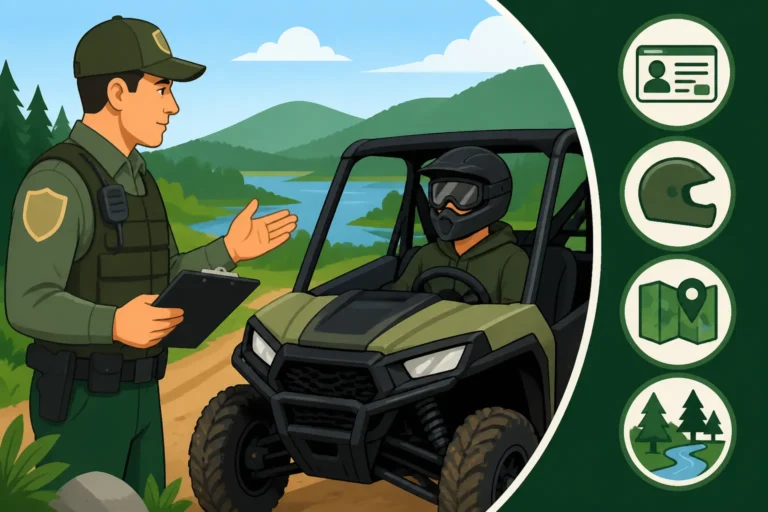
Imagine this scenario: You're enjoying a beautiful autumn day ripping through October Mountain State Forest. You come around a bend, and there's an Environmental Police Officer on patrol. They wave you over for a routine check. This isn't necessarily because you did anything wrong; it's just part of their job to ensure everyone is riding legally and safely. The first thing they're likely to ask for, right after proof of your safety certificate if you're under 18, is your registration card. If you're fumbling around, or worse, can't produce it, it immediately raises red flags. Having it ready, perhaps tucked into a waterproof sleeve in your jacket pocket or a dedicated compartment on your machine, makes the interaction quick and painless. It allows the officer to verify your machine's identity, your ownership, and its current registration status right there on the trail. They're not going to be happy if you tell them it's "at home on the fridge" or "in the glovebox of my truck back at the trailhead." For more insight into what officers typically check for, you might want to read [What an Environmental Police Officer Can Ask].
What Information Your Massachusetts OHV Registration Card Contains
While it's a small card, it's packed with crucial information that identifies both you and your off-highway vehicle. Understanding what's on it can also help you double-check that everything is correct, preventing future headaches.
Key Details for Identification
Your Massachusetts OHV registration card is designed to be a compact, comprehensive record. When you receive it, you'll find several critical pieces of information printed clearly. This typically includes the Vehicle Identification Number (VIN) of your ATV or UTV, which is unique to your machine and acts like its fingerprint. You'll also see your full name and address as the registered owner, the specific type of machine (ATV, UTV, snowmobile), the registration number assigned to your vehicle, and, most importantly, the expiration date of your registration. Each of these details serves a vital purpose. The VIN confirms the machine's identity, preventing issues with stolen vehicles. Your name and address link you directly to the machine. The expiration date lets everyone know when it's time to renew, ensuring continuous legal operation.
Distinguishing It from a Title
One common point of confusion for new owners, especially those coming from other states or who are used to car ownership, is the difference between a registration card and a vehicle title. In Massachusetts, for off-highway vehicles like ATVs and UTVs, the Environmental Police issue a registration card – they do not issue a traditional vehicle title. A title is a document that proves legal ownership and typically transfers with the sale of a vehicle. While your registration card contains ownership information, its primary purpose is to grant permission to operate the machine on state-designated trails and private land with permission. It's proof of legal operation, not necessarily undisputed legal ownership in the way a car title is. For example, if you sell your ATV, you'll need a bill of sale to transfer ownership, not just hand over the registration card. To understand this distinction more clearly, check out [Why the Environmental Police Issue a Card, Not a Title].
Best Practices for Carrying Your Registration Card on the Trail
Knowing you have to carry it is one thing; figuring out the best way to do so without it getting lost, damaged, or becoming a hassle is another. Our trails can be wet, dusty, muddy, and rugged, and your paperwork needs to withstand all that Mother Nature throws at it.
Protecting Your Card from the Elements
The trails in Massachusetts are beautiful, but they're not always kind to paper documents. Rain showers can pop up unexpectedly, creek crossings can splash, and even just sweat from a long, exhilarating ride can ruin a flimsy paper card. That's why protecting your registration card is paramount. I always recommend slipping your card into a durable, waterproof sleeve or a small Ziploc bag before you even think about hitting the trail. Some riders even go a step further and laminate their cards (after making a copy, of course, just in case!). This extra layer of protection can mean the difference between having a legible, valid document and a soggy, unreadable mess that an officer might not accept. Remember, an unreadable card is as good as no card at all when you're trying to prove compliance.
Smart Storage Locations on Your Machine and Person
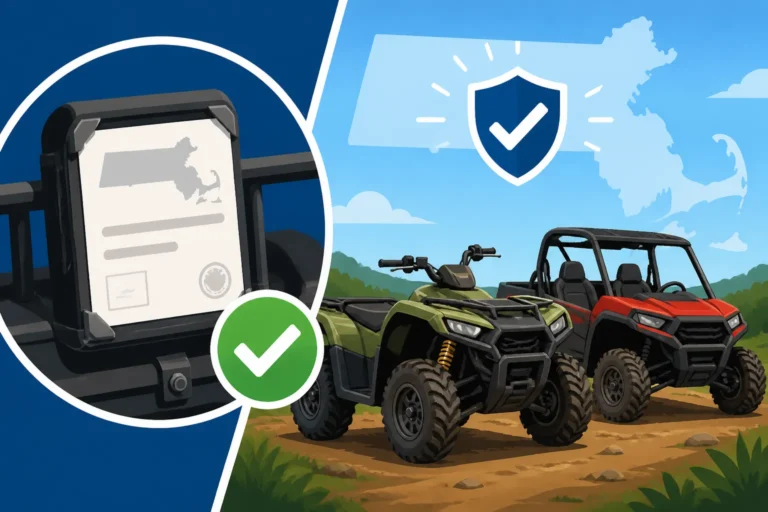
Once your card is protected, you need a smart place to keep it. This isn't just about security; it's about accessibility. You want it somewhere it won't get lost, but also somewhere you can retrieve it quickly and easily during a trailside stop. Many ATVs and UTVs come with small storage compartments – a glove box, a console, or an under-seat compartment. These can be good options, but make sure they're truly waterproof and secure enough that the card won't bounce out on rough terrain.
Alternatively, carrying the card on your person offers immediate access and ensures it stays with you even if you step away from your machine. A wallet with a waterproof pouch, a fanny pack, or a dedicated pocket in your riding jacket are all excellent choices. For more ideas on how to secure it, you can consult [Carrying a Card in a Pocket]. Just make sure that wherever you put it, it's not going to fall out when you hit a bump or get caught on a branch. A hypothetical scenario: you're navigating a technical section, your machine takes a hard lean, and that loose card tucked into a non-zippered pocket flies out without you even noticing. That's a headache waiting to happen.
What Happens If You Don't Have Your Registration Card
It’s easy to forget a small detail like a card, especially when you’re eager to get riding. But the consequences of not having your registration card with you can be far more significant than a momentary inconvenience.
Facing the Environmental Police Without Proof
Let's be crystal clear: if an Environmental Police Officer stops you on a Massachusetts trail and you cannot produce your current, valid registration card, you can face significant penalties. Even if your machine is technically registered in the state database, the inability to provide immediate proof is a violation. Officers aren't going to have time to call dispatch and verify every single registration on the spot. They need to see the physical card. The consequences can range from a citation and a fine, which can easily ruin your day, to the extreme possibility of your machine being impounded until you can prove its legal registration. It's essentially treated similarly to riding an unregistered machine, which has its own set of serious repercussions. To understand the gravity of this, consider reviewing [Massachusetts Penalties for Riding Unregistered]. It's a risk simply not worth taking, especially when a little preparation can prevent it entirely.
Dealing with a Lost or Damaged Card
Life happens. Maybe your card got soaked in an unexpected downpour, or perhaps it slipped out of your pocket somewhere along the trail. If your registration card becomes lost, stolen, or so badly damaged it’s unreadable, don't just throw caution to the wind and hope for the best. You need to obtain a duplicate. The process for getting a replacement card through the Massachusetts Environmental Police is straightforward, but it does take time, and there's a small fee involved. You'll typically need to submit a request, often through their online system or by mail. While you're waiting for your new card to arrive, you should avoid riding on public lands or trails where an MEP officer might stop you, as you still won't have immediate proof of registration. You can find more details on this process by looking at [Replacing a Card You Lost] and [Massachusetts Registration Transfer and Duplicate Fees].
Here's a quick comparison of the situation:
| Scenario | On-Trail Experience | Legal Consequences (Potential) |
|---|---|---|
| Have Current Card | Quick, friendly verification; resume ride promptly. | None; demonstrates compliance. |
| No Card (Registered) | Delay, questioning, suspicion; frustrating interaction. | Citation, fine; potential impoundment; proving registration later. |
| No Card (Unregistered) | Immediate and severe consequences. | Significant fines, impoundment, legal action. |
| Damaged/Unreadable Card | Treated similarly to no card; officer discretion. | Citation, fine; hassle of proving registration later. |
Keeping Your Registration Card Current and Accurate
A registration card is only useful if the information on it is correct and up-to-date. Misinformation can cause just as many problems as a missing card, so it's essential to stay on top of any changes.
Ensuring Your Information is Up-to-Date
Life changes, and sometimes those changes need to be reflected on your official documents. Did you move to a new town in Massachusetts? Did you get married and change your name? These are the kinds of changes that require you to update your registration information with the Massachusetts Environmental Police. If your address on the card doesn't match your current residence, or your name is different from your driver's license, it can raise questions during a trailside stop. Officers need to be able to verify that the person operating the machine is indeed the registered owner as listed on the card. Keeping your information current is a crucial part of your ongoing responsibility as an OHV owner. If you need to make changes, such as a name correction, it's wise to address it promptly. For guidance on how to do this, check out [Correcting a Name on a Card].
Understanding Expiration Dates and Renewals
Unlike some vehicle registrations that might be valid for a single year, Massachusetts OHV registrations for residents are typically valid for two years, while non-resident registrations are for one year. This longer period for residents can sometimes lead to forgetting about the renewal date. However, riding on an expired registration is effectively the same as riding unregistered. Your registration card clearly states its expiration date. Make a note of it, put a reminder in your calendar, or take advantage of any email renewal reminders the state might offer. Renewing your registration promptly ensures that your card, and the legal right to ride, remains valid. If you let it lapse, and you're caught on the trails, you'll face the same penalties as someone who never registered their machine in the first place. Always double-check that your card is current before you load up for a ride.
Beyond the Card: Other Essential Documents and Practices
While the registration card is king for legal operation, it's not the only piece of paper you might need or find useful. Being fully prepared means thinking about other scenarios that could arise on your adventures.
Proof of Ownership and Identification
The registration card proves your machine is registered and you are the registered operator, but there are times when you might need more comprehensive proof of ownership or personal identification. For instance, in the unfortunate event of an accident, a theft, or if you ever decide to sell your machine, having a solid paper trail is vital. Your driver's license is your primary form of personal identification, and it should always be with you when you're riding. For the machine itself, while Massachusetts doesn't issue titles for ATVs/UTVs, your original bill of sale or Manufacturer's Certificate of Origin (MCO) for new machines serves as crucial proof of ownership. These documents are generally not carried on the trail but should be kept safe at home. If you're involved in a private sale, ensuring you have a proper bill of sale is critical for transferring ownership cleanly and for the new owner to register the machine without a hitch. Services like LawDepot can provide professional, customizable bill of sale templates that ensure all necessary details are covered for a smooth transaction, which is essential when updating registration information. Remember, your card allows you to ride, but other documents protect your investment and rights. For more on what constitutes proof, see [Massachusetts Proof of Ownership on the Trail].
Comprehensive Paperwork Preparedness
Being fully prepared for your Massachusetts off-road adventures extends beyond just having your registration card. It's about a holistic approach to your paperwork and readiness. Before every ride, I encourage riders to create a small, waterproof packet of essential documents and contact information. This might include:
- Your OHV registration card (protected, of course!).
- Your driver's license or other valid photo ID.
- Your safety certificate if you are under 18 years old.
- Emergency contact information for yourself and any medical alerts.
- A copy of written permission if you're riding on private land that requires it (especially important given Massachusetts's strict rules about riding on others' property).
- Proof of any optional insurance you might carry, even though it's not mandated in Massachusetts.
Keeping all this together, perhaps in a secure compartment on your machine or in your backpack, ensures you're ready for any situation, from a routine check by the Environmental Police to an unexpected emergency. It’s also a good idea to have a [Massachusetts Registration Paperwork Checklist] to ensure you don’t miss any crucial items. Being organized and prepared reduces stress and allows you to truly relax and enjoy the incredible riding opportunities we have here in Massachusetts. When you're dealing with private sales, platforms like LawDepot are incredibly useful for generating the necessary legal documents, ensuring both buyer and seller are protected and the transaction meets state requirements for future registration updates. Taking the extra time to gather and protect these documents before you hit the trail makes all the difference for a worry-free ride.
Disclaimer
This article is for general informational purposes only and does not constitute professional advice. Laws, prices and regulations vary by location and change over time. Consult a qualified professional for guidance on your specific situation.