How a Driver’s License Replaces Adult Supervision
Navigating the ins and outs of Massachusetts ATV and UTV laws can feel like trying to untangle a particularly stubborn fishing knot, especially when it comes to young riders and supervision. Many parents and new riders scratch their heads trying to figure out when they can finally hit the trails without an adult literally looking over their shoulder. This guide aims to clear up a significant point of confusion: how holding a Massachusetts driver's license can change the rules around adult supervision for off-highway vehicle (OHV) operators in the Bay State.
The Foundation: Massachusetts' Stringent Youth OHV Laws
Massachusetts has some of the strictest laws in the nation when it comes to youth operation of ATVs and UTVs. These regulations are designed to enhance safety and prevent accidents, but they also create a maze of requirements that can be challenging to understand fully. Before we dive into how a driver's license plays a role, it's crucial to grasp the baseline rules for young riders.
Sean's Law and the Under-14 Ban
The cornerstone of youth OHV regulation in Massachusetts is often referred to as [Sean's Law: The 2010 Ban Named for a Boy]. This law dramatically changed how and where young people can ride. Essentially, it prohibits anyone under the age of 14 from operating an ATV or UTV anywhere in the state, including on private land, unless it's during a sanctioned event. This means that if your child is under 14, even if they have a strong understanding of how to ride and you're right there supervising them, they are generally not permitted to operate an OHV. This ban is a significant departure from laws in many other states and often catches new residents or visitors by surprise. The intent is to protect very young riders from the inherent risks of these powerful machines, acknowledging that their cognitive development and physical capabilities might not yet be sufficient for safe operation in all conditions.
Engine Size Restrictions for Teenagers
For riders who are old enough to legally operate an ATV or UTV, specific limitations on engine size come into play, especially for those aged 14 to 16. Massachusetts law states that riders in this age bracket are restricted to operating machines with an engine size of 90cc or less. This rule is a critical safety measure, aiming to match the power and speed of the vehicle to the rider's developing skill and judgment. It means that even if a 15-year-old has completed a safety course and has their OHV certificate, they cannot legally ride a full-size adult ATV that exceeds the 90cc limit. These restrictions are part of a broader framework of [Massachusetts Engine Size Limits by Age] designed to ensure that teenagers gain experience on machines that are more manageable and less prone to causing serious injury.
The General Requirement for Adult Supervision
For many young riders, adult supervision is a constant requirement. Generally, any operator under the age of 16 must be under the direct supervision of an adult. This isn't just about having an adult present somewhere on the property; it often means the adult must be in continuous visual and verbal contact with the rider, ready to intervene if needed. This rule applies to riding on both public and private land, reinforcing the state's commitment to safety for its youngest OHV enthusiasts. The definition of a [Massachusetts Supervising Adult Defined] typically means someone 18 years of age or older who is responsible for the minor's actions. It's a heavy responsibility, and the supervising adult can be held liable for any violations committed by the young rider under their charge.
When a Driver's License Changes the Game
While the baseline rules for youth riders are quite strict, reaching a certain age and obtaining a Massachusetts driver's license does introduce some key changes, particularly regarding the requirement for direct adult supervision. This is where the intersection of a road-legal license and off-road privileges becomes important to understand.
The 16.5 Year-Old Threshold and Road Crossings
One of the most significant points at which a driver's license becomes relevant for OHV operation is when a rider reaches 16 and a half years old and holds a valid Massachusetts driver's license. Before this age, even with an OHV safety certificate, crossing a public way on an ATV or UTV typically requires direct adult supervision and strict adherence to specific procedures. However, once a rider is 16 and a half and possesses a full driver's license (not just a learner's permit), the rules for [Road Crossings Change at 16 and a Half]. At this point, the operator is generally permitted to cross public roads without direct adult supervision, provided they still follow all other crossing protocols like coming to a complete stop, yielding to traffic, and crossing at a 90-degree angle. This is a crucial distinction, as it allows for a greater degree of independence when connecting trails or accessing different riding areas that might be separated by a public way.
What a Driver's License Doesn't Override
It’s absolutely vital to understand that simply having a driver's license does not grant unlimited freedom on an ATV or UTV, nor does it override all other OHV regulations. For instance, a driver's license does not exempt a rider from the mandatory [Massachusetts Helmet Law for Every Rider]. Helmets are required for all OHV operators and passengers, regardless of age or licensure. Similarly, obtaining a driver's license does not automatically give you permission to ride on private land; you still need explicit [Massachusetts Landowner Permission in Writing]. Furthermore, a driver's license does not negate the requirement for the OHV itself to be properly registered with the Massachusetts Environmental Police. These are fundamental rules that remain in place for everyone, regardless of their driving privileges on public roads. Think of your driver's license as one piece of the puzzle, not the whole solution.
Enhancing Safety and Performance for Independent Riders
As riders gain more independence, ensuring their machine is well-maintained and equipped for safety becomes even more critical. Many riders choose to upgrade their OHVs with accessories that enhance protection and functionality. For instance, adding a durable windshield or a robust set of A-arm guards can provide crucial protection on rugged trails. Aftermarket accessories from reputable brands like SuperATV can significantly improve the riding experience and bolster safety for independent riders. Whether it's heavy-duty tires for better traction or a full underbody skid plate to protect vital components, investing in quality gear helps ensure the machine is ready for solo adventures.
Nuances of Independence: Certificate vs. License
The journey to independent OHV riding in Massachusetts involves a few key milestones, and it's essential to understand how an OHV safety certificate and a driver's license interact to grant that independence. It's not an "either/or" situation for younger riders; often, it's a combination of both.
The OHV Safety Certificate Requirement
For anyone under the age of 18, obtaining a Massachusetts OHV safety certificate is a non-negotiable requirement for riding on public lands. This certificate signifies that the rider has completed a state-approved safety course, covering topics like safe operating procedures, environmental awareness, and relevant laws. Even if a 17-year-old has had their full driver's license for a year, they still need to possess this safety certificate to legally ride an ATV or UTV on state forest trails or other public access areas. The OHV safety course typically has both an online component and an in-person skills test, ensuring riders gain both theoretical knowledge and practical skills. Failing to carry this certificate can lead to citations from the Environmental Police, even if you're otherwise in compliance with age and license requirements. It’s an explicit requirement for [Massachusetts Safety Certificates Under 18].
How a Driver's License Replaces Adult Supervision
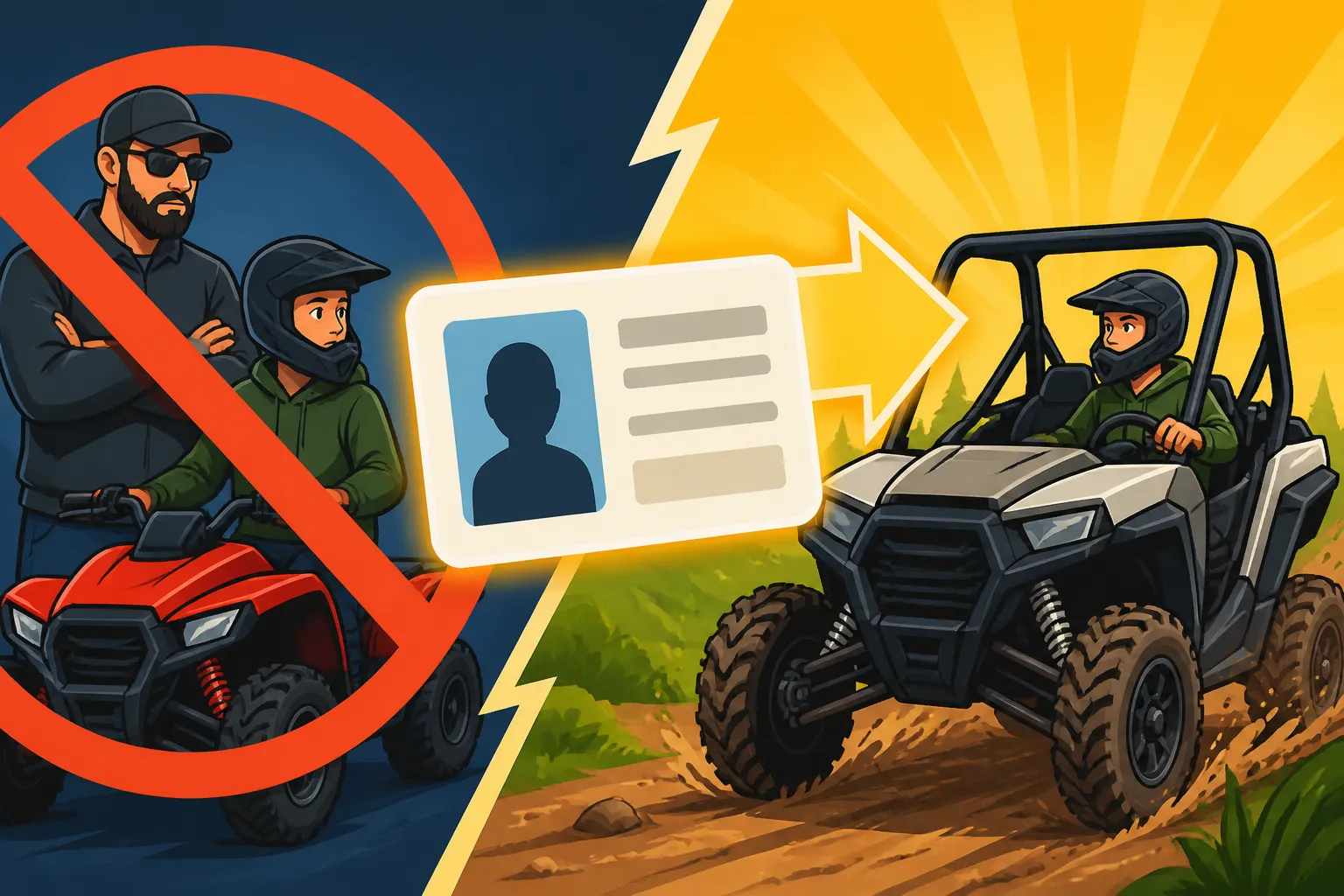
Here's the core answer: A valid Massachusetts driver's license, in conjunction with an OHV safety certificate, is generally what allows a rider aged 16 and a half or older to operate an ATV or UTV on public lands without direct adult supervision.
Let's break it down:
- Under 14: Banned (except sanctioned events, still supervised).
- 14-16 (without certificate): Needs adult supervision.
- 14-16 (with certificate): Still needs adult supervision.
- 16 to 16.5 (with driver's license but no OHV certificate): Still needs adult supervision for general riding on public land. The license helps for road crossings, but not for overall supervision.
- 16.5+ (with full driver's license AND OHV safety certificate): This is the sweet spot. The combination of demonstrating proficiency on public roads (via the driver's license) and demonstrating OHV-specific safety knowledge (via the certificate) means the state no longer mandates direct adult supervision for general riding on authorized public trails. This rider can now confidently head out on trails in places like October Mountain State Forest or Pittsfield State Forest without a parent or guardian needing to be in continuous visual or verbal contact.
This doesn't mean they can ignore all safety precautions or local rules, of course. They are still expected to ride responsibly, adhere to trail rules, and ensure their machine is in good working order. But the requirement for an accompanying adult is lifted, granting them genuine independence on the trails.
Practical Implications for Riders 16.5 and Older
For a rider who has reached 16 and a half, obtained their full driver's license, and completed their OHV safety certificate, the world of Massachusetts OHV riding opens up considerably. They can plan solo rides on authorized trails, join group rides with friends who meet similar criteria, and enjoy the freedom of exploring without constant adult oversight. This newfound independence, however, comes with increased personal responsibility. They are now fully accountable for their actions on the trail, for carrying their [Massachusetts Registration Cards Carried on Board] and safety certificate, and for making safe choices. It’s a significant step, moving from supervised riding to self-sufficient exploration. Many choose to enhance their riding experience and safety by outfitting their machines with specialized gear. Whether it's adding a high-performance winch for challenging terrain or installing rugged protection for the undercarriage, brands like SuperATV offer a variety of accessories that cater to the needs of independent riders who want to be prepared for anything the trail throws at them.
Still Essential: Rules That Always Apply
While a driver's license significantly impacts supervision requirements for older teens, it's crucial to remember that a slew of other regulations and best practices remain in force for all riders, regardless of age or license status. These rules are fundamental to safe and legal OHV operation in Massachusetts.
Helmet, Permission, and Machine Requirements
Let's reiterate some non-negotiables:
- Helmets: As mentioned, [Massachusetts Helmet Law for Every Rider] is universal. Every operator and passenger must wear a USDOT-compliant helmet. No exceptions, no matter your age or license.
- Landowner Permission: You cannot just ride anywhere you please. For private land, you absolutely must have [Massachusetts Landowner Permission in Writing]. For public lands, you must stick to designated trails. Trespassing is a serious offense.
- Machine Registration: Your ATV or UTV must be registered with the Massachusetts Environmental Police. This involves providing proof of ownership (like an [Massachusetts Requires an MCO for a New Machine] or [Massachusetts Requires a Bill of Sale for a Used One]), paying the applicable fees ([Massachusetts Charges $44 for Residents]), and displaying the [Massachusetts Decals on Both Sides] correctly. An unregistered machine is an illegal machine, regardless of who is operating it.
- Proper Equipment: Your machine must meet basic [Massachusetts Equipment Requirements], including functional brakes, a muffler to keep noise levels down ([Massachusetts Muffler Requirements]), and proper lighting if you're riding after sunset ([Massachusetts Lighting After Sunset]).
Understanding Liability
Even when a rider is old enough and licensed to ride without direct adult supervision, the concept of liability is still very real. While [Massachusetts Supervising Adults Are Liable for a Rider's Violation] when a minor is under their care, an independent rider (16.5+ with license and certificate, or 18+) is fully responsible for their own actions. This means if you cause damage to property, injure yourself or others due to negligence, or violate any laws, you are personally liable for the consequences. While Massachusetts does not mandate OHV insurance ([Massachusetts Has No Insurance Mandate]), many savvy riders choose to purchase optional coverage for liability, property damage, and even theft, understanding the financial risks involved in operating these powerful machines. It’s a wise investment for peace of mind, especially when riding independently.
Where Massachusetts Law Says You May Not Ride
Finally, it's paramount to understand the significant restrictions on where you can legally ride an ATV or UTV in Massachusetts. Your driver's license and OHV certificate grant you the privilege to ride, but only in authorized areas. Massachusetts has a strict stance:
- Public Ways: You cannot operate an ATV or UTV on paved public roads, streets, or highways. [Massachusetts Bans Riding on Public Ways] and [Massachusetts Bans Riding on Highways] are clear. The only exception is to cross a public way, following strict safety protocols. There is no path to making an ATV or UTV "street legal" in Massachusetts.
- Private Land Without Permission: As noted, riding on someone else's property without explicit, written permission is trespassing. [Massachusetts Bans Riding Others' Land].
- Environmentally Sensitive Areas: Areas like beaches and dunes are strictly off-limits to prevent environmental damage ([Massachusetts Bans Beach and Dune Damage]).
- Designated Public Land: Even on public land, you must stick to trails specifically designated and marked for OHV use. For example, in the western part of the state, you'll find [Beartown State Forest Riding in Massachusetts], [October Mountain State Forest Riding in Massachusetts], and [Pittsfield State Forest Riding in Massachusetts] with authorized trails. However, many other state forests or conservation areas might prohibit OHVs entirely, or restrict them to motorcycles only. Always check with the Department of Conservation and Recreation (DCR) or relevant authorities before heading out.
Understanding these boundaries is crucial for avoiding fines, property damage, and potentially serious accidents. The responsibility for knowing and following these rules ultimately falls on the rider, especially when riding independently.
| Requirement/Condition | Under 14 | 14-16 (No Cert) | 14-16 (With Cert) | 16-16.5 (With DL, No Cert) | 16-16.5 (With DL & Cert) | 18+ (No Cert) | 18+ (With Cert) |
|---|---|---|---|---|---|---|---|
| Banned from Riding (General) | Yes | No | No | No | No | No | No |
| Engine Size Limit (90cc) | N/A | Yes | Yes | No | No | No | No |
| OHV Safety Certificate Req. | No | Yes (to ride) | Yes | Yes (to ride without sup) | Yes | No | No |
| Adult Supervision (Public Land) | Yes | Yes | Yes | Yes | No | No | No |
| Full MA Driver's License Req. | No | No | No | Yes | Yes | No | No |
| Helmet Required | Yes | Yes | Yes | Yes | Yes | Yes | Yes |
| Machine Registered | Yes | Yes | Yes | Yes | Yes | Yes | Yes |
| Road Crossings (Unsupervised) | No | No | No | Partial (with DL, but complex) | Yes | Yes | Yes |
Disclaimer
This article is for general informational purposes only and does not constitute professional advice. Laws, prices and regulations vary by location and change over time. Consult a qualified professional for guidance on your specific situation.