Massachusetts Rules for Riding With a Dog
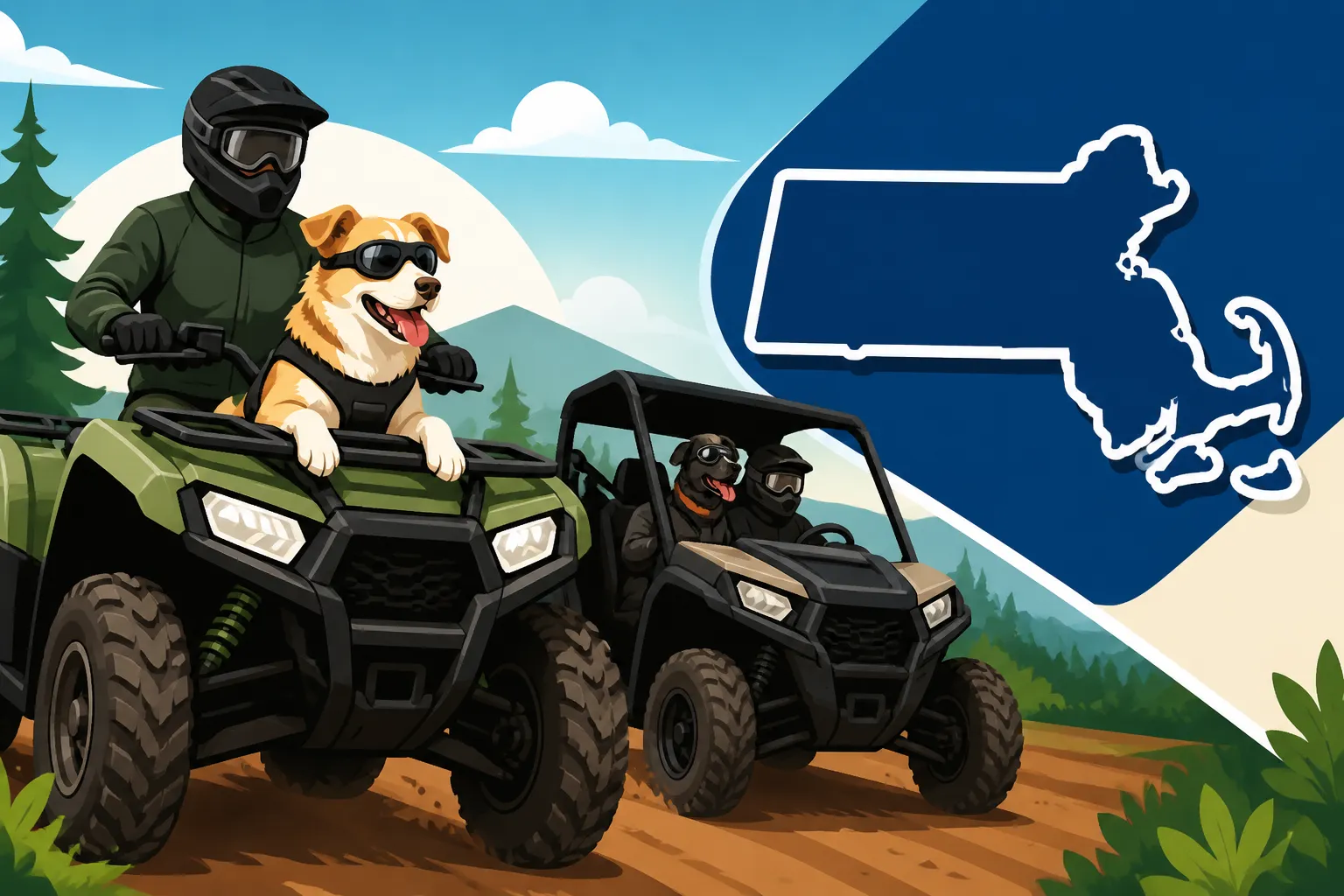
It's such a quintessential New England experience, isn't it? Heading out on the trails with your ATV or UTV, the crisp air, the rustling leaves, and the thought inevitably crosses your mind: "Wouldn't it be great to bring my dog along?" For many of us, our dogs aren't just pets; they're family. But riding an off-highway vehicle (OHV) with your furry companion in Massachusetts involves a lot more than just tossing them in the back. This guide will walk you through the practicalities, legal considerations, and crucial safety measures to ensure both you and your four-legged co-pilot have a safe and enjoyable adventure on the Bay State's trails.
The Legal Landscape: Dogs on Massachusetts OHV Trails
Massachusetts has a lot of regulations when it comes to riding ATVs and UTVs, covering everything from registration to age limits. When it comes to bringing your dog along, however, the specific laws are a bit less direct and often fall under broader categories of animal welfare, public land rules, and landowner permission. You won't find a line item saying "dogs must wear a helmet on an ATV," but that doesn't mean there aren't rules and expectations you need to be aware of.
Understanding General Animal Welfare and Leash Laws
First and foremost, Massachusetts has general animal cruelty laws that apply to all animals, regardless of whether they're on a trail or in your backyard. This means you have a legal obligation to ensure your dog's safety and well-being. Leaving a dog unsecured in a moving vehicle, exposing them to extreme weather without protection, or causing them distress could lead to serious repercussions. Think common sense here: if you wouldn't do it with your child, you probably shouldn't do it with your dog.
Beyond cruelty laws, most public lands in Massachusetts, including the state forests and parks where OHV riding is permitted, have strict leash laws. This means your dog must be on a leash, typically no longer than six feet, and under your immediate control at all times. This isn't just a suggestion; it's a rule designed to protect your dog from hazards, prevent conflicts with other trail users (hikers, mountain bikers, other riders), and safeguard wildlife. An Environmental Police officer can and will issue citations for off-leash dogs in areas where leashing is required. It's also worth remembering that even if your dog is the friendliest creature on earth, not everyone is comfortable with loose dogs, and some people may even have severe allergies or fears.
Landowner Permission and Specific Trail Rules
One of the biggest hurdles for any OHV rider in Massachusetts is understanding where you can legally ride. [Massachusetts Requires Written Permission] to ride on private land, and this permission often comes with conditions. If you're riding on private property, the owner might have their own rules regarding dogs, such as requiring them to be leashed or kept away from livestock. Always clarify these expectations before you head out.
On public lands, like Beartown State Forest, October Mountain State Forest, or Pittsfield State Forest, specific rules for dogs generally mirror those for other recreational users. While dogs might be allowed, they are almost always required to be leashed. Some areas might have specific restrictions, such as prohibiting dogs from swimming areas or certain sensitive ecological zones. Always check the Department of Conservation and Recreation (DCR) website or call the specific ranger station for the most up-to-date information before you leave. You don't want to drive all the way to a trailhead only to find out your furry friend isn't welcome. Knowing the rules in advance can save you a lot of grief and prevent potential fines.
| Location Type | Dog Policy (General) | Leash Requirement | Special Considerations |
|---|---|---|---|
| State Forests/Parks | Generally allowed in OHV areas | Yes (Mandatory) | Check for specific restrictions (e.g., swimming areas, wildlife zones). Carry waste bags. |
| Private Land (with permission) | Varies by landowner | Varies | Always confirm with landowner. Respect their rules regarding pets. |
| Town Land | Highly variable, often restricted | Likely Yes | Check town bylaws. Many ban OHVs; dogs may also be restricted. |
| Commercial Riding Parks | Rare for OHV parks to allow dogs on trails | Check Park Rules | Almost certainly requires leashing; some may have size or breed restrictions. |
Safety First: Protecting Your Canine Co-Pilot on the Trails
Bringing your dog on an ATV or UTV ride isn't just about legality; it's profoundly about safety. These machines are powerful, the trails can be rugged, and the environment can be unpredictable. Your dog's well-being must be your absolute top priority. This means planning, preparation, and constant vigilance.
Secure Transport: Keeping Your Dog Safe on the Machine
This is perhaps the single most critical safety aspect. A dog bouncing around unsecured in the back of a UTV or on an ATV rack is an accident waiting to happen. They can be thrown from the machine, interfere with your driving, or injure themselves trying to jump out. You need a secure, comfortable, and safe method of transport.
For UTVs, a quality kennel or crate securely strapped into the cargo bed is often the best option. Look for travel-rated crates that can withstand jostling. You might consider an enclosure like those offered by SuperATV, which are designed to integrate with UTV cargo areas, providing a robust and secure space. Ensure the crate is large enough for your dog to stand, turn around, and lie down comfortably, but not so large that they can be tossed around inside it. For ATVs, the options are more limited due to space, but specialized dog carriers designed to fit on front or rear racks exist. These should always be heavily padded and secured. Some riders use a dog seatbelt or harness system that clips into the machine, but these must be robust enough for trail riding and secured to a sturdy point, not just a flimsy cargo net. The goal is to prevent ejection or injury from sudden stops, bumps, or turns.
Environmental Hazards and Protective Gear
The trails present numerous dangers for your dog. Sharp rocks, sticks, thorns, and other debris can cause paw injuries. Consider protective booties for your dog, especially if you're hitting rocky or particularly rough terrain in the Berkshires. These not only protect paws but can also provide better traction. [Tires for Berkshire Rock] might be what you need on your machine, but your dog's paws need protection too.
Weather is another huge factor. Dogs can overheat very quickly, especially on a sunny day with physical exertion. Always bring plenty of fresh water and a bowl, and offer frequent breaks. Watch for signs of heatstroke: excessive panting, drooling, lethargy, or stumbling. In cooler weather, consider a dog jacket to protect against the cold, especially for short-haired breeds. And never forget ticks! [Massachusetts Tick Season and Riding Gear] is a serious concern, and your dog is highly susceptible. Use veterinarian-approved tick preventatives and check them thoroughly after every ride.
Training, Temperament, and First Aid
Not all dogs are cut out for OHV riding. Extremely nervous or anxious dogs might find the noise, vibration, and motion too stressful. Even the most laid-back dog needs some exposure and training. Start with short rides around a familiar, controlled area before tackling a full-length trail. Your dog should be calm around the machine and comfortable with their secured transport method.
Always carry a pet-specific first-aid kit. This should include items like paw balm, antiseptic wipes, gauze, vet wrap, tweezers (for splinters or ticks), and any necessary medications. Know basic pet first aid for common injuries like cuts, scrapes, or sprains. Having an emergency contact for a local vet is also wise, especially if you're exploring new areas like those near [Massachusetts Riding Near Great Barrington]. Being prepared for minor mishaps can prevent them from becoming major emergencies.
Practical Considerations for Trail Riding with Your Dog
Once you've got the legal and safety aspects covered, it's time to think about the nitty-gritty details that make for a successful and enjoyable outing with your canine companion. These are the logistical elements that often get overlooked until you're halfway down the trail.
Hydration and Nutrition on the Go
Just like us, dogs need to stay hydrated, especially during physical activity and in varying weather conditions. Always pack more water than you think you'll need. Collapsible water bowls are excellent for trail use, making it easy to offer a drink during stops. Don't rely on finding natural water sources; many streams might be contaminated or simply not present where you need them.
For longer rides, consider bringing some high-energy dog treats or a small portion of their regular food. Breaks are essential, not just for you to stretch your legs, but for your dog to relieve themselves, get a drink, and have a snack. If your dog is prone to motion sickness, consult your vet about remedies before hitting the trails. Riding on an empty stomach might also help.
Managing Waste and Trail Etiquette
This falls under both practicality and etiquette. [Massachusetts Trail Etiquette Locals Expect] means leaving no trace, and that absolutely includes your dog's waste. Always carry plenty of waste bags and be prepared to pack out everything your dog leaves behind. This isn't just about being polite; it's about preventing the spread of disease and maintaining the natural beauty of the trails. Nobody wants to step in a pile of dog doo while enjoying a scenic overlook. It’s a simple act that goes a long way in ensuring dogs continue to be welcome on public lands.
Consider your dog's energy levels and stamina. A young, energetic border collie might love a long ride, but an older pug might be miserable and quickly exhausted. Match the length and intensity of your ride to your dog's capabilities. Remember, while you're sitting and driving, your dog is experiencing all the bumps, vibrations, and sounds, which can be far more tiring for them.
Planning Your Route and Breaks
When planning your route, think about your dog's needs. Are there shaded areas for breaks? Are there natural stops where you can let them out to stretch (on a leash, of course)? Avoid trails that might be overly challenging or dangerous for your dog, such as those with extremely narrow passages, deep water crossings, or very steep, rocky climbs. While your SuperATV UTV might easily traverse a challenging section, a securely crated dog will still experience significant jostling, and you want to minimize their discomfort.
Factor in more frequent, shorter breaks than you might take if you were riding solo. These breaks allow your dog to hydrate, relieve themselves, and simply take a breather from the motion and noise of the OHV. Use these times to check their paws, fur, and overall demeanor. An early sign of discomfort or fatigue can prevent bigger problems later.
Etiquette and Respect: Sharing the Trails with Your Dog
Bringing your dog on the trails means you're not just representing yourself; you're representing all dog owners. Your behavior directly impacts whether dogs continue to be allowed on OHV trails. Being a responsible and courteous dog owner is paramount.
Interactions with Other Trail Users and Wildlife
When you encounter other trail users – be it hikers, mountain bikers, other ATV riders, or even horseback riders – ensure your dog is under strict control. This means on a short leash, close to you, and calmly waiting for the other party to pass. Not everyone likes dogs, and some people may even be afraid. A friendly wagging tail can be intimidating to someone who isn't expecting it. Respect their space and ensure your dog does not jump on, bark at, or otherwise bother other users.
Wildlife encounters can also be an issue. Even the most well-behaved dog has instincts. An off-leash dog can harass or injure wildlife, disturbing nesting birds, chasing deer, or even cornering a porcupine. This isn't just bad etiquette; it can be illegal and harmful to the ecosystem. Keep your dog leashed and close, and teach them a strong "leave it" command to prevent them from chasing after animals they might spot. This also protects your dog from potentially dangerous encounters with larger animals like bears or coyotes that call the Massachusetts woods home.
Noise, Exhaust, and Environmental Impact
OHVs, by their nature, can be noisy. This noise can be unsettling for some dogs and can disturb wildlife. If your dog is particularly sensitive to loud noises, an ATV or UTV ride might not be the best activity for them. You might notice some riders have optimized their machines with quieter aftermarket exhaust systems, and while some SuperATV components can enhance performance, consider the noise factor when deciding what accessories to add, especially if your dog is sensitive.
Beyond noise, remember that OHVs have an environmental impact. Stay on marked trails to prevent habitat damage. Your dog's presence adds to this impact, particularly if they are off-leash or allowed to dig. Adhering to all trail rules, including those about staying on designated paths, is crucial for minimizing your footprint and preserving the trails for everyone. [Massachusetts Trails Closed in Winter] is another reminder of how fragile these environments can be. Your efforts to ride responsibly, both with and without your dog, contribute to the longevity of these precious riding areas.
Being a Good Ambassador for Dog Owners
Ultimately, bringing your dog on an OHV adventure in Massachusetts is a privilege, not a right. By being prepared, prioritizing safety, and practicing impeccable trail etiquette, you become an ambassador for all dog owners. When you demonstrate responsible pet ownership, you help ensure that dogs continue to be welcome on our beautiful public lands and OHV trails. Failure to do so can lead to stricter rules or even outright bans on dogs on trails. Let's all do our part to keep Massachusetts trails enjoyable for everyone, two-legged and four-legged alike!
Disclaimer
This article is for general informational purposes only and does not constitute professional advice. Laws, prices and regulations vary by location and change over time. Consult a qualified professional for guidance on your specific situation.