Massachusetts Trespass Law for Riders
Riding your ATV or UTV in Massachusetts offers incredible opportunities to explore our beautiful landscapes, from the rolling hills of the Berkshires to the state forests further east. However, nothing can ruin a fantastic day of riding faster than realizing you've accidentally, or even knowingly, trespassed onto someone else's property. The fear of getting caught, facing fines, or worse, having your machine impounded, is a very real and valid concern for many riders. This guide is designed to clarify Massachusetts trespass laws specifically for off-highway vehicle (OHV) riders, helping you understand your responsibilities, the potential consequences, and most importantly, how to stay on the right side of the law so you can enjoy your adventures worry-free.
Understanding Trespass in Massachusetts for OHV Riders
When we talk about trespass, it's not always as straightforward as a "No Trespassing" sign. For ATV and UTV riders in Massachusetts, the law has specific nuances that are absolutely crucial to understand. It’s about respecting private property rights and ensuring the future of responsible OHV recreation in our state.
The Legal Definition of Trespass for ATVs/UTVs
In Massachusetts, operating an off-highway vehicle on private land without the express permission of the landowner is considered trespassing. This isn't just a polite request; it's a legal requirement enshrined in state law. The key phrase here is "express permission." This means it's not enough to think you have permission, or to assume a trail is public because it looks well-used. You need clear, undeniable consent. This law applies whether the land is fenced, unfenced, posted with signs, or completely unmarked. The burden of proof that you have permission rests entirely on you, the rider.
Imagine you're out riding near a town like Becket or Great Barrington. You come across a seemingly abandoned logging road that looks like a perfect shortcut. While it might appear unmaintained and forgotten, it almost certainly belongs to someone. Without explicitly asking the owner and getting their permission, riding down that path immediately puts you in violation of the law. This is a common pitfall for riders, especially those exploring new areas. Understanding [Massachusetts Bans Riding Others' Land] is the first step to staying compliant.
Why Written Permission is Critical
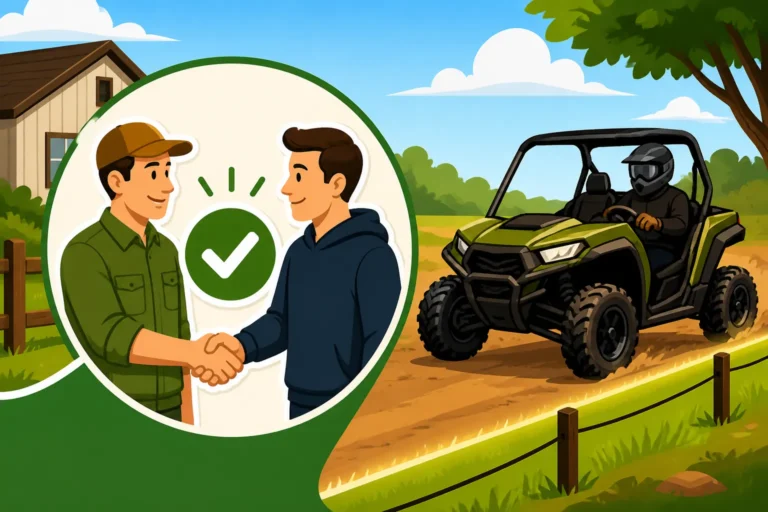
Here's a cold, hard truth: verbal permission, while seemingly friendly and straightforward, can be incredibly difficult to prove if an issue arises. A handshake deal with a landowner might feel solid at the moment, but memories fade, people move, or misunderstandings can occur. In the eyes of law enforcement, if you can't show proof of permission, you don't have it. This is why [Massachusetts Requires Written Permission] to ride on private land.
A written permission form acts as your shield. It clearly outlines who gave permission, for what specific land, and often, under what conditions or for what duration. This protects both you and the landowner. It prevents "he said, she said" situations and provides concrete evidence that you are riding legally. Without it, even if a landowner initially said "sure, go ahead," they could later deny it, or a new owner might have no knowledge of the previous agreement, leaving you in a vulnerable position. The Environmental Police, when they stop you, will ask for this documentation.
Consider this scenario: You’ve been riding on Farmer McGregor’s back forty for years, always with his verbal okay. One day, a new officer is on patrol, or Farmer McGregor's nephew, who now manages the property, sees you and doesn't know about your arrangement. Without a piece of paper in your pocket, you’re suddenly a trespasser. This is why having [Written Permission From a Bay State Owner] is non-negotiable for private land access.
Common Misconceptions About Access
Many riders operate under assumptions that, while perhaps common, are legally incorrect and can lead to trespass violations. Let's clear up a few of these.
One major misconception is that if land isn't posted with "No Trespassing" signs, it's fair game. This is absolutely false in Massachusetts. The absence of a sign does not imply permission. All private land is considered restricted unless you have explicit permission. You can't just assume a path is public because you don't see a sign. Another common belief is that old logging roads or utility easements are public access points. While some utility corridors might have specific, limited recreational access, the vast majority are private, and using them without permission is trespassing.
| Permission Type | Legal Standing in Massachusetts | Best Practice for OHV Riders |
|---|---|---|
| Verbal | Generally insufficient for proof | Avoid relying solely on this |
| Implied | Not recognized as permission | Never assume access |
| Written | Legally recognized as proof | Always obtain for private land |
| Public Land | Permitted only on designated trails | Stay on marked OHV trails |
Some riders also believe that if a trail is listed on an older, unofficial map or app, it must be legitimate. However, these maps can be outdated or inaccurate. Property lines change, land gets sold, and access agreements can be revoked. Always verify current access rules. For example, some trails might be open to hikers or mountain bikers but explicitly closed to motorized vehicles. What's legal for one type of recreation isn't necessarily legal for all. When planning your ride, always consult current official resources or landowners directly to prevent accidental trespass, especially in areas where boundaries might be less defined.
The Serious Consequences of ATV/UTV Trespass in Massachusetts
Trespassing isn't just a slap on the wrist. In Massachusetts, the consequences can range from significant financial penalties to the loss of your machine, and even contribute to broader restrictions for all OHV enthusiasts. It's a risk simply not worth taking.
Penalties and Fines You Could Face
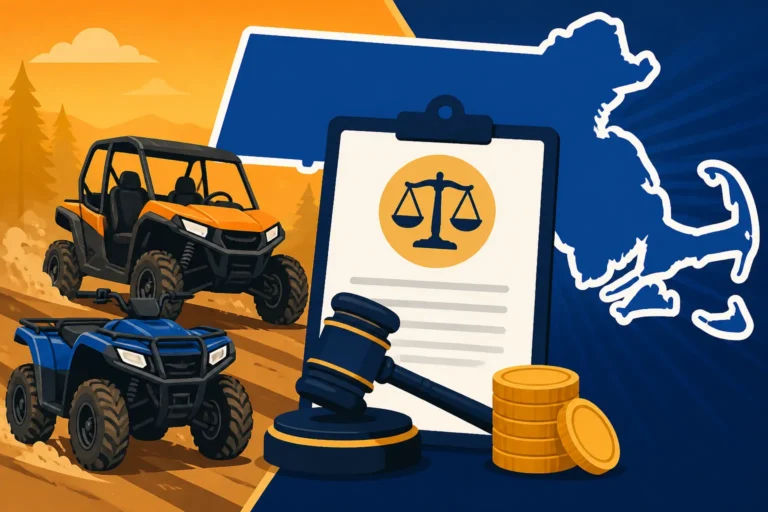
If caught trespassing on private land with your ATV or UTV, you're looking at more than just a stern talking-to. The Massachusetts Environmental Police are empowered to enforce these laws, and the fines can be substantial. Violations of [Massachusetts Penalties for Illegal Riding] can quickly add up. For a first offense, you might face a fine, but repeat offenses or aggravating circumstances (like property damage) can lead to much harsher penalties. This isn't just about paying a ticket; your vehicle could even be impounded.
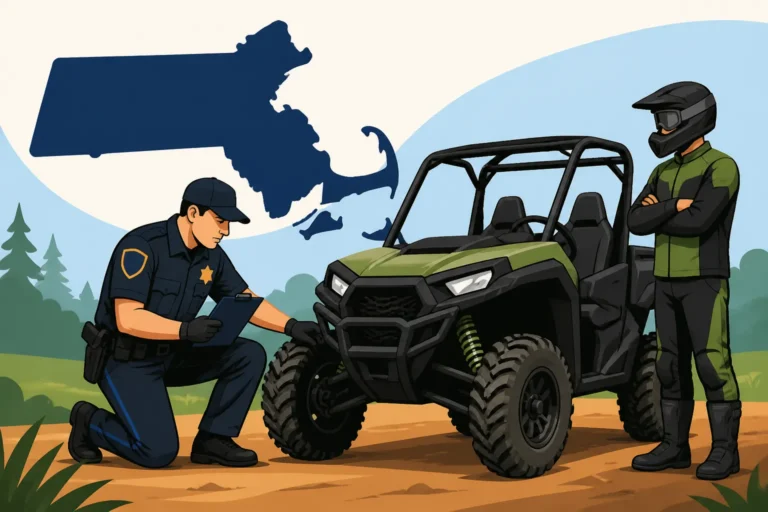
Imagine this scenario: You're riding what you thought was an old public access road in October Mountain State Forest, but you've veered off onto adjacent private property. An Environmental Police officer, perhaps responding to a landowner complaint, stops you. If you can't produce written permission, you're immediately in violation. The officer could issue you a citation, and depending on the severity and history, they might even order your vehicle to be towed and impounded. Getting a seized quad back from the state involves additional fees, court appearances, and significant hassle, truly ruining any enjoyment you might have had that day. These are the kinds of [Massachusetts Penalties Under Sean's Law] and other statutes that riders must be aware of.
Landowner Rights and Civil Action
Beyond the state-imposed fines and penalties, landowners have significant rights to protect their property. If you trespass and cause any damage – even seemingly minor damage like tearing up turf, damaging a fence, or disturbing crops – the landowner can pursue civil action against you. This means they can sue you in court to recover costs for repairs, lost income, or other damages. This can be far more expensive than any state fine.
Consider a situation where you accidentally cut a fence line or churn up a farmer's newly planted field while trying to turn around on private land. The landowner, fed up with trespassers, might not just call the Environmental Police; they could also pursue you in civil court for the cost of repairing the fence, re-seeding the field, and even for emotional distress or loss of enjoyment of their property. Your insurance policy might not cover damages incurred while committing an illegal act like trespassing, leaving you personally liable for potentially thousands of dollars. It's a stark reminder that respecting property boundaries isn't just about avoiding a ticket; it's about avoiding a costly legal battle.
Long-Term Impact on Riding Opportunities
Every instance of ATV/UTV trespass, property damage, or landowner complaint chips away at the overall perception of responsible OHV recreation in Massachusetts. When landowners feel their property is being disrespected, or when local communities are plagued by illegal riding, the result is almost always stricter regulations, more "No Trespassing" signs, and fewer opportunities for everyone. This affects not just individual riders, but organized clubs and the wider OHV community.
Think about areas like the Berkshires, where open land is often a mix of state forests and privately owned parcels. If a few riders consistently ignore posted signs or ride without permission, it creates a negative stereotype. Landowners become less willing to consider opening their property for any kind of managed trail use, and communities may pressure the Department of Conservation and Recreation (DCR) to close existing state trails. The more incidents of trespass, the harder it becomes for clubs to advocate for new trails or maintain existing ones. Ultimately, repeated trespass incidents can lead to [Massachusetts Bans Riding Others' Land], closing off potential future riding areas permanently, impacting our collective ability to enjoy our machines.
Proactive Steps to Avoid Trespass and Ride Legally
Nobody wants to be a trespasser. Most riders genuinely want to do the right thing and enjoy their sport responsibly. The good news is there are many proactive steps you can take to ensure you're always riding legally and respectfully.
How to Secure Written Landowner Permission
The single most effective way to avoid trespassing on private land is to obtain clear, written permission. But how do you go about it? First, identify the landowner. This might involve checking local town assessor's maps, which are often available online or at town hall. Once you know who owns the land, a polite, direct approach is best.
Prepare a simple, professional request. Explain that you are a responsible OHV rider, that you respect private property, and that you are seeking permission to ride specific trails or areas on their land. Offer to sign a liability waiver, which can often ease a landowner's concerns. Be very clear about the type of machine you'll be riding and the specific areas you want to use. A written agreement doesn't have to be overly complicated; it can be a simple letter signed by both parties, stating the permission, the land description, and any conditions. Always carry this document with you when riding on their property. This simple act aligns perfectly with [Massachusetts Landowner Permission in Writing].
Identifying Legal Riding Areas and Resources
The easiest way to avoid trespass is to stick to designated, legal riding areas. Massachusetts has a few fantastic state forests in the western part of the state that offer miles of trails for ATVs and UTVs. Beartown State Forest, October Mountain State Forest, and Pittsfield State Forest are prime examples. The DCR maintains these trails, and they are clearly marked. Always check the DCR website for current trail maps, conditions, and any temporary closures before you head out.
Joining a local ATV or UTV club can also be an invaluable resource. Clubs often have established relationships with landowners, know about approved riding events, and can provide guidance on where it's legal and safe to ride. They are typically well-versed in [Massachusetts Rules for Riding Private Land] and public access. For example, the Berkshire Trails Council works closely with the DCR to maintain trails and promote responsible riding. These clubs often organize group rides, which means you're riding with experienced locals who know the legal access points.
Using Technology and Best Practices
In today's world, technology can be a powerful ally in preventing accidental trespass. GPS units or mapping apps on your smartphone can display property lines, helping you stay aware of your exact location relative to private property boundaries. There are many robust off-road navigation apps available that show parcel data. Having a reliable GPS mount from a company like SuperATV can keep your device secure and visible, allowing you to easily check your location against property maps in real-time.
Before you even leave your driveway, plan your route using these mapping tools. Identify the boundaries of public lands and any private parcels you have permission for. Save these routes and boundaries on your device. During your ride, periodically check your position. If you find yourself approaching a property line you don't have permission to cross, turn around. It's always better to err on the side of caution. Furthermore, maintaining your machine with quality SuperATV parts, like robust skid plates or winches, can help prevent breakdowns in remote areas, which could otherwise lead to desperate measures to get out, potentially involving unintentional trespass. Remember, a physical map of the area is also a great backup, especially in areas with spotty cell service.
Navigating Specific Scenarios and Avoiding Accidental Trespass
Even with the best intentions, certain situations can make avoiding trespass a bit tricky. Understanding these specific scenarios and how to handle them is key to responsible riding.
Unmarked Land and Disputed Boundaries
One of the most challenging situations is when land appears unmarked or when boundary lines are unclear. As discussed, the lack of "No Trespassing" signs does not grant permission. If you encounter land that seems like it might be private, but isn't clearly marked, assume it's private. The responsibility is always on the rider to know where they are.
If you are unsure of a boundary line, do not proceed. Retreat to a known legal trail or public land. In some cases, talking to locals or checking town property maps can help clarify ownership. For example, many conservation commissions manage town-owned land that might look like public trails, but these often have specific restrictions, sometimes banning motorized vehicles entirely. Always double-check before riding. When [Reading Posted Land Signs in the Berkshires], remember that sometimes even subtle markers like paint on trees can indicate property lines. If in doubt, stay out.
Crossing Public Ways and Right-of-Ways
Massachusetts law specifically addresses how ATVs and UTVs can interact with public roads. While it's generally illegal to ride an OHV on a public road, there are specific provisions for crossing them. You are allowed to cross a public way, but it must be done safely and directly, and you must yield to all other traffic. You cannot ride along the shoulder or a ditch of a public road to connect trails.
This means if you're riding a DCR trail system and it requires you to briefly cross a paved or gravel town road to reach the next section of trail, you must [Massachusetts Crossings Require a Full Stop], look both ways, and proceed cautiously straight across to the other side. This is not an opportunity to ride down the road for a quarter-mile. If you're under a certain age (specifically 16 and a half, unless you have a valid motor vehicle operator's license), you also need to meet specific supervision requirements for these crossings. These rules are distinct from general trespass law but are vital for legal and safe riding.
Understanding the 150-Foot Dwelling Rule
Massachusetts has a very specific rule that is directly tied to respecting private property and preventing disturbance: the "150-Foot Dwelling Rule." This law states that you cannot operate an OHV within 150 feet of a dwelling or building without the express, written consent of the owner or occupant of that dwelling. This rule applies even if you are on otherwise legal public land, or land for which you have general permission.
This rule is designed to protect residents from noise and disturbance, and it's something Environmental Police officers enforce strictly. Imagine you're on a legal DCR trail in Pittsfield State Forest, but that trail happens to pass very close to the property line of a private residence. Even though you're technically on state land, if you're within 150 feet of that home, you need specific permission from the homeowner. This can be tricky, as DCR trails aren't necessarily laid out to avoid every private dwelling. Knowing [Why 150 Feet From a Dwelling Matters] and how [How 150 Feet Is Measured From a Dwelling] is crucial. This rule is a common trap for riders, making proactive awareness and planning even more important to avoid accidental violations.
Disclaimer
This article is for general informational purposes only and does not constitute professional advice. Laws, prices and regulations vary by location and change over time. Consult a qualified professional for guidance on your specific situation.