Massachusetts Landowner Permission in Writing
Riding your ATV or UTV on private land in Massachusetts can be a fantastic experience, offering freedom and open spaces that public trails sometimes can't. However, the biggest headache many riders face isn't a mechanical issue, but the nagging uncertainty about where they can legally ride, and specifically, how to ensure they have proper permission for private property. This guide is here to clear up the confusion, explaining why written landowner permission isn't just a good idea, but an absolute necessity in the Bay State, and what you need to know to secure it properly.
Why Written Permission is Paramount in Massachusetts
Let's be honest, nobody wants to get a trespass ticket, have their machine seized, or worse, face legal action because of a misunderstanding. In Massachusetts, the rules around riding off-highway vehicles (OHVs) on private land are quite clear, and they put a strong emphasis on documented permission. It's not about being overly formal; it's about protecting everyone involved and ensuring the longevity of our riding opportunities.
The Letter of the Law: Chapter 90B
Massachusetts General Laws Chapter 90B is where you'll find the core regulations governing ATVs, UTVs, and other OHVs. While many sections focus on registration, age restrictions, and equipment, it's the part about land access that often trips up riders. The law is designed to prevent unauthorized access, protect private property, and ensure public safety. It explicitly states that you cannot operate an OHV on private property without the express permission of the landowner. And what does "express permission" often mean in the eyes of the law, especially if there's ever a dispute? You guessed it: something in writing. Relying on a casual nod or a shouted "Go for it!" from a distance can quickly put you in a precarious position. This isn't just a suggestion; it's a legal safeguard. Understanding [Massachusetts ATV Laws Under Chapter 90B] is the first step in responsible riding.
Protecting Yourself and the Landowner
Having written permission isn't just a hoop to jump through; it's a mutual protection agreement. For you, the rider, it's undeniable proof that you have the right to be there, shielding you from potential trespass charges or disputes with neighbors, game wardens, or even other family members of the landowner. Imagine you're out enjoying a perfect fall day on a buddy's sprawling property, and a new neighbor, unfamiliar with the arrangement, calls the Environmental Police. Without written proof, it's your word against theirs, and that's a tough spot to be in.
For the landowner, it also offers a layer of protection. It can stipulate conditions of your riding, such as specific areas you can use, times of day, or even types of machines allowed. This prevents misunderstandings and gives the landowner peace of mind that their property isn't being misused or damaged. It's about setting clear boundaries and expectations from the outset.
Preventing Trespass Charges
This is perhaps the most immediate and serious consequence of not having proper permission. [Massachusetts Trespass Law for Riders] can lead to fines, impoundment of your machine, and even more severe legal repercussions depending on the circumstances, such as property damage or repeated offenses. The Environmental Police, who are responsible for enforcing OHV laws in Massachusetts, take trespass seriously. They are trained to investigate these incidents, and if you're found on private land without a clear right to be there, you'll be facing a citation.
Let's consider a common scenario: you've been riding on a piece of land for years, you know the owner, and it's always been fine. But then the land changes hands, or perhaps the original owner passes away, and the new heirs or owners have no idea about the informal agreement. Suddenly, your long-standing riding spot becomes a no-go, and without written permission, you have no recourse. A simple written note, even if it feels a bit formal for a friend or family member, can prevent a world of hurt down the line.
What Your Written Permission Document Needs to Include
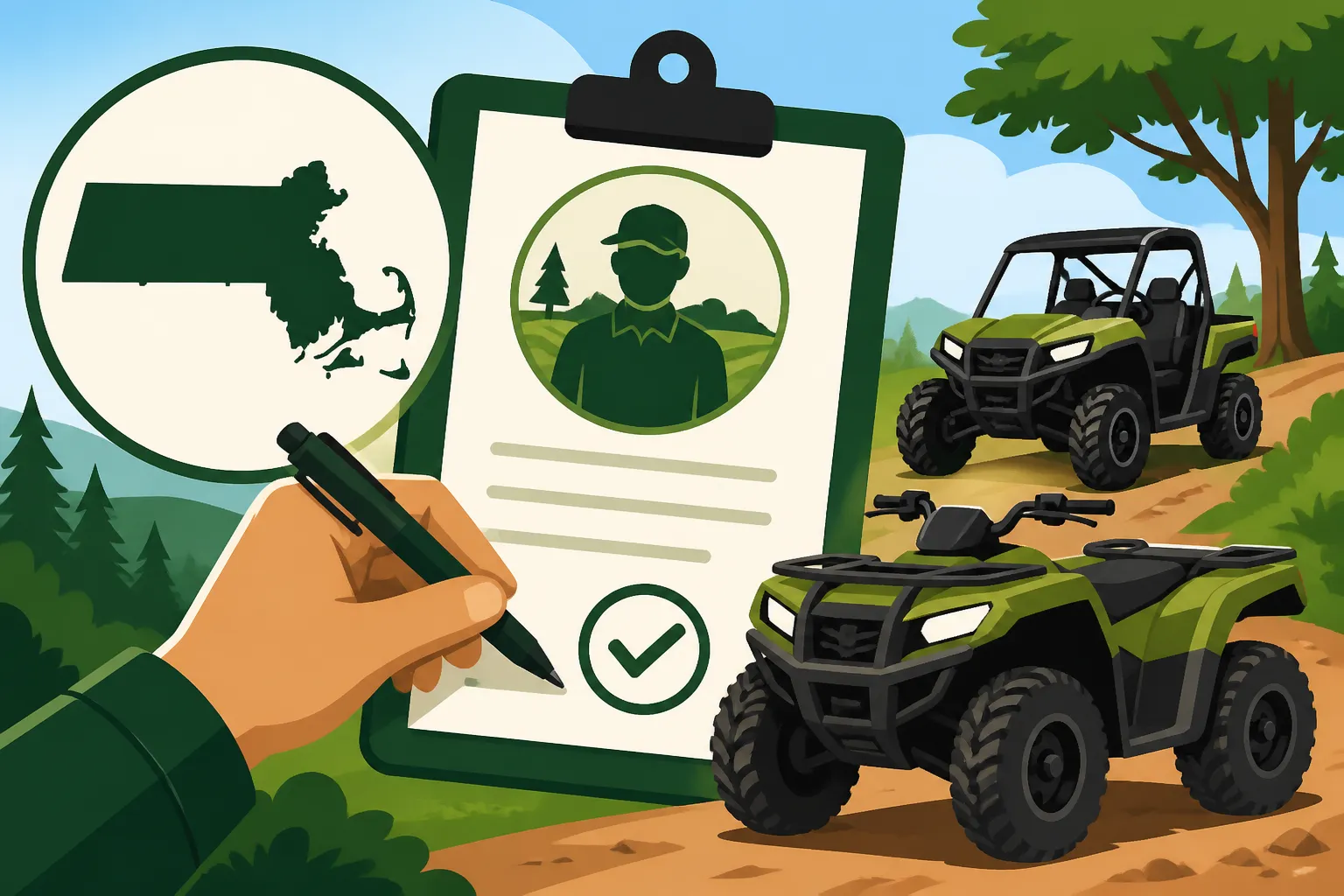
So, you're convinced: written permission is the way to go. But what exactly should that document look like? You don't need a fancy legal contract drafted by an attorney, but a few key elements will make your permission robust and clear. Think of it as a simple, good-faith agreement that covers the essentials.
Essential Information to Cover
At a minimum, your written permission document should include:
- Date: When was the permission granted? This helps establish the timeline.
- Landowner's Full Name and Contact Information: This verifies who is giving permission.
- Rider's Full Name and Contact Information: This identifies who is receiving permission.
- Clear Description of the Property: Include the address, town, and ideally, a parcel number or a description that leaves no doubt about which land is being discussed. "My back forty" isn't specific enough; "Parcel ID 123 on Main Street, located in Becket, Massachusetts" is much better.
- Specific Statement Granting Permission: A simple sentence like "I, [Landowner Name], grant permission to [Rider Name] to operate an off-highway vehicle (ATV/UTV) on my property described above."
- Duration of Permission: Is it for a single day, a season, or indefinitely until revoked? Specifying this avoids ambiguity.
- Any Conditions or Restrictions: This is crucial. Does the landowner only want you to ride on certain trails? During specific hours? Are passengers allowed? Should you avoid certain sensitive areas like wetlands or planting fields? This is where you can address concerns about [Massachusetts Riding Within Sight of a House] or [Massachusetts Equipment Requirements].
- Signatures: Both the landowner and the rider should sign and date the document. This signifies mutual understanding and agreement.
Here's a quick example of a simple table outlining key elements:
| Element | Description | Why It's Important |
|---|---|---|
| Date | When the agreement was made. | Establishes the validity period and context. |
| Landowner Info | Full name, address, contact details. | Verifies authorization and allows communication. |
| Rider Info | Full name, address, contact details. | Identifies who is granted permission. |
| Property Description | Address, town, parcel number, lot boundaries. | Clearly defines the authorized riding area, preventing ambiguity. |
| Grant of Permission | Explicit statement allowing OHV operation. | The core of the agreement; leaves no doubt about intent. |
| Duration | Single use, specific dates, season, ongoing until revoked. | Sets the timeframe for authorized access. |
| Conditions | Areas to avoid, hours, machine types, speed limits, trail maintenance. | Protects property, limits liability, ensures responsible use, manages noise or dust. |
| Signatures | Landowner and rider, with dates. | Legal acknowledgement and acceptance of terms by both parties. |
Specificity is Your Friend
Being vague opens the door to misinterpretation. Instead of saying "you can ride on my land," try to be as precise as possible. For instance, if there's a specific trail you're allowed to use, draw it on a simple map and attach it to the permission slip. If there are areas bordering sensitive ecosystems or neighbor's properties, mark them clearly as off-limits. The more detail you include upfront, the fewer questions and potential conflicts will arise later. This precision also helps clarify expectations for anyone, be it the Environmental Police or a concerned neighbor, who might question your presence. It's about clarity over brevity, especially when it comes to land access. This level of detail is particularly useful for [Getting Written Permission From a Berkshire Woodlot Owner] where boundaries can be less obvious.
Consider a Basic Agreement Template
You don't have to start from scratch every time. Many OHV clubs or state associations offer basic templates for landowner permission that you can adapt. These often include liability waivers (which are critical for landowners), clauses about respecting the environment, and expectations for rider behavior. Even if you're just getting permission from a friend, using a slightly more formalized template shows a level of seriousness and respect for their property and the legal implications. Always make sure to carry a copy of this written permission with you whenever you're riding on private land. This is just as important as carrying your [Massachusetts Registration Cards Carried on Board] when you're out on the trails.
Navigating Different Types of Private Land
Not all private land is the same, and the approach to obtaining written permission might vary slightly depending on the type of property and your relationship with the owner. Whether it's a friend's backyard or a vast woodlot, understanding these nuances can make the process smoother.
Family and Friends' Properties
It might feel awkward to ask your aunt or your best friend for written permission to ride on their land. Many people think, "They know me, it's fine!" But as we discussed, even the closest relationships can lead to misunderstandings or complications down the road. A verbal agreement, no matter how sincere, holds little weight if questioned by authorities or if circumstances change.
Approach it with respect and an explanation of why written permission is important – not because you don't trust them, but because you want to protect both of you legally. Offer to draft the simple document yourself, making it easy for them. Emphasize that it's a responsible riding practice that gives everyone peace of mind. You might even discover that they appreciate your proactive approach, showing you take their property seriously.
Woodlots and Agricultural Land
These types of properties often come with unique challenges and responsibilities. Farmers and foresters rely on their land for their livelihood, and unauthorized OHV use can damage crops, disrupt livestock, or interfere with timber operations. When seeking permission for woodlots or agricultural land, be extra considerate.
Highlight your commitment to staying on designated paths, avoiding muddy fields, and not disturbing any agricultural activities. If they use [Massachusetts Machines Used Only on Private Land] for farm work, they'll appreciate a fellow machine operator who understands the need for care. Offer to help with minor trail maintenance or clear fallen branches as a way to show gratitude and commitment. The property owner might have specific concerns, such as fire risk during dry periods or conflicts with hunting season, so be prepared to discuss these and incorporate them into your written agreement. Showing you understand the property's primary use can go a long way in securing permission.
Commercial or Leased Land
Obtaining permission for commercial properties (like gravel pits or industrial sites) or land that is leased by another entity (such as a hunting club or a conservation group) is often more complex. These properties usually have stricter liability concerns and formal protocols. You might need to contact a property manager, a corporate office, or the leasing agent rather than a direct owner.
Be prepared for more extensive paperwork, including potential liability waivers, insurance requirements, or even fees. It's less about a friendly handshake and more about formal business. If the land is leased, you'll need permission from both the actual landowner and the leaseholder. Never assume that just because a gate is open, or it looks abandoned, you have permission. Always seek out the proper contact and follow their official procedures. [What a Locked Gate on a Woods Road Means] is often a clear signal that access is restricted and requires explicit permission.
Common Pitfalls and How to Avoid Them
Even with the best intentions, riders can sometimes fall into traps that lead to problems with private land access. Being aware of these common mistakes can save you a lot of grief and ensure your riding remains legal and enjoyable.
Verbal Agreements Aren't Enough
We've touched on this, but it bears repeating: a verbal agreement, no matter how solid it feels, is a house of cards. Human memory is fallible, people's opinions change, and land ownership can transfer. "I told him he could ride there" quickly turns into "I never said that" or "I meant only for a day, not every weekend."
The Environmental Police will almost always ask for written proof if you're stopped on private land. Without it, you are vulnerable to charges. Make the effort to get it in writing, even if it's just a quick note scribbled on a piece of paper. It's about foresight and respecting the legal framework that protects both you and the landowner.
Ignoring "Posted" Signs
This is a non-negotiable rule: if a property is posted with "No Trespassing," "Private Property," or similar signs, you absolutely cannot ride there without explicit, written permission from the owner. These signs are legal declarations of intent, and ignoring them is a direct violation of trespass laws.
Sometimes, riders assume that if they know the owner, or if the signs are old, they don't apply. This is a dangerous assumption. Always assume posted signs mean exactly what they say. Even if you have a prior verbal agreement, if new signs go up, that's a clear signal that the landowner's stance might have changed, and it's time to re-establish contact and secure updated written permission. Disregarding these signs is a quick way to earn yourself a [Massachusetts Penalties for Illegal Riding].
Riding Beyond the Scope of Permission
Another common mistake is extending the limits of the permission you've been granted. If the landowner said you could ride the old logging road, that doesn't automatically mean you can explore the entire 500-acre property, cut new trails, or bring five of your buddies. If your permission specifies riding during daylight hours, don't assume you can ride after dark.
Any deviation from the written (or even verbal, if it's truly all you have) agreement can be seen as exceeding your authority and could be considered trespass. Always stick to the agreed-upon areas and conditions. If you want to expand your riding area or bring guests, communicate with the landowner first and get explicit, ideally written, approval for the changes. If you're using something like a [Massachusetts Rules for a Side-by-Side Driver] that's wider or heavier than a typical ATV, make sure that's explicitly allowed to avoid unexpected trail damage.
Building Positive Relationships with Landowners
Securing written permission is a transactional first step, but truly responsible riding involves fostering long-term, positive relationships with landowners. These relationships are the lifeblood of private land access and can open up more opportunities for everyone.
Respect and Communication are Key
Treat the landowner's property as if it were your own, or even better. This means riding responsibly, staying on designated trails, avoiding excessive noise, and respecting the natural environment. If you notice any issues on their property – a downed tree, a broken fence, or suspicious activity – communicate it to them.
Regular, polite communication is invaluable. Check in periodically, even if you're not riding that day, just to say hello or ask if everything's okay. A simple gesture like that reinforces that you're a responsible individual, not just someone looking for a place to play. Showing respect for their land and their concerns builds trust, which is the foundation of continued access.
Offering to Help Out
One of the best ways to show gratitude and solidify a good relationship is to offer assistance. Many landowners, especially those with large tracts of land, are busy and appreciate an extra set of hands. Could you help clear some brush on a trail you ride? Maybe fix a fence line? Offer to help with a small chore around the property that doesn't involve your OHV.
This kind of proactive goodwill can transform your relationship from a mere permission-seeker to a trusted helper. It demonstrates that you value their land and are willing to contribute positively to its upkeep. This reciprocal relationship can be incredibly rewarding for both sides and is far more durable than a simple piece of paper. You might even find yourself using some of your SuperATV gear, like a winch or a small trailer, to help with trail maintenance or moving materials, further cementing your helpfulness.
Leaving No Trace
This is an ethical imperative for all outdoor enthusiasts, and especially critical when riding on private land. "Leave No Trace" means exactly that: when you leave, the land should look as if you were never there, or even better. Pack out all your trash, and if you see any litter, pick it up, even if it's not yours. Avoid damaging vegetation, creating ruts, or causing excessive erosion.
This practice is not just about being tidy; it's about minimizing your impact on the environment and on the landowner's property. A landowner is far more likely to renew permission for a rider who is meticulous about leaving no trace than for one who leaves behind trash or visible damage. It reflects well on you, on other OHV riders, and on the broader OHV community.
Beyond Private Land: Where Else Can You Ride?
While securing written permission for private land opens up many possibilities, it's also important to remember that Massachusetts offers other legal riding opportunities. Understanding these alternatives can round out your riding experiences and provide variety.
State Forests with Designated Trails
Massachusetts, particularly in the western part of the state, has several state forests that offer designated OHV trails. These are managed by the Department of Conservation and Recreation (DCR) and provide a fantastic resource for riders. Places like [October Mountain State Forest Riding in Massachusetts], [Beartown State Forest Riding in Massachusetts], and [Pittsfield State Forest Riding in Massachusetts] offer miles of trails for ATVs and UTVs.
These public lands have their own set of rules, including specific riding seasons (typically May to November), machine requirements, and sometimes even fees. While you don't need individual landowner permission here, you must adhere strictly to the posted regulations. It's a different kind of permission – collective permission granted by the state for responsible use. These trails are often rated for difficulty, so always check the conditions and ensure your skill level matches the terrain.
Permits and Regulations for Public Land
Even on public lands, you'll encounter specific permit and regulation requirements. For instance, some state forests might require a daily parking fee, or perhaps a yearly DCR pass. Always check the DCR website or contact the specific state forest office before you head out. These regulations are in place to manage the impact of recreation, maintain trails, and ensure safety for all users.
Understanding the specific rules for public land, such as age restrictions or noise limits, is just as crucial as having private landowner permission. While [Massachusetts Has No Insurance Mandate] for OHVs, carrying some form of coverage is always a smart move, even on public trails, to protect yourself financially in case of an accident.
Understanding the Limits of Public Access
It's vital to remember that "public land" doesn't mean "anything goes." Many state forests, parks, and conservation areas in Massachusetts explicitly ban OHV use. Others are open only to specific types of machines (e.g., motorcycles only on certain single tracks). Never assume that because a road or trail looks inviting, it's open to your ATV or UTV.
Always consult official DCR maps and websites, or contact the appropriate ranger station, to confirm OHV access. Riding on unauthorized public land is just as serious as trespassing on private property and can lead to the same fines and penalties. Respecting these boundaries, whether private or public, is fundamental to being a responsible and welcomed rider in Massachusetts.
Disclaimer
This article is for general informational purposes only and does not constitute professional advice. Laws, prices and regulations vary by location and change over time. Consult a qualified professional for guidance on your specific situation.