Massachusetts Age and Engine Size Ladder
Navigating the world of off-highway vehicle (OHV) riding in Massachusetts can feel like deciphering a secret code, especially when it comes to who can ride what, and at what age. It's a common frustration for families and young riders to be eager to hit the trails, only to find themselves utterly confused by the state's very specific, and often strict, rules regarding age limits, engine sizes, and supervision. This comprehensive guide is here to shed light on Massachusetts's unique age and engine size ladder, breaking down exactly what's required for different age groups to ride ATVs, UTVs, and dirt bikes legally and safely in the Bay State.
Why Massachusetts Has Such Strict Youth Riding Laws
Massachusetts didn't arrive at its current OHV regulations by accident. The state has some of the strictest laws in the country when it comes to youth riders, and for good reason—safety. While it can feel restrictive, especially for families accustomed to more lenient rules in other states, these regulations are designed to prevent serious injuries and fatalities, particularly among younger, less experienced operators. Understanding the "why" behind these laws can help riders and parents appreciate their intent, even if they find them challenging to navigate.
The Impact of Sean's Law
The foundation of many of Massachusetts's youth riding regulations is rooted in what's widely known as [Sean's Law]. This legislation, passed in 2010, was a direct response to a tragic incident involving a young rider and aimed to significantly enhance safety for children operating off-road vehicles. Before Sean's Law, the rules were less clear, leading to preventable accidents and heartbreaking consequences for families across the Commonwealth.
This law specifically introduced the ban on riders under the age of 14 operating ATVs, UTVs, or dirt bikes on any land, public or private, with very limited exceptions. It also established stricter age and engine size progression for older youth, along with mandatory safety certifications and supervision requirements. The intent was to ensure that only riders with appropriate physical and cognitive development, coupled with formal safety training, were operating these powerful machines, drastically reducing the risks associated with inexperienced youth riders. It's a common point of contention and confusion for many, but it undeniably reshaped the landscape of youth OHV riding in Massachusetts.
Prioritizing Safety Over Unrestricted Access
Massachusetts takes a firm stance that the safety of its citizens, especially children, outweighs the desire for unfettered access to OHV riding. This philosophy underpins the entire regulatory framework. While other states might allow younger children to operate smaller machines with parental supervision, Massachusetts mandates specific milestones and educational requirements before a child can legally ride. This isn't just about preventing accidents on public trails; it extends to private land as well, reflecting a comprehensive approach to safety.
For parents coming from states with more relaxed rules, this can be a significant adjustment. You might have a child who's been riding a small ATV on your property in Vermont or New Hampshire since they were seven, but bringing that experience to Massachusetts means adhering to a completely different set of expectations. The state prioritizes formal training and age-appropriate development, meaning that practical experience, while valuable, must still align with the established legal framework. It’s a proactive approach designed to minimize risk rather than react to incidents after they occur.
The Age-Based Riding Tiers in Massachusetts
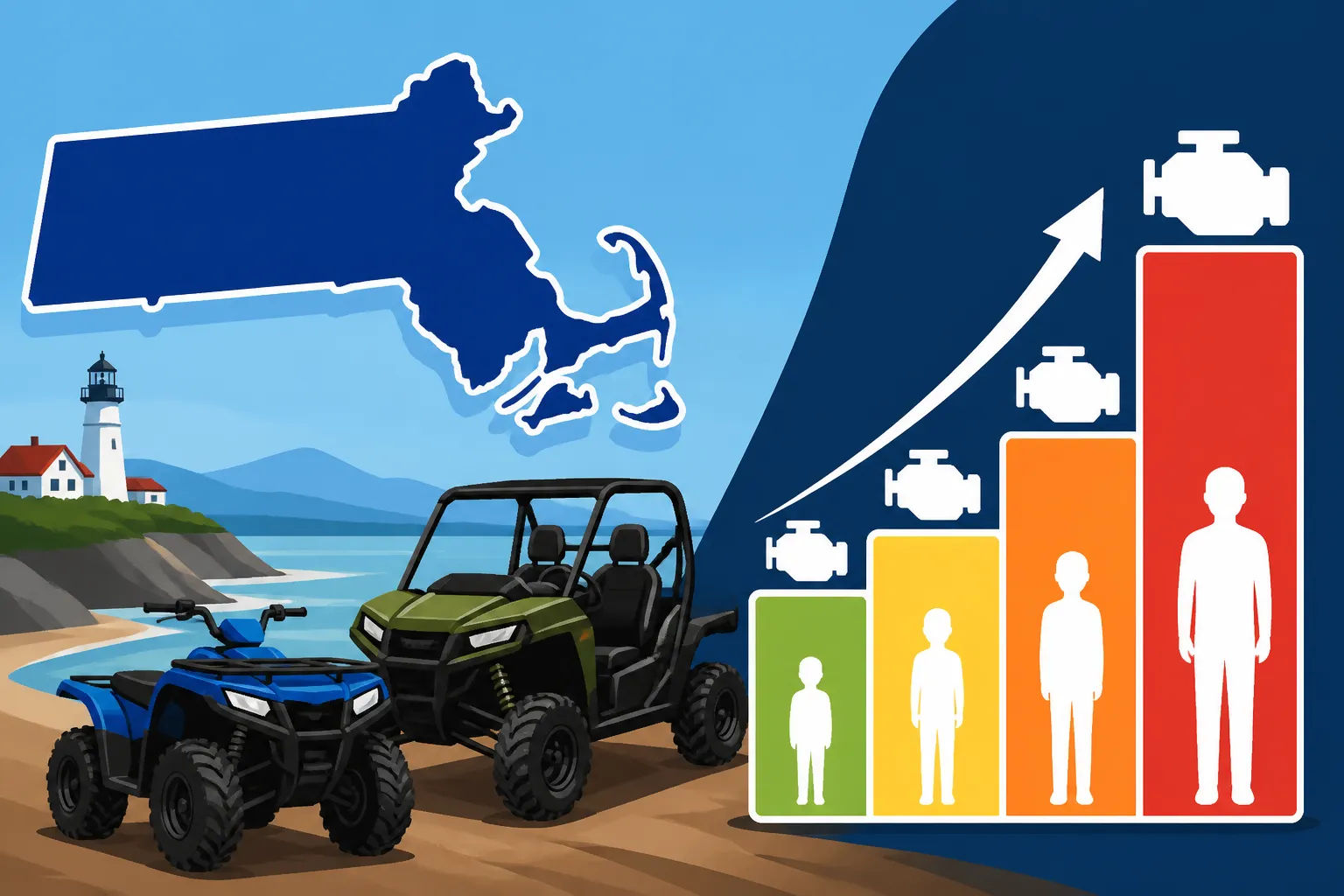
Massachusetts has established a clear, progressive "ladder" system for OHV riders, based strictly on age and, in some cases, engine size. This system dictates who can ride, what they can ride, and under what conditions. Understanding these tiers is crucial for any parent or young rider looking to enjoy the trails legally in the Bay State. Ignoring these rules can lead to serious penalties, not just for the rider, but for the supervising adult as well.
Riders Under 10 Years Old
This is the strictest tier, and it often comes as a shock to parents new to Massachusetts regulations. Generally speaking, children under the age of 10 are prohibited from operating any OHV, including ATVs, UTVs, and dirt bikes, on any land within Massachusetts, whether public or private. There are virtually no exceptions for casual riding, even on private property with direct parental supervision.
The only narrow exception for riders under 10 is participation in a sanctioned organized event, such as a race or a practice session, that is specifically approved by the municipality where it's held. Even in these highly controlled environments, strict rules apply, including specific supervision, safety gear, and often limitations on engine size. However, for the typical family looking to simply enjoy a trail ride together, a child under 10 simply cannot legally operate an OHV in Massachusetts. This means if you're planning a family trip to a state forest like October Mountain, anyone under 10 will have to be a passenger on a machine designed for it, or they'll be sitting out the ride entirely.
Riders Ages 10 to 14
The 10 to 14 age bracket represents the next step on the ladder, but it's still heavily restricted. [Massachusetts Bans Riders Under 14] from general OHV operation. For a child in this age range, the rules are very specific: they may only operate an OHV in Massachusetts if they are participating in a sanctioned organized event, such as a race or a practice day, which has been formally approved by the municipality where the event takes place. This is not for recreational riding in a state forest or on private land without specific event approval.
Even within these sanctioned events, children aged 10 to 14 must be under the direct supervision of an adult who is at least 18 years old. This isn't just about being in the general vicinity; it means close, continuous visual contact and verbal communication whenever feasible. The machines they operate are typically subject to engine size restrictions as well, focusing on smaller, more manageable vehicles appropriate for their age and skill level within the controlled environment of an event. This strict limitation means that typical family trail riding with a 10-13 year old operating their own machine is generally not permitted outside of these very specific, organized events.
Riders Ages 14 to 16
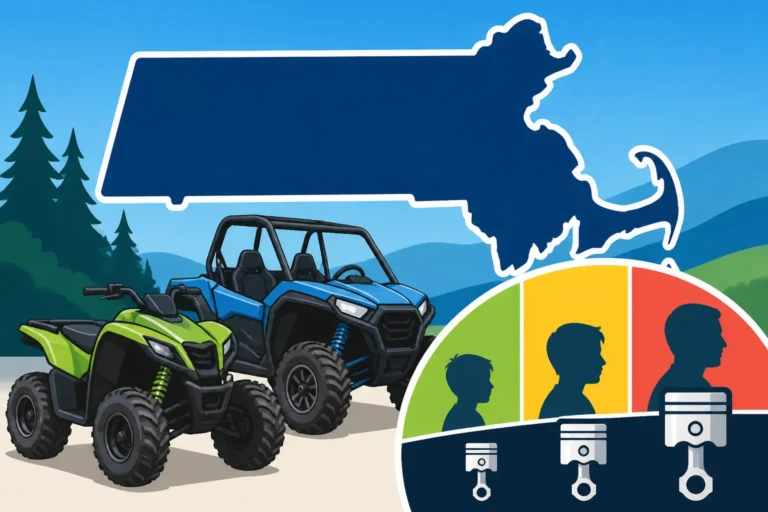
For riders aged 14 to 16, the rules begin to loosen slightly, but significant restrictions still apply, especially concerning engine size. A rider in this age group can operate an OHV for recreational purposes, but there's a crucial engine displacement limit: they are restricted to machines with an engine size of 90cc or less. This applies to ATVs, dirt bikes, and even side-by-sides if they fall into that engine category, though most side-by-sides are well above 90cc. [Massachusetts Riders 14 to 16 and 90cc] is a critical rule to remember.
Furthermore, these riders must carry a valid OHV safety certificate, which proves they've completed the required safety training course. They also must be under the direct supervision of an adult who is at least 18 years old. This supervision again means continuous visual contact and verbal communication. Imagine a family riding in Pittsfield State Forest: the 15-year-old on their 90cc quad must be in sight and earshot of a supervising adult at all times. This tier emphasizes controlled introduction to riding with a focus on smaller, less powerful machines, ensuring the rider is developing skills without being overwhelmed by a high-performance vehicle.
Engine Size Restrictions and Their Nuances
The discussion of engine size is inextricably linked with age in Massachusetts OHV laws. It's not just about how old a rider is, but also about the power and capability of the machine they're operating. The 90cc rule for younger teens is perhaps the most significant, but understanding what "90cc" truly means and how it applies to different types of OHVs is essential.
The Critical 90cc Cap
The 90cc engine size cap for riders aged 14 to 16 is one of the hallmarks of Massachusetts's strict youth riding laws. This means that if your child is 14 or 15, they cannot legally operate an ATV, dirt bike, or UTV with an engine larger than 90 cubic centimeters. This is a hard limit, and there's no flexibility for "just a little over." Many popular youth ATVs are designed to meet this very specification, but it's vital for parents to check the manufacturer's stated engine displacement.
For many families, this can be a difficult pill to swallow, especially if they already own larger machines or if their child is experienced on bigger quads from out-of-state riding. However, the intent behind [The 90cc Engine Cap for Riders 14 to 16] is to ensure that riders in this developmental stage are on machines that are manageable and less prone to dangerous situations caused by excessive speed or power. When considering a machine for a young teen, always verify the engine size meticulously. For aftermarket parts or accessories, parents might look to companies like SuperATV that offer components designed for smaller displacement machines, ensuring compatibility and enhancing the riding experience while staying within legal limits.
How Engine Size Impacts ATV, UTV, and Dirt Bike Choices
The 90cc rule heavily influences what types of machines are suitable for younger riders in Massachusetts. For ATVs, many manufacturers offer specific "youth" models that fall within this displacement, often ranging from 50cc to 90cc. These are typically smaller in stature, with features like speed limiters and remote kill switches, making them ideal for supervised learning. When your teen is looking to customize their youth quad, options from brands like SuperATV can help adapt the machine for better control and fit.
Dirt bikes also have specific youth models, often denoted by engine size (e.g., 85cc, 65cc) that might be appropriate for this age group. However, the challenge primarily arises with UTVs or "side-by-sides." Most utility-task vehicles, even smaller ones, typically have engine displacements far exceeding 90cc. This means that for riders aged 14-16, operating a UTV is virtually impossible under Massachusetts law, as very few, if any, production UTVs fall into the 90cc or less category. Parents often overlook this detail, assuming a smaller UTV might be permissible, but the engine size rule is uncompromising for this age bracket.
Table: Massachusetts OHV Youth Riding Ladder
| Rider Age | Engine Size Limit | Supervision Required | Safety Certificate Required | Allowed Riding Locations |
|---|---|---|---|---|
| Under 10 | Not Applicable | Not Applicable | No | Sanctioned events ONLY |
| 10 to 14 | Not Applicable | Yes (18+ adult) | No | Sanctioned events ONLY |
| 14 to 16 | 90cc or less | Yes (18+ adult) | Yes | Recreational & Sanctioned |
| 16 and Half to 18 | No limit (if licensed) | No (if licensed) | Yes | Recreational & Sanctioned |
| 18+ | No limit | No | No (but recommended) | Recreational & Sanctioned |
Note: "Sanctioned events" must be approved by the municipality.
Supervision Requirements for Young Riders
Beyond age and engine size, the question of supervision is paramount for youth OHV riders in Massachusetts. It's not enough for a parent to be somewhere on the trail; the law is quite specific about the nature and proximity of adult supervision. This is often an area where well-meaning parents can inadvertently fall afoul of the regulations, simply by misinterpreting what "supervision" truly entails.
Defining "Direct Supervision" and "Continuous Visual Contact"
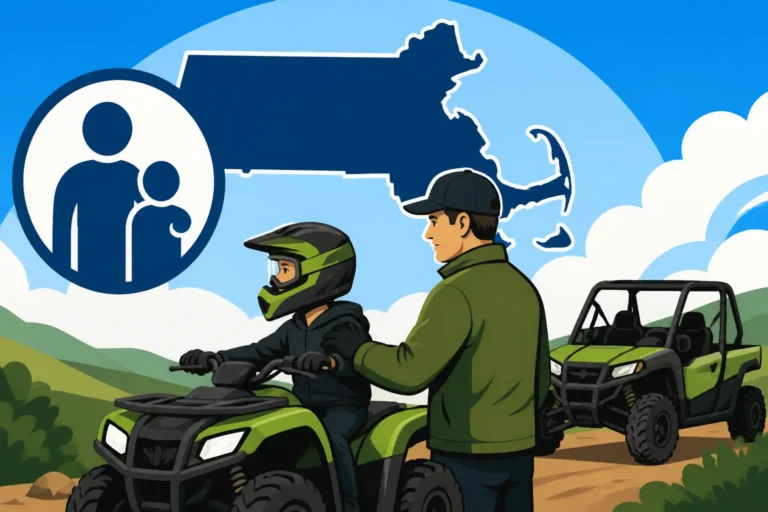
For riders under 18, the law mandates "direct supervision" by an adult at least 18 years of age. This isn't a passive requirement. Massachusetts regulations, particularly those enforced by the Environmental Police, define direct supervision as maintaining [What Continuous Visual Contact Means in Massachusetts]. This means the supervising adult must be able to see the young rider at all times while they are operating the OHV.
Consider a winding trail in Beartown State Forest: if your 15-year-old is on their 90cc quad, you, as the supervising adult, must be able to see them as they navigate turns and hills. You can't be several bends ahead, or out of sight over a ridge. Furthermore, verbal communication should be possible whenever feasible, though this is often more challenging on noisy machines or in dense terrain. The idea is that the adult should be able to intervene immediately if the young rider encounters trouble, loses control, or makes a dangerous decision. This often means the supervising adult is riding immediately behind or in front of the young rider, never letting them out of their direct line of sight.
The Supervising Adult's Liability
It's critical for any adult taking on the role of supervisor to understand the gravity of their responsibility. In Massachusetts, [Massachusetts Supervising Adults Held Liable] for any violations committed by the young rider they are supervising. This means that if the child breaks a rule – perhaps riding off-trail, exceeding the speed limit, or operating an unregistered machine – the supervising adult can face fines, citations, or other legal consequences right alongside, or even instead of, the young rider.
This liability underscores why direct and continuous supervision is so important. It places the onus squarely on the adult to ensure the young rider is not only safe but also adhering to all state OHV laws and regulations. This legal responsibility is a powerful incentive for adults to be diligent and engaged in their supervisory role, ensuring that both the young rider and their machine comply with all the various requirements, from proper registration to the correct decal placement.
The Role of the OHV Safety Certificate
Beyond age, engine size, and supervision, the Massachusetts OHV safety certificate is a non-negotiable requirement for young riders. This certification demonstrates that a rider has undergone formal training in OHV operation, safety, and the state's specific laws. It's a fundamental pillar of Massachusetts's youth riding program, designed to educate and empower riders with the knowledge they need to be safe and responsible.
Who Needs an OHV Safety Certificate
Anyone operating an OHV in Massachusetts who is under the age of 18 is generally required to possess a valid OHV safety certificate. This includes ATVs, UTVs, and dirt bikes. The certificate proves that the rider has successfully completed an approved OHV safety and responsibility course. For instance, a 15-year-old riding a 90cc quad in October Mountain State Forest must have their certificate on them, along with their registration card.
There's a subtle but important distinction as riders approach adulthood: while the certificate is mandatory for anyone under 18, once a rider turns 16 and a half years old AND possesses a valid motor vehicle driver's license (not just a learner's permit), they are generally exempt from the continuous adult supervision requirement. However, they still need to have their OHV safety certificate until they turn 18. This means the certification requirement essentially bridges the gap between heavily supervised youth riding and independent adult riding. For parents signing up their child, understanding the two-part nature of the course—online and in-person—is key. [Massachusetts Safety Certificates Under 18] are a critical part of the process.
The Two-Part Safety Course Requirement
Obtaining an OHV safety certificate in Massachusetts involves a two-part process: an online component and an in-person practical skills test. Both parts must be completed successfully to earn the certificate. The online portion covers theoretical knowledge, including basic operating procedures, safety rules, environmental considerations, and Massachusetts-specific laws. This part can often be completed at the rider's own pace.
The second part is a mandatory in-person skills test, typically conducted by the Massachusetts Environmental Police or an authorized instructor. This hands-on session evaluates the rider's ability to safely operate an OHV, perform basic maneuvers, and demonstrate control. For riders under 16, a parent or legal guardian is also required to attend a portion of the classroom training, highlighting the shared responsibility in ensuring youth safety. [Massachusetts Two-Part Safety Course] ensures that riders gain both theoretical knowledge and practical experience before hitting the trails. This comprehensive approach is meant to instill good habits and a strong understanding of the rules from the start.
Helmet and Equipment Requirements
While age and engine size restrictions are specific to youth riders, certain equipment requirements apply to all OHV operators in Massachusetts, regardless of age. Foremost among these is the helmet law, but other basic equipment standards are also in place to ensure rider safety and minimize environmental impact. These aren't just suggestions; they are legally mandated requirements.
The Universal Helmet Law
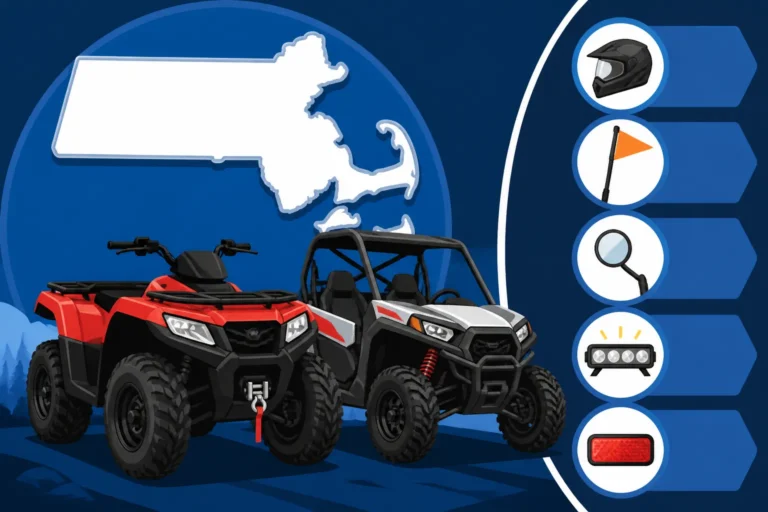
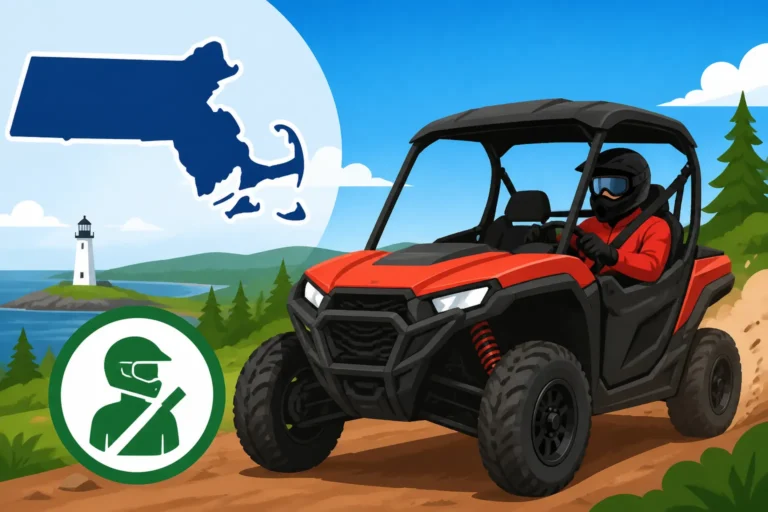
Massachusetts has a clear and unambiguous [Massachusetts ATV Helmet Law]: every person operating or riding as a passenger on an OHV must wear a helmet that meets federal Department of Transportation (DOT) standards. This applies to riders of all ages, on all types of OHVs—ATVs, UTVs, and dirt bikes—and on all types of land, public or private. There are no exceptions for experienced riders, private property, or low-speed operation.
This helmet law is strictly enforced by the Environmental Police. A rider caught without a helmet, or with a helmet that doesn't meet the DOT standard, can face a citation and a fine. The intent is simple: to protect against head injuries, which are among the most serious and common in OHV accidents. Parents should ensure their children have properly fitting, DOT-approved helmets, and encourage them to wear it every time they get on a machine, even for a quick spin around the yard. When looking for helmets, consider reputable brands and ensure they fit snuggly without obstructing vision.
Other Mandatory Equipment for OHVs
Beyond helmets, Massachusetts law also outlines other equipment requirements for OHVs to ensure safe operation and compliance with noise and environmental standards. These typically include:
- Brakes: The OHV must have a braking system that is in good working order and capable of stopping the machine effectively. [Massachusetts Brake Requirements] are not to be overlooked, as faulty brakes are a major safety hazard.
- Muffler: An OHV must be equipped with a muffler system that is in good working order and designed to prevent excessive noise. Operating a machine with a modified or removed muffler that causes it to be excessively loud can result in a citation. [Massachusetts Muffler Requirements] are in place to minimize disturbance to residents and wildlife.
- Spark Arrester: To prevent wildfires, especially in wooded areas like state forests, all OHVs must have a US Forest Service approved spark arrester on their exhaust system. This device is designed to prevent hot carbon particles from escaping the exhaust and igniting dry vegetation.
- Headlights and Taillights: If an OHV is operated between sunset and sunrise, it must be equipped with a headlight that can illuminate objects for at least 150 feet ahead, and a red taillight visible from at least 500 feet to the rear. This is crucial for visibility and safety during low-light conditions. These equipment checks are often part of what [Massachusetts Equipment Checks by Officers] will look for during routine patrols.
Ensuring your machine, especially a youth quad, is properly maintained and equipped is part of responsible riding. If you're looking for replacement parts or upgrades, companies like SuperATV offer a variety of accessories, from lighting kits to exhaust components, that can help ensure your machine is compliant and ready for the trails.
Penalties for Non-Compliance
It's easy to get caught up in the excitement of riding, but ignoring Massachusetts's OHV laws, especially those pertaining to age and engine size, can lead to significant and unpleasant consequences. The Massachusetts Environmental Police (MEP) are the primary enforcement agency for OHV laws, and they take violations seriously. Understanding the potential penalties can be a strong motivator to ensure full compliance.
Fines and Citations for Violations
The penalties for violating Massachusetts OHV laws can range from monetary fines to more serious legal actions. For instance, operating an OHV without the required safety certificate or allowing a child under the legal age to ride can result in substantial fines. A first offense might mean a warning, but repeat offenses almost certainly lead to citations and financial penalties. [Massachusetts Penalties Under Sean's Law] specifically target the serious nature of youth rider violations.
Furthermore, if a supervising adult is found liable for a youth rider's violation, they too can face fines. These aren't minor infractions; the state wants to ensure that both riders and supervisors understand the gravity of the rules. The costs can quickly add up, turning what was supposed to be a fun day on the trails into a very expensive lesson in compliance. Always check [Massachusetts Ticket Costs for Riders] if you are curious about the specific breakdown of fines.
Machine Seizure and Other Consequences
In more severe cases of non-compliance, particularly for repeat offenders or egregious violations, the Massachusetts Environmental Police have the authority to seize the unregistered or illegally operated OHV. This means your machine could be impounded, and retrieving it would involve not only paying outstanding fines but also storage and administrative fees. [Getting a Seized Quad Back From the State] is not a simple or inexpensive process.
Beyond fines and seizure, consistent violations could potentially impact future riding privileges or even lead to court appearances, depending on the nature and severity of the offense. For young riders, a history of OHV violations could have broader implications. It's not just about the immediate penalty; it's about the long-term impact on one's ability to enjoy the sport responsibly. Therefore, staying informed and strictly adhering to all age, engine size, supervision, and equipment requirements is the best way to avoid any unpleasant encounters with law enforcement.
Navigating Residency and Visiting Rider Rules
The Massachusetts OHV laws on age and engine size apply to everyone riding within the state, but there are additional considerations for non-residents and those new to the Bay State. It's a common misconception that if your home state has different rules, those rules travel with you. Unfortunately, when you ride in Massachusetts, you play by Massachusetts rules.
Massachusetts Laws Apply to All Riders, Regardless of Origin
One of the most important takeaways for anyone riding an OHV in Massachusetts is that the state's laws apply universally, regardless of where you're from. If you're a visitor from New Hampshire, where age limits and engine size restrictions might be different, your 12-year-old on a 250cc quad might be perfectly legal at home, but they would be in direct violation of Massachusetts law on a trail in October Mountain. [Massachusetts Rules for an Out-of-State Machine] are clear: if it's in Massachusetts, it follows Massachusetts law.
This means that if you're planning a trip to Massachusetts with your OHVs, you need to familiarize yourself with all of the state's specific regulations, not just those related to registration. The age and engine size ladder is particularly critical for families with young riders, as Massachusetts has some of the strictest youth riding laws in the country. It's a source of frustration for many, but it's the reality of riding in the Bay State.
What Visiting Riders Need to Know
For visiting riders, the primary concern beyond the age and engine size laws is typically [Massachusetts Non-Resident OHV Registration]. While your home state's registration might be valid in some places, Massachusetts requires its own specific registration for all OHVs operated within its borders, resident or non-resident. This involves obtaining a Massachusetts decal and registration card, which are valid for one year for non-residents.
Even with a valid Massachusetts non-resident registration, all other state laws, including the age and engine size restrictions, apply. This means if you're visiting with a 15-year-old, they still need to be on a 90cc or less machine, have their safety certificate (even if it's from another state, as long as it's approved), and be under direct adult supervision. There's no reciprocity for these specific youth riding laws; Massachusetts's strict interpretation applies to every wheel that touches its ground. This can be a headache for families used to less rigid regulations, but forewarned is forearmed when planning your Bay State OHV adventure.
Important Considerations for Parents and Guardians
For parents and legal guardians, navigating the Massachusetts OHV age and engine size ladder isn't just about understanding the rules for their children; it's also about understanding their own responsibilities, making informed purchasing decisions, and ensuring a safe and positive experience for everyone.
Making Responsible Purchasing Decisions
Given the strict age and engine size restrictions, parents in Massachusetts face unique challenges when purchasing an OHV for a child. It's not uncommon for a child to quickly outgrow a 90cc machine in terms of skill and physical size, but still be legally restricted from moving to a larger engine until they are 16 and a half and licensed. This can lead to a dilemma: buy a 90cc machine they might quickly feel limited by, or wait until they are older to purchase a larger one.
When looking at youth quads, always confirm the engine displacement and consider the child's age progression. For example, a 14-year-old would benefit from a 90cc machine, but a 16-year-old who isn't yet licensed would still be restricted to 90cc, which might feel small. Companies like SuperATV offer a range of accessories that can help customize youth machines, improving ergonomics and safety for specific rider sizes, extending the usability of a smaller quad. It's about finding the right balance between current legal requirements, the child's skill development, and the eventual transition to larger machines.
Encouraging Safety Beyond the Law
While Massachusetts laws establish a baseline for safety, responsible OHV riding goes beyond mere legal compliance. Parents should instill a strong safety culture in their young riders, emphasizing awareness, respect for the environment, and courteous behavior on shared trails. This includes teaching them to ride within their skill level, to always wear appropriate protective gear (even if not explicitly mandated for certain items), and to respect private property boundaries and noise ordinances.
Engaging with local OHV clubs, participating in volunteer trail maintenance days, and continuing to seek out advanced rider training can further enhance a young rider's skills and sense of responsibility. Even after a child has obtained their safety certificate and is riding larger machines, ongoing education and emphasis on safe practices are crucial. The goal isn't just to avoid a ticket, but to cultivate lifelong safe riding habits and a deep appreciation for the sport and the natural environment.
Disclaimer
This article is for general informational purposes only and does not constitute professional advice. Laws, prices and regulations vary by location and change over time. Consult a qualified professional for guidance on your specific situation.