Massachusetts Crossings Under 16 and a Half
Young ATV and UTV riders in Massachusetts face unique and often confusing rules when it comes to crossing public roads. It's not just a matter of looking both ways; the Bay State has some of the strictest laws in the nation, particularly for those under a specific age threshold, and missteps can lead to serious consequences. This guide will walk you through the precise regulations governing how riders under 16 and a half can legally and safely cross public ways, ensuring you understand every nuance to protect yourself and your family.
Understanding Massachusetts' Strict Youth OHV Laws
Massachusetts takes the safety of its off-highway vehicle (OHV) riders, especially children and teenagers, incredibly seriously. Unlike some other states where regulations might be more lenient, the Bay State has a comprehensive framework designed to prevent accidents and ensure responsible riding. This strict approach means that parents and guardians must be intimately familiar with the rules, not just for general riding, but for specific scenarios like crossing public roads. The intent isn't to discourage riding, but to foster a safe environment through education and adherence to well-defined guidelines, making the trails safer for everyone.
This focus on safety for young riders is paramount because, let's be honest, operating an ATV or UTV requires a significant amount of judgment, coordination, and an understanding of risks. While we want our kids to enjoy the thrill of off-road adventures, we also need to equip them with the knowledge and legal framework to do so responsibly. The state’s laws reflect a commitment to minimizing hazards, particularly when these powerful machines interact even briefly with public roadways where cars and trucks are traveling at higher speeds.
Why Massachusetts Has Tough Rules for Young Riders Sean's Law
The landscape of OHV laws in Massachusetts changed dramatically with the passage of [Sean's Law: The 2010 Ban Named for a Boy]. This legislation, enacted in 2010, significantly tightened restrictions on youth riders, making Massachusetts's rules among the most stringent in the country. Sean's Law was a direct response to tragic accidents involving young riders, aiming to prevent future fatalities and serious injuries. It fundamentally altered who can ride, where they can ride, and under what conditions, with a strong emphasis on age, supervision, and safety training. Understanding the spirit behind Sean's Law helps appreciate why the rules concerning road crossings for young riders are so detailed and inflexible. It’s all about protecting our youngest enthusiasts from preventable harm and ensuring that a fun day out doesn't turn into a tragedy.
The impact of [Sean's Law] cannot be overstated, particularly for families with children eager to explore the trails on their quads or side-by-sides. Before this law, while some rules existed, the framework was less comprehensive. Now, it explicitly bans riders under 14 from operating OHVs on public or private land, with very limited exceptions for sanctioned events. This foundational age restriction cascades into other rules, including those for road crossings, creating a legal environment where the age of the rider is a paramount consideration for every aspect of OHV operation. It's a constant reminder that the state prioritizes safety above all else, often making it challenging for families accustomed to less restrictive environments elsewhere or for those new to the Bay State's unique regulations.
Age and Engine Size Restrictions at a Glance
Massachusetts implements a tiered system of age and engine size restrictions that directly impacts who can operate certain machines and, by extension, who can perform a road crossing. For instance, riders under the age of 14 are generally prohibited from operating an OHV. Once a rider reaches 14, they may operate an OHV, but with strict engine size limitations: they cannot operate a machine exceeding 90cc until they turn 16. This applies to both ATVs and dirt bikes, although the specific nuances of dirt bikes can sometimes differ slightly due to their separate classification for some purposes. This ladder system is designed to gradually introduce young riders to more powerful machines as they gain experience and maturity, helping them build skills on less intimidating equipment.
Navigating these age and engine size restrictions requires careful attention from parents and guardians. A 14-year-old on a 150cc ATV, for example, is operating illegally, regardless of their skill or experience level. This is a common pitfall, especially when families upgrade machines or inherit one that doesn't fit the age-appropriate criteria. Even if a young rider has their [Massachusetts Safety Certificate Under 18], the engine size restrictions still apply. It's crucial to check the engine displacement of your child's machine against their age every time they head out, and especially before attempting any road crossing, as violations can lead to fines and legal complications, not to mention increased risk of an accident on an overpowered machine.
The Concept of "Public Way" in Massachusetts
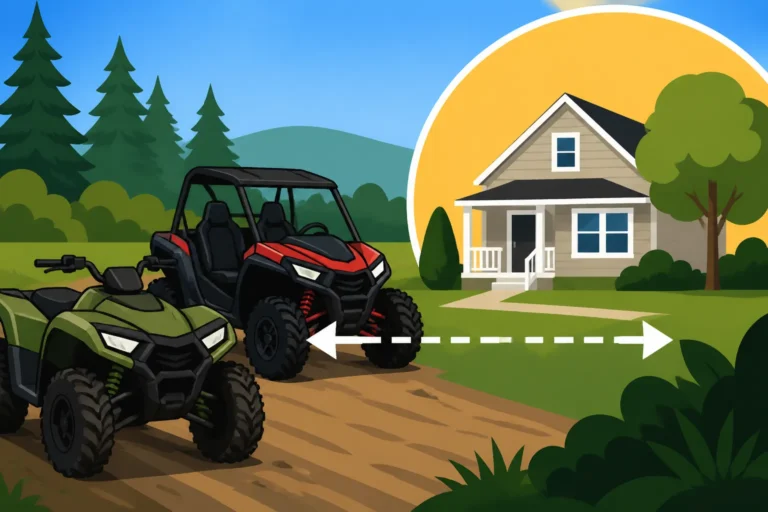
When we talk about road crossings, it's vital to understand what Massachusetts defines as a "public way." This isn't just paved highways; the definition is much broader and includes any road, street, or even certain dirt roads that are maintained by the state or a municipality and open to public travel. This can sometimes catch riders by surprise, especially those exploring rural areas or remote trails. What might seem like a mere dirt path connecting two sections of woods could, in fact, be classified as a public way, triggering all the regulations associated with crossing it, even if there's no asphalt in sight.
The Environmental Police, who oversee OHV registration and enforcement, are very clear on this point: if it's publicly maintained and accessible to vehicles, it's likely a public way. This distinction is critical because riding an OHV on a public way, rather than merely crossing it, is generally illegal in Massachusetts, with very few exceptions. Therefore, identifying these public ways before you ride is paramount. When planning a route, always assume any road or path that isn't explicitly marked as a private trail or part of an authorized OHV trail system is a public way, especially for young riders. This cautious approach can prevent unintended violations and ensure a safer riding experience. For a deeper dive into this often-confusing aspect, you might want to read [Which Dirt Roads Count as a Public Way].
The Specifics of Road Crossings for Young Riders
Successfully and legally crossing a public way in Massachusetts as a young OHV rider is a nuanced process. It’s not simply a quick dash across the asphalt. There are specific procedures that must be followed to ensure safety and adhere to the law. These rules are designed to minimize the risk of collisions with other vehicles and to make the OHV operator as visible as possible during a maneuver that, by its very nature, places them in a high-risk environment. Ignoring these specific steps can turn a simple crossing into a serious legal issue or, worse, a dangerous incident that puts everyone involved at risk.
Stopping Before a Crossing: The Absolute Rule
One of the most fundamental rules for any OHV rider, regardless of age, when encountering a public way is the absolute requirement to come to a complete stop before entering the roadway. This isn't a suggestion; it's a mandatory legal step. For young riders, this rule is enforced with particular vigilance. The stop must be complete, bringing the machine to a standstill, ideally at a point that allows the rider to observe traffic without encroaching on the road itself. This provides a crucial moment for the rider to assess the situation, look for oncoming vehicles, and ensure it's safe to proceed. It's about giving them adequate time to process their surroundings.
A "rolling stop" or simply slowing down and looking is not sufficient and can result in a citation. The Environmental Police are specifically trained to observe these details. After stopping, the rider must yield to all vehicular traffic on the public way. Only when the way is clear, and the rider can cross safely and quickly, should they proceed. This moment of pause is about more than just checking for cars; it's about giving the rider a chance to think, process the environment, and make a conscious decision to cross responsibly. For young riders, practicing this full stop repeatedly on private land can build the muscle memory necessary for real-world situations. To learn more about avoiding tickets, check out [Crossing a Public Way Without Getting Ticketed].
The Critical Age of 16 and a Half
Massachusetts law introduces a significant change in supervision requirements for road crossings precisely at the age of 16 and a half. For any rider under 16 and a half, adult supervision is explicitly required during a public way crossing. This isn't just about having an adult nearby; it's about active supervision, often meaning the adult must also be present at the crossing and directly overseeing the maneuver. This rule is a cornerstone of youth OHV safety in the state, acknowledging that younger riders may lack the judgment, experience, or reaction time to safely navigate complex traffic situations on their own. The state recognizes that a few months can make a significant difference in maturity and road awareness.
Once a rider reaches 16 and a half years old, and if they hold a valid motor vehicle driver's license, the requirement for adult supervision during a road crossing is waived. This is a key distinction that many parents and riders might overlook. Simply being 16 and a half isn't enough; the possession of a driver's license is the critical component that grants this additional autonomy. For those just turning 16 and a half but who haven't yet obtained their driver's license, the adult supervision rule for crossings still applies. This emphasizes the state's view that the skills and knowledge gained from earning a driver's license contribute to safer road interactions, even when operating an OHV. Understanding this transition point is vital, as detailed further in [Road Crossings Change at 16 and a Half].
Supervision Requirements During a Crossing
For riders under 16 and a half, the term "supervision" during a road crossing is quite specific. The supervising adult must be at least 18 years old and must maintain "continuous visual contact" and "verbal communication" with the young rider. This means they need to be close enough to see and talk to the rider effectively throughout the entire crossing process. It's not acceptable for an adult to be waiting on the other side of the road, or out of sight and merely listening for the sound of the machine. The adult is responsible for guiding the young rider, pointing out traffic, and ensuring all legal requirements are met, acting as a crucial second set of eyes and ears.
This level of supervision implies active participation. Many families might have an adult riding with a group that includes younger riders. When a public way crossing arises, the adult needs to take charge, ensure the younger riders stop, look, and only proceed when it's genuinely safe. The supervising adult is held liable for any violations committed by the young rider during the crossing. This legal accountability underscores the seriousness of the supervisory role. Equipping younger riders with clear communication devices, even simple hand signals or pre-arranged calls, can enhance safety during these supervised crossings, especially if terrain or other noise makes verbal communication difficult. For more information on this critical responsibility, see [Supervising Adults Are Liable for a Rider's Violation].
Key Requirements for Riders Under 16 and a Half During Crossings
Beyond the basic act of stopping and being supervised, there are other critical elements that young riders must fulfill when making a road crossing in Massachusetts. These requirements are often intertwined with general OHV operation laws but take on particular significance when a rider is briefly operating their machine in proximity to public vehicle traffic. Failing to meet any of these can negate the legality of the crossing, even if the primary stop-and-look rule was followed. It's about a holistic approach to safety and compliance, leaving no stone unturned when it comes to protecting our youth.
Safety Certificates and Their Role
Any rider under the age of 16 operating an OHV on public land in Massachusetts, including during a road crossing, must possess a valid [Massachusetts Safety Certificate Under 18]. This certificate is earned by completing an approved OHV safety course, which typically involves both classroom instruction and a hands-on skills test. The purpose of this course is to educate riders on safe operation techniques, legal responsibilities, and environmental stewardship, instilling a deep understanding of proper conduct. For a young rider, carrying this certificate is as important as carrying their registration card. The Environmental Police can, and often do, ask for proof of this certification, especially if they observe a young rider operating near or crossing a public way.
It’s crucial to understand that the safety certificate is a prerequisite for operating on public land, which by extension applies to situations like crossing a public way. It demonstrates that the rider has received formal training in responsible OHV operation. While an adult supervising a crossing might have their own experience, the state requires this specific training for the youth, ensuring a baseline of knowledge is met. Even if a young rider has an extensive amount of private land riding experience, if they don't have this certificate, they are technically in violation when crossing a public way. Parents should ensure their children complete the [Massachusetts Two-Part Safety Course] well in advance of any planned rides, making sure they're prepared both legally and skillfully.
Helmet Laws and Equipment Checks
Massachusetts has a strict [Massachusetts ATV Helmet Law] that applies to all OHV riders, regardless of age, whenever they are operating their machine. This law mandates the use of a helmet that meets specific safety standards. For young riders, this is absolutely non-negotiable, particularly during a road crossing where the risk of collision, however brief, is heightened. A helmet is your primary protection in the event of an impact, and riding without one, even for a short crossing, is a serious violation that can result in significant fines and an immediate end to the ride. This isn't just a suggestion for safety; it's a legal imperative.
Beyond helmets, the OHV itself must meet certain basic equipment requirements. While not as extensive as street-legal vehicles, ATVs and UTVs need functional brakes, a muffler to keep noise within legal limits, and proper lighting if riding after sunset. While a road crossing is typically a daytime event, ensuring your machine is in good working order, especially brakes, is critical. A malfunctioning brake system could be disastrous during a critical moment while trying to stop and yield to traffic. Before any ride, and especially before venturing into areas requiring road crossings, a thorough check of the machine's essential safety features is always a good idea. Brands like SuperATV offer a range of robust aftermarket brake components and lighting solutions that can improve the reliability and safety of a machine, providing peace of mind during crucial maneuvers.
Carrying Permission and Registration
For any OHV rider in Massachusetts, carrying the necessary paperwork is essential, and this holds true for young riders during a road crossing. The [Massachusetts Registration Cards Carried on Board] rule means that the OHV's registration card must be physically carried on the machine or by the rider at all times when operating on public land or crossing a public way. This card proves that the machine is legally registered with the Environmental Police and that the associated fees have been paid, signifying compliance with state requirements. If asked by an Environmental Police officer, the rider (or their supervising adult) must be able to produce this documentation.
Furthermore, if the crossing involves traveling over any private land to reach the public way, or to get to the next section of trail, [Massachusetts Requires Written Permission] from the landowner. While not directly about the crossing itself, the journey to and from the public way often involves private property, making this a critical piece of documentation. For young riders, ensuring they have all these documents, along with their safety certificate, means they are fully compliant with state law. It's a common mistake for riders to leave paperwork back at the truck or camp, but during a roadside stop or an inspection, its absence can lead to delays and citations, potentially ruining an otherwise great day of riding.
Common Misunderstandings and Penalties
Even with clear rules, misunderstandings about Massachusetts OHV laws are prevalent, especially concerning road crossings for young riders. These misinterpretations, often stemming from practices in other states or a lack of detailed knowledge, can lead to unwitting violations. It's crucial for riders, parents, and guardians to be aware of these common pitfalls, as ignorance of the law is never an acceptable defense, and the penalties can be significant. A little knowledge here can save a lot of headaches, and potentially money, down the road.
Thinking a Dirt Road is Not a "Public Way"
One of the most frequent misunderstandings is the belief that a dirt road, gravel path, or unpaved route does not constitute a "public way" under Massachusetts law. Many riders assume that "road" strictly refers to asphalt or concrete highways. As discussed earlier, this is incorrect. If a dirt road is publicly maintained by a town or the state (e.g., a state forest access road, a town-owned dirt lane), and is open to public vehicle travel, it is a public way. This means all the same crossing rules apply, including the stop, yield, and supervision requirements for young riders, just as if it were a busy highway.
The consequence of this misunderstanding can be severe. A young rider, unsupervised and unaware, might simply roll through a stop sign or proceed directly onto what they perceive as a private dirt track, only to find themselves in violation. Environmental Police officers frequently patrol areas where trails intersect with these types of roads, precisely because they are common points of confusion and potential violation. It’s always best to err on the side of caution: if there’s any doubt whether a path is a public way, treat it as one and follow all crossing protocols. For a more detailed explanation of this nuanced point, refer to [Which Dirt Roads Count as a Public Way].
Consequences of Unsupervised or Illegal Crossings
The penalties for failing to comply with Massachusetts' OHV crossing laws, particularly for young riders, can range from significant fines to having the OHV impounded. If a young rider under 16 and a half is caught crossing a public way without adult supervision, or fails to come to a complete stop, they (and potentially their supervising adult, if one was supposed to be present) can face citations. These aren't minor infractions; they are serious violations of [Massachusetts ATV Laws Under Chapter 90B] and are taken seriously by law enforcement, often resulting in mandatory court appearances and substantial monetary penalties.
Beyond the immediate financial penalties, repeat offenses or particularly egregious violations could lead to more severe consequences, such as the suspension of riding privileges or even court appearances. More importantly, an illegal crossing puts the rider and others at immense risk. A collision during an illegal crossing can have devastating physical and financial repercussions, not to mention the emotional toll. Even without a collision, the legal headache, the cost of fines, and the potential impoundment of a valuable machine are powerful deterrents. The state's focus is on preventing these situations, which is why enforcement is stringent and the consequences are designed to be impactful.
Parental Liability Under Massachusetts Law
Under Massachusetts law, parents, guardians, or supervising adults bear significant responsibility for the actions of young OHV riders under their care. This means if a rider under 16 and a half commits a violation, such as an illegal road crossing, the adult who was supposed to be supervising them can be held legally liable. [Massachusetts Parent Liability for a Young Rider] is a serious aspect of the law that every parent must understand. It's not enough to simply send your child out on the trails; active, diligent supervision is required, especially in situations like public way crossings where risks are elevated.
This liability extends beyond just being present; it includes ensuring the young rider has the proper safety certificate, is on an age-appropriate machine, and understands and follows all rules. A parent cannot claim ignorance if their child is ticketed for an illegal crossing; the expectation is that they have educated their child and are actively supervising them. This aspect of the law serves as a powerful incentive for parents to be fully engaged in their child's OHV riding activities, reinforcing the state's commitment to youth safety and emphasizing that responsibility for minors falls squarely on the adults in their lives.
Ensuring Safety and Compliance
Adhering to Massachusetts' strict rules for young OHV riders crossing public ways is about more than just avoiding fines; it's fundamentally about safety. A proactive approach, combining thorough education, proper equipment, and responsible riding practices, is the best way to ensure both compliance and a safe, enjoyable experience for everyone. This section will focus on practical steps you can take to foster a culture of safety around road crossings, ensuring every ride is a good one.
Practicing Safe Crossing Techniques
The best way to ensure a young rider handles a public way crossing legally and safely is through consistent practice. Before encountering actual public roads, identify a safe, controlled environment, like a long driveway or a quiet section of private property, where the rider can repeatedly practice the full stopping procedure. Simulate traffic by having another adult drive by at different speeds and from different directions. Emphasize the "look left, look right, look left again" method, teaching them to scan the road thoroughly before even considering moving. Practice waiting patiently for a clear opening, even when it feels like a long wait, reinforcing the idea that safety trumps speed.
Walk the young rider through the entire sequence: slow down, signal (if applicable, or hand signal), come to a complete stop before the edge of the road, observe traffic carefully, make eye contact with any approaching drivers if possible, and then cross quickly and directly when safe. Teach them to avoid sudden swerving or stopping in the middle of the road, and to execute the crossing in a predictable manner for other drivers. Repetition builds confidence and muscle memory, making the correct procedure second nature when it counts. It also helps reinforce the understanding of [You Must Stop Before Crossing Any Public Way].
Equipping Your Machine for Visibility and Control
While Massachusetts does not mandate a host of specialized equipment for OHVs beyond basic functional requirements, certain additions can significantly enhance safety and visibility, especially for young riders performing road crossings. High-visibility flags, often mounted on a whip, can make a machine much easier to spot by oncoming traffic, particularly if the crossing point has limited sightlines or uneven terrain. Bright LED lighting, even during the day, can also increase the OHV's presence to other drivers. SuperATV offers a variety of LED light bars and flags that are specifically designed for off-road use but dramatically improve visibility in situations like road crossings, giving other drivers an earlier warning.
Ensuring the OHV's brakes are in perfect working order, and perhaps even upgrading to performance brake pads, provides critical stopping power. Tires with appropriate tread for varied terrain are also vital for maintaining control, especially when transitioning from a dirt trail onto a paved or gravel road. Beyond visibility, sturdy skid plates and durable A-arm guards, like those offered by SuperATV, can protect vital undercarriage components should a young rider misjudge a small ditch or curb when entering or exiting a public way, adding another layer of practical safety. While these additions might not be legally required for a crossing, they are smart investments in safety. For young riders, whose reaction times and judgment might still be developing, giving them every possible advantage through equipment choices can be a game-changer.
Communicating with Landowners and Authorities
Open lines of communication can go a long way in preventing misunderstandings and ensuring compliance. Before riding in a new area, particularly one with potential public way crossings, try to obtain a [Massachusetts ATV Trail Map Downloads] and study the routes. If you're unsure about the classification of a particular road or require specific permissions, reach out to the Massachusetts Environmental Police or the local Department of Conservation and Recreation (DCR) office. They are the authoritative sources for interpretation of the laws and can offer guidance on designated crossing points or unique local regulations, saving you from making assumptions that could lead to trouble.
Similarly, if you're riding on private land that borders public ways, ensure you have explicit [Massachusetts Landowner Permission in Writing]. This protects you from trespass accusations and clarifies the legal status of your access to certain areas, including potential crossing points. By being proactive and seeking clarification, you not only ensure legal compliance but also contribute to a positive relationship between OHV riders and local communities and authorities. This commitment to clear communication ultimately fosters a safer and more welcoming environment for all riders, including our youngest enthusiasts, promoting responsible recreation throughout the Bay State.
Massachusetts OHV Road Crossing Requirements for Young Riders
| Rider Age Category | Road Crossing Requirement | Supervision Required? (Adult 18+) | Driver's License Required? | Safety Certificate Required? | Notes |
|---|---|---|---|---|---|
| Under 14 | Generally Prohibited (except events) | Always | No (cannot obtain one) | Yes (for sanctioned events) | Cannot operate OHV, thus cannot legally cross public roads. |
| 14 to Under 16.5 | Stop, Yield, Cross Swiftly | Yes (continuous visual/verbal) | No (cannot obtain one) | Yes | Engine size cap (<= 90cc). Supervising adult is legally liable for violations. |
| 16.5 with Valid MA DL | Stop, Yield, Cross Swiftly | No | Yes | Yes | Possession of a valid MA driver's license waives supervision for crossings. |
| 16.5 without Valid MA DL | Stop, Yield, Cross Swiftly | Yes (continuous visual/verbal) | No | Yes | Adult supervision still required if a driver's license has not been obtained. |
| 18 and Over | Stop, Yield, Cross Swiftly | No | No (for OHV, but often held) | Yes (if born after 1/1/86) | General OHV rules apply; specific youth restrictions no longer in effect. |
- Note: "DL" stands for Driver's License. "Sanctioned events" are specific, approved competitions or rides and generally do not involve typical public way crossings. The safety certificate is generally required for anyone under 16 operating on public land, and for all operators born after January 1, 1986, regardless of age.
Disclaimer
This article is for general informational purposes only and does not constitute professional advice. Laws, prices and regulations vary by location and change over time. Consult a qualified professional for guidance on your specific situation.