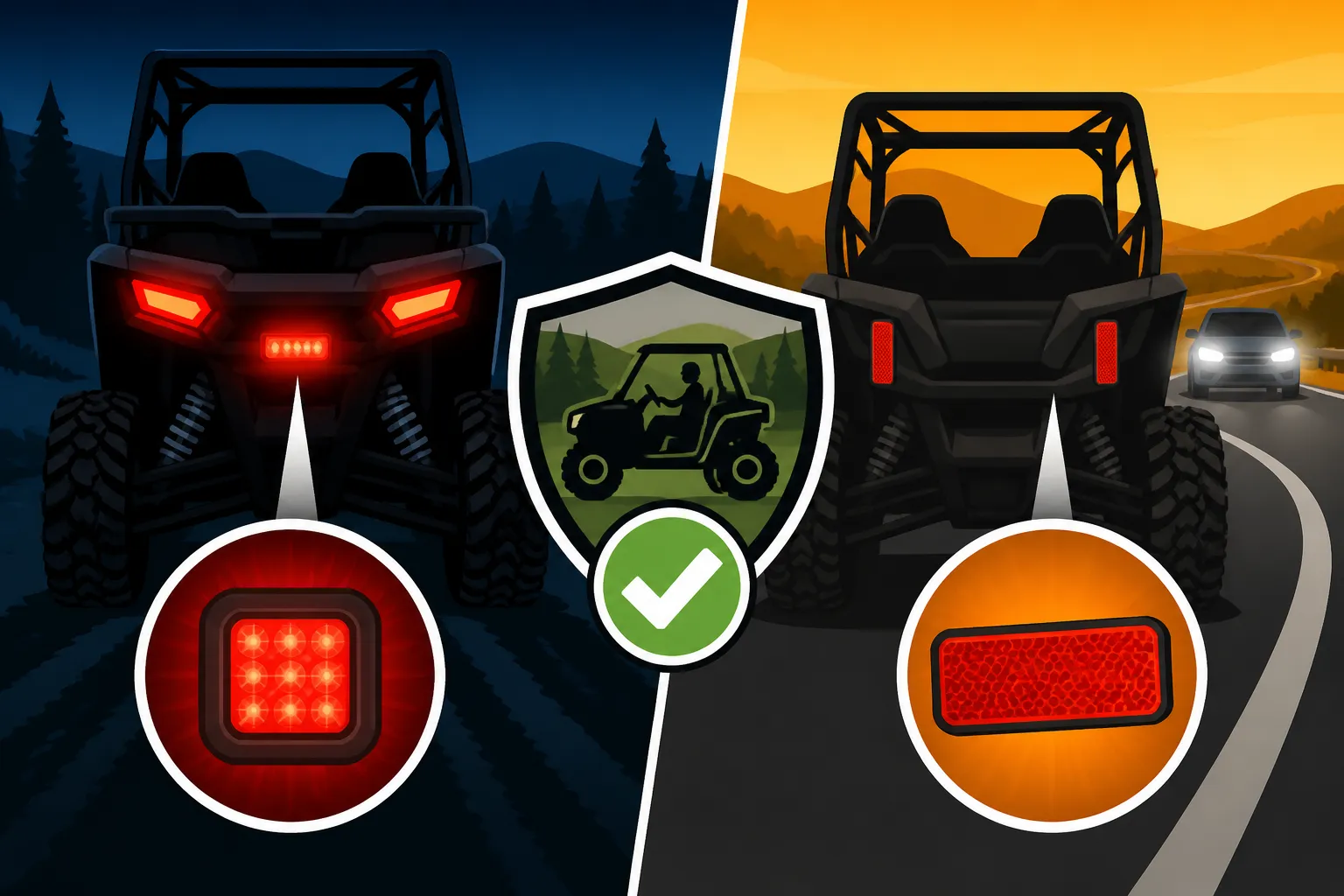
Why You Need a Red Light or Reflector
It's a common scenario: you've packed up your quad or side-by-side, the sun is dipping below the tree line, and you're heading out for a twilight ride, or maybe just trying to get back to the truck before it's pitch black. You know you need to be visible, but exactly what kind of rear lighting does Massachusetts require? It can be confusing trying to decipher the rules when all you want to do is ride safely and legally. This guide is here to cut through that confusion, explaining why a red light or reflector is essential for your off-highway vehicle (OHV) on Massachusetts trails, and how to make sure you’re fully compliant.
Understanding Massachusetts's Rear Lighting Requirements for OHVs
Riding an ATV or UTV in Massachusetts means understanding and adhering to a specific set of rules designed to keep everyone safe. When it comes to being seen from behind, the state takes visibility seriously, especially as daylight fades. It's not just a suggestion; it's a critical safety mandate rooted in the law.
The Law's Intent: Visibility and Safety After Dark
Think about it from a common-sense perspective. When you're out on a winding trail in, say, October Mountain State Forest, conditions can change rapidly. A dense tree canopy, a sudden downpour, or just the natural progression of dusk can plunge the trail into shadow. If you're riding a machine that blends into the background, you're putting yourself and others at serious risk. The primary intent behind requiring a red light or reflector at the rear of your OHV is simple: to make your machine visible to anyone approaching from behind.
This isn't just about preventing a collision with another OHV. Imagine a hiker on a shared trail, a mountain biker, or even a wildlife warden on patrol. All these individuals need to be able to spot your machine well in advance, whether you're moving or temporarily stopped. Without proper rear illumination, you become a silent, unseen hazard. The law aims to prevent the all-too-common scenario where one rider comes over a rise or around a blind corner only to find an unlit machine in their path, leading to a scramble to avoid an accident. It’s about creating a predictable and safe environment for everyone enjoying our beautiful Massachusetts trail systems.
What Chapter 90B Says About Rear Visibility
The legal framework for OHV operation in Massachusetts is primarily found in Chapter 90B of the Massachusetts General Laws. This chapter specifically addresses the equipment requirements for ATVs, UTVs, dirt bikes, and snowmobiles, ensuring they are outfitted for safe operation. When it comes to rear visibility, the language is clear: your machine must have appropriate lighting or reflective devices.
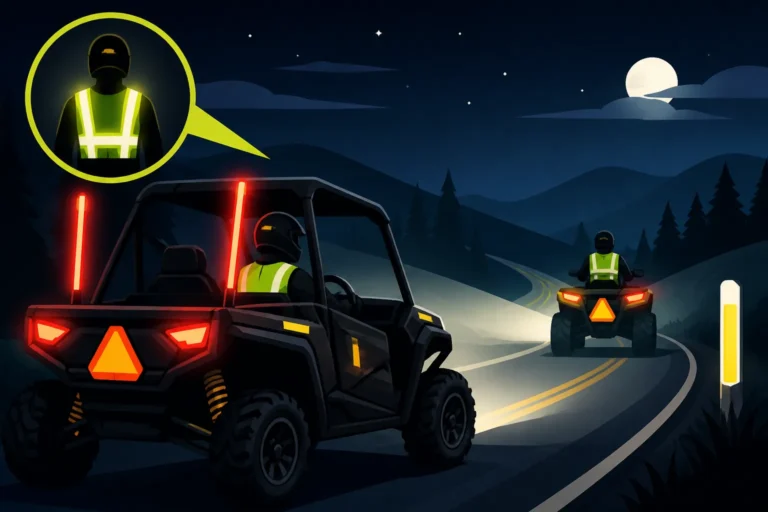
For any off-highway vehicle operated on public lands or trails during the period from one-half hour after sunset to one-half hour before sunrise, or at any other time when visibility is less than 500 feet due to weather conditions like fog, rain, or snow, a red light or reflector is mandatory. This isn't just for moving; if you're stopped on the trail after dark, that rear light needs to be functioning.
The law differentiates between a light and a reflector. A reflector passively bounces light back from another source, while a light actively emits its own illumination. While a red reflector can meet the minimum requirement in some contexts, a powered red taillight offers significantly more visibility and is generally the safer, more proactive choice. It's crucial to understand that these rules apply uniformly across all OHV types, so whether you're on a sporty quad or a multi-passenger side-by-side, the same rear visibility standards apply. Ensuring your machine is equipped correctly helps you avoid trouble and stay safe, as Environmental Police officers often conduct checks related to [Massachusetts Lighting After Sunset].
Practical Application: Equipping Your Machine for Massachusetts Trails
Knowing the law is one thing, but actually implementing it on your machine can sometimes feel like a puzzle. What's the best approach? Should you rely on a simple reflector, or invest in a proper taillight system? Let's break down the practical aspects of making your OHV visible from behind.
Red Light vs. Red Reflector: When Each Is Appropriate
This is where many riders get a little hung up. The law often mentions "a red light or reflector," which can imply they're interchangeable. However, from a practical safety standpoint, a red light is almost always the superior option when riding in low light conditions.
- Red Reflector: A reflector is a passive safety device. It relies on ambient light or the headlights of another vehicle to reflect light back. If you're parked on the side of a trail with no other light source around, a reflector won't do much good. It's truly a secondary safety measure, best suited for when your machine is not actively being operated after dark, or as a backup to a primary light source. Some machines come with small, factory-installed reflectors, but these are often minimal. For example, if you're only riding private land during daylight hours and storing your machine before dusk, a simple reflector might be deemed sufficient if you're never in a low-visibility situation on public trails. But even then, why take the chance?
- Red Light: This is the active hero of rear visibility. A powered red taillight emits its own light, making your machine visible regardless of external light sources. For any riding after sunset, before sunrise, or during adverse weather, a functional red taillight is non-negotiable for true safety and compliance. Most modern ATVs and UTVs come equipped with factory taillights, but it’s vital to ensure they are working properly and are clean enough to be effective. Aftermarket options can significantly enhance your visibility. For instance, many riders upgrade to brighter LED taillights or even add supplemental light bars, like those offered by SuperATV, to their rear cage or bumper for maximum impact. These lights offer better durability and intensity than older incandescent bulbs, making them a wise investment for regular night riders. When considering [Massachusetts Equipment Requirements], a robust taillight system should be high on your list.
Here's a quick comparison to help visualize the choice:
| Feature | Red Light (Powered) | Red Reflector (Passive) |
|---|---|---|
| Visibility | Emits own light, visible in all conditions | Relies on external light source to reflect |
| Effectiveness | High, proactive safety | Moderate, reactive safety (only when lit by others) |
| Power Source | Requires battery/electrical system | None, purely optical |
| Primary Use | Active riding after dark, low visibility conditions | Backup, parking, daylight riding, minimal compliance |
| Cost | Generally higher (initial purchase, some power draw) | Very low (simple plastic/metal device) |
| Maintenance | Check bulbs/LEDs, wiring, clean lens | Keep clean, ensure secure mounting |
Placement and Specifications for Compliance
It's not enough to just have a light or reflector; it has to be positioned correctly and meet certain visual standards. The goal is maximum visibility from the rear, so placement is key.
- Placement: The red light or reflector must be mounted on the rear-most portion of your OHV, at a height that is clearly visible to anyone approaching from behind. This generally means it should be centered or symmetrically placed on the rear of the frame, fender, or cargo rack, not hidden underneath or obscured by gear. For side-by-sides, this might mean on the roll cage or the rear bumper. Make sure it's not blocked by your spare tire, cooler, or any other items you're carrying.
- Color and Function: The device must emit or reflect a red color. If it's a light, it needs to be a steady red light, not flashing or strobing, as those are typically reserved for emergency vehicles. It should be visible from a reasonable distance, typically specified as 500 feet under normal atmospheric conditions. This ensures that other trail users have ample time to react to your presence.
- Reflector Specifics: If you are relying primarily on a reflector (which again, is not recommended for active night riding), it should be at least 3 inches in diameter or provide an equivalent surface area of reflective material. It must be made of a durable, retro-reflective material that performs effectively. Think about the common rectangular reflectors found on trailers or bicycles – they're designed to bounce light directly back to its source.
- Maintenance: Always keep your taillight lens or reflector clean. Mud, dust, and grime are common on Massachusetts trails, and they can severely diminish the effectiveness of any lighting or reflective device. A quick wipe-down before you head out, especially if you anticipate riding into the evening, can make a huge difference. Regular checks of your taillight bulbs or LED units are also vital to ensure they haven't burnt out or been damaged by trail vibrations. Understanding these practical details is part of adhering to [Massachusetts Lighting Requirements for an OHV].
Beyond the Basics: Common Pitfalls and Best Practices
Even with the best intentions, it's easy to overlook small details that can lead to big problems on the trail. Beyond simply meeting the minimum legal requirements, there are several best practices you can adopt to significantly enhance your safety and avoid unnecessary headaches.
Avoiding Penalties and Ensuring Safety
It’s easy to think, "Oh, I'll just be back before dark," or "It's just a short ride." But conditions can change quickly in the woods. Getting caught without a proper red light or reflector after sunset or in low visibility can lead to citations from the Environmental Police. These aren't just minor slaps on the wrist; [Massachusetts Penalties for Illegal Riding] can include fines and other repercussions that put a damper on your riding experience and your wallet.
Consider these common scenarios:
- The "Oops, I Forgot" Moment: You packed your gear, fueled up, and were eager to hit the trail. You forgot to check if your taillight was working or if your reflector was still securely attached after a particularly bumpy ride last weekend. Environmental Police officers, especially those patrolling during the "magic hour" of dusk, are keenly aware of visibility issues and will often stop riders to perform equipment checks. They might even pull you over just to verify [What an Environmental Police Officer Can Ask] about your machine's compliance.
- Trail Damage: You took a tumble, or a low-hanging branch snagged your rear fender. Your taillight lens is cracked, or the wiring is exposed and no longer functioning. If you continue riding, you're not only risking a ticket but also increasing your chances of being involved in an accident. Always do a quick pre-ride inspection, especially checking all lights and reflective surfaces.
- The "Good Enough" Mindset: Relying on a tiny, mud-splattered reflector when you're riding a complex trail system like Beartown State Forest after dark is simply not "good enough." The law implies a reasonable level of visibility, and a barely-there reflector might not cut it in the eyes of an officer, or more importantly, another rider trying to see you.
The best defense is a good offense: proactive maintenance and preparedness. Make sure your taillight is functional, bright, and clean every time you head out. Carry a small repair kit with spare bulbs (if applicable) or electrical tape for quick fixes. It’s far better to spend a few minutes checking your gear than to face a fine or, worse, an injury.
Enhancing Visibility Beyond the Minimum Requirements
While meeting the legal minimum is essential, true safety-conscious riders often go a step further. The goal isn't just to avoid a ticket; it's to maximize your safety and the safety of everyone on the trail.
- Supplemental Reflective Gear: Think beyond the machine itself. Adding reflective tape to your helmet, riding jacket, or backpack can make you, the rider, more visible. Consider a high-visibility vest, especially if you're frequently riding in low-light conditions. These small additions can dramatically increase your profile to others. Our article on [Reflective Gear Worth Adding to Your Quad] dives deeper into these options.
- Brake Lights: While not always explicitly required as a separate system for OHVs in Massachusetts (often combined with the taillight), a clear, bright brake light that illuminates when you hit the brakes provides crucial information to riders behind you. If your machine doesn't have a distinct brake light, consider an aftermarket upgrade. This immediate visual cue lets others know you're slowing down, preventing potential rear-end collisions.
- Auxiliary Lighting: For those who frequently ride after dark, investing in auxiliary rear lighting can be a game-changer. Products like those from SuperATV, including their multi-function LED rear light bars, offer not just a bright taillight function but sometimes integrated brake lights, reverse lights, and even turn signals. These comprehensive lighting solutions significantly increase your machine's visibility profile, giving you an edge in safety and peace of mind. They are often ruggedized for off-road use, making them a durable choice for the challenging environments found in Massachusetts.
- Riding Practices: Even the brightest lights won't compensate for poor riding habits. Maintain safe following distances, especially when dust is an issue. Be aware of your surroundings, and if you must stop on the trail, choose a wide, visible spot. Communication with your riding group about stopping or slowing down is also a key safety measure.
Ultimately, your machine's rear visibility is a critical component of safe OHV operation in Massachusetts. By understanding the law, choosing appropriate equipment, and adopting best practices, you can enjoy the trails with confidence, knowing you're doing your part to keep yourself and others safe. Always remember to carry your [Why Your Registration Card Must Ride With the Machine] with you, as Environmental Police officers conducting equipment checks will often ask for it.
Disclaimer
This article is for general informational purposes only and does not constitute professional advice. Laws, prices and regulations vary by location and change over time. Consult a qualified professional for guidance on your specific situation.