Massachusetts Rules for Riding a Conservation Area
It's easy to look at a beautiful, sprawling conservation area in Massachusetts and imagine yourself exploring its trails on your ATV or UTV. The quiet woods, the winding paths, the sense of adventure – it all sounds incredibly appealing. However, the reality for off-highway vehicle (OHV) riders in these precious natural spaces is often very different from what we might hope. This guide will clarify the specific rules and common misunderstandings surrounding ATV and UTV use in Massachusetts conservation areas, helping you avoid legal trouble and protect these vital landscapes.
Understanding Conservation Areas in Massachusetts
Before we dive into the nitty-gritty of ATV and UTV rules, it’s really important to understand what a conservation area is in Massachusetts and why it exists. These aren't just any old woods; they serve a very specific purpose.
What Exactly is a Conservation Area?
When we talk about a "conservation area" in Massachusetts, we're typically referring to land that has been set aside, either by a municipality, a land trust, or sometimes the Department of Conservation and Recreation (DCR), with the primary goal of protecting natural resources, preserving open space, and safeguarding wildlife habitats. Think about the wetlands that filter our water, the forests that provide clean air, or the unique ecosystems that support various plant and animal species – these are the treasures conservation areas aim to protect. They're often managed by local conservation commissions, whose volunteers work tirelessly to maintain their ecological integrity.
These areas are fundamentally different from, say, a state forest that might have a more varied management plan. While some state forests might have designated trails for a wide range of recreational activities, including OHV use, conservation areas almost always prioritize passive, low-impact recreation. They are sanctuaries, not playgrounds for machines. The focus is on preserving the land in its natural state, which means minimizing human impact, especially from motorized vehicles.
The Core Principle: Passive Recreation Focus
The guiding principle for almost every conservation area in Massachusetts is "passive recreation." What does that mean in practical terms? It means activities that don't involve motors, don't generate significant noise, and don't cause erosion or disruption to wildlife. We're talking about things like hiking, birdwatching, snowshoeing, cross-country skiing, and quiet nature walks. These activities are designed to allow people to enjoy nature without leaving much of a trace.
Motorized vehicles, including ATVs and UTVs, are generally incompatible with this mission. The reasons are numerous and critical. First, there's the noise factor: the rumble of an engine can disturb wildlife, interrupt the peaceful experience of other visitors, and travel surprisingly far through quiet woods. Then there are the environmental concerns: exhaust fumes, potential for fluid leaks, and most significantly, the ground disturbance. Tires can compact soil, create ruts, contribute to erosion, especially on slopes and near waterways, and damage delicate plant life. Furthermore, the sheer speed and presence of an OHV can be a safety concern for hikers, dog walkers, and children who expect a quiet, pedestrian-focused environment. Conservation areas are designed to be safe havens for nature and quiet enjoyment, which motorized vehicles fundamentally disrupt.
Specific Rules for ATVs and UTVs in Massachusetts Conservation Areas
It’s crucial to understand that simply seeing a dirt path in a conservation area does not mean it's open to your ATV or UTV. The rules are generally quite clear, even if they're not always what riders hope to hear.
The General Prohibition on Motorized Vehicles
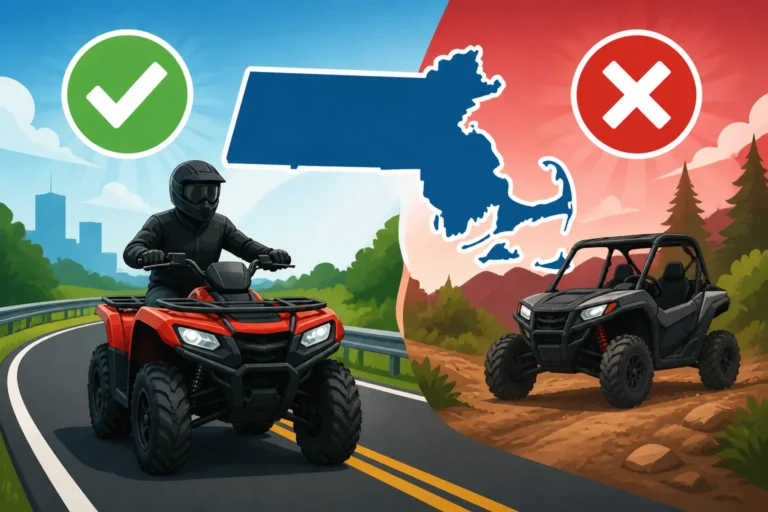
Let's cut right to the chase: the vast majority, if not all, conservation areas in Massachusetts explicitly prohibit ATVs, UTVs, and other motorized vehicles. This isn't just a suggestion; it's a rule enforced by law. These prohibitions stem from a variety of sources: local town bylaws, the specific regulations of land trusts that own and manage the land, and in some cases, DCR management plans for properties they designate as conservation areas. The goal is consistent across all these entities: protect the natural environment and ensure the safety and enjoyment of passive recreation users.
These rules are often posted at primary trailheads and parking areas, though not always at every single access point. Riders have a responsibility to know the rules before they even consider bringing their machine to a conservation area. Ignorance of the local bylaws or land trust rules is not a valid defense if you're caught. Before you even load your machine onto the trailer, make sure you've researched the specific area you plan to visit. A quick call to the local conservation commission or checking their website can save you a lot of headache and potential penalties.
Exceptions and Nuances Very Rare
While the general rule is a resounding "no," it's worth acknowledging that the landscape of land management can have subtle nuances. However, let me be absolutely clear: exceptions for ATVs and UTVs in Massachusetts conservation areas are extremely rare, if they exist at all. You should never assume access. There might be instances where a specific parcel of land, perhaps managed by a municipality, is designated as "open space" and has a particular trail or segment specifically, explicitly, and clearly signed for multi-use including OHVs. These are not common and often come with very strict conditions, such as requiring specific permits and adhering to designated seasonal access.
It’s critical to differentiate between a "conservation area" and a "state forest" that does have designated OHV trails. For instance, Massachusetts does have state forests like Beartown State Forest, October Mountain State Forest, and Pittsfield State Forest in the Berkshire region that are well-known and managed for OHV riding. These are not typically called "conservation areas" in the context of their OHV use, but rather state forests with specific, authorized multi-use trails. These state forests have environmental impact studies, maintenance crews, and designated routes to manage OHV traffic responsibly. [Massachusetts ATV Trails: Three Berkshire Forests] provides details on these legal riding spots. A conservation area, by contrast, is usually managed under a much stricter set of environmental protections, where motorized vehicle access is typically seen as antithetical to its purpose. Always, always check with the specific managing authority before you even think about entering any non-designated area.
Penalties for Violating Conservation Area Rules
Riding your ATV or UTV in a conservation area where motorized vehicles are prohibited is not a minor transgression. The consequences can be significant and costly. First and foremost, you're likely to face fines. These fines can vary depending on the municipality or the specific regulations of the land trust involved, but they are rarely cheap. These aren't just warnings; they are serious citations meant to deter damage to the environment and disruption to other users.
Beyond monetary penalties, there's the very real possibility of your machine being impounded. Law enforcement, including local police and the Massachusetts Environmental Police, take these violations seriously. If your ATV or UTV is seized, getting it back will involve not only paying fines but also impoundment fees, which can quickly add up. In more severe cases, particularly if there's damage to property or sensitive ecosystems, you could face legal action for property damage or trespassing. [Massachusetts Trespass Law for Riders] applies to motorized vehicles just as it does to people on foot. The state of Massachusetts also has strict laws regarding [Massachusetts Penalties for Riding Unregistered], which could be compounded if you are also riding in an unauthorized area. It's simply not worth the risk to yourself, your wallet, or the environment to ride where you're not allowed.
Finding Legal Places to Ride in Massachusetts
Given the strict rules surrounding conservation areas, it's natural to wonder where you can legally and safely ride your ATV or UTV in Massachusetts. The good news is, there are options, but they require planning and adherence to regulations.
Designated State Forests and Managed Trails
The primary and most widely recognized legal riding areas for ATVs and UTVs in Massachusetts are within specific state forests managed by the Department of Conservation and Recreation (DCR). As mentioned, these include Beartown State Forest in Monterey, October Mountain State Forest in Washington, and Pittsfield State Forest in Pittsfield. These forests offer designated trail systems specifically engineered and maintained for OHV use. They have clear signage, maps, and specific rules regarding registration, safety equipment, and operating hours.
Riding in these areas provides a fantastic experience because you know you're on legal, sanctioned trails. You'll often find fellow riders, and the DCR works to keep these trails in good condition. However, even here, preparation is key. You'll need to ensure your machine is properly registered with the state, that you and any passengers wear appropriate safety gear (like helmets, as per [Massachusetts Helmet Law for Every Rider]), and that you understand the specific rules for that forest. The [Massachusetts DCR Riding Season] typically runs from May 1st to November 30th, so you'll want to check before you head out, especially for any specific closures or conditions. These are the places where you can truly enjoy your machine responsibly, knowing you're contributing to the upkeep of a legal trail system.
Riding on Private Land with Permission
Another excellent and very common way to enjoy your ATV or UTV legally in Massachusetts is by riding on private land – with the express, written permission of the landowner. This cannot be stressed enough: written permission is the gold standard. A verbal "yeah, sure" might seem sufficient, but in the event of an incident or complaint, having a signed document protecting both you and the landowner is invaluable. This is a practice widely encouraged to maintain good relationships with property owners and avoid trespassing issues. [Massachusetts Landowner Permission in Writing] offers critical guidance on this.
Riding on private land gives you flexibility and often access to varied terrain. Many landowners with large plots of land, especially in more rural parts of the state, are happy to allow responsible riders, sometimes even sharing existing logging roads or farm paths. When riding on private property, you are still subject to general state OHV laws under [Massachusetts ATV Laws Under Chapter 90B], including age restrictions, helmet requirements, and specific equipment requirements. You also need to be mindful of noise, especially if you're riding [Massachusetts Riding Within Sight of a House]. This is where a well-maintained machine can shine. For instance, adding utility accessories like a heavy-duty winch or robust skid plates from brands like SuperATV can be incredibly beneficial for navigating challenging terrain on private land, ensuring your machine is protected and capable for any work or recreation you might undertake without damaging the property. Just remember, even with landowner permission, you are a guest, and respecting the land and any conditions the owner sets is paramount.
Checking Local Ordinances and Maps
Before you ever load your ATV or UTV onto a trailer and head out, it is absolutely essential to do your homework. Do not rely on assumptions or hearsay. Your first stop should always be the specific town or municipality's website where you intend to ride, even if it's just to pass through. Look for their conservation commission's pages, local bylaws, or planning department information. Many towns explicitly list prohibited activities in their conservation areas.
The Massachusetts DCR website is another invaluable resource, offering information on state forests, including trail maps and current conditions. Always download or carry a physical map if available, as cell service can be spotty in remote areas. A good rule of thumb for any recreational activity, but especially for OHV riding, is "if in doubt, don't go out." It's far better to spend a few minutes researching and confirm legal access than to face fines, impoundment, or cause environmental damage. Be a responsible rider – it benefits everyone, from the environment to the OHV community as a whole. Equipping your machine with durable parts from a company like SuperATV ensures you're ready for any legal trail, giving you peace of mind that your gear won't let you down.
Here's a quick comparison of typical characteristics for conservation areas versus state forests with OHV access:
| Feature | Massachusetts Conservation Area | Massachusetts State Forest with OHV Trails |
|---|---|---|
| Primary Purpose | Environmental protection, passive recreation, wildlife habitat | Multi-use recreation, timber, wildlife, OHV trails |
| Typical OHV Access | Generally prohibited | Designated trails allowed |
| Managing Authority | Local Conservation Commission, Land Trusts, DCR (sometimes) | DCR (Department of Conservation & Recreation) |
| Allowed Activities | Hiking, birdwatching, snowshoeing, nature study | Hiking, hunting, fishing, mountain biking, OHV riding (on designated trails) |
| Enforcement | Local police, Environmental Police | Environmental Police, DCR Rangers |
| Common Misconception | All dirt paths are open to OHVs | All state forests allow OHVs (not true) |
| What to Check | Local bylaws, land trust rules | DCR website, specific forest regulations |
Ultimately, being a responsible ATV or UTV owner in Massachusetts means understanding and respecting the different types of land and their specific rules. While conservation areas are generally off-limits for motorized vehicles, there are legal and enjoyable avenues for riding your machine responsibly, particularly within designated state forests and on private land with proper permission. By following these guidelines, you not only protect the natural beauty of Massachusetts but also safeguard your own enjoyment of the sport.
Disclaimer
This article is for general informational purposes only and does not constitute professional advice. Laws, prices and regulations vary by location and change over time. Consult a qualified professional for guidance on your specific situation.