Massachusetts Visitors From New Hampshire
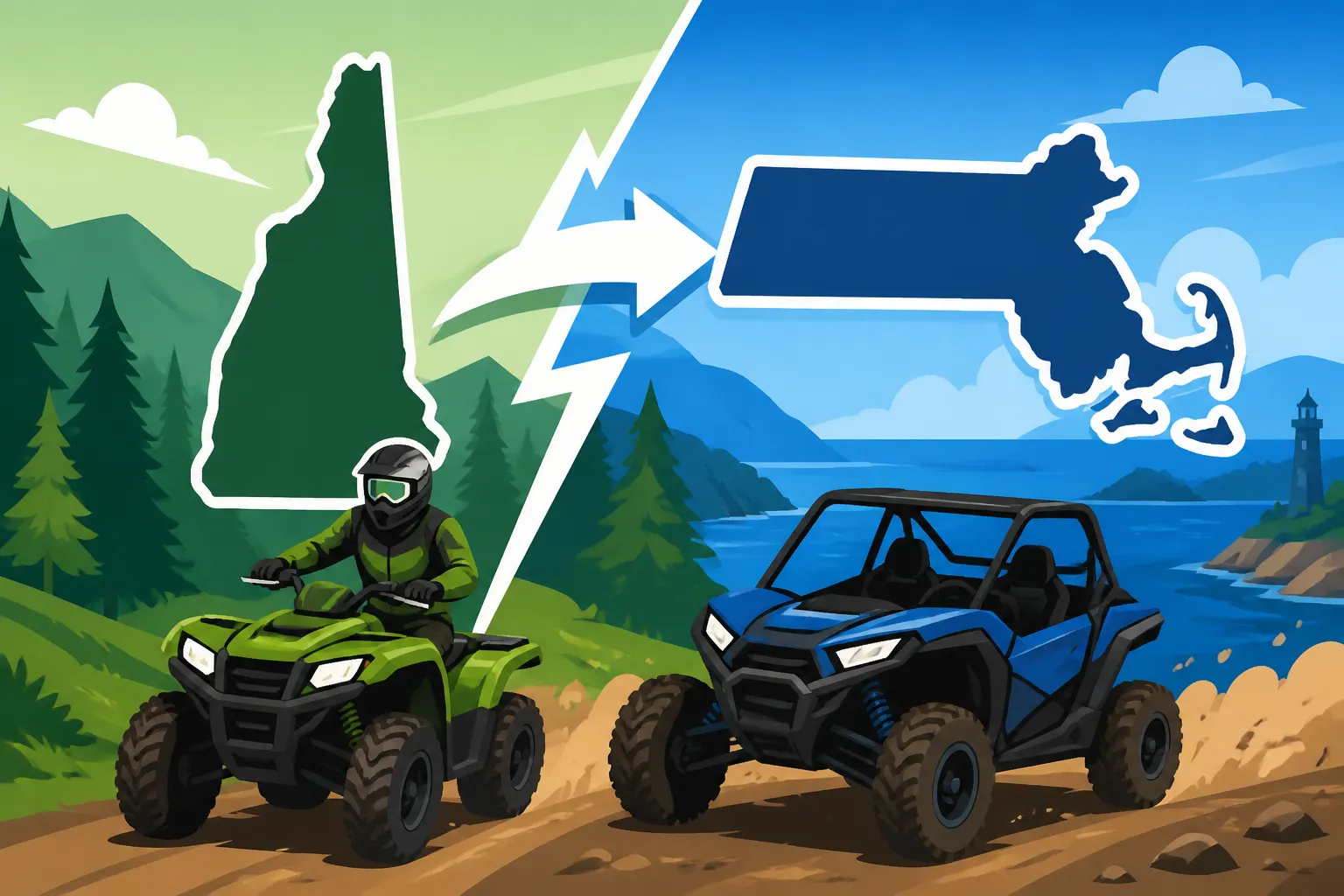
A New Hampshire registration or decal does not automatically let you ride an ATV or UTV in Massachusetts. If you’re planning a visit, the key is to sort out Massachusetts registration, land access, and rider rules before you tow. Here’s what New Hampshire visitors should check so an out-of-state sticker doesn’t become a problem at the trailhead.
New Hampshire registration does not replace Massachusetts registration
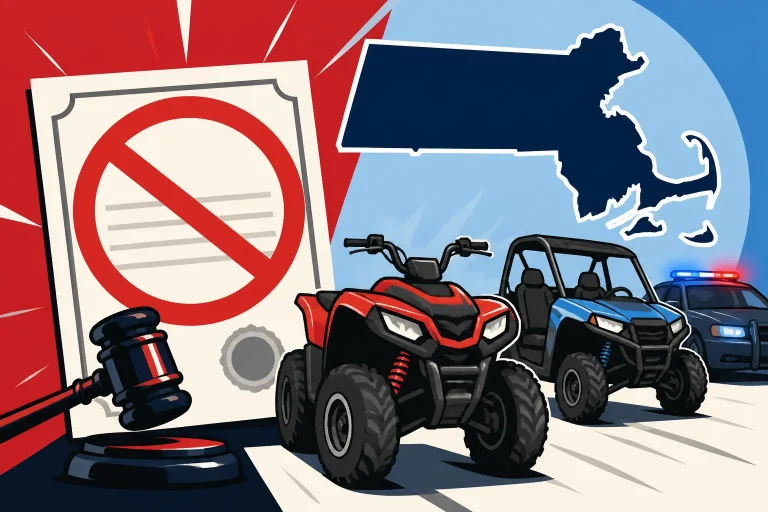
Massachusetts does not offer general reciprocity for out-of-state OHV registrations. That means a New Hampshire registration, decal, or trail credential is not a substitute for the Massachusetts registration required for a machine used here. The practical rule for visitors is simple: plan to obtain the Massachusetts sticker before riding in Massachusetts, even if your ATV or side-by-side is properly registered at home.
This requirement is about the place where you ride, not just where you live or where you bought the machine. A New Hampshire resident bringing a quad to Massachusetts should treat the state’s registration rules as a separate step from the machine’s home-state paperwork. The same issue can apply to a side-by-side or another off-highway vehicle. See Massachusetts Requires Its Own Registration and Out-of-State OHV Stickers Are Not Valid in Massachusetts for more on the distinction.
A Massachusetts registration sticker is not a general trail pass. It does not, by itself, grant access to every forest, private riding area, or town property. You still need to confirm that the specific land allows your type of machine and that you meet any local access conditions. Registration, trail permission, and parking are separate things.
| What you have or need | What it means in Massachusetts |
|---|---|
| New Hampshire registration or decal | Does not replace Massachusetts OHV registration |
| Massachusetts OHV sticker | Required for visitors who must register a machine for use in the state |
| Permission to ride a particular property | Still required where applicable; a sticker does not create land access |
| Parking or camping payment | Separate from OHV registration and may depend on the location |
| Rider safety certificate or age compliance | Separate requirements that may apply even when the machine is registered |
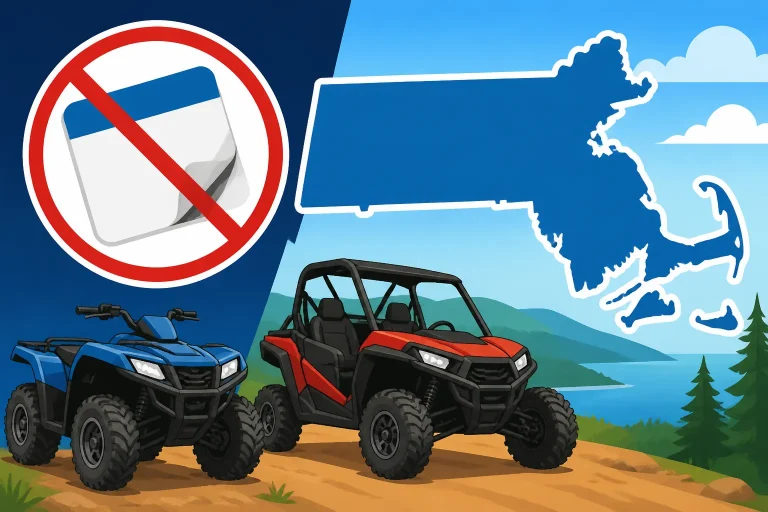
Massachusetts offers visiting riders a one-year registration term, rather than the resident term. Check the current application requirements and term details with the Massachusetts Environmental Police before you travel. The visitor process and the distinction between a home-state sticker and a Massachusetts one are covered in Massachusetts Visitors Buy a One-Year Sticker and Why a Non-Resident Sticker Expires a Year Sooner.
How to prepare for a Massachusetts visitor sticker
Start by gathering the machine and ownership information you’ll need for an application. Requirements can depend on the machine’s history and the documents you have, so don’t assume a New Hampshire registration card alone will answer every question. The state may ask for proof of ownership and identifying information such as the VIN. If you bought the machine recently, bring the paperwork from the sale as well.
Before applying, confirm the current instructions with the Environmental Police registration system. Massachusetts OHV registration is handled through the Environmental Police, not the Registry of Motor Vehicles. Make sure you choose the correct application path for a nonresident and for the kind of machine you own. Registering an ATV on the Environmental Police Website explains the online route, while Massachusetts Registration Paperwork Checklist can help you organize documents before you begin.
A useful preparation sequence is:
- Identify the machine. Confirm whether it is an ATV, side-by-side, dirt bike, or another type of off-highway vehicle. Use the VIN on the machine and compare it with your ownership documents.
- Collect ownership paperwork. Have your New Hampshire registration, bill of sale, manufacturer’s certificate of origin, or other relevant records available. Which documents are needed can depend on whether the machine is new, used, or previously registered.
- Check the nonresident application requirements. Use the current Environmental Police instructions rather than relying on an old application or another rider’s experience.
- Submit the application and payment as directed. Current payment methods and costs can change, so verify them with the official registration office before submitting.
- Wait for the registration materials. Don’t assume the application alone is enough to ride. Confirm when the registration is active and what you must carry or attach to the machine.
- Prepare the machine for the required card and decal. Follow Massachusetts instructions for carrying the registration card and placing the decals and numbers.
If you’re buying or borrowing a machine shortly before a trip, take care not to confuse the seller’s paperwork with your own registration permission. A registration assigned to one machine is not a general permit for another. If a required document is missing, resolve that before hauling the machine across the state line. For a private purchase, Massachusetts Registration Without a Bill of Sale may help you understand what to ask about, but the registration office should confirm what it will accept for your specific case.
Once registered, follow the Massachusetts rules for displaying the decal and carrying the card. The card is part of the paperwork you may need to produce during a check; storing it at home or in the tow vehicle may not meet the requirement. Review The Registration Card You Must Carry in Massachusetts and Massachusetts Decal Placement Rules before your first ride.
Registration is only one part of a legal ride
Visitors often focus on the sticker because it is the step that differs most from riding at home. But registration does not override Massachusetts riding restrictions. Before planning a route, check the access rules for the exact property and the vehicle category. A trail shown on a map may be closed, may be intended for a different kind of machine, or may require a permit or other conditions.
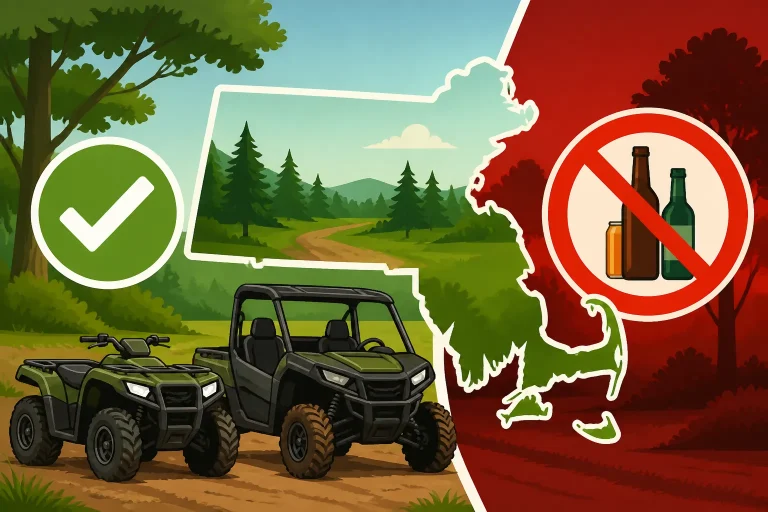
State forest access is not the same everywhere, and a Massachusetts registration does not make a closed trail legal. Confirm current trail availability, machine limits, seasonal closures, and parking arrangements with the land manager. If you’re heading to a Berkshire forest, for example, check the specific location rather than assuming every state forest allows ATVs or UTVs. Massachusetts ATV Trails: Three Berkshire Forests is a starting point for understanding the main listed riding areas, and Massachusetts Trail Conditions Before You Tow can help you plan around closures or conditions.
Keep these separate questions in mind:
- Is the machine registered for Massachusetts? A New Hampshire sticker alone does not provide reciprocity.
- Is the machine allowed on this land or trail? Check the property’s current rules, including restrictions on side-by-sides or other vehicle types.
- Is the rider allowed to operate it? Age, supervision, helmet, and safety-certificate rules can apply independently of registration.
- Is a separate parking or site permit required? A registration sticker does not necessarily cover parking, camping, or a location-specific permit.
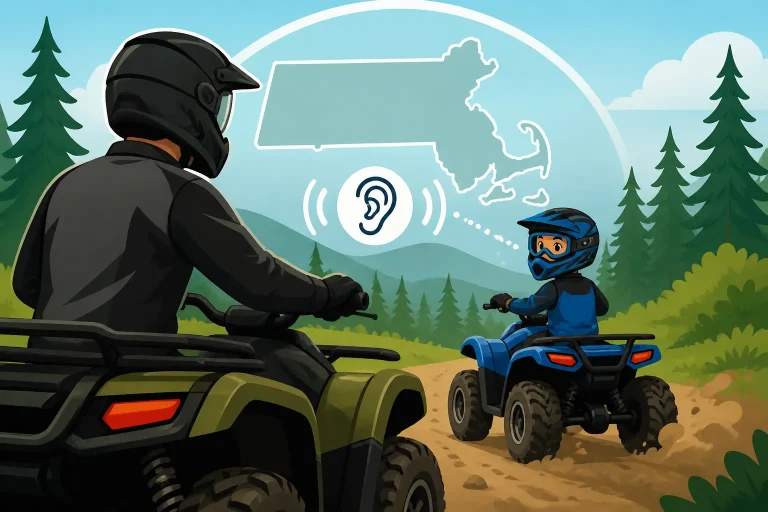
Rider requirements deserve particular attention when a child or teenager is coming along. Massachusetts has age-based rules and youth restrictions that may differ from New Hampshire’s. Do not rely on a home-state age rule or certificate as proof that a rider meets Massachusetts requirements. Confirm whether the rider needs a Massachusetts-recognized safety certificate, what supervision is required, and what equipment must be worn. See Massachusetts Rules for Young Riders on Public Land and Which Safety Certificates the Environmental Police Accept before bringing a young rider.
Equipment and operation rules matter, too. A legal registration does not make an unsafe or noncompliant machine acceptable. Check that the machine is in working condition and meets applicable requirements for items such as brakes, lighting, and a muffler. Visitors should also be especially cautious about roads: an OHV registration is not a street plate, and riding on a public way is generally not a way to connect trail sections. For a clearer look at where road crossings fit into the rules, see You Must Stop Before Crossing Any Public Way.
Finally, landowner permission is not interchangeable with state registration. If you have permission to ride private land, keep to the area and conditions the owner approved. If you plan to use public land, follow the land manager’s access rules. A Massachusetts sticker proves registration status; it does not prove that you have permission to be on a particular property.
Common questions from New Hampshire visitors
Can I ride in Massachusetts using only my New Hampshire sticker?
No. Massachusetts does not generally recognize an out-of-state OHV sticker as a replacement for its own registration. Visitors should confirm the current nonresident registration process and obtain the Massachusetts materials before riding.
Does the Massachusetts sticker let me ride anywhere in the state?
No. It addresses registration, not access. You still need to ride only where your machine is allowed, respect closures and seasonal rules, and obtain any separate permission or permit that applies.
Does registering the machine make it street legal?
No. An OHV registration is not the same as a road-vehicle plate. Do not assume that registration allows you to ride on public roads or use a road as a trail connector. Check the rules for any permitted crossing and stop as required.
What if I’m visiting for only one weekend?
The length of your visit does not make a New Hampshire sticker reciprocal. Check the nonresident application and timing requirements before you travel. If there is not enough time to complete registration, postpone the ride rather than assuming a day pass or home-state registration will cover it.
Should I check the rules again before every trip?
Yes. Registration instructions, trail access, closures, and site-specific requirements can change. Before loading the machine, verify the registration status, the land manager’s current rules, and any parking or camping arrangements. A quick check can prevent a long drive to a closed or unsuitable trailhead.
Disclaimer
This article is for general informational purposes only and does not constitute professional advice. Laws, prices and regulations vary by location and change over time. Consult a qualified professional for guidance on your specific situation.