Massachusetts Rules for a 16-Year-Old Rider
Riding an ATV or UTV in Massachusetts when you're 16 can feel like navigating a maze of rules and restrictions. You're past the "little kid" age, but not quite an adult yet, and the laws reflect that in often confusing ways. This guide is here to untangle the specific regulations that apply to 16-year-old riders in the Bay State, from engine size limitations and mandatory safety courses to supervision requirements and where you can actually ride, helping you understand exactly what you need to do to hit the trails legally and safely.
Navigating the Basics: Age, Engine, and Certifications
Massachusetts has some of the strictest ATV and UTV laws in the nation, especially concerning youth riders. When you hit 16, some things ease up, but important restrictions remain that you absolutely need to be aware of. It’s not simply a matter of getting on a machine and riding; there are specific hoops to jump through for your safety and the safety of others.
The 16-Year-Old Age Bracket: What's Different?
At 16, you’re in a unique position in Massachusetts’s OHV (Off-Highway Vehicle) legal framework. You're no longer under the most severe restrictions that ban riders under 14 from operating ATVs even on private land, except in sanctioned events. This is a significant step, but it doesn't mean you have free rein. The state still views riders under 18 as minors who require certain protections and oversight.
While you gain a bit more independence compared to younger teens, the state's intent is still very much focused on a graduated approach to responsibility. This age bracket is about proving you can handle a machine safely and responsibly, often with the backing of formal training. Understanding these nuances is crucial, because what might seem like a minor infraction to you could carry serious penalties for you and your supervising adult.
Engine Size Limitations for 16-Year-Olds
This is where many 16-year-old riders and their families get tripped up. Massachusetts law specifically states that riders between the ages of 14 and 16 are restricted to operating ATVs with an engine size of 90cc or less. Yes, you read that right – even at 16, you're still capped at a smaller engine. This is a critical rule designed to match machine power to rider experience and maturity, reducing the risk of accidents.
The intent behind [The 90cc Engine Cap for Riders 14 to 16] is to prevent young riders from getting on machines that are too powerful for their skill level, especially as they're still developing judgment and reaction times. This cap remains in effect until your 17th birthday. It's a hard limit, and there's no workaround for it in Massachusetts, whether you're riding on public trails or private land. Once you turn 17, the 90cc engine cap is lifted, as highlighted by [Why the 90cc Engine Cap Ends at 16]. This means if you're 16, that 250cc sport quad or full-size side-by-side will have to wait a little longer.
Mandatory Safety Certificates
If you plan to ride on any public land in Massachusetts—and that includes the state forests that permit OHVs—you absolutely must complete an approved safety course and carry your certificate with you. This isn't optional; it's a non-negotiable requirement. For 16-year-old riders, this is especially important because it demonstrates a foundational understanding of safe operation and state regulations.
The safety course is typically a two-part process. It involves both a classroom component (which can sometimes be done online, though often requires an in-person follow-up) and a hands-on skills test. The classroom portion covers everything from basic machine operation and maintenance to trail etiquette and the specific laws governing OHVs in Massachusetts. The in-person skills test ensures you can physically handle a machine safely under various conditions. [Massachusetts Two-Part Safety Course] outlines this in more detail, and you can learn about the practical aspects in [Massachusetts In-Person Skills Test]. Remember, [Riders Under 18 Must Carry the Certificate] whenever they are operating an OHV on public land.
Supervision and Trail Access for 16-Year-Olds
Even with a safety certificate, a 16-year-old rider in Massachusetts still operates under certain supervision rules, particularly when it comes to public land and road crossings. These rules are in place to ensure an experienced adult can intervene if necessary and to hold someone accountable for a minor's actions.
When Supervision is Still Required
While a 16-year-old with a safety certificate gains more independence than a younger rider, direct adult supervision can still be a factor, especially for general riding on public lands. Massachusetts law holds supervising adults liable for the actions of young riders, meaning someone 18 or older needs to be present and available. This doesn't necessarily mean they have to be riding directly behind you, but they must be within reasonable proximity and able to communicate or assist if needed.
The rules around supervision are designed to ensure accountability. Even if you're a highly experienced 16-year-old rider, the state places a degree of responsibility on an adult. This adult could be a parent, guardian, or another responsible person over 18. They don't need to be right on your tail, but they should be aware of where you're riding and capable of intervening. [Who Counts as a Supervising Adult at 18] provides further context on this role. For riders under 18, having your [Massachusetts Safety Certificates Under 18] is paramount, as it's the primary way the state verifies your foundational knowledge.
Public Land Access and Crossing Roads
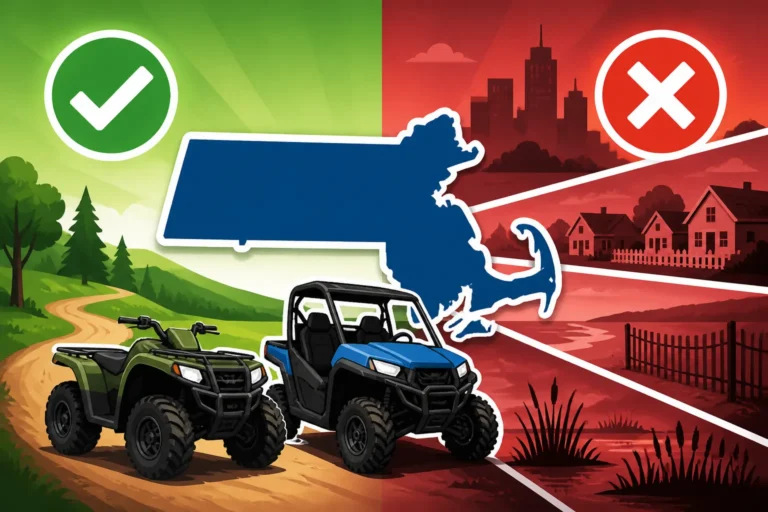
Massachusetts offers limited but dedicated public trails for OHV riding in specific state forests, primarily in the western part of the state. If you have your mandatory safety certificate, a registered machine, and you are adhering to the 90cc engine size limit for your age, then you can access these trails. However, always check with the specific forest management office for any local rules, closures, or permit requirements before you head out.
When it comes to crossing public ways (roads), 16-year-olds face specific rules. You cannot operate an OHV on a public road, street, or highway in Massachusetts. Period. The only exception is to cross a public way to get from one section of a trail to another, or to access your riding area. When performing such a crossing, you must come to a [Massachusetts Crossings Require a Full Stop], yield to all traffic, and proceed directly across at a right angle. While having a driver's license might change some aspects of adult supervision for road crossings (as it grants you a level of driving privilege), the fundamental rule of not riding on the road remains for OHVs.
Riding on Private Property
Riding on private land offers more flexibility in some ways but still comes with significant legal obligations. First and foremost, you must have [Massachusetts Requires Written Permission] from the landowner. This permission should be in writing and you should carry it with you whenever you ride on their property. This isn't just a suggestion; it’s a legal requirement designed to prevent trespassing issues and protect landowners.
Beyond permission, there's also the "150-foot dwelling rule." This means you cannot operate an OHV within 150 feet of a dwelling (a house or occupied building) without the express written consent of the occupant of that dwelling. So, even if you have permission from the landowner, if their property is close to a neighbor's house, you'll need the neighbor's permission too. [Massachusetts's 150-Foot Dwelling Rule] is in place to minimize noise disturbances and ensure residents' peace and quiet. Ignoring these rules can lead to serious fines and legal trouble, not just for you but also for the landowner who allowed you to ride.
Essential Equipment and Safety Practices
Beyond the age and certification requirements, the state of Massachusetts has clear rules about the equipment your ATV or UTV must have, and what personal protective gear you, as a 16-year-old rider, are expected to wear. These are critical for your safety and to ensure your machine is operating within legal limits.
Helmet and Other Protective Gear
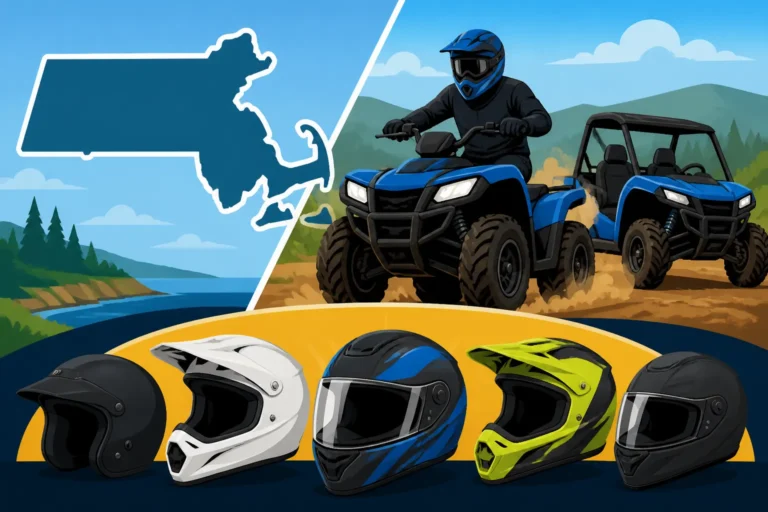
Massachusetts has a strict helmet law that applies to all OHV riders, regardless of age. If you're on an ATV or UTV, you must wear a helmet that meets federal safety standards (DOT approved). This is non-negotiable and one of the most important pieces of safety equipment you'll ever use. Your brain is not something to gamble with, and a good helmet can be the difference between a minor bump and a life-altering injury.
Beyond the helmet, it’s highly recommended that 16-year-old riders wear additional protective gear. This includes eye protection (goggles or a face shield), long pants, long-sleeved shirts, over-the-ankle boots, and gloves. While not all of this is mandated by law, it's common sense for off-road riding. Branches, rocks, and even minor tumbles can cause scrapes, bruises, and sprains that these items help prevent. Think of it as investing in your ability to keep riding without painful interruptions. For more details on what's required, see [Massachusetts Helmet Law for Every Rider].
Machine Requirements: Mufflers, Brakes, and Lights
Your ATV or UTV, even if it's a 90cc machine for a 16-year-old, needs to meet certain equipment standards to be legal in Massachusetts. These aren't just suggestions; they are part of [Massachusetts Equipment Requirements] and are checked by Environmental Police officers.
First, your machine must have a working muffler and spark arrester. The muffler helps keep noise levels down, which is crucial for maintaining good relationships with landowners and minimizing disturbance in sensitive natural areas. The spark arrester is a safety device designed to prevent sparks from escaping the exhaust system, which could otherwise ignite dry leaves or grass and cause a wildfire. Many aftermarket exhaust systems, like some performance options from SuperATV, will specify if they include a spark arrester, but always verify to ensure compliance.
Secondly, your ATV or UTV must have adequate braking systems that are in good working order. This means both front and rear brakes (if applicable) must function effectively. Good brakes are your primary defense against collisions and are vital for controlling your machine on varied terrain. Finally, if you're riding after sunset or before sunrise, or in any conditions of reduced visibility, your machine must be equipped with working headlights and taillights. Many older or youth machines might have basic lighting, but if you ride frequently in low-light conditions, consider aftermarket LED light bars or auxiliary lights from brands like SuperATV to enhance your visibility and safety.
Avoiding Pitfalls and Staying Safe
Riding an ATV or UTV can be an incredible experience, offering freedom and adventure. However, for a 16-year-old in Massachusetts, that enjoyment hinges entirely on understanding and respecting the rules. Ignoring them isn't just a minor inconvenience; it can lead to serious consequences.
Common Mistakes Young Riders Make
One of the biggest mistakes young riders make is underestimating the seriousness of Massachusetts's OHV laws. Thinking you can just "get away with it" or that "no one will notice" is a dangerous mindset. Environmental Police officers patrol trails and private lands, and they are well-versed in enforcing these regulations. Common pitfalls include:
- Riding an oversized machine: As we discussed, a 16-year-old is capped at 90cc. Riding a 250cc quad is an immediate violation, no matter your skill level.
- Lack of a safety certificate: Trying to ride on public land without having completed the required safety course and carrying the certificate is a quick way to get a ticket.
- No written permission on private land: Many young riders assume verbal permission is enough, but the law specifies written permission.
- Riding on public roads: Even a quick hop down a paved street is illegal and dangerous.
- No helmet or improper gear: Cutting corners on safety equipment is a direct violation and puts your life at risk.
These mistakes often lead to fines, machine impoundment, and can even result in your parents being held liable for your actions. [Massachusetts Penalties for Illegal Riding] can be steep, so it's always better to know the rules and follow them.
The Importance of a Pre-Ride Check
Before you even turn the key, it's vital to perform a thorough pre-ride check. This isn't just about legal compliance; it's about ensuring your machine is safe to operate, preventing breakdowns, and ultimately, keeping you safe on the trail. For 16-year-old riders, developing this habit early is crucial.
Here’s a quick checklist for every ride:
| Component | What to Check | Why it Matters |
|---|---|---|
| Tires | Pressure, tread wear, punctures | Proper traction and stability; prevents flats |
| Brakes | Lever/pedal feel, effectiveness, fluid levels | Critical for stopping and control |
| Lights | Headlights, taillights, brake lights (if equipped) | Visibility for you and others |
| Fluids | Engine oil, coolant (if liquid-cooled), brake fluid, fuel level | Prevents engine damage and ensures operation |
| Chain/Belt | Tension, lubrication, wear (for chain); condition (for belt) | Proper power transfer; prevents snapping |
| Steering | Free play in handlebars, smooth turning, no binding | Essential for control and maneuverability |
| Throttle | Smooth operation, returns to idle freely | Prevents unintended acceleration |
| Muffler/Exhaust | Secure, no leaks, spark arrester present | Noise compliance, fire prevention, performance |
| Protective Gear | Helmet condition, goggles, boots, gloves | Your personal safety |
Taking just a few minutes to do this can save you from a ruined day, costly repairs, or even an accident. It also builds good habits that will serve you well as you gain more experience and potentially move to larger machines or more challenging terrain.
Remember, riding an ATV or UTV in Massachusetts as a 16-year-old means carrying a good amount of responsibility. By understanding the age and engine restrictions, getting your safety certificate, knowing where and how to ride legally, and always performing a pre-ride check, you're setting yourself up for years of safe and enjoyable adventures.
Disclaimer
This article is for general informational purposes only and does not constitute professional advice. Laws, prices and regulations vary by location and change over time. Consult a qualified professional for guidance on your specific situation.