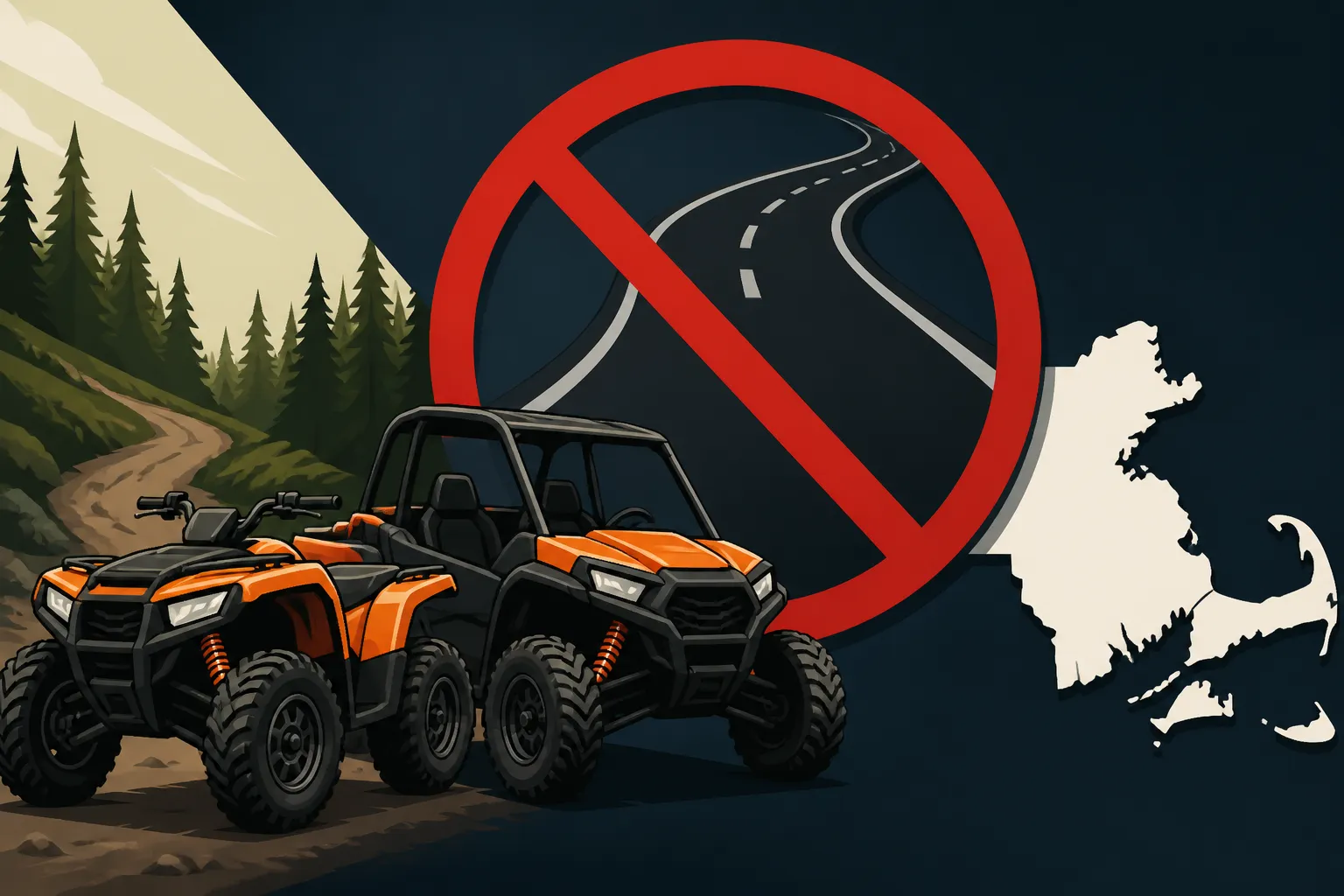
Massachusetts Has No Street Legal Path
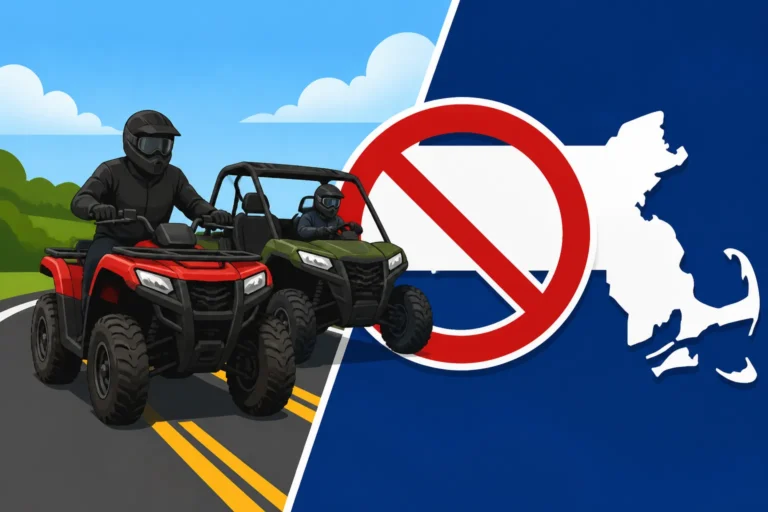
It's a common dream for many ATV and UTV owners across Massachusetts: the freedom to hop on your machine and ride it straight from your driveway to the local store, or to connect trails by simply taking a quick jaunt down a paved road. Unfortunately, if you're holding onto that dream, I'm here to gently tell you that Massachusetts has some of the strictest laws in the country regarding off-highway vehicles (OHVs) and public roads, making the idea of a "street legal" ATV or UTV a non-starter here in the Bay State. This guide will dive deep into why Massachusetts doesn't allow street-legal OHVs, what the laws actually say, and how you can still enjoy your machine responsibly within state regulations.
The Dream vs. Reality: Why Massachusetts Says No to Street Legal OHVs
The desire to make an ATV or UTV street legal is perfectly understandable. It would add a layer of convenience and accessibility that many riders crave. However, the legal framework in Massachusetts draws a very clear line between vehicles designed for roads and those intended for off-road use, and that line is practically unmovable for ATVs and UTVs.
The Core Definition of an Off-Highway Vehicle
At its heart, the problem lies in how Massachusetts law defines an ATV or UTV. These machines fall under Massachusetts General Laws Chapter 90B, which is specifically dedicated to "Recreational Vehicles." This chapter explicitly states that these vehicles are "designed for or capable of travel over unimproved terrain." In plain language, they are considered off-highway vehicles, built from the ground up to conquer dirt, mud, rocks, and trails – not smooth asphalt or concrete public roads.
Think about the fundamental differences between your typical car or truck and an ATV. Cars have features like enclosed cabins, advanced crumple zones, and specific tire designs optimized for road traction and speed. ATVs, on the other hand, often have high ground clearance, knobby tires for grip on loose surfaces, open designs, and suspension systems built to absorb rough terrain rather than provide a smooth, stable ride at highway speeds. These design distinctions aren't just cosmetic; they're legal classifications that dictate where a vehicle can and cannot operate.
Legislative Hurdles and Public Road Purpose
The legal separation between Chapter 90 (governing motor vehicles on public ways) and Chapter 90B (governing recreational vehicles) is a critical hurdle. The Registry of Motor Vehicles (RMV) is responsible for registering vehicles that operate on public roads, ensuring they meet strict safety standards for such environments. The Environmental Police (MEP), by contrast, oversee OHV registration because their mandate includes regulating outdoor recreation and protecting natural resources. This division reflects the state's intent: ATVs and UTVs are not considered part of the public road ecosystem. You can learn more about this distinction in [Why the Environmental Police Register ATVs, Not the RMV].
The legislative intent behind these separate chapters is rooted in public safety. Imagine a powerful, lightweight ATV, designed for quick acceleration and nimble handling on trails, suddenly sharing a busy highway with heavy trucks and passenger cars. The differences in stopping distances, visibility, and crash protection present significant risks, not just to the OHV rider but to other motorists as well. Lawmakers have prioritized keeping these distinct categories of vehicles separate to minimize these hazards.
Why Conversions Don't Work Here
Many enthusiastic riders, looking to bridge this gap, invest in aftermarket modifications. They might add DOT-approved tires, turn signals, mirrors, a horn, and even windshields, often sourcing quality parts from reputable companies like SuperATV. The hope is that by adding these street-legal features, their machine will suddenly become eligible for road registration.
However, in Massachusetts, this approach simply won't work. Even with all the bells and whistles, the vehicle's fundamental classification as an "off-highway vehicle" remains unchanged. The state does not offer a pathway to convert an ATV or UTV into a road-legal vehicle. This is largely because the original manufacturer's Certificate of Origin (MCO) would designate it for off-road use, and the state's RMV has no process to override or reclassify a vehicle based on aftermarket parts. It's not just about the equipment; it's about the vehicle's inherent design and its legal designation from the factory. Without a specific legislative change or a manufacturer-produced "street-legal" version that meets Chapter 90 standards, the dream of riding your ATV down Main Street remains just that – a dream.
Understanding Massachusetts' ATV & UTV Laws on Public Ways
Given that making an ATV or UTV "street legal" isn't an option, it's crucial to understand the very strict rules Massachusetts has about operating these machines anywhere near public roads. Disregarding these laws can lead to significant penalties and put you and others at risk.
The Absolute Ban on Public Ways
Let's be unequivocally clear: Massachusetts prohibits the operation of ATVs and UTVs on nearly all public roads, streets, and highways. This isn't just a suggestion; it's a legal mandate. You cannot ride your machine on paved roads, gravel roads maintained by the town, shoulders, or even in the breakdown lane. The laws explicitly state that [Massachusetts Bans Riding on Public Ways] and [Massachusetts Bans Riding on Highways]. This prohibition extends to almost any area that the public has a right of access to and that is maintained for vehicle traffic.
The reasoning behind this absolute ban goes back to the safety concerns we touched upon earlier. OHVs are not designed for the speeds, traffic patterns, or braking requirements of public roads. Their handling characteristics, especially at higher speeds or in emergency maneuvers, are vastly different from traditional automobiles. Furthermore, the lack of robust safety features like airbags, seatbelts designed for road impact, and enclosed cabins means that OHV riders are significantly more vulnerable in a collision with a road vehicle. It's a tough pill to swallow for riders who see similar vehicles operating on roads in other states, but Massachusetts has chosen a different, stricter path for safety.
Limited Exceptions for Crossing Public Ways
While the general rule is "no public roads," there is one very specific and narrow exception: crossing a public way. This is the only time an ATV or UTV may legally touch a public road surface, and it comes with stringent requirements. You cannot simply ride down the road for a short distance to get to another trail. Instead, you must cross the public way directly, as close to a 90-degree angle as possible, and only if it's the most direct route between two legal riding areas.
When making such a crossing, you are required to come to a complete stop before entering the public way, yield to any oncoming traffic, and proceed cautiously. Think of it like a pedestrian crossing a busy street, but with a powerful machine. Furthermore, there are specific age restrictions for riders making these crossings: [Massachusetts Crossings Require a Full Stop]. If you're under 16 and a half years old, you need to be under the direct supervision of an adult who is at least 18 years old and holds a valid driver's license. The rules around age and crossings change slightly once you're older, as outlined in [Road Crossings Change at 16 and a Half]. Always remember, these are crossings, not casual rides.
Other Restricted Areas Beyond Roads
The restrictions on OHV use in Massachusetts extend beyond just paved public roads. Riders also need to be aware of other areas where operation is generally forbidden unless explicitly authorized. This includes sidewalks, bicycle paths, public parks not designated for OHVs, and most town or municipal properties. Furthermore, environmental protection laws prohibit riding on certain sensitive lands, such as beaches and dunes, to prevent ecological damage. [Massachusetts Bans Beach and Dune Damage] is a critical law to be aware of if you're anywhere near coastal areas.
Even on private land, you cannot assume you have the right to ride. [Massachusetts Requires Written Permission] from the landowner to operate an OHV on their property. This isn't just a courtesy; it's a legal requirement designed to prevent trespassing and property damage. Always seek [Written Permission From a Bay State Owner] before venturing onto any private parcel. This holistic approach to OHV regulation aims to concentrate riding in designated, managed areas while protecting public safety and natural resources across the rest of the state.
The Difference Between "Street Legal" and "Registered" in Massachusetts
This is perhaps the most common point of confusion for new and even some experienced OHV riders in Massachusetts. Many assume that once their ATV or UTV is registered with the state, it automatically gains some form of street legality. This is a dangerous misconception that can lead to fines and other legal troubles.
What a Massachusetts OHV Registration Actually Means
When you register your ATV or UTV in Massachusetts, you are not making it street legal. What you are doing is registering it as an off-highway vehicle, which is a mandatory step for operating it on any public lands designated for OHV use, such as state forests. The registration process, which you can learn more about in [How to Register an ATV in Massachusetts], provides you with a set of decals (stickers) that must be affixed to your machine, and a physical registration card that you must carry with you while riding. [Massachusetts Requires Decals and a Card] for all registered OHVs.
This registration simply acknowledges your machine as a legally recognized off-highway vehicle within the state's system. It allows you to legally participate in the state's limited, but growing, network of designated OHV trails. It ensures that if there's an incident on a trail or if an environmental police officer checks your machine, it's accounted for and you've paid your share to support the trail system. It does not, however, grant you any privileges to operate your machine on public roads, nor does it convert its legal classification from off-highway to on-highway.
The Environmental Police vs. the RMV
The fact that the Massachusetts Environmental Police (MEP) handle OHV registration, rather than the Registry of Motor Vehicles (RMV), is a fundamental clue to understanding the state's stance. The RMV is the agency responsible for licensing drivers and registering vehicles that operate on public roads and highways, ensuring they meet rigorous safety and emissions standards for that purpose. They issue titles for cars and trucks and oversee annual inspections.
The MEP, on the other hand, is focused on enforcing laws related to natural resources, wildlife, and outdoor recreation. Their role in OHV registration aligns perfectly with their mission to manage and protect state lands and ensure responsible recreational use. This clear division of labor reinforces the legal distinction: if the RMV isn't registering it, it's not considered a "motor vehicle" for public road use. This key difference highlights why your ATV or UTV, even when fully registered, won't receive a traditional vehicle title or be subject to RMV inspections. For more details on this, check out [Why the Environmental Police Register ATVs, Not the RMV].
Penalties for Riding on Public Roads
Ignoring the "no street legal" rule and operating your registered or unregistered OHV on a public way in Massachusetts can lead to a host of unpleasant consequences. The Massachusetts Environmental Police and local law enforcement officers take these violations seriously, as they directly impact public safety. The penalties can range from substantial fines to the impoundment of your machine. You could be facing tickets for illegal operation, trespassing if you're on private land without permission, and potentially even reckless endangerment charges depending on the circumstances of your ride.
Think about the financial hit: fines can quickly add up, and the cost of retrieving an impounded vehicle (towing fees, storage fees, release fees) can be significant. Furthermore, if you're involved in an accident on a public road while operating an illegal vehicle, your personal liability could be enormous, especially since Massachusetts does not mandate insurance for OHVs. While optional insurance is available and highly recommended, an insurer might deny a claim if the vehicle was being operated illegally. [Massachusetts Penalties for Illegal Riding] are no joke and are designed to deter riders from taking their machines onto the streets. It's simply not worth the risk.
Practical Realities for Massachusetts OHV Riders
Since street-legal riding isn't an option, Massachusetts OHV owners need to understand the practical realities of how and where they can enjoy their machines legally and safely. It requires a bit more planning than simply jumping on and going, but the rewards of legal trail riding are well worth it.
Transporting Your Machine Legally
Because you cannot ride your ATV or UTV on public roads, the most fundamental reality for Massachusetts riders is the need for proper transportation. This means you will almost certainly need a truck with a bed capable of carrying your machine, or a trailer specifically designed for hauling ATVs or UTVs. This applies whether you're heading to a state forest for a day of riding, moving your machine between properties, or even taking it for service.
Planning your trips around transportation is crucial. When heading out to one of the state's designated riding areas, like the trails in the Berkshire forests, you'll be loading your machine up, driving it to the trailhead, unloading, riding, and then reloading for the trip home. This adds an extra layer to the riding experience, but it’s a non-negotiable part of responsible OHV ownership in Massachusetts. Make sure your trailer is properly registered and your tow vehicle is up to the task of safely hauling your OHV.
Navigating Designated OHV Trails and State Forests
The good news is that while Massachusetts is strict about road use, it does offer some fantastic opportunities for off-road riding in designated areas. The primary legal riding spots for ATVs and UTVs are found within three state forests in Western Massachusetts: Beartown State Forest, October Mountain State Forest, and Pittsfield State Forest. These areas provide miles of challenging and enjoyable trails, allowing riders to experience the beauty of the Bay State's natural landscape. You can find more information about these locations in [Massachusetts ATV Trails: Three Berkshire Forests].
It is absolutely essential to stay on marked and authorized trails within these forests. Riding off-trail can lead to environmental damage, erosion, and confrontations with park rangers, who are empowered to issue citations. Always respect trail signage, closures, and the safety of other trail users, which can include hikers, mountain bikers, and horseback riders. These trails are a shared resource, and responsible riding helps ensure they remain open for everyone.
Connecting Trails and the Role of Unpaved Paths
Many riders dream of long, interconnected trail systems, and it's natural to wonder if unpaved dirt roads or old logging paths can be used to link up various riding areas. In Massachusetts, the rule of thumb remains: if it's considered a public way, even if unpaved, the ban on OHVs applies unless it's explicitly designated and marked as an authorized OHV trail. A dirt road that is maintained by a town or county, or that provides access to multiple properties, is typically considered a public way under Chapter 90, not Chapter 90B.
There might be very rare, highly localized exceptions where a specific town or private entity has obtained special permission or created a private, designated OHV connection. However, these are few and far between and will always be clearly marked with specific signage indicating OHV use is allowed. Without such clear, official signage, assume any unpaved path that functions as a public access route is off-limits. This means that true "trail connecting" often requires trailering your machine from one legal riding area to another. Always consult official trail maps and contact the Department of Conservation and Recreation (DCR) or the Environmental Police for the most up-to-date and accurate information on where you can legally ride. Knowing [Massachusetts Rules for Crossing a Road] will also be vital for staying legal when an authorized trail requires a short passage across a street.
| Feature | Street Legal Vehicle (Car/Truck) | Registered OHV (ATV/UTV) |
|---|---|---|
| Governing Law | Massachusetts General Laws Chapter 90 | Massachusetts General Laws Chapter 90B |
| Registration Body | Registry of Motor Vehicles (RMV) | Environmental Police (MEP) |
| Primary Use | Public roads, highways, licensed operation | Designated off-highway trails, private land with permission |
| Road Operation | Legal (with license, insurance, inspection) | Illegal (except for direct crossings) |
| Required Equipment | DOT tires, turn signals, horn, mirrors, headlights, brake lights, seatbelts, windshield, wipers | Headlights, taillights, brakes, muffler, spark arrester, sometimes mirrors (for UTVs) |
| Insurance Mandate | Mandatory (for liability) | Optional (but highly recommended) |
| Title Issued | Yes (typically) | No (registration card and decals issued instead) |
| Inspection | Annual safety/emissions inspection required | No state inspection requirement |
Disclaimer
This article is for general informational purposes only and does not constitute professional advice. Laws, prices and regulations vary by location and change over time. Consult a qualified professional for guidance on your specific situation.