Massachusetts Decal Replacement If Lost
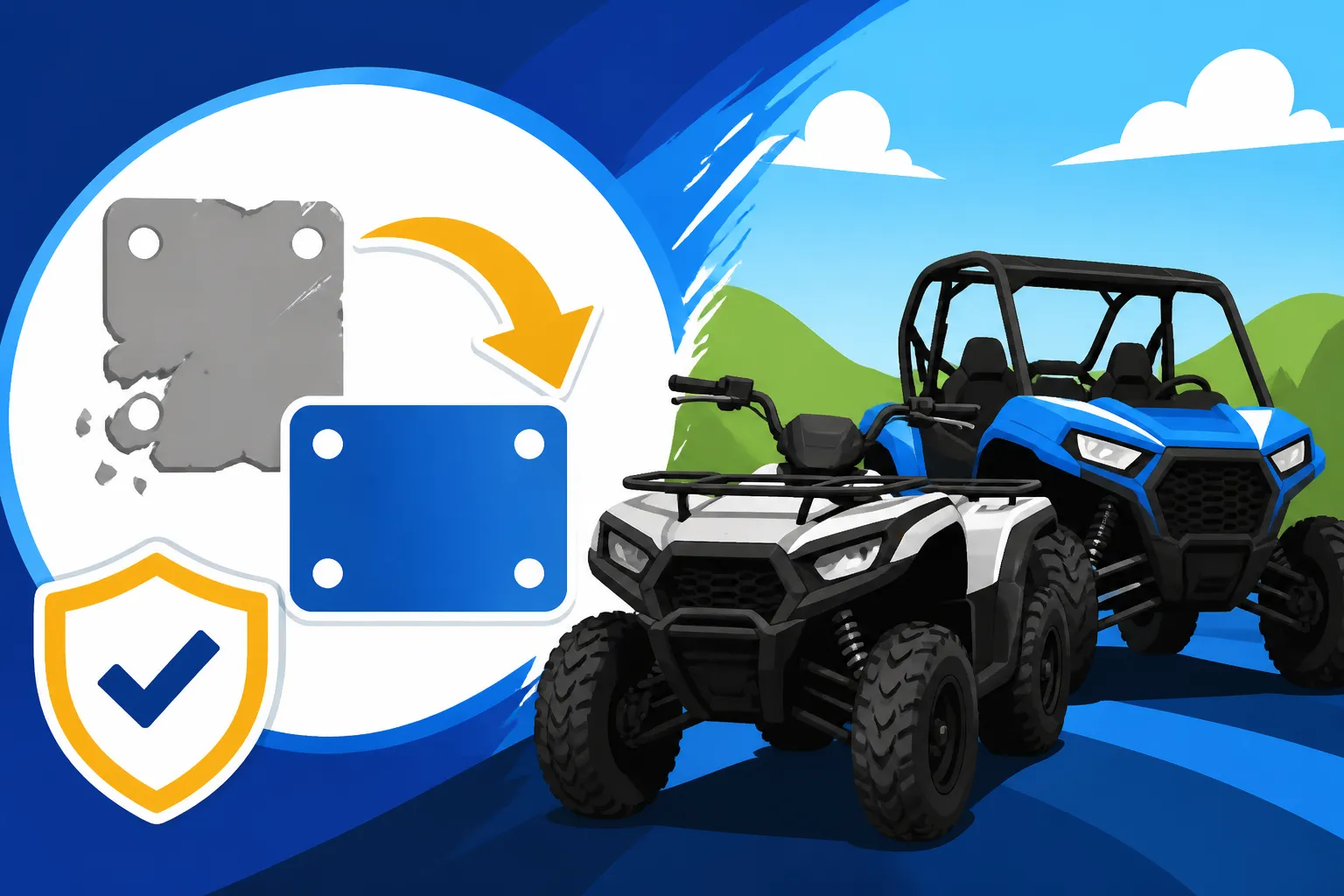
There's nothing quite as frustrating as realizing a crucial piece of your ATV or UTV registration, like a decal, has gone missing or is damaged beyond recognition. You know you're registered, you paid your fees, but without that little sticker, it feels like all that effort is for naught, potentially jeopardizing your trail access and even leading to unwanted attention from law enforcement. This guide will walk you through the precise steps to take when you need a replacement decal for your off-highway vehicle (OHV) in Massachusetts, ensuring you can get back to riding legally and without a hitch.
The Headache of a Missing Decal: Why It Matters in Massachusetts
You’ve got your machine, you’ve got your registration card, but where did that little sticker go? Maybe it peeled off on a particularly gnarly section of trail, perhaps it faded beyond recognition under the relentless New England sun, or maybe it just vanished into thin air. Whatever the reason, a missing or unreadable decal is more than just an aesthetic annoyance; it’s a compliance issue that can cut your riding day short.
The Legal Mandate: Why Decals Aren't Optional
In Massachusetts, every off-highway vehicle, whether it’s an ATV, UTV, or snowmobile, needs to be properly registered with the Massachusetts Environmental Police. Part of this registration process involves receiving decals—stickers that display your unique registration number and the expiration date. These decals are more than just pretty pictures; they are your machine's visible proof of legal registration. Without them, even if your machine is technically registered in the system, you lack the immediate, tangible evidence required by law. Think of it like a license plate for your car; you might have a valid registration document in your glovebox, but without the physical plate, you're still not compliant. The state wants to make it easy for officers to identify legally registered machines at a glance, and those decals are the primary tool for that. [Massachusetts Issues Decals and a Card] explains more about the package you receive.
Consider a scenario where you're loading up your side-by-side for a weekend trip to October Mountain State Forest. You've double-checked your helmets, packed your cooler, and confirmed your route. But as you're strapping down the machine, you notice the decal on the left side is completely gone, leaving just a faint sticky residue. You know you registered it last spring, but now what? Without that decal, an Environmental Police Officer could potentially stop you, as your machine doesn't visibly conform to the state's registration requirements. It's a small detail that carries significant weight in the eyes of the law, ensuring everyone playing by the rules is easily identifiable on public land.
Enforcement on the Trail: What an Officer Looks For
When an Environmental Police Officer (EPO) encounters an OHV on a public trail or crossing a public way, one of the first things they'll look for are those distinct Massachusetts registration decals. They're trained to spot them quickly and to verify that the numbers match the machine and that the expiration date is current. If a decal is missing, obscured, or illegible, it immediately raises a red flag. It forces the officer to spend more time checking your registration card, potentially delaying your ride or even leading to a citation if you can't produce proof of registration.
Imagine you're riding with friends in Pittsfield State Forest. You've been having a great time, navigating some challenging terrain. Suddenly, an EPO approaches. While your friends’ machines have clear decals, yours is missing. The officer will likely ask for your [Massachusetts Registration Cards Carried on Board] and might even run the VIN to confirm registration. This extra scrutiny, while understandable from an enforcement perspective, is a hassle you want to avoid. The decals serve as an "all clear" signal, indicating that you've done your part to comply with the state's OHV laws. It's not just about avoiding a ticket; it's about making your interaction with law enforcement as smooth and brief as possible so you can get back to enjoying your ride.
When a Decal Goes Missing: Common Scenarios
Decals can disappear or become damaged for a variety of reasons, many of which are completely out of your control. Trail riding, by its very nature, is tough on equipment. Branches can snag, mud and grit can act like sandpaper, and pressure washers, while great for cleaning, can sometimes be a bit too aggressive for adhesive.
Think about a long, muddy ride through Beartown State Forest after a spring rain. You're splashing through puddles and pushing through overgrown sections. Later, as you're hosing off your machine, you notice a corner of your decal is peeling. You try to press it back down, but it's already lost its stick. Or perhaps your machine sits outside through a harsh Massachusetts winter, and the extreme temperature changes cause the adhesive to fail, leading to a cracked and faded decal that simply won't stay put. In other cases, a minor fender bender with another machine or even just clumsy handling while loading onto a trailer can scuff or tear a decal beyond recognition. While these aren't intentional acts of defiance, they still leave you with a non-compliant machine. Having critical documents like your original bill of sale handy, perhaps created with a service like LawDepot, can make proving ownership easier if there are any doubts during the replacement process. These real-world scenarios highlight why knowing the replacement process is essential for any Massachusetts OHV owner.
Navigating the Replacement Process: Getting Your New Decal
So, your decal is gone or damaged. Don't panic! Massachusetts has a straightforward process for getting a replacement. It might not be as instant as you'd like, but it’s definitely doable. The key is knowing who to contact and what information you'll need at your fingertips.
Who to Contact and What to Prepare
When you need a duplicate decal, your first point of contact will be the Massachusetts Environmental Police (MEP), specifically their Boat and Recreational Vehicle Safety Bureau. They are the agency responsible for all OHV registrations in the Commonwealth. You won't be going to the Registry of Motor Vehicles (RMV) for this, as they handle on-road vehicles. The MEP needs specific information to verify your existing registration and process your request.
Before you call or fill out any forms, gather these essentials:
- Your existing OHV registration number: This is the most crucial piece of information. It's usually a series of letters and numbers like "MA 1234 AB." You can find this on your registration card.
- Your machine's Vehicle Identification Number (VIN): This is unique to your ATV or UTV and can usually be found stamped on the frame. Having this ready helps cross-reference your machine. [Massachusetts Requires a VIN on the Application] for initial registration, and it's just as important for replacements.
- Your personal contact information: Full name, address, phone number, and email. Make sure it matches what they have on file for your current registration.
- A clear explanation of why you need a duplicate: Is it lost? Damaged? Stolen? Providing this helps them understand the situation.
While not always explicitly required for a duplicate decal, having access to your original purchase documents, such as a bill of sale or manufacturer's certificate of origin (MCO), is always a good idea for any OHV owner. If you initially created your bill of sale using a platform like LawDepot, keeping a digital or physical copy readily accessible can be incredibly helpful for any future administrative needs related to your machine.
The Application for a Duplicate Decal
The process for requesting a duplicate decal is generally handled either online through the state's portal or by mail. While the online system is often the quickest route, some prefer the paper method. You'll typically be looking for an option related to "duplicate registration" or "replacement decals."
When you access the application, it will ask for the information you prepared: your registration number, VIN, and personal details. You'll specify that you're requesting a duplicate decal, as opposed to a duplicate registration card (though you can often request both at the same time if you’ve lost the card too). The system is designed to be user-friendly, guiding you through the necessary fields. Make sure to double-check all entries for accuracy before submitting. An incorrect registration number or VIN could lead to delays or the wrong decals being sent out, which would just add to your frustration. Pay close attention to any fields asking for the specific reason for the replacement, as this helps the MEP track common issues.
| Item Requested | Information Needed |
|---|---|
| Duplicate Decal | OHV Registration Number, VIN, Owner Info |
| Duplicate Registration Card | OHV Registration Number, VIN, Owner Info |
| Both Duplicate Decal & Card | OHV Registration Number, VIN, Owner Info |
The Cost and How to Pay
There is a fee associated with obtaining a duplicate decal in Massachusetts. As an informational resource, I can't provide the exact, current dollar amount, but you should expect a nominal charge for the processing and mailing of your new stickers. This fee helps cover the administrative costs of verifying your registration and producing the physical decals. The current fee for a replacement sticker can be found on the Massachusetts Environmental Police website or by contacting their office directly. [Massachusetts Duplicate Sticker at $5.50] mentions a common price for a replacement.
Payment methods typically include credit card if you're applying online, or check/money order if you're mailing in a paper application. Ensure your payment is accurate and submitted correctly to avoid any hold-ups in processing. It's always a good idea to confirm the fee amount on the official state website right before you apply, as these figures can change. For example, if you register your machine and pay your fees [Massachusetts Charges $44 for Residents], a replacement decal is a separate, smaller fee. Don't forget to account for any potential transaction fees if paying by credit card online.
What to Expect While You Wait and After Arrival
Once you've submitted your application and paid the fee, the waiting game begins. It's crucial to understand what you can and cannot do during this period and what to do once your shiny new decals arrive.
Riding Legally (or Not) While You Await Your New Decals
This is a critical point: just because you've applied for a duplicate decal doesn't automatically grant you legal permission to ride an un-decaled machine on public lands. While the Environmental Police are generally understanding, the law states that your machine must display the current decals. Riding on public trails or crossing public ways without visible, valid decals can still lead to a citation.
In a best-case scenario, if stopped, you could explain that you’ve applied for a duplicate and show proof of your application (like a confirmation email or a copy of your mailed form and payment receipt). However, there's no guarantee an officer will waive the requirement. To be absolutely safe, it's generally advised to avoid riding on public trails or areas where registration is required until your new decals arrive. If you absolutely must use your machine for something essential, like moving it to a repair shop or across private land, exercise extreme caution and carry all possible documentation with you. For riding on your own private property, where no public access laws apply, you're usually in the clear. However, the purpose of the decals is for public land use, so waiting until they arrive is the safest bet to avoid any fines or issues under [Massachusetts Penalties for Riding Unregistered].
Proper Placement of Your New Massachusetts Decals
Once your duplicate decals arrive in the mail, the next step is to apply them correctly. The Massachusetts Environmental Police have specific rules about where these decals must be placed on your ATV or UTV. Proper placement is just as important as having the decals themselves.
For ATVs and most UTVs, the decals typically need to be applied to both the left and right forward halves of the machine, usually on the front fenders or bodywork. They should be clearly visible and unobstructed. The registration number itself, often issued on separate stickers, needs to be at least 3 inches high and have a stroke of at least a half-inch wide. The expiration decal, a smaller sticker, usually goes on the left-hand side of the machine, near the main registration decal. [Massachusetts Decal Placement Rules] further elaborates on these requirements.
- Clean the surface thoroughly: Before applying, make sure the area is free of dirt, grease, and old adhesive residue. Rubbing alcohol works well for this.
- Apply in a warm, dry environment: This helps the adhesive bond properly. Avoid applying them in freezing temperatures or high humidity.
- Smooth out air bubbles: Start from one edge and slowly press the decal down, working out any air bubbles as you go. A squeegee or even a credit card can help.
Failing to place them correctly can still make your machine non-compliant. Take your time, consult the instructions provided with your decals, and ensure they are firmly affixed and clearly visible. The clearer your decals are, the less likely you are to be questioned by an EPO on the trails of [October Mountain State Forest Riding in Massachusetts] or [Pittsfield State Forest Riding in Massachusetts].
Keeping Your Decals Secure for the Long Haul
Now that you have your new decals, you'll want to take steps to ensure they don't go missing or get damaged again. A little proactive maintenance can save you the hassle and cost of another replacement down the road.
First, consider applying a clear protective film over the decals once they are properly adhered. This can add an extra layer of defense against abrasive trail conditions, UV fading, and even the force of a pressure washer. Many automotive or marine supply stores carry suitable clear vinyl films. Second, be mindful when cleaning your machine. While it’s important to remove mud and grime, avoid directing high-pressure streams directly at the edges of your decals. Work around them or use a gentler spray.
Finally, proper storage can also extend the life of your decals. If possible, store your ATV or UTV in a garage or under a cover to protect it from harsh weather elements when not in use. Extreme heat and cold, as well as prolonged sun exposure, can all degrade decal adhesive and cause fading over time. Regularly check your decals as part of your pre-ride inspection to catch any signs of peeling or damage early. Addressing a small corner lifting before it becomes a full loss can save you a replacement fee and keep you riding legally without interruption. Maintaining a good record of your machine's documentation, including a digital copy of your bill of sale or any ownership transfer forms (which you might have created using a tool like LawDepot), can also be a wise practice, providing backup if you ever need to re-verify ownership for future decal or registration needs.
Disclaimer
This article is for general informational purposes only and does not constitute professional advice. Laws, prices and regulations vary by location and change over time. Consult a qualified professional for guidance on your specific situation.