Massachusetts Registration Compared to New Hampshire
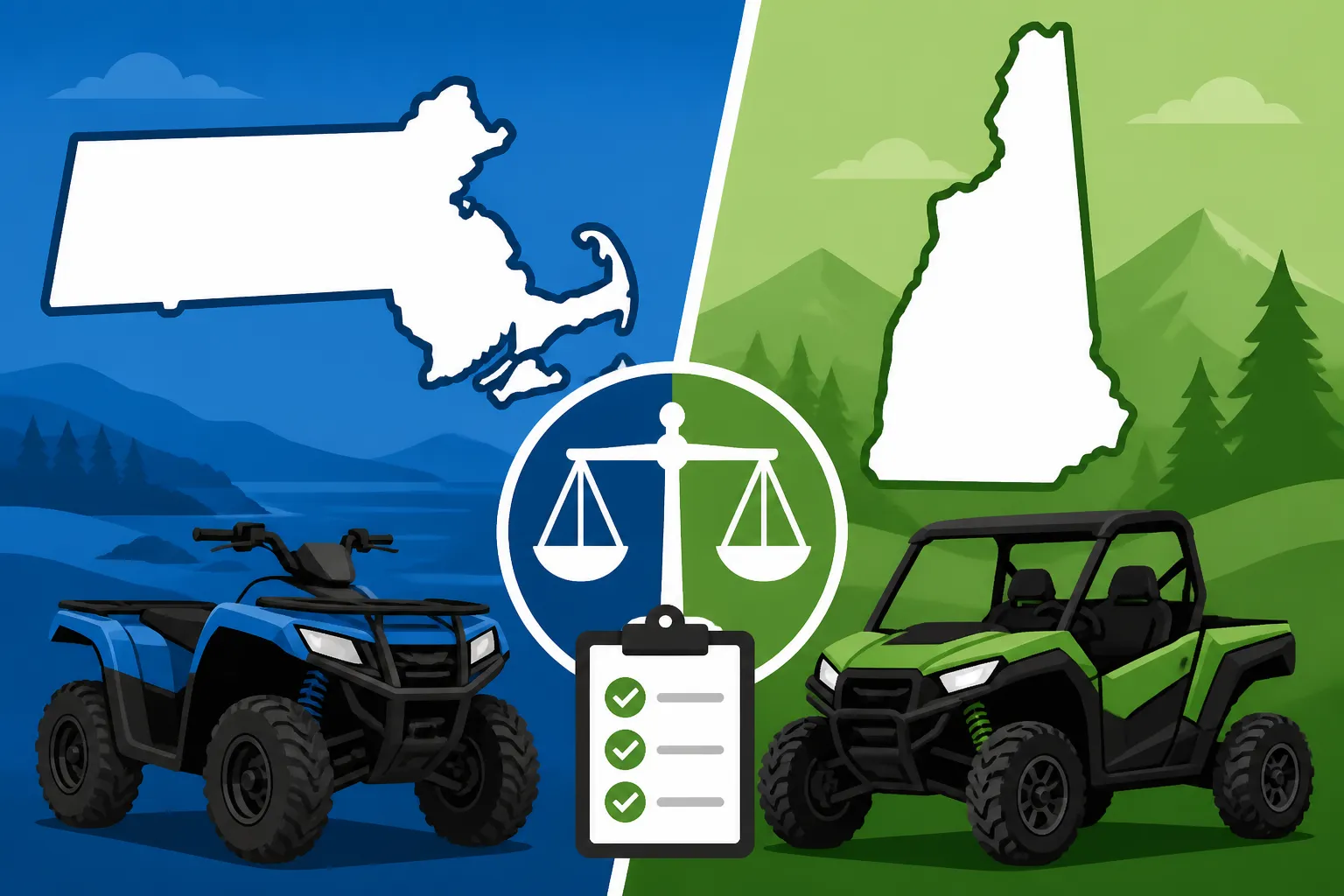
One of the most common questions I hear from folks who love to ride ATVs and UTVs in New England is how Massachusetts registration rules stack up against those in our neighbor to the north, New Hampshire. It's not just a matter of different colored stickers; the entire approach, from who you register with to what you pay and where you can ride, can feel like navigating two completely different worlds. This guide is here to untangle those differences, helping you understand what it takes to legally enjoy your off-road machine in both the Bay State and the Granite State, whether you're a resident or just visiting.
The Fundamental Differences in OHV Registration Between Massachusetts and New Hampshire
When you're trying to figure out where and how to get your ATV or UTV registered, the first hurdle often comes down to understanding which government agency is even in charge. It's not always as straightforward as it seems, and both Massachusetts and New Hampshire have distinct ways of handling things that can catch new riders or those crossing state lines by surprise. The underlying philosophy behind their respective systems also dictates what kind of documentation you'll need and what kind of "ownership" document you actually receive.
Who Manages OHV Registration in Each State?
This is perhaps the most significant difference right off the bat. In Massachusetts, you might naturally assume the Registry of Motor Vehicles (RMV) handles all vehicle registrations. After all, they deal with cars, trucks, motorcycles, and everything else on the road. However, for off-highway vehicles (OHVs) like ATVs and UTVs, the responsibility falls to a completely different agency: the Massachusetts Environmental Police. Yes, the Environmental Police! It’s a bit unusual, but they are the ones who process your application, issue your decals, and maintain the OHV registration records for the Commonwealth. This distinct arrangement is designed to keep OHV use tied directly to environmental and recreational land management, as the Environmental Police are also responsible for enforcing off-road vehicle laws and managing state recreation areas. You can register an ATV in Massachusetts by visiting their dedicated online system or by mail. [Registering an ATV With the Environmental Police] explains this further.
New Hampshire, on the other hand, centralizes its OHV registration process under the New Hampshire Fish and Game Department. This is a bit more intuitive for many riders, as Fish and Game departments often oversee hunting, fishing, and general outdoor recreation, including trail systems. Similar to Massachusetts, their focus is on connecting off-road vehicle use with recreational opportunities and conservation efforts. While the agencies are different, both states are ultimately linking your OHV registration to the oversight of natural resources and outdoor activities.
What You're Actually Getting When You Register
Another key distinction lies in what you receive as proof of registration. In Massachusetts, once your application is processed and approved, the Environmental Police issue you a registration card and a set of numbered decals. It’s important to note that Massachusetts does not issue a "title" for ATVs or UTVs, which can be a point of confusion for those accustomed to titled vehicles. The registration card is your official proof that the machine is legally registered to you for use on designated trails, and the decals must be affixed to your machine in specific locations. This system simplifies the process by focusing on the operational legality of the machine rather than formal ownership documentation in the way a car title would. [Why the Environmental Police Issue a Card, Not a Title] delves into this.
New Hampshire's system is similar in that you receive a registration certificate and decals. Like Massachusetts, New Hampshire generally does not issue titles for ATVs or UTVs unless they are going to be operated on public roads (which is a very limited circumstance). The focus is again on proof of registration for trail use. Both states expect you to carry your registration certificate with you whenever you're operating your OHV, and to have the decals clearly displayed on your machine. This helps law enforcement officers quickly verify that your machine is legally registered for the trails you're on.
The Philosophy Behind Each State's Approach
The underlying philosophies driving these two states' registration systems reflect their broader goals for off-highway vehicle recreation. Massachusetts, with its Environmental Police handling registrations, emphasizes conservation, responsible land use, and strict enforcement of OHV laws to protect its natural resources. The laws, such as [Sean's Law and Massachusetts Youth Riders], are notoriously stringent, particularly concerning age restrictions and supervised riding, and the registration system is part of this tightly regulated framework. The fees collected from registrations often go towards maintaining trails and managing OHV recreation, ensuring that the financial burden of these activities is offset by the users themselves. [The OHV Trail Fund Your Sticker Pays Into] elaborates on this.
New Hampshire, often seen as a more "live free or die" state, generally has a reputation for being a bit more open to outdoor recreation, though still with clear rules. Their Fish and Game Department's role in registration ties it closely to wildlife management and access to vast tracts of public land. While still focused on safety and responsible riding, New Hampshire's approach might be perceived as slightly less restrictive in certain areas compared to Massachusetts, though it still emphasizes user responsibility and the importance of funding trail maintenance and safety programs through registration fees. Both states fundamentally use registration as a tool to manage access, fund upkeep, and ensure accountability for riders enjoying their public lands.
Diving Into Residency, Fees, and Expiration Periods
The cost and duration of your OHV registration can vary significantly depending on whether you're a resident of Massachusetts or New Hampshire, or simply visiting from another state. These differences are designed to ensure that state residents, who contribute to the local tax base, often receive a benefit, while visitors still contribute to the upkeep of the trails they enjoy. Understanding these nuances is crucial for budgeting and planning your riding season.
Massachusetts Resident vs. Non-Resident Fees and Terms
If you're a Massachusetts resident, the registration process is fairly straightforward. You'll register your ATV or UTV for a two-year period, which simplifies things by cutting down on annual renewals. The fee for residents is designed to be comprehensive for this longer term. This two-year term is a real benefit, letting you ride for a good stretch without worrying about your sticker expiring. [Massachusetts Two-Year OHV Registration] goes into detail about this.
For non-residents looking to ride in Massachusetts, the situation changes. You'll obtain a non-resident registration, which is valid for a shorter, one-year term. The fee for non-residents is typically different from the resident fee, reflecting the shorter term and sometimes administrative differences. It's important to remember that if you're visiting from New Hampshire or any other state, your home state's registration is not valid for riding in Massachusetts. You absolutely need a Massachusetts non-resident sticker to legally operate on designated trails in the Bay State. [Why a Non-Resident OHV Sticker Costs $33] explains the non-resident cost.
New Hampshire's Resident and Non-Resident Approach
New Hampshire also distinguishes between resident and non-resident registrations, but the specifics of the fees and terms can differ from Massachusetts. Generally, New Hampshire offers a one-year registration for both residents and non-residents. The fee structure might be different for each category, with residents often paying a lower fee than non-residents. New Hampshire's system is designed to provide annual revenue for its trail system, and the one-year term keeps the process consistent across the board.
For out-of-state visitors to New Hampshire, you will need to acquire a New Hampshire non-resident registration. Just like Massachusetts, New Hampshire does not honor registrations from other states for use on its trails. If you're coming up from Massachusetts to ride the trails in the White Mountains or other areas, you'll need that New Hampshire sticker. This ensures that every rider utilizing New Hampshire's trail network is contributing to its maintenance and management.
What About Reciprocity Between the Two States?
This is a big one, and it's where many riders get confused or even run into trouble. The simple answer is: there is no direct reciprocity for OHV registrations between Massachusetts and New Hampshire. If you have a Massachusetts registration sticker, it is only valid for riding on legally designated trails within Massachusetts. It does not allow you to ride in New Hampshire. Conversely, if you have a New Hampshire registration sticker, it is only valid for riding on legally designated trails within New Hampshire, and absolutely does not grant you permission to ride in Massachusetts.
This means if you're a Massachusetts resident who wants to ride both in your home state and occasionally cross the border into New Hampshire, you'll need two separate registrations: one for Massachusetts and one for New Hampshire. The same goes for a New Hampshire resident wanting to explore Massachusetts trails. It's an extra cost and a bit more paperwork, but it's the only way to stay legal and avoid potential fines. Always assume you need the registration for the state you are physically riding in, regardless of where your machine is primarily registered or where you live. This policy ensures that each state's trail fund and regulatory system is supported by all users of its respective trail networks.
Here's a quick comparison of the basic registration structures:
| Feature | Massachusetts OHV Registration | New Hampshire OHV Registration |
|---|---|---|
| Administering Agency | Environmental Police | Fish and Game Department |
| Proof of Registration | Card and Decals (No Title) | Certificate and Decals (No Title for OHVs) |
| Resident Term | Two Years | One Year |
| Non-Resident Term | One Year | One Year |
| Reciprocity | No (Need NH sticker to ride in NH) | No (Need MA sticker to ride in MA) |
| Primary Goal | Conservation, Regulated Access, Trail Funding | Outdoor Recreation, Wildlife Mgmt, Trail Funding |
Navigating the Documentation and Application Process
Getting your ATV or UTV registered in either state involves more than just filling out a form and paying a fee. You’ll need specific documents to prove ownership, residency, and that the machine itself is legitimate. Missing even one piece of paperwork can lead to frustrating delays, so it's essential to be prepared. Understanding the specific requirements for each state will save you a lot of hassle.
Required Documents for Massachusetts Registration
When you're ready to register your OHV in Massachusetts, whether it's a brand-new side-by-side or a used quad you just picked up, the Environmental Police will expect a few key items. First, you'll need a completed application form. This form collects all the necessary information about you and your machine, including the Vehicle Identification Number (VIN). [Massachusetts Requires a VIN on the Application] covers this.
For a brand-new machine purchased from a dealer, the most critical document you'll need is the Manufacturer's Certificate of Origin (MCO), sometimes called an MSO. This is essentially the birth certificate of your machine, proving it's new and has never been registered before. If you're buying a used machine through a private sale, you'll need a proper bill of sale. This document needs to include the buyer's and seller's names and addresses, the sale price, the date of sale, and the machine's VIN. You can often find templates for these documents through services like LawDepot, which can help ensure all the necessary legal information is included. [Massachusetts Requires a Bill of Sale for a Used One] details these requirements.
Finally, there's the sales tax. Massachusetts imposes a 6.25% sales tax on the purchase of ATVs and UTVs, and you'll typically need to show proof that this tax has been paid or that you're exempt before your registration can be finalized. This often involves filing a Form ST-6 (Sales and Use Tax Return). If you're claiming an exemption, such as for a gift, you'll need to submit [Massachusetts Exemption Form ST-6E]. Always have your proof of insurance handy, even though Massachusetts does not mandate OHV insurance for registration, some riders carry it anyway.
Paperwork You'll Need for New Hampshire Registration
New Hampshire's documentation requirements for OHV registration are generally similar, focusing on proof of ownership and the machine's identity. You'll start with their specific application form from the Fish and Game Department.
For a new machine, you will also need the Manufacturer's Statement of Origin (MSO) or Certificate of Origin (MCO). If it's a used machine from a private sale, a bill of sale is essential. This document should clearly identify the machine by its VIN, state the purchase price, and include the names and signatures of both the buyer and seller. While New Hampshire doesn't have the same strict sales tax requirements as Massachusetts (as there is no general sales tax in New Hampshire), you'll still need clear proof of purchase and ownership.
Proof of residency is also key for New Hampshire residents to qualify for resident rates. This might include a valid New Hampshire driver's license or other state-issued identification. For non-residents, simply proving your identity will suffice, as you'll be applying for a non-resident registration. You can often find generic bill of sale forms online, from sites like LawDepot, to ensure you're covered for a private sale.
Where and How to Submit Your Application
Once you've gathered all your documents, the next step is submission. In Massachusetts, you have a couple of options. The most common and convenient method for many is to register online through the Massachusetts Environmental Police's dedicated portal. This system allows you to upload your documents, pay your fees, and track your application's progress from the comfort of your home. You can also register by mail, sending your completed forms and copies of supporting documents to the Environmental Police headquarters. While in-person registration might be available at certain Environmental Police barracks, it's always wise to check their website or call ahead for current operating procedures. [Registering an ATV on the Environmental Police Website] provides the details for online registration.
New Hampshire offers a similar blend of online and mail-in options through its Fish and Game Department. Their website will provide access to the application forms and instructions for online submission or where to mail your paperwork. They also have authorized agents, such as some town clerks or sporting goods stores, that might be able to process registrations in person, especially for renewals. Always confirm the most up-to-date methods directly with the New Hampshire Fish and Game Department, as procedures can change. Regardless of the state, double-checking that all forms are completely filled out and all required supporting documents are attached is critical to avoid delays. Make sure any legal documents, such as a bill of sale obtained from a resource like LawDepot, are properly filled out and signed.
Riding Privileges: Where Your Registration Takes You
Once you've gone through the effort of registering your ATV or UTV, you want to know where you can actually ride it! The purpose of registration is, after all, to grant you legal access to designated trails. However, the rules for where you can ride, and who can ride, are quite different between Massachusetts and New Hampshire, and understanding these differences is vital to avoid trespassing fines or other penalties.
Where a Massachusetts-Registered Machine Can Legally Ride
Having a Massachusetts OHV registration allows you to ride on state-sanctioned and designated OHV trails within the Commonwealth. This primarily includes specific state forests managed by the Department of Conservation and Recreation (DCR) that explicitly permit ATV and UTV use. Examples of popular riding areas in Massachusetts include parts of [October Mountain State Forest Riding in Massachusetts] and [Beartown State Forest Riding in Massachusetts], both located in the Berkshire region. It's crucial to understand that "public land" does not automatically mean "open to OHVs" in Massachusetts. Many state parks, forests, and conservation areas have strict prohibitions against OHV use.
Beyond designated public trails, you are generally permitted to ride on private land only with the express written permission of the landowner. This isn't just a suggestion; it's a legal requirement. You cannot ride on public roads, streets, or highways, even for short distances, unless it's a specifically designated crossing point where you follow all the rules of the road (like stopping and yielding). Massachusetts also has very strict age and engine size restrictions, with a ban on riders under 14 years old and limits for those 14-16. You can read more about this in [Massachusetts ATV Age Requirements]. Furthermore, a Massachusetts registration does not grant you any riding privileges in New Hampshire.
Where a New Hampshire-Registered Machine Can Legally Ride
With a New Hampshire OHV registration, you gain access to the extensive network of designated ATV and UTV trails throughout the Granite State. New Hampshire is well-known for its vast multi-use trail systems, often connecting towns and providing a different kind of riding experience than Massachusetts. These trails are managed by various entities, including state agencies, local municipalities, and private clubs that often lease land for trail access. Similar to Massachusetts, you generally cannot ride on public roads unless they are designated as shared-use trails or specific crossing points.
Like Massachusetts, riding on private land in New Hampshire requires landowner permission. While New Hampshire's age restrictions are generally less stringent than Massachusetts's, it's still essential to understand their specific rules regarding youth riders, helmet use, and safety certificates. Many of these trails are maintained by clubs funded partly by registration fees, and respectful riding is key to maintaining access. Remember, a New Hampshire registration does not allow you to ride on any trails in Massachusetts; you'd need that Massachusetts non-resident sticker for that.
The Importance of Safety Certificates and Age Restrictions
Both Massachusetts and New Hampshire place a significant emphasis on rider safety, particularly for younger operators. This often involves safety courses and age-specific rules.
In Massachusetts, anyone under the age of 18 operating an OHV on public land must possess an OHV Safety Certificate issued by the Massachusetts Environmental Police. This involves completing both a classroom or online component and a practical, hands-on skills test. The rules for youth riders are some of the strictest in the country, with outright bans for riders under 14, and specific engine size limits and supervision requirements for those between 14 and 16. Even for riders 16 and 17, while they might have a driver's license, the OHV Safety Certificate is still required for public land use. [Massachusetts Safety Certificates Under 18] provides essential details.
New Hampshire also encourages, and sometimes requires, OHV safety training. While their age restrictions are generally less restrictive than Massachusetts's, certain age groups or circumstances might necessitate a safety certificate. For instance, children operating an OHV might need to take a safety course. Both states also enforce helmet laws; in Massachusetts, a helmet is required for every rider, regardless of age, on an OHV. It's always a good idea to check the most current regulations for the specific state you plan to ride in, as laws can and do change. Adhering to these safety regulations is not just about avoiding a ticket; it's about ensuring a safe and enjoyable experience for everyone on the trails.
Disclaimer
This article is for general informational purposes only and does not constitute professional advice. Laws, prices and regulations vary by location and change over time. Consult a qualified professional for guidance on your specific situation.