Carrying a Firearm on a Quad During Hunting Season
The crisp air of a Massachusetts autumn, the vibrant foliage, and the call of the wild often beckon ATV and UTV riders who also happen to be avid hunters. It's a natural combination: using your off-road machine to access remote hunting grounds. However, many riders feel a real pang of confusion and even anxiety when it comes to transporting a firearm on their quad or side-by-side during hunting season. The laws can seem like a dense thicket, and nobody wants to inadvertently break the rules and face a hefty fine or worse. This guide is here to clear the air, helping you understand the regulations and best practices for legally and safely carrying a firearm on your machine in the Bay State.
Understanding Massachusetts Laws for Firearms and OHVs
Massachusetts has specific laws governing the transportation of firearms, and these rules absolutely extend to how you carry them on your Off-Highway Vehicle (OHV). It's not as simple as tossing your rifle in the back of your UTV and heading out. The key is understanding the distinction between a "loaded" and "unloaded" firearm and how that applies to a vehicle, even an off-road one. Misinterpreting these rules can turn a fun hunting trip into a serious legal headache.
The Basic Premise: No Loaded Firearms on OHVs
Let's cut right to the chase: you cannot operate an ATV or UTV in Massachusetts with a loaded firearm on board. This is a fundamental rule that aims to prevent accidental discharges and misuse of firearms while operating a motor vehicle, including OHVs. The law is quite clear that any firearm being transported on an OHV must be unloaded.
What exactly does "loaded" mean in the eyes of Massachusetts law for an OHV? For a shotgun or rifle, it generally means having ammunition in the chamber or an attached magazine, clip, or cylinder that is inserted into the firearm. For a muzzleloader, it means having powder and projectile loaded, regardless of whether a primer is in place. The intent here is to ensure the firearm is not ready to fire at a moment's notice. An Environmental Police officer conducting a routine check at a trailhead might ask you to demonstrate your firearm is unloaded, and it's essential to comply politely and know your stuff. This rule applies whether you're on public land, like one of the [Massachusetts ATV Trails: Three Berkshire Forests], or even crossing your own private property to get to a hunting blind.
Exceptions and Safe Transport Requirements
While the "no loaded firearms" rule is strict, it doesn't mean you can't transport your hunting rifle or shotgun at all. It means you must do so safely and legally. The law requires that any firearm transported on an OHV be:
- Unloaded: As defined above, ensure no ammunition is in the chamber or magazine attached to the firearm.
- Cased or in a locked container: This adds an extra layer of safety and demonstrates intent for safe transport rather than immediate use. A soft gun case or a hard-sided locked case are both acceptable. This prevents accidental handling and also protects your valuable firearm from trail dust, mud, and bumps.
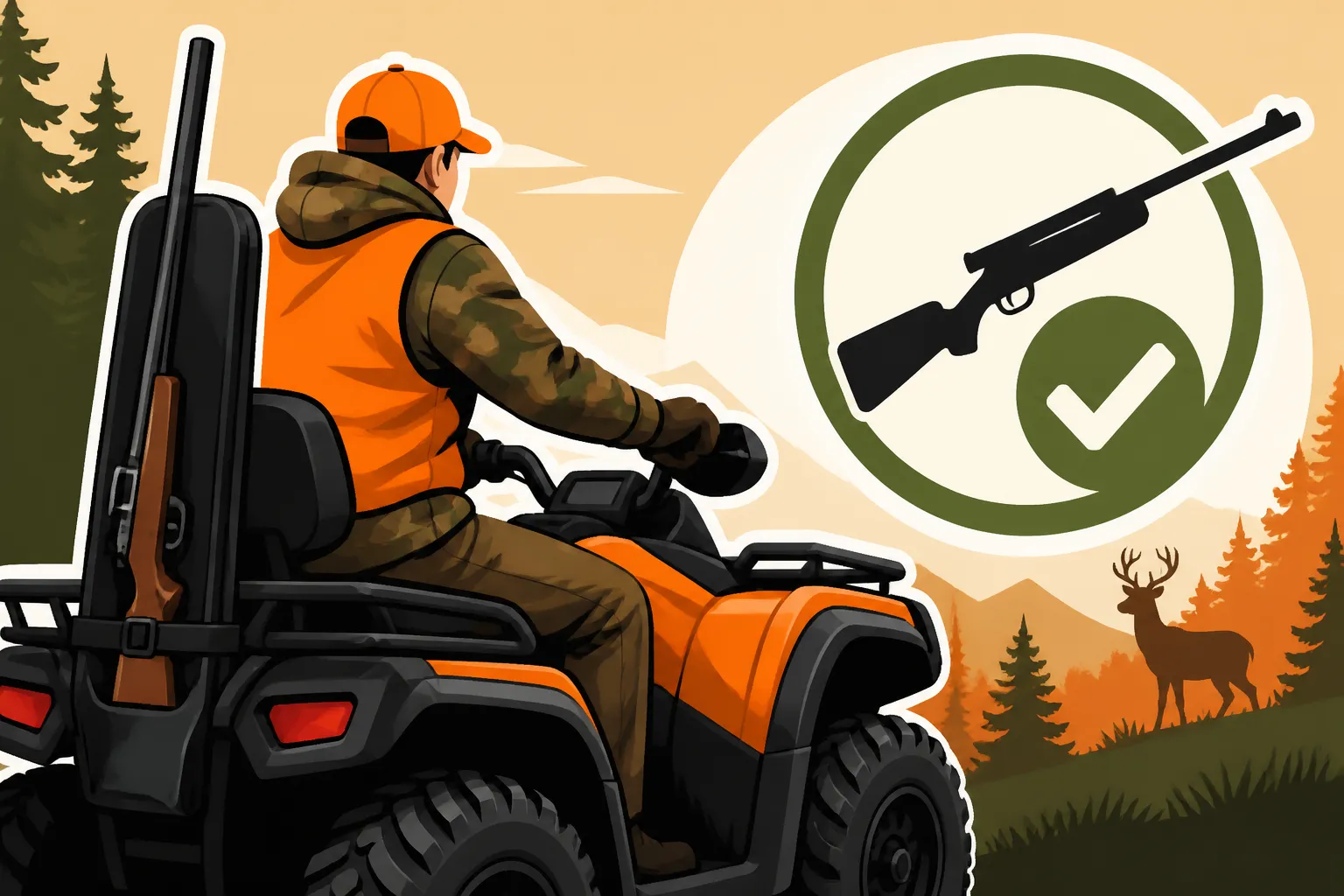
- Secured and out of reach of the operator and passengers: The firearm should not be readily accessible while the machine is in operation. This often means it should be in a gun boot mounted to the machine, secured in a cargo box, or otherwise fastened in a way that prevents it from being grabbed or falling out.
Think of it this way: the firearm should be treated as cargo, not as an extension of the rider. If you're pulled over and the officer sees a loaded rifle uncased and leaning against the seat, you're almost certainly going to face a citation. It's not worth the risk. Always aim for over-compliance when it comes to firearm safety and legal transport.
Where You Can and Cannot Ride with a Firearm
The legality of carrying a firearm on your OHV also depends heavily on where you are riding. Massachusetts has a mix of public and private lands, and the rules vary.
- Public Lands (DCR Forests): The state's Department of Conservation and Recreation (DCR) manages state forests, some of which allow OHV use and hunting during designated seasons. On these lands, the "unloaded and cased" rule is paramount. Furthermore, you must adhere to all DCR regulations regarding OHV operation, including staying on marked trails, observing speed limits, and ensuring your machine is properly registered. Remember, [Massachusetts Requires Its Own Registration] for any OHV used on public land, and you must carry your [Massachusetts Registration Cards Carried on Board] with you. Just because you have a hunting license doesn't give you carte blanche to ignore OHV rules or firearm transport laws.
- Private Lands: If you're hunting on private land that you own or have explicit written permission to access, you still must follow the unloaded and cased rule for your OHV. While you might have more leeway on your own property regarding general riding, firearm transport on a moving vehicle remains regulated. Always get [Massachusetts Landowner Permission in Writing] if you're not the owner, as trespassing with an OHV, especially while armed, can lead to serious consequences. The same applies if you're merely using your quad to retrieve a downed deer from private land – the firearm must still be transported legally.
Practical Considerations for Secure Firearm Transport on Your Machine
Now that we understand the legal framework, let's talk about the practical side of getting your firearm to and from your hunting spot safely and securely. Simply strapping a rifle to your rack with bungee cords is a recipe for disaster, risking damage to your firearm, potential loss, or even an accidental discharge. Investing in the right gear makes all the difference.
Choosing the Right Gear for Your Quad or Side-by-Side
The market offers a wide array of accessories designed specifically for safely transporting firearms on OHVs. These solutions are built to withstand the bumps, vibrations, and elements of off-road riding.
- Gun Scabbards/Boots: These are perhaps the most popular choice for hunters. A gun scabbard or boot is a hard or soft case that securely mounts to the rack or frame of your ATV or UTV. They protect your firearm from dirt, moisture, and impact. Many are designed to hold the firearm upright or at an angle, keeping it out of the way of the rider and passengers. Look for options that offer quick-release mechanisms for easy access once you've reached your destination and are ready to dismount and prepare for hunting.
- Gun Racks: Open gun racks are also available, which typically hold the firearm securely in place with straps or clamps. While they don't offer the same level of protection from the elements as a scabbard, they keep the firearm stable. If you choose a rack, ensure your firearm is still unloaded and ideally in a soft case for added protection against bumps and scratches. Always consider the terrain you'll be riding – an open rack might be fine for smooth fire roads but less ideal for challenging, technical trails.
- Utility Boxes and Cargo Bins: Many side-by-sides and larger ATVs have cargo boxes or beds. A hard, lockable gun case placed securely within one of these can be an excellent option. This method provides superior protection from the elements and often allows for multiple firearms or additional hunting gear. Brands like SuperATV offer a variety of utility boxes, cargo beds, and mounting solutions that can be adapted to securely hold a firearm case. Their rugged designs are built for the demands of off-road use, ensuring your valuable equipment stays protected, whether you're traversing rocky trails or muddy logging roads.
When selecting gear, consider the type of firearm you'll be carrying, the terrain you typically ride, and the weather conditions you'll encounter. Ensure the mounting system is robust and won't come loose during your ride. Always double-check that your chosen method adheres to the "secured and out of reach" legal requirement.
Securing Your Firearm for Trail Riding
Beyond just choosing the right gear, proper securing techniques are crucial.
- Preventing Damage: Off-road trails are notorious for bumps, jolts, and vibrations. Ensure your firearm is snug in its case or scabbard to prevent it from rattling around and potentially getting damaged. A damaged scope, a bent barrel, or a scratched stock can ruin a hunting trip.
- Accidental Discharge Prevention: While your firearm should always be unloaded during transport, ensuring it's secured also minimizes any chance of an accidental discharge, even if the impossible happens and a round gets chambered. The firearm should be positioned so that nothing can accidentally engage the trigger.
- Theft Deterrence: Unfortunately, opportunistic theft can occur, especially if you leave your machine unattended at a trailhead or while you scout. A locked gun case or a secure scabbard that requires tools to remove offers a layer of deterrence. Never leave a valuable firearm easily accessible or visible on your machine if you're going to be out of sight for any period. Remember to bring your [Massachusetts Registration Cards Carried on Board] and proof of ownership if questioned by law enforcement about your machine or its contents.
Even when you're just moving your side-by-side a few yards to reposition, always ensure your firearm is properly secured. It might seem like a hassle, but these practices are non-negotiable for safety and legality.
Navigating Hunting Season Rules and OHV Access in Massachusetts
Combining your love for OHV riding with hunting requires a good understanding of both sets of regulations. Massachusetts' hunting seasons are specific, and OHV access is restricted to certain areas. It's crucial not to confuse the two or assume that having a hunting license grants you unrestricted OHV access.
Knowing Your Hunting Zone and OHV-Permitted Areas
Massachusetts is divided into various wildlife management zones, each with its own hunting season dates and regulations. Before you even think about loading up your ATV or UTV, you need to know which zone you're in and if hunting is currently permitted. More importantly for OHV riders, you need to know which specific public lands allow OHV use.
In Massachusetts, the primary DCR state forests that permit ATV and UTV riding are located in the western part of the state: Beartown State Forest, October Mountain State Forest, and Pittsfield State Forest. These forests also allow hunting during regulated seasons.
- Beartown State Forest: Offers miles of trails suitable for OHVs and is a popular hunting spot.
- October Mountain State Forest: The largest state forest in Massachusetts, providing extensive riding and hunting opportunities.
- Pittsfield State Forest: Features diverse terrain and a trail system that can be accessed by OHVs, coexisting with hunting activities.
It's absolutely critical to stay on marked OHV trails within these forests. Riding off-trail, especially with a firearm, can lead to significant penalties, environmental damage, and could even jeopardize future OHV access to these areas. Always check the DCR website or contact the specific forest office for current conditions, trail closures, and any special regulations that might be in effect, particularly during hunting season. Remember that [Massachusetts Riding Season Month by Month] for OHVs generally runs from May to November, so plan your hunting trips accordingly.
Essential Permits and Documentation
To legally ride your OHV and hunt in Massachusetts, you'll need several key pieces of documentation:
- OHV Registration: Every ATV and UTV operated on public lands or trails in Massachusetts must be registered with the Massachusetts Environmental Police. This is a two-year registration for residents and a one-year registration for non-residents. [Massachusetts Requires Its Own Registration], so out-of-state registrations are not valid here.
- Hunting License: You must possess a valid Massachusetts hunting license for the current season, along with any necessary stamps or permits for the specific game you are pursuing (e.g., deer, turkey).
- Firearms Identification (FID) Card or License to Carry (LTC): To possess a firearm in Massachusetts, you need either an FID card or an LTC, depending on the type of firearm. Ensure your permit is valid and you are complying with all conditions.
- OHV Safety Certificate (for youth): If you have a younger rider operating an ATV or UTV during a hunting trip, ensure they meet all age and safety course requirements. Massachusetts has strict [Massachusetts ATV Age Requirements] and mandates a safety certificate for riders under 18 on public land.
Always carry these documents with you when riding and hunting. Environmental Police officers frequently patrol these areas, and they will ask to see your paperwork. It’s much easier to have everything organized and readily available than to scramble for it. Carrying your [Massachusetts Registration Cards Carried on Board] is not just a suggestion, it's the law.
The Importance of Landowner Permission
While state forests offer public access, a significant amount of hunting in Massachusetts occurs on private land. If you plan to use your OHV to access private hunting grounds or retrieve game from private property, securing written permission from the landowner is absolutely non-negotiable.
- Verbal Permission is Not Enough: While a handshake agreement might feel neighborly, it provides no legal protection if you're stopped by law enforcement or confronted by another individual claiming ownership. [Massachusetts Landowner Permission in Writing] clearly outlines the boundaries and terms of your access, protecting both you and the landowner.
- Avoid Trespassing: Riding an OHV, especially while armed, on private property without permission is considered trespassing and can lead to severe penalties. Landowners are often wary of OHV use due to potential trail damage or disturbance, so a formal, written agreement helps build trust and clarifies expectations.
- Retrieving Game: Even if you legally shoot an animal on land you have permission to hunt, using your OHV to retrieve it from adjacent private property requires separate permission for access. Never assume.
In some cases, using an OHV for game retrieval may be limited to specific circumstances or certain types of machines. Always check the Massachusetts hunting regulations or contact the Division of Fisheries and Wildlife (MassWildlife) for clarification on specific rules regarding game retrieval with motorized vehicles. Respecting private property is fundamental to responsible hunting and OHV riding in Massachusetts.
By thoroughly understanding and adhering to these regulations and best practices, you can enjoy a safe, legal, and successful hunting season combining your passion for the outdoors with the utility of your ATV or UTV in Massachusetts.
| Firearm Transport Rule | Description | Applies To | Enforcement |
|---|---|---|---|
| Unloaded | No ammunition in the chamber or attached magazine. For muzzleloaders, no powder/projectile loaded. | All firearms (rifles, shotguns, handguns, muzzleloaders) on any OHV. | Environmental Police checks. Violation can result in fines, confiscation, and license suspension. |
| Cased/Secured | Firearm must be in a case, scabbard, or locked container. Not readily accessible from operator/passenger. | All firearms on any OHV. | Prevents accidental discharge, damage, theft. Checked during stops. |
| Proper Registration | OHV must have a current Massachusetts registration sticker and card. | All OHVs on public land. | Environmental Police can issue tickets for unregistered machines. |
| Valid Permits | Hunter must have valid hunting license and FID/LTC. | All hunters possessing a firearm. | Failure to produce valid permits can lead to arrest or significant citations. |
| Landowner Permission | Written permission required for private land access. | Any OHV use on private land not owned by the operator. | Trespassing charges if no permission is provided. |
| Stay on Trails | OHVs must remain on designated trails on public lands. | All OHVs on DCR State Forests (Beartown, October Mountain, Pittsfield, etc.). | Environmental Police patrol for off-trail riding; penalties for resource damage. |
Disclaimer
This article is for general informational purposes only and does not constitute professional advice. Laws, prices and regulations vary by location and change over time. Consult a qualified professional for guidance on your specific situation.