Massachusetts ATV Laws Under Chapter 90B
Navigating the world of ATVs and UTVs in Massachusetts can feel like trying to solve a puzzle with half the pieces missing, especially when it comes to understanding what you can and can't do legally. Many riders just want to enjoy the trails without constantly worrying if they're breaking a rule they didn't even know existed. This comprehensive guide is here to demystify Chapter 90B of Massachusetts law, breaking down the regulations that govern off-highway vehicles and empowering you to ride safely and legally.
What Exactly is Chapter 90B and Why Does It Matter to Riders?
For anyone who owns or plans to ride an ATV or UTV in Massachusetts, Chapter 90B of the Massachusetts General Laws is your essential playbook. This isn't just some dusty legal text; it's the very foundation of how off-highway vehicles (OHVs) are regulated across the Commonwealth. Think of it as the ultimate rulebook for everything from registration to riding age to where you can actually put your tires on the ground. Ignoring it isn't an option, as the consequences can range from fines to having your machine impounded.
What makes Chapter 90B so crucial is its all-encompassing nature. It doesn't just touch on one or two aspects of OHV operation; it lays down the law for almost every scenario you can imagine. This includes the definitions of different types of OHVs, who is responsible for enforcing these laws (hint: it's not the Registry of Motor Vehicles for registration!), and the specific requirements for operating these machines. For riders, this chapter dictates the legal framework within which they can pursue their passion, ensuring both their safety and the preservation of natural resources.
The Legislative Intent Behind the Law
When Chapter 90B was enacted and subsequently amended, the primary goals were clear: to enhance public safety, protect the environment, and establish clear guidelines for OHV enthusiasts. Massachusetts is a state with both densely populated areas and beautiful, sensitive natural landscapes. Without proper regulation, the potential for accidents, property damage, and environmental harm would be significant. The law aims to strike a balance, allowing for responsible recreational riding while minimizing negative impacts on communities and ecosystems. It's about more than just telling you what not to do; it's about fostering a culture of safe and respectful off-highway vehicle use.
One of the driving forces behind certain strict provisions in Chapter 90B, especially concerning youth riders, has been tragic accidents that led to public outcry and legislative action. These incidents highlighted gaps in previous regulations and spurred lawmakers to create more stringent rules to protect younger, less experienced riders. This context is important because it helps riders understand that these aren't arbitrary rules; they often stem from a very real concern for safety and a desire to prevent future tragedies. While some rules might feel overly restrictive, understanding their origin can help foster compliance and a greater sense of shared responsibility among the riding community.
Who Enforces Chapter 90B?
Unlike street-legal vehicles where the Registry of Motor Vehicles (RMV) handles most things, OHV registration and enforcement in Massachusetts fall under the purview of the Massachusetts Environmental Police (MEP). These officers are specifically trained in OHV laws and are frequently encountered on trails, in state forests, and at trailheads. They are the ones who will check your registration, ensure you're complying with age and helmet laws, and investigate any incidents involving off-highway vehicles. It's crucial to remember that their jurisdiction extends wherever an OHV is operated, whether it's public land or even private property if there's a complaint or violation of law.
The Environmental Police are also responsible for issuing your OHV registration stickers and cards, not the RMV. This division of duties can sometimes confuse new riders or those accustomed to registering street vehicles. Understanding that the MEP is your go-to agency for all things ATV/UTV registration and enforcement is vital. They are also the ones you'd call to report illegal riding or if you have specific questions about trail access in state forests. Their dedicated focus on environmental and recreational vehicle laws means they are highly knowledgeable about Chapter 90B and its nuances.
Age and Supervision: Who Can Ride What, and With Whom?
Massachusetts has some of the strictest age and supervision requirements for ATV and UTV riders in the entire country, and these are firmly rooted in Chapter 90B. This isn't just about whether you have a driver's license; it's about specific age brackets, engine displacement limits, and mandatory supervision for younger riders. For parents, understanding these rules isn't just a recommendation, it's a legal obligation, as violations can lead to significant penalties. This section will break down exactly what the law says about who can operate an OHV and under what conditions.
The primary goal of these age restrictions is rider safety, particularly for minors. Legislators have recognized that young riders, due to their developing judgment, physical capabilities, and reaction times, require extra protection and oversight. This has led to a tiered system where age dictates not only if a child can ride, but what they can ride and who must be with them. It’s a carefully constructed framework designed to minimize the risks associated with powerful off-highway vehicles for inexperienced operators.
Sean's Law and Youth Rider Restrictions
A pivotal piece of legislation, often referred to as [Sean's Law: The 2010 Ban Named for a Boy], dramatically changed the landscape for youth ATV riders in Massachusetts. This law was enacted after a tragic accident and has had a profound impact on how children can operate off-highway vehicles. The most significant aspect of Sean's Law is the outright ban on anyone under the age of 14 operating an ATV or UTV, even on private property with parental supervision. This is a crucial detail that often catches parents by surprise, as many assume private land offers an exemption. It doesn't.
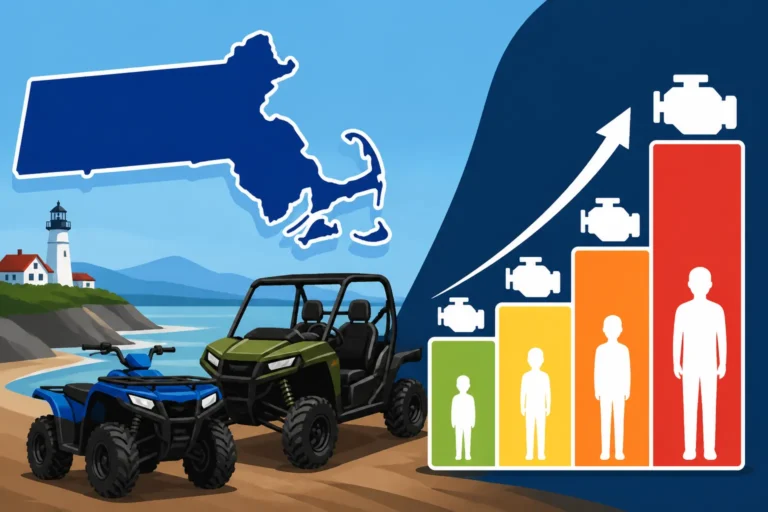
For riders between 14 and 16 years old, the law permits operation only if the ATV has an engine size of 90cc or less. This restriction on engine displacement is a critical safety measure, limiting younger riders to less powerful machines. Furthermore, riders in this age bracket must be supervised by an adult at least 18 years old. This isn't just about having an adult present at the riding area; the supervising adult must maintain continuous visual contact and be able to communicate verbally with the youth rider. This close supervision ensures immediate intervention in case of an emergency or a lapse in judgment. For more details, you can refer to [Massachusetts ATV Age Requirements].
| Rider Age Group | Engine Size Restriction | Supervision Requirement | Safety Certificate Required |
|---|---|---|---|
| Under 14 | None (Prohibited) | None (Prohibited) | No (Prohibited) |
| 14 to 16 | 90cc or less | Yes (Adult 18+, visual contact & verbal comms) | Yes |
| 16 to 17 | Any size | Yes (Adult 18+, visual contact & verbal comms) OR hold a valid driver's license | Yes |
| 18 and over | Any size | No | No (Unless specified by property owner) |
Safety Certificates and Adult Supervision
Beyond age and engine size, Massachusetts law also mandates that any rider under the age of 18 must possess a valid OHV safety certificate to operate an ATV or UTV on public land or on private land without written permission from the owner. This certificate is earned by completing a two-part safety course approved by the Massachusetts Environmental Police. The course typically involves an online or classroom component covering theory, followed by a hands-on skills test. Parents of riders under 16 are also required to attend the classroom portion of the course. This dual requirement of a safety certificate and, for younger riders, strict supervision, underscores the state's commitment to rider education and responsibility.
The requirement for a safety certificate extends even to 16 and 17-year-old riders, though at this age, if they hold a valid motor vehicle operator's license, they are exempt from the supervision requirement. However, the certificate itself is still mandatory for operating on public or unpermitted private land. It's a layer of protection designed to ensure that even those nearing adulthood have a foundational understanding of safe OHV operation, trail etiquette, and the specific laws governing their machines. For more on this, check out [Massachusetts Safety Certificates Under 18].
Where Can You Actually Ride an ATV or UTV in Massachusetts?
This is often the million-dollar question for Massachusetts OHV enthusiasts, and it's where a lot of confusion and frustration arise. Unlike some other states with vast public lands open to off-roading, Massachusetts has a more limited and highly regulated approach. Chapter 90B is very specific about where you are (and are not) permitted to operate your ATV or UTV, emphasizing the importance of respecting private property and public safety. Assuming you can just ride anywhere you see a dirt path is a costly mistake.
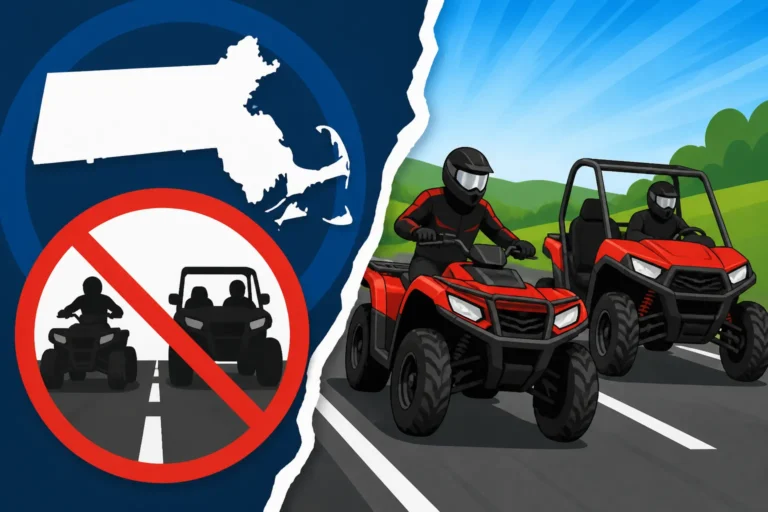
The fundamental principle in Massachusetts is that you cannot ride on public roads, highways, or most unpaved public ways. The state is firm on this: off-highway vehicles are for off-highway use. Furthermore, riding on private land without explicit, written permission from the landowner is strictly forbidden and constitutes trespass. This means even if you see an open field or a tempting woodlot, if it's not yours and you don't have a signed document, you cannot ride there.
Designated State Forests and Managed Trails
The primary legal riding opportunities in Massachusetts are found within specific state forests managed by the Department of Conservation and Recreation (DCR). Currently, there are a few designated areas, predominantly in Western Massachusetts, that offer authorized OHV trails. These include Beartown State Forest, October Mountain State Forest, and Pittsfield State Forest. These trails are actively maintained, typically marked, and operate under specific DCR regulations, including seasonal closures. For a more detailed look at the available riding, refer to [Massachusetts Three Forests and 69 Miles].
Even within these designated state forests, there are rules. Riders must stay on marked trails, obey speed limits, and respect other trail users like hikers and mountain bikers. The DCR also has specific seasons for OHV use, often from May 1st to November 30th, which means you can't just show up and ride year-round. These restrictions are in place to prevent trail degradation during wet seasons and to minimize conflicts with other recreational activities. Always check the DCR website or call the individual forest office for the most current information on trail status and open seasons before you haul your machine out there.
The Strict Rules on Public Ways and Private Land
Chapter 90B makes it abundantly clear: operating an ATV or UTV on any public way (which includes paved roads, gravel roads, and even unpaved town roads that are part of the public right-of-way) is illegal. There are very limited exceptions, such as crossing a public way directly and safely, and even then, specific rules apply. You must come to a complete stop, yield to all traffic, and cross at a right angle. Attempting to ride along a public way, even for a short distance, is a surefire way to get a ticket. This is a common point of confusion for riders, especially those from states with more lenient road-crossing or shoulder-riding laws.
When it comes to private land, the law is equally strict. [Massachusetts Landowner Permission in Writing] is not just a suggestion; it's a legal requirement. Verbal permission, no matter how friendly your neighbor, is generally not sufficient in the eyes of the law. This written permission should clearly state who is allowed to ride, what machines they can use, and during what timeframe. Without it, you are trespassing, and landowners have the right to call the Environmental Police. This strict rule helps protect landowners from liability and property damage, and it's a measure every responsible rider should respect.
Equipment Requirements: Making Sure Your Machine is Trail-Ready
It's not enough to just know where and when to ride; Chapter 90B also dictates how your ATV or UTV must be equipped to be legally operated in Massachusetts. These aren't just suggestions; they are mandatory requirements designed to ensure both rider safety and environmental responsibility. Many aftermarket parts, like those from a company such as SuperATV, can actually help you meet or exceed these requirements, enhancing both safety and compliance. Failing to meet these standards can lead to citations from the Environmental Police during a trail check.
The purpose of equipment regulations is multifaceted. They aim to prevent excessive noise, minimize the risk of fire, ensure visibility, and provide basic safety functions. Riding an improperly equipped machine not only puts you at risk but can also disturb other trail users, wildlife, and nearby residents. Adhering to these standards is a key part of being a responsible OHV operator in Massachusetts.
Mandatory Safety Gear and Machine Components
First and foremost, every single person operating or riding as a passenger on an ATV or UTV in Massachusetts, regardless of age, must wear a helmet. This isn't optional; it's a non-negotiable safety requirement directly stated in Chapter 90B. The helmet must be properly fitted and meet current safety standards, such as those set by the Department of Transportation (DOT). For more on this, check out [Massachusetts ATV Helmet Law]. This applies even if you're just puttering around a field on private property.
Beyond helmets, your machine itself has several mandatory requirements. Every ATV and UTV must be equipped with at least one headlight and one taillight, which must be illuminated from one half-hour after sunset to one half-hour before sunrise, and at any other time when visibility is limited. A working muffler is also essential to control noise levels; loud machines are a common source of complaints and can lead to trail closures. Additionally, a spark arrester is often required, particularly on public lands, to prevent wildfires from embers exiting the exhaust. Many riders choose to upgrade to quality aftermarket lighting or exhaust components from brands like SuperATV to ensure they meet these requirements while also improving performance and durability. You can find a comprehensive list of mandates in [Massachusetts Equipment Requirements].
Noise and Environmental Considerations
Massachusetts takes noise pollution seriously, and Chapter 90B includes provisions to address it. Your ATV or UTV must have a muffler in good working order that effectively limits engine noise. Excessive noise can be a nuisance to residents near riding areas, disturb wildlife, and contribute to negative perceptions of OHV riders. Environmental Police officers are authorized to check for compliant mufflers, and machines deemed too loud can result in fines. This is a common point of enforcement, so it's wise to ensure your exhaust system is stock or an approved aftermarket option that meets sound level standards.
Furthermore, while not always explicitly defined as an "equipment" requirement in the same vein as lights or helmets, the law also implicitly covers environmental impact through its rules on operating machines. This means preventing spills of fuel or oil, not damaging sensitive ecosystems, and ensuring your machine isn't leaking fluids onto the trails. While some of this is about rider behavior, having a well-maintained machine with no leaks is part of responsible equipment management. Choosing robust components, perhaps even specialized parts from a company like SuperATV designed for tough conditions, can help prevent mechanical failures that could lead to environmental contamination.
The Big No-Nos: What Massachusetts Law Explicitly Forbids
Beyond simply telling you what you should do, Chapter 90B is very clear about what you absolutely cannot do when operating an ATV or UTV in Massachusetts. These prohibitions are designed to prevent dangerous situations, protect the environment, and minimize conflicts with other land users. Ignoring these "big no-nos" isn't just a minor infraction; it can lead to serious legal consequences, including significant fines, machine impoundment, and even criminal charges in some instances. Understanding these forbidden activities is paramount for any rider hoping to stay out of trouble.
Many of these prohibitions stem from the very nature of off-highway vehicles—their power, their potential for speed, and their ability to travel over varied terrain. While these characteristics make them thrilling to ride, they also necessitate strict rules to ensure they are not misused in ways that harm people or property. This section will delve into the most critical restrictions that every Massachusetts rider must internalize.
Operating Under the Influence and Reckless Operation
One of the most serious prohibitions under Chapter 90B is operating an ATV or UTV while under the influence of alcohol or drugs. Just like driving a car, operating an OHV while impaired is illegal, extremely dangerous, and carries severe penalties. The Environmental Police actively enforce OUI (Operating Under the Influence) laws on trails and in riding areas. A conviction can lead to fines, loss of driving privileges (even for street vehicles), and even jail time. This isn't just about safety; it's about criminal responsibility.
Beyond OUI, Chapter 90B also forbids reckless operation or operating an OHV in a negligent manner. This includes excessive speed for conditions, doing stunts or wheelies in inappropriate areas, or endangering others. For example, riding at high speeds near campsites, passing other riders or hikers too closely, or creating excessive noise or dust in residential areas could all be considered reckless or negligent. The law expects riders to operate their machines with due regard for the safety of themselves, other people, and property. This also extends to damaging the environment, such as riding in sensitive wetland areas or causing significant erosion.
Illegal Areas and Activities
As mentioned earlier, riding on public ways, including paved roads, unpaved town roads, and highways, is strictly forbidden. There is no "street legal" conversion path for ATVs or UTVs in Massachusetts; these machines are simply not designed or permitted for road use. Even short hops down a public way to get from one section of trail to another are illegal and frequently result in citations. For more information, you can read [Can You Ride an ATV on the Road in Massachusetts?].
Other explicitly forbidden activities include riding on another person's private property without their written permission, riding within 150 feet of a dwelling without permission (even if you have permission for the rest of the land, this 150-foot rule is critical), or operating an OHV on land specifically designated as off-limits. This includes most conservation areas, municipal lands, and protected wildlife habitats. Riding on beaches or dunes is also generally prohibited due to environmental protection laws. The DCR trails are your authorized zones, and anything outside of that requires careful verification of legality.
Penalties and Enforcement: What Happens When You Break the Rules?
Ignorance of the law is no excuse, and in Massachusetts, violations of Chapter 90B can lead to some pretty hefty consequences. The Massachusetts Environmental Police are diligent in their enforcement efforts, particularly in designated riding areas and in response to complaints about illegal OHV activity. Understanding the potential penalties is a crucial deterrent and underscores the importance of adhering to the rules. It's not just about a minor inconvenience; it can hit your wallet hard and even result in losing your machine.
The penalties are designed to be substantial enough to discourage violations and promote responsible riding. They reflect the state's serious commitment to safety and environmental protection. For example, if you're found operating an unregistered machine or letting a child ride without proper supervision, the fines can quickly add up, turning a fun day out into a very expensive lesson.
Fines and Citations
The most common penalty for violating Chapter 90B is a monetary fine, issued in the form of a citation by an Environmental Police officer. These fines vary depending on the specific offense, but they can quickly accumulate. For example, operating an unregistered OHV, riding without a helmet, or riding on a public way can each carry their own distinct fine. If multiple infractions are observed during a single stop, you could be looking at several hundred dollars in penalties.
It's also important to remember that these fines are often just the initial cost. If you choose to dispute a citation in court and lose, you might also be responsible for court fees and surcharges, which further increase the financial burden. The Environmental Police database tracks violations, and repeat offenders may face escalating penalties. This is why it's so critical to understand and follow the rules, as the costs associated with non-compliance can be substantial. For a general overview of potential penalties, refer to [Massachusetts Penalties for Illegal Riding].
Machine Impoundment and Other Consequences
In more severe cases, or for repeat offenses, an Environmental Police officer has the authority to impound your ATV or UTV. This means your machine can be seized on the spot, and you will be responsible for towing and storage fees, which can quickly become exorbitant. Getting an impounded machine back is a process that typically involves paying all outstanding fines, proving ownership, and covering all associated impoundment costs. In some extreme cases, or if the machine was involved in a serious incident, it could even be subject to forfeiture.
Beyond fines and impoundment, there can be other consequences. If you are operating under the influence, you could face criminal charges that impact your driving record for regular vehicles. If an accident occurs due to your negligence or violation of the law, you could be held civilly liable for damages to property or injuries to others. Furthermore, illegal riding activities, particularly those that damage land or disturb communities, contribute to a negative public perception of OHV riders, making it harder to expand or even maintain existing riding opportunities. Always consider the full scope of potential repercussions before taking shortcuts or ignoring the law.
Safety First: Beyond the Law, What Every Rider Should Know
While Chapter 90B lays down the legal framework for ATV and UTV operation in Massachusetts, true responsible riding goes beyond just avoiding a ticket. "Safety First" isn't just a catchy phrase; it's a mindset that every off-highway vehicle enthusiast should adopt. The exhilaration of riding can sometimes overshadow the inherent risks, but being proactive about safety can make all the difference between a memorable day on the trails and a trip to the emergency room.
Many aspects of safety aren't explicitly codified into law but are best practices developed over years of experience and accident data. These practices enhance your personal protection, extend the life of your machine, and ensure you're a good steward of the trails and a considerate member of the riding community. Think of it as the unwritten code of the trail that complements the legal requirements.
Essential Gear and Pre-Ride Checks
We've covered the legally mandated helmet, but serious riders know that proper gear extends far beyond that. Eye protection (goggles or a face shield), sturdy over-the-ankle boots, long pants, a long-sleeved shirt, and gloves are all highly recommended. This gear protects you from branches, debris, impacts, and scrapes that are common even during minor mishaps. Investing in good quality riding gear is investing in your own safety and comfort.
Before every ride, a thorough pre-ride inspection of your machine is non-negotiable. This "T-CLOC" check (Tires, Controls, Lights/Electrics, Oil/Fluids, Chain/Drive Shaft) helps identify potential mechanical issues before they become dangerous problems on the trail. Check tire pressure, test brakes, ensure all lights are working, verify fluid levels, and inspect your drive system. Neglecting these checks can lead to breakdowns in remote areas or, worse, mechanical failures that cause accidents. A company like SuperATV offers robust components that can enhance your machine's durability, but even the best parts need regular inspection and maintenance.
Riding Prepared for Massachusetts Conditions
Massachusetts trails can be diverse, from rocky climbs to muddy lowlands, and conditions can change rapidly. Always ride within your skill level and the capabilities of your machine. Never attempt a difficult obstacle if you're not confident you can clear it safely. Carrying basic tools, a first-aid kit, a small shovel, a tow strap, and a fully charged cell phone (though service can be spotty in remote areas) is smart practice. It’s also wise to inform someone of your riding plan – where you’re going and when you expect to return.
The weather in Massachusetts can also be unpredictable. Pack rain gear, extra layers for temperature drops, and plenty of water, especially during warmer months. Understanding the terrain and how it might be affected by recent rain (hello, mud!) is crucial. [Massachusetts Trail Riding After Heavy Rain] can turn a fun experience into a challenging, and potentially dangerous, one. Being prepared for these eventualities means you can adapt to conditions and minimize risks, ensuring a safer and more enjoyable riding experience for everyone in your group.
Common Misconceptions and Questions About MA ATV Laws
Despite Chapter 90B being readily available, there are persistent myths and common misunderstandings about ATV and UTV laws in Massachusetts. These misconceptions can lead riders into unintentional violations, costly fines, or dangerous situations. It's easy to get confused, especially when laws differ significantly from neighboring states or what you might hear through the grapevine. Let's tackle some of these frequently asked questions and clear up the confusion.
Many riders, particularly those new to the state or new to the sport, often rely on anecdotal evidence or generalize from experiences in other jurisdictions. This can be problematic because Massachusetts often has stricter rules than what they might be accustomed to. My aim here is to cut through the noise and provide clear, accurate information directly aligned with the letter of the law.
"I Only Ride on My Own Land, So the Laws Don't Apply to Me."
This is a very common and dangerous misconception, especially concerning youth riders and registration. While owning your own land does offer some flexibility, it doesn't grant you a complete exemption from all Chapter 90B rules. Most notably, [Why Under-14 Riders Are Banned on Private Land Too] is a direct result of Sean's Law. If you allow a child under 14 to operate an ATV or UTV on your private property, you are in violation of state law, regardless of ownership.
Additionally, while you don't necessarily need an OHV safety certificate to ride your own machine on your own private land (unless you're inviting others to ride), your machine still needs to be registered with the Massachusetts Environmental Police if it's going to be operated anywhere in the Commonwealth, including your backyard. There are very limited exceptions, such as for agricultural use under specific circumstances, but for recreational use, registration is mandatory. [Do You Need to Register an ATV in Massachusetts?] The Environmental Police often respond to noise complaints from neighbors, and if they observe an unregistered machine or an underage rider, violations will be issued.
"My ATV is Insured, So I'm Good to Go."
While having insurance for your ATV or UTV is always a wise decision, Massachusetts does not legally require it for registration or operation. [Massachusetts Has No Insurance Mandate] for off-highway vehicles, unlike cars. This means that if you're involved in an accident and are at fault, you could be personally liable for any damages or injuries, potentially losing personal assets to cover costs.
Therefore, while the law doesn't mandate it, obtaining liability, collision, and comprehensive insurance for your OHV is a strong recommendation. It protects you financially in case of an accident, theft, or damage to your machine. Many homeowners' insurance policies specifically exclude OHVs, so a separate policy is often necessary. Don't confuse "not required by law" with "not needed." A smart rider will always carry appropriate coverage to protect their investment and their financial well-being.
Massachusetts ATV Laws Under Chapter 90B: Quick Reference
To help summarize some of the key legal points we’ve covered, here’s a quick reference table. Remember, this is a summary, and detailed sections of this guide and Chapter 90B itself should be consulted for specific situations.
| Aspect | Massachusetts Law (Chapter 90B) |
|---|---|
| Registration | Required for all OHVs operated anywhere in MA (incl. private land, with few exceptions). Administered by MEP. [Massachusetts Two-Year OHV Registration] |
| Age Limit for Operation | Under 14: Strictly prohibited on any land, public or private. [Massachusetts Riders Under 14] |
| 14-16: 90cc engine cap. Must have safety certificate. Supervised by 18+ adult. | |
| 16-17: Any engine size. Must have safety certificate. Supervised by 18+ adult (unless holding valid driver's license). | |
| Helmet Requirement | Mandatory for all operators and passengers, regardless of age, on all land. [Massachusetts ATV Helmet Law] |
| Public Road Use | Strictly prohibited. Limited direct crossings allowed with full stop and yield. [Can You Ride an ATV on the Road in Massachusetts?] |
| Private Land Use | Requires written permission from landowner. [Massachusetts Landowner Permission in Writing] |
| 150-Foot Dwelling Rule | Cannot operate within 150 feet of a dwelling without express permission. [Massachusetts's 150-Foot Dwelling Rule] |
| Safety Certificate | Mandatory for all riders under 18 (and for any rider on public land or unpermitted private land). [Massachusetts Safety Certificates Under 18] |
| Designated Riding Areas | Primarily specific DCR State Forests (e.g., Beartown, October Mountain, Pittsfield). |
| Equipment | Headlight, taillight, muffler, spark arrester required. Brakes must work. [Massachusetts Equipment Requirements] |
| Insurance | Not legally required, but highly recommended for financial protection. [Does Massachusetts Require Insurance on a Registered ATV?] |
| Enforcement | Massachusetts Environmental Police (MEP). |
| Sales Tax | 6.25% sales tax applies to ATV/UTV purchases. Must be paid before registration. [Massachusetts's 6.25 Percent Sales Tax] |
Navigating Massachusetts ATV laws can certainly feel like a full-time job at times, but with this breakdown of Chapter 90B, you're now much better equipped to ride legally and responsibly. It's about respecting the land, the rules, and your fellow riders, ensuring the future of OHV recreation in the Bay State.
Disclaimer
This article is for general informational purposes only and does not constitute professional advice. Laws, prices and regulations vary by location and change over time. Consult a qualified professional for guidance on your specific situation.