Helmet Rules a Massachusetts Private Park Enforces
A helmet that is legal for riding may still fail a private park’s admission rules. Massachusetts riders need to account for both state law and the park’s own policy, which may set stricter requirements. Before loading your ATV or UTV, check what kind of helmet is accepted, whether every rider needs one, and what other gear the park requires.
State law and a park’s helmet policy are separate
Massachusetts has helmet requirements for off-highway vehicle riders. A private park can also impose its own conditions for entering and riding on its property. Treat them as two checks: meeting state requirements does not automatically mean you meet the park’s rules, and a park’s permission cannot cancel a requirement in state law.
For the state-law side, review Massachusetts Helmet Law for Every Rider and Massachusetts Helmet Standards. If you are unsure whether a particular helmet meets the applicable standard, check its certification label and ask the appropriate state office or park before traveling. Do not rely on a seller’s shorthand description alone.
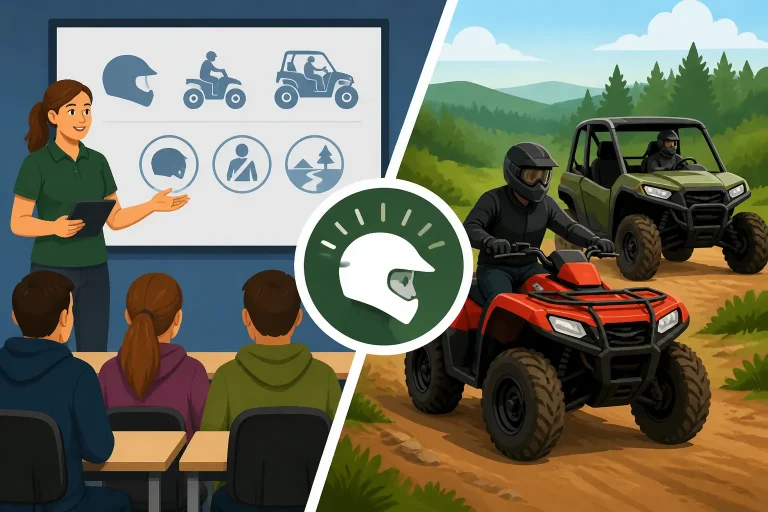
A private riding facility may, for example, require a full-face helmet even when a helmet of another style would satisfy the applicable legal standard. It may also require eye protection, a chin strap fastened while riding, or a helmet in good condition. Those are examples of possible facility rules, not a claim that every Massachusetts park uses the same policy.
The park may apply its policy to everyone entering the riding area, including passengers and young riders. It may also set separate rules for ATVs, dirt bikes and side-by-sides. Check the wording for the specific vehicle you plan to bring rather than assuming a rule for one machine applies to another.
| Question | What to check |
|---|---|
| Does state law require a helmet for this ride? | Confirm the applicable Massachusetts helmet requirement and standard. |
| Does the park require a particular helmet style? | Ask whether it accepts open-face helmets or requires full-face coverage. |
| Is the helmet acceptable for every rider? | Check rules for drivers, passengers and children separately. |
| Are other items required? | Ask about eye protection, fastening, condition and any required safety gear. |
| Does the rule apply to side-by-sides? | Confirm the facility’s policy for your specific vehicle and occupants. |
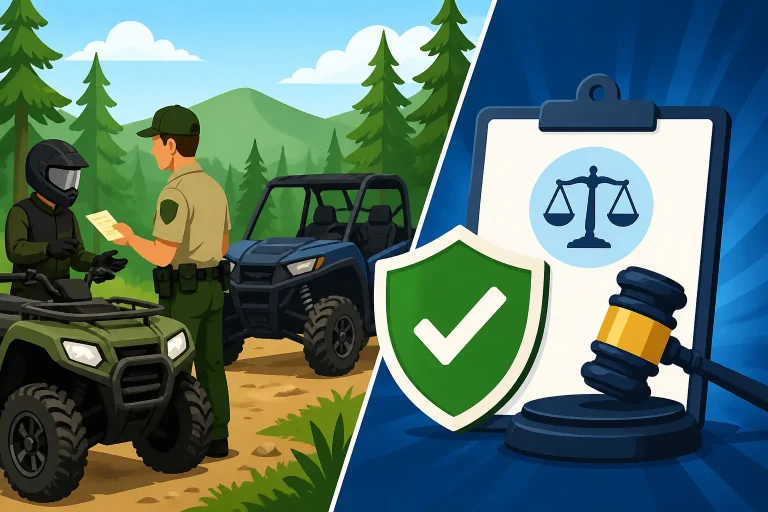
A waiver does not make an otherwise unlawful ride lawful, and it does not guarantee that the park will admit you. Read the waiver and facility rules, but treat them as additional conditions—not substitutes for state requirements. Massachusetts Private Park Waivers and Rules explains why it is worth checking a park’s own paperwork before arriving.
What to verify before you leave home
Park policies can differ, and a website’s brief summary may not answer the questions that matter at the gate. Contact the facility directly if the helmet rule is unclear, especially if you are bringing children, passengers or more than one type of machine.
Ask specific questions. “Are helmets required?” may get a simple yes, without clarifying whether your helmet qualifies. Instead, ask whether the park requires a full-face helmet, whether eye protection must be worn, and whether the same rule applies to every person riding in your vehicle.
A useful pre-ride check looks like this:
- Read the current facility rules. Look for the helmet policy, age restrictions, passenger rules and any equipment inspection details. Save or print the information so you can refer to it if questions come up.
- Confirm anything unclear with the park. Ask about the helmet you intend to bring, describing its style and certification label. If the park has separate rules for side-by-sides or passengers, ask about those directly.
- Inspect each helmet. Check the label, shell, liner, strap and buckle. Do not count on a visibly damaged helmet being accepted just because it once met a standard.
- Check fit and fastening. A helmet should fit securely and its retention system should work. Bring one for each person who will ride; do not assume a passenger can share a helmet during a session.
- Pack any additional required gear. If the park requires goggles or other protective equipment, bring it even if it is not part of the helmet itself.
- Recheck shortly before the visit. Rules, operating conditions and admission procedures can change. Confirm directly if you are making a long drive or visiting during a special event.
When buying a helmet, focus first on the applicable safety certification and fit, then compare styles against the facility’s policy. A product listing on Amazon or another retailer is not a substitute for checking the helmet’s label or the park’s admission rules. If the park requires a particular style, buying a cheaper helmet that does not meet that policy can leave you unable to ride.
Extra checks for children and passengers
A child’s age can affect more than helmet size. Massachusetts has separate rules for youth riders, including age-related restrictions and safety requirements. A private park may impose additional minimum ages or limits of its own. Check both sets of rules before planning a family visit.
For park age policies, see Massachusetts Private Park Minimum Ages. For state requirements that apply to younger riders, Massachusetts Safety Certificates Under 18 and Massachusetts Rules for a Child Passenger are useful starting points. Do not assume that a child who can physically fit a helmet is eligible to operate or ride on a particular machine.
Passengers need the right equipment too. Confirm that the vehicle is designed and permitted to carry a passenger, and ask whether the park requires a helmet for each occupant. A helmet rule is not permission to carry a passenger where the vehicle, state rules or facility policy does not allow one.
Side-by-sides can create a particular misunderstanding: having a cab, doors or seat belts does not automatically mean the park waives its helmet requirement. Ask the facility what it requires for drivers and passengers in a UTV, and check the applicable state rules. Massachusetts Rules for a Side-by-Side Driver covers the separate operating considerations.
A private park visit does not replace other requirements
A private park’s helmet policy is only one part of planning a ride. Registration, age limits, safety certificates and rules for the type of land or event may still matter. Do not treat a reservation, waiver or staff member’s verbal okay as proof that every legal requirement has been satisfied.
Visitors from another state should check Massachusetts registration rules separately. A home-state sticker is not automatically accepted for riding in Massachusetts, and a private facility’s entry policy does not necessarily create an exception. Review Out-of-State OHV Stickers Are Not Valid in Massachusetts and Massachusetts Has No Reciprocity for Visitors before transporting an out-of-state machine.
Likewise, permission to ride at a private park is not permission to ride on public roads or elsewhere. Keep your plans within the area and routes the facility authorizes. For a broader view of equipment requirements, see Massachusetts Equipment Requirements.
The simplest way to avoid a wasted trip is to confirm three things before unloading: your helmet meets the applicable state standard, it meets the park’s specific policy, and every driver and passenger is eligible to ride. If any answer is uncertain, contact the park and the relevant state office before setting out.
Disclaimer
This article is for general informational purposes only and does not constitute professional advice. Laws, prices and regulations vary by location and change over time. Consult a qualified professional for guidance on your specific situation.