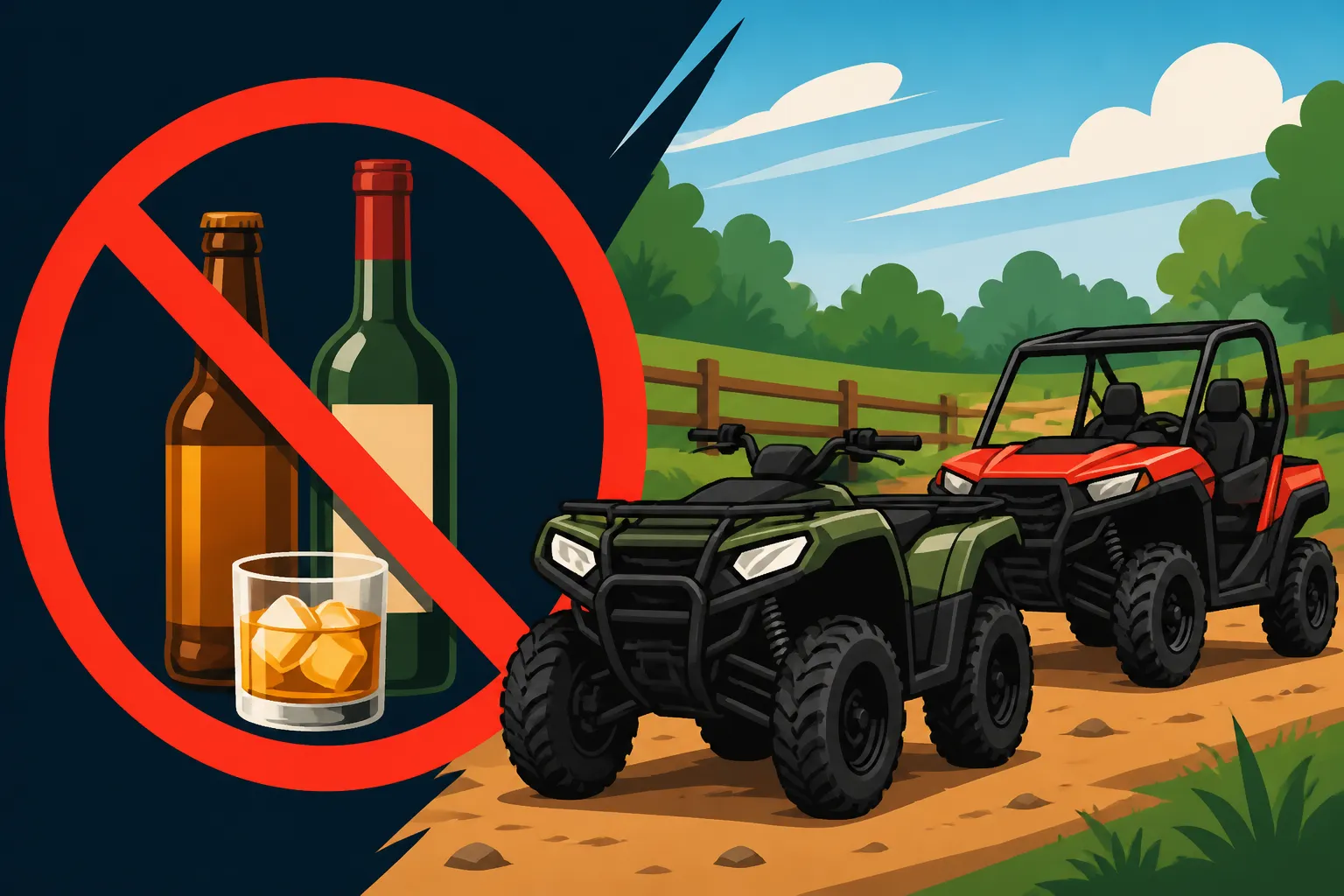
Alcohol Rules at a Private Riding Park
Private riding parks can set their own alcohol policies, and a rule that allows drinks at a campsite may still prohibit them near riding areas. In Massachusetts, the safest approach is to confirm the park’s current rules before you go, separate drinking from machine operation, and make a plan for anyone who may need a ride back.
The park’s policy comes first
There is no single alcohol policy that applies to every private riding park. Each operator can set conditions for using its property, and those conditions may cover alcohol differently in riding areas, parking lots, cabins, campsites, event spaces, and common areas. A park may prohibit alcohol everywhere, allow it only in designated overnight areas, or have different rules for regular riding days and organized events.
Do not assume that a private park permits alcohol just because it allows camping, or that a group ride has the same rules as an overnight stay. The park may also limit who can possess or consume alcohol, when it may be consumed, and whether visitors can bring their own. An event organizer can impose additional conditions on participants, even when the venue’s regular policy is less restrictive.
Check the park’s current written rules before loading the machine. Look at its website, reservation information, waiver, arrival instructions, and posted signs. If the policy is unclear, contact the park and ask about the specific part of the property you plan to use. A rule for a campground may not answer whether alcohol is permitted at a trailhead or in a day-use area.
| Situation | What to confirm with the park |
|---|---|
| Day ride | Whether alcohol is prohibited throughout the property, including parking and staging areas |
| Overnight stay | Whether alcohol is allowed at campsites or cabins, and whether any areas are off-limits |
| Organized event | Whether the organizer has additional restrictions or a no-alcohol policy |
| Group visit | Whether every guest must follow the same rules and whether the group lead is responsible for sharing them |
| Unclear signs or terms | Which rule applies and who at the park can clarify it |
A park’s waiver or reservation terms are worth reading rather than clicking through. The park may make compliance a condition of entry, and violating its rules could lead to being asked to leave or losing permission to ride. See Massachusetts Private Park Waivers and Rules for more on the kinds of conditions a private riding venue may set.
If you are staying overnight, look for alcohol restrictions alongside the campground’s other terms. Quiet hours, fire rules, and campsite boundaries may apply regardless of whether drinking is allowed. Massachusetts Private Park Camping Rules and Massachusetts Private Park Quiet Hours can help you think through those parts of a stay, but the individual park’s current instructions are the ones to follow.
Drinking and riding are separate activities
A park allowing alcohol in one area does not mean it is safe or permitted to operate an ATV or UTV after drinking. Treat riding and drinking as separate activities: if you plan to drink, do not operate a machine afterward. That includes riding back to a campsite, moving a machine between parking areas, or taking a short trip along a trail.
Operating a machine requires attention, judgment, balance, and the ability to respond quickly to changing trail conditions. Alcohol can interfere with those abilities. A trail that felt manageable earlier may include other riders, uneven ground, blind corners, or unexpected obstacles. Familiarity with the property does not make impaired operation safe.
Massachusetts has laws addressing operation of off-road machines under the influence. The details of how a law applies can depend on the circumstances, so do not rely on a park’s alcohol policy as permission to ride after drinking. For more context, see Massachusetts DUI Law and Off-Road Machines and Riding Under the Influence on a Berkshire Trail. If you are unsure about a legal question, get advice from a qualified professional rather than treating informal park guidance as a legal ruling.
A private park may also have a stricter no-riding-after-drinking rule than the law alone would require in a particular situation. Its staff can enforce access conditions, and an officer may separately assess conduct under applicable law. Being on private property does not automatically exempt a rider from safety rules or legal consequences.
The simplest plan is to identify a sober driver before anyone drinks. The plan should cover all machine movement, not just the main trail ride. If a rider drinks after finishing, leave the machine parked until a sober, authorized person can move it safely and lawfully, or arrange another way to get back. Do not let a guest pressure someone into “just moving it a little.”
Plan for campsites, groups, and events
Alcohol rules become harder to manage when a group has multiple machines, shared campsites, or people arriving and leaving at different times. Agree on the plan before the ride begins. Decide who will operate machines, who will remain sober, and how the group will handle a change in plans. A designated driver is only useful if that person has permission and a safe way to transport everyone who needs help.
Keep drinks away from machine keys and riding decisions. A person who has been drinking should not be asked to judge whether they are fit to ride, supervise a rider on a trail, or make a quick decision about navigating the property. If a group member drinks, the group should treat their riding for the day as finished.
For an organized ride, confirm whether the event organizer’s policy is stricter than the park’s. The organizer may prohibit alcohol during the event or require participants to follow special instructions. If you are helping coordinate, put the policy in the pre-ride message and repeat it at check-in. Do not assume everyone has read the venue’s booking details.
Parents and guardians should make sure young riders understand that an adult’s decision to drink does not change the rules for operating a machine or supervising a young rider. Age and supervision requirements may apply at a private venue as well as other settings. Check Massachusetts Private Park Age Minimums and the park’s own rules when children or teenagers are part of the group.
A practical group plan can include:
- Confirm the park’s alcohol policy for riding areas, campsites, and event spaces.
- Decide who will stay sober and be able to help throughout the visit.
- Park machines before drinking begins, and keep them parked afterward.
- Arrange transportation for anyone who cannot safely drive home.
- Tell every guest about the rules, including people who join after the ride starts.
- Follow staff directions and posted signs if they clarify or restrict access.
If a park has a no-alcohol rule, do not try to work around it by leaving drinks in a vehicle or carrying them into another area without permission. Ask staff where property boundaries and permitted areas are. If the answer is no, the straightforward option is to leave alcohol at home.
What to do when the rule is unclear or someone violates it
When the policy is unclear, pause before opening a drink or entering a restricted area. Ask a park employee or manager for the rule that applies to your situation. A clear answer in advance is better than relying on a guess based on another visit, another park, or what someone in your group remembers.
If you see a posted restriction, follow it even if you have not located the same wording online. Signs may identify rules for a particular section of the property, such as a riding zone or event area. If a sign appears to conflict with a reservation document, ask staff which instruction governs access. Do not interpret silence on one page as permission to ignore a posted rule.
If another rider has been drinking and is preparing to operate a machine, do not get on the machine with them or encourage them to “take it slow.” Keep yourself and other riders away from an unsafe situation. If it is appropriate and safe, ask the person to stop, secure the machine, and contact park staff. If there is an immediate danger, contact emergency services. Avoid putting yourself at risk by trying to physically restrain someone or take control of a moving machine.
Park staff may ask a guest to stop drinking, leave a restricted area, or leave the property if the guest violates the venue’s terms. Depending on what happened, there may also be legal consequences beyond the park’s own response. A park’s permission to be on the property is not a defense to unsafe or unlawful operation.
Before leaving, make sure the ride-home plan is still safe. Someone who has been drinking should not drive a road vehicle just because they are finished riding. Use a sober driver or another safe transportation option, and leave the machine secured until a sober person can move it. If the group is staying overnight, make the decision before drinking begins rather than trying to solve transportation after the fact.
A private park’s alcohol rules are easiest to follow when they are treated as part of the ride plan, not as an afterthought. Confirm the policy, keep drinking separate from machine operation, and make sure every member of the group knows what to do if plans change.
Disclaimer
This article is for general informational purposes only and does not constitute professional advice. Laws, prices and regulations vary by location and change over time. Consult a qualified professional for guidance on your specific situation.