Getting the Certificate After Both Parts Are Done
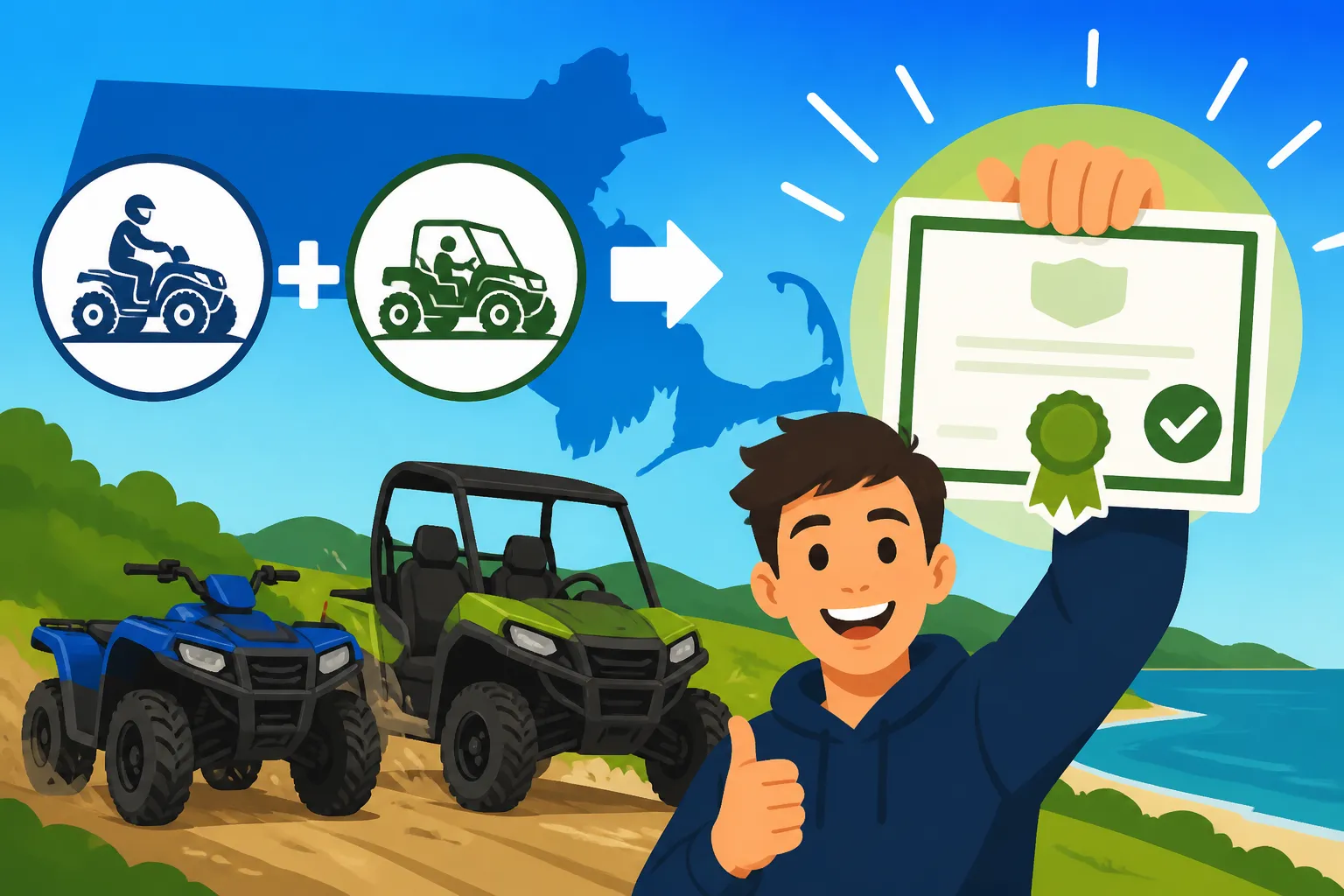
Finishing an online safety course and attending the in-person session does not always mean you have a certificate in hand that same day. Riders need to know how completion is recorded, how to check for a missing result, and what to carry before riding. Here’s how to follow up after both parts of the Massachusetts OHV safety course are complete.
What counts as completing both parts
The Massachusetts OHV safety course has two parts: an online course and an in-person session. Completing only one part does not complete the full course. The online work covers safety and responsibility topics; the in-person session adds instruction and practical requirements. The session may include a skills test, so attendance alone may not be enough if the course provider requires you to demonstrate specific abilities.
Before following up about a certificate, make sure you have completed every requirement in both parts. Check that the online course shows a completed status, not merely that you watched the material or began the assessment. For the in-person portion, confirm that you attended the full session and completed any required evaluation.
| Course stage | What to check | What to keep |
|---|---|---|
| Online course | The course account shows completion of all assigned work | Completion confirmation or course record |
| In-person session | Attendance and any required skills assessment are recorded | Session details and any paperwork provided |
| Certificate | The issuing office or provider can confirm that both parts are on file | The certificate and any instructions for carrying it |
If you are unsure what each part includes, see Two Parts to the OHV Safety Certificate. The in-person portion is not simply a duplicate of the online material; What Riders Have to Do on the Skills Test can help clarify why it matters to finish every required activity.
The course and certificate are separate from the machine’s registration. A safety certificate does not register an ATV or UTV, replace a registration card, or authorize riding in a place where machines are not allowed. Massachusetts registration requirements still apply, including to visitors. See Massachusetts Requires Its Own Registration and Out-of-State OHV Stickers Are Not Valid in Massachusetts if you are preparing to ride with an out-of-state machine.
How to confirm the certificate is ready
There may be a gap between completing the two course parts and receiving confirmation that the record is complete. Do not assume the certificate is ready just because the class has ended, and do not assume there is a problem simply because you have not received it immediately. The practical next step is to check with the organization that handled the course or the office responsible for safety-course records.
Use this sequence:
- Check the online course account. Look for a completion status, confirmation message, or instructions about what happens next. Save a copy or screenshot for your records.
- Review any documents from the in-person session. The instructor may have provided a completion slip, assessment result, or follow-up instructions. Keep those even if you expect the final record to be electronic.
- Check the contact details for the course. Use the course provider’s or state office’s current contact information, rather than relying on an old email or a phone number copied from an unrelated page.
- Ask whether both parts are recorded. Give your full name and the course details requested. If the office needs a student or course identifier, provide it through the channel they specify.
- Ask how and when the certificate is issued. Confirm whether you should expect a digital record, a physical document, or further instructions. Do not guess about delivery method or timing.
- Follow up on any missing part. If the online record appears complete but the in-person session is missing, contact the session organizer. If the session is recorded but the online part is not, contact the online course provider.
When you contact an office, keep the question specific: “Can you confirm that my online course and in-person session are both recorded, and tell me how to obtain my certificate?” That is more useful than asking only whether the class was completed, because the record may be incomplete even when you personally finished everything.
Have relevant details ready, but share only what the office requests. Useful information may include the name used when registering, the date or location of the in-person session, the email address used for the online course, and any confirmation number. If your name or email changed between the two parts, mention that early; a mismatch can make two records harder to connect.
For help locating the right office or asking a focused question, Reaching the Boat and Recreation Vehicle Safety Bureau and Questions Worth Asking a Registration Office may help you prepare. Registration staff and course staff do different jobs, though, so send certificate questions to the office or provider responsible for safety-course records rather than assuming the registration desk can issue one.
What to do with the certificate once it is issued
When you receive the certificate, check it before putting it away. Make sure the name and other identifying information are correct, and confirm that it reflects successful completion of both required parts. If something is wrong or incomplete, ask the issuing office how to correct the record. Keep a copy of the certificate and any confirmation that shows when and how you completed the course.
The certificate is proof of course completion. It is not the same document as an OHV registration card, and it does not replace a machine’s registration decal. Massachusetts treats registration, safety training, and permission to ride as separate matters. Keep the registration card with the machine as required; Why Your Registration Card Must Ride With the Machine explains that separate obligation.
If the rider is under 18, take particular care to have the certificate available when required. The course record should not be treated as a substitute for carrying the certificate if the rider must carry it. Review Riders Under 18 Must Carry the Certificate and the current instructions that apply to the rider’s age and riding location. Rules can differ depending on the setting, so check the applicable requirements before leaving for a trail or event.
A sensible approach is to keep the certificate somewhere protected and accessible, and to retain a digital copy as a backup if the issuing office provides one. A small document sleeve or waterproof pouch can help prevent paper from getting wet or torn. The certificate should remain readable; a phone image may be useful as a backup, but do not assume a photo is accepted in place of the required document unless the relevant authority confirms that.
Do not confuse the certificate with a trail permit or a general pass. Massachusetts does not treat course completion as permission to ride every state forest, private park, or trail. Riders still need to check where riding is allowed, whether a location has separate access rules, and whether the machine needs a Massachusetts registration sticker. The article Why Massachusetts Sells No OHV Trail Pass explains why a safety credential and riding access are not interchangeable.
The same distinction matters for visitors. Completing a safety course does not make an out-of-state registration valid for riding in Massachusetts. Check the separate visitor registration rules and the course requirements that apply to the rider. If you are traveling from another state, Where a Visiting Rider Applies for a Massachusetts Sticker can help with the registration side of the trip.
If the certificate does not arrive or the record is wrong
If you have completed both parts but cannot locate the certificate, start by checking the online account and the instructions given at the in-person session. Then contact the course provider or the office responsible for issuing or maintaining the certificate record. Avoid paying for or repeating a course until the office has checked whether your completion is already on file.
Explain the situation in plain terms. State which parts you completed, approximately when you completed them, and what confirmation you have. Ask whether the record is pending, whether one part is missing, or whether the certificate can be reissued. If you have moved, changed your email address, or used different names in the two course systems, point that out.
If the online course account does not show completion, contact that course provider first and ask what evidence they need to verify your work. If the in-person portion is missing from the record, contact the organizer or instructor for that session. Keep any response you receive. It can help resolve a mismatch if you need to follow up with another office.
If your certificate contains an error, do not alter the document yourself. Ask the issuing office to correct the official record and explain whether it will issue a revised certificate. If the certificate is lost after it was issued, ask about the current replacement process. Requirements and contact procedures can change, so use the current instructions from the organization responsible for the record rather than relying on an old form or message.
Before riding, make sure the certificate question is settled along with the other essentials: valid registration, the required documents, a legal riding location, and any age-related restrictions. For a broader preparation list, see Massachusetts Registration Before Your First Ride. A completed safety course is an important step, but it is only one part of being ready to ride legally and responsibly in Massachusetts.
Disclaimer
This article is for general informational purposes only and does not constitute professional advice. Laws, prices and regulations vary by location and change over time. Consult a qualified professional for guidance on your specific situation.