Massachusetts Parent Riding With a Child
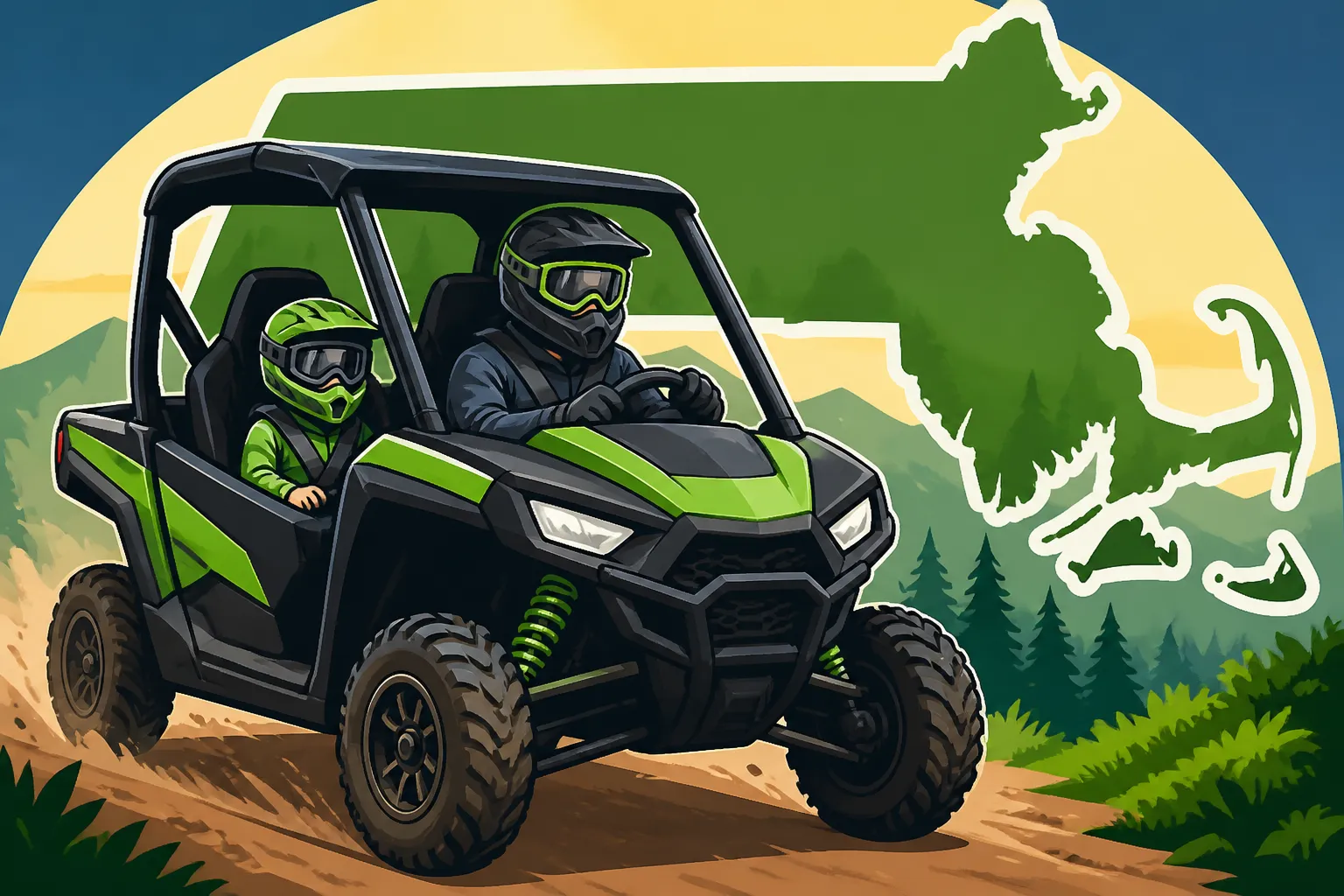
A parent riding beside a child may feel like the safest way to introduce an ATV, but supervision does not make every ride legal in Massachusetts. Age limits, machine size, safety certificates, and rules for passengers all matter. Here’s how to tell whether your child may operate a machine, ride as a passenger, or needs to wait.
First, distinguish supervision from permission to ride
The most important point is that a parent’s presence does not override Massachusetts age restrictions. For recreational riding, a child under 14 generally cannot operate an ATV or other recreational vehicle—even on private land and even when a parent is close by. The limited exception is for qualifying sanctioned events, which have their own rules. A casual family ride is not the same thing as an approved event.
That distinction is easy to miss. Parents often think of supervision as permission: if an adult is watching, the child can ride. In Massachusetts, supervision is only one part of the rules. It cannot make an otherwise prohibited recreational ride legal.
For children who are old enough to ride, the rules depend on age and, for younger teens, engine size. Safety certificate requirements also apply to riders under 18 in relevant situations. A parent riding on a separate machine should not assume that being nearby satisfies every legal requirement. Where adult supervision is required, the adult must meet the applicable definition and maintain the required contact with the young rider.
| Child’s situation | What a parent should know |
|---|---|
| Under 14, ordinary recreational ride | A parent’s supervision does not make the ride permissible. The sanctioned-event exception is narrow and has separate rules. |
| Ages 14 to 16 | Engine-size restrictions and supervision rules apply. Check the machine’s actual engine displacement and the current requirements for the planned riding location. |
| Ages 16 to 18 | Safety certificate requirements may apply, along with any supervision rules for the rider’s age and setting. |
| Riding as a passenger | The machine must be designed to carry a passenger, and the child must be able to ride safely in the intended position. Passenger status is different from operating a machine. |
The age limits are not a substitute for checking the details that apply to a particular rider and machine. For a closer look at the age brackets, see Massachusetts ATV Age Requirements and Massachusetts Engine Size Limits by Age. For the rules specifically affecting younger riders, Massachusetts Rules for Young Riders on Public Land is also relevant.
A parent riding beside a child is not automatically a supervisor under the law
A parent can provide useful oversight on a ride, but “I can see my child” is not always enough to meet a legal supervision requirement. The rules can depend on the rider’s age, the location, and whether the adult meets the statutory requirements. When supervision is required, it may involve staying within visual contact and being able to communicate—not simply following somewhere on the same trail.
Before setting out, check the age-specific rules and make a plan that keeps the child within the contact required by law. A winding trail, thick woods, a steep climb, or a group riding at different speeds can quickly separate a parent and child. If you cannot maintain the required contact, do not treat the ride as supervised.
The legal definition of an adult supervisor matters too. Review Massachusetts Supervising Adult Defined and How Close a Supervising Adult Has to Stay before relying on a parent’s presence to satisfy a supervision rule. An adult who is riding a different machine should be able to stay close enough to supervise in practice, not just be present somewhere in the group.
If your child is old enough to operate a machine
For a child who meets the minimum age for ordinary recreational riding, start with the exact age and the specific machine. A label such as “youth quad” does not establish that the machine is permitted for every young rider. Engine displacement matters for some age groups, and the machine should be appropriate to the rider’s size, experience, and ability to control it.
For riders ages 14 to 16, Massachusetts has an engine-size limit. Confirm the machine’s displacement from its documentation rather than relying on its model name or appearance. A modified machine or a used quad with incomplete records can make that check harder. If you are unsure what the paperwork shows, ask the seller or a qualified dealer before the ride.
A child’s safety certificate is another separate issue. Do not assume that having a parent present replaces a required certificate, or that a certificate removes age or engine-size restrictions. The certificate, the rider’s age, the machine, and the riding location all need to line up. See Massachusetts Safety Certificates Under 18 for the certificate rules and How to Get a Massachusetts Safety Certificate for the process.
Before allowing an eligible child to ride, work through these checks:
- Confirm the child’s age and the activity. Ordinary recreational riding and a sanctioned event are treated differently. Do not rely on an event exception for a family outing.
- Check the machine’s displacement and condition. Make sure it fits the rider’s age category and that the controls, brakes, tires, and throttle are working properly.
- Verify the safety certificate requirement. Check whether the rider needs a certificate for the planned use, and make sure the required proof is available.
- Confirm registration and location rules. A machine’s registration does not authorize riding wherever you choose. Massachusetts has separate rules for registration, land access, and trail use. Start with Do You Need to Register an ATV in Massachusetts? and Massachusetts Rules for Riding Private Land.
- Agree on supervision and communication. Decide who is supervising, how the group will stay together, and what everyone will do if a rider loses sight of the others.
- Set a conservative route. Choose terrain that matches the child’s skill and the machine. Do not use adult speed or adult riding ability as the benchmark for a young rider.
A parent should also make the rules clear before starting the engine. A young rider needs to know where to stop, what to do if the group separates, and why the route may change. If conditions or the child’s confidence change, turn back rather than stretching the ride.
If your child is riding as a passenger
A child riding on an adult’s machine is not the same as a child operating their own ATV, but passenger safety still needs careful attention. First, check that the machine is built to carry a passenger. A seat that happens to look wide enough does not make a single-rider machine suitable for two people. Follow the manufacturer’s instructions for passenger use, including any age, weight, or seating guidance.
The child should be able to sit securely in the intended position, use the available handholds, and keep feet on the footrests. If the child cannot reach or use the passenger equipment properly, the machine may not be a safe fit—even if a parent is driving slowly. Do not carry a child on a rack, fender, or other place not designed as a passenger seat.
A passenger also needs appropriate protective gear, including a properly fitting helmet. A loose or adult-sized helmet that shifts around can offer poor protection. Check the relevant requirements in Massachusetts ATV Helmet Law and the passenger-specific rules in Massachusetts Rules for a Child Passenger. The same caution applies to other gear: it should fit the child, stay secured, and allow the child to hold on and move safely.
Before riding with a child as a passenger, consider whether the child can follow simple instructions, remain seated, and signal discomfort or fear. A child who is too small to hold on securely or whose feet cannot stay on the footrests should not ride as a passenger on that machine. A short trip does not remove the risk of sudden bumps, braking, or a change in terrain.
A parent carrying a child should also consider the machine’s handling. An additional passenger changes weight and balance, and may affect braking and maneuvering. Keep the route easy, avoid abrupt turns and steep or uneven terrain, and do not ride faster just because the child is a passenger rather than the driver. If the machine feels less controlled with the passenger aboard, stop and reconsider the setup.
Plan a ride that is legal and manageable
The safest family plan begins with the child’s legal eligibility, not with a trail or a machine already loaded on a trailer. Then check whether the location allows that type of riding. Massachusetts does not treat a registration sticker as general permission to ride on any road, trail, or parcel of land. A parent must confirm both that the rider may operate the machine and that the riding area allows it.
For public riding areas, check current access information before traveling. A trail may be closed, may not allow the type of machine you have, or may have additional requirements. For private land, get the owner’s permission and follow any conditions attached to it. See [Massachusetts Landowner Permission Forms] and Massachusetts Trail Planning and Closures when planning a route.
A practical family checklist includes:
- The child meets the age requirement for the planned activity.
- Any engine-size restriction is satisfied.
- Required safety training or certificate rules have been checked.
- The machine is registered when required and permitted at the destination.
- The child has a properly fitting helmet and suitable protective gear.
- A passenger is carried only on a machine designed for a passenger.
- The supervising adult can maintain the required contact with the rider.
- The route, terrain, and pace suit the child’s ability.
- The group has a clear plan for stopping or turning back.
If you are uncertain about a child’s eligibility, a machine’s displacement, or whether a particular location permits youth riding, pause before the ride and confirm the applicable rule with the relevant authority or land manager. That is especially important when the plan involves a sanctioned event, an unusual machine, or a young rider near an age cutoff.
A parent can make a ride safer by being present, choosing appropriate terrain, and setting clear limits. But those steps do not replace Massachusetts’ age rules, certificate requirements, or land-access restrictions. Confirm each one separately, and choose a different activity if the child is not yet legally eligible to ride.
Disclaimer
This article is for general informational purposes only and does not constitute professional advice. Laws, prices and regulations vary by location and change over time. Consult a qualified professional for guidance on your specific situation.