Two Parts to the OHV Safety Certificate
Two Parts to the OHV Safety Certificate
Trying to book an OHV safety course in Massachusetts can be confusing when one part happens online and another requires an in-person session. The key is to treat them as connected steps, not interchangeable options: complete the assigned online work, attend the required in-person instruction and skills assessment, then confirm that your certificate is recorded before you ride.
What the two parts involve
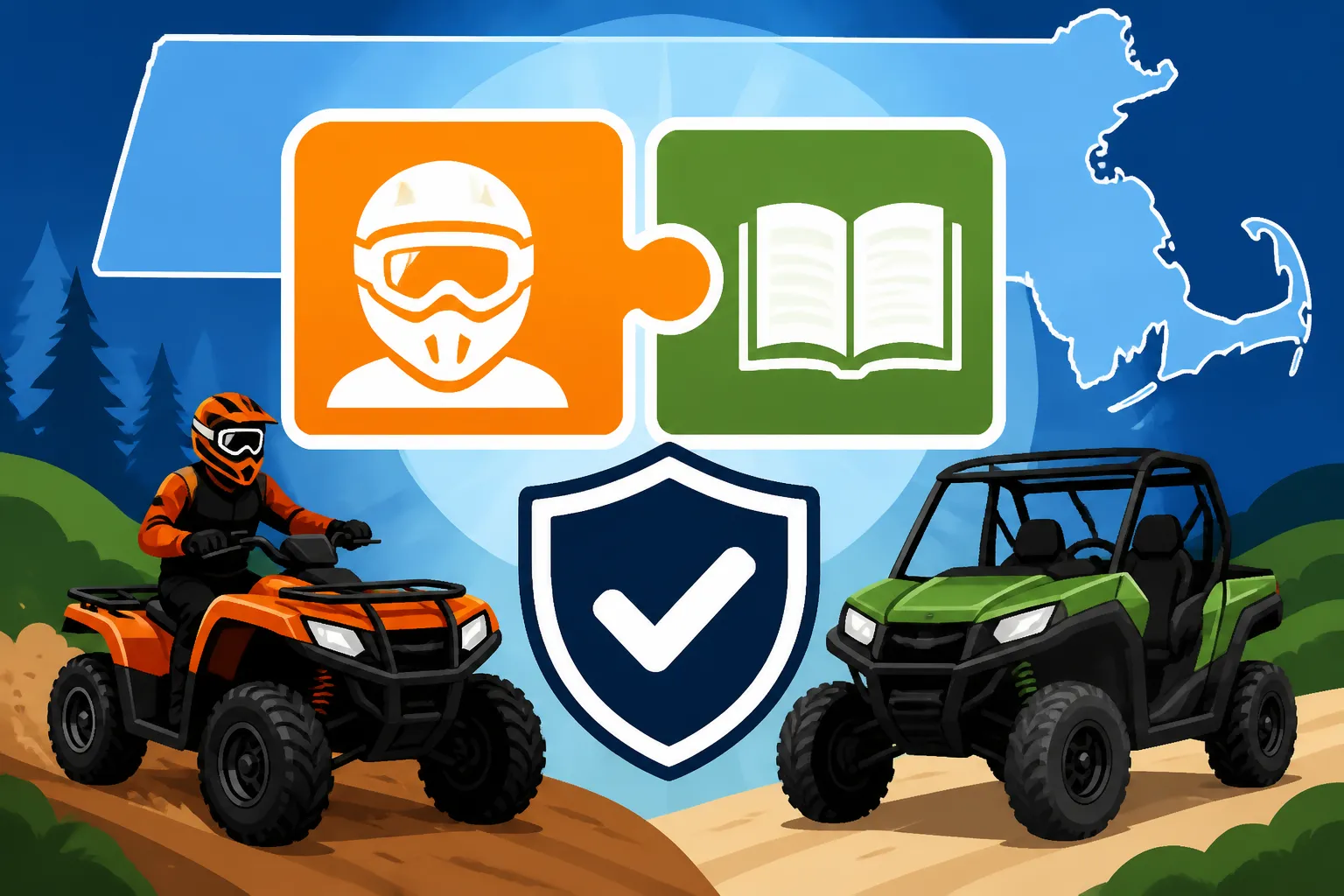
The Massachusetts OHV safety certificate process has an online component and an in-person component. The online work introduces essential safety and responsibility topics. The in-person session adds instruction and a chance to demonstrate practical skills. Completing only one part does not mean you have finished the full process.
The exact instructions for your course matter. The online provider or course registration will tell you what to complete, how to show that you finished it, and what you need to do before attending the in-person session. Read those instructions before you start, especially if a parent or guardian needs to attend with you.
| Part | What it is for | What to do |
|---|---|---|
| Online instruction | Introduces core OHV safety and responsibility material | Complete the assigned work and keep any completion confirmation |
| In-person session | Reviews key concepts and includes practical instruction or assessment | Attend the scheduled session and follow the instructor’s directions |
| Certificate check | Confirms that both required parts are complete and the record is available | Check the official process before relying on the certificate for a ride |
This structure helps address two different learning needs. An online lesson can cover rules and decisions at a pace that suits the student. A face-to-face session lets an instructor reinforce important points and assess practical understanding. Neither part should be treated as a formality.
The certificate is also not the same thing as an OHV registration sticker. A safety certificate concerns the rider’s training status; registration concerns the machine. Massachusetts has its own registration requirements, including for visitors from other states. Review Massachusetts Requires Its Own Registration and Out-of-State OHV Stickers Are Not Valid in Massachusetts if you are also sorting out the machine’s paperwork.
For riders under 18, certificate requirements are especially important. Massachusetts requires young riders to carry the required safety certificate in the circumstances set by law. The exact rules depend on age and where the machine is being operated, so do not assume that taking the course alone settles every riding requirement. Massachusetts Safety Certificates Under 18 covers the age-related question in more detail.
A certificate does not grant permission to ride anywhere, replace registration, or make an otherwise prohibited ride legal. You still need to follow the rules for the rider’s age, the land, the machine, and the activity. Before heading out, check the relevant rules for Massachusetts Rules for Young Riders on Public Land and the place where you plan to ride.
Part one: complete the online work
The online portion is the preparation stage. It gives students time to work through safety and responsibility topics before meeting an instructor in person. Depending on the course arrangement, it may be provided through a designated online course provider. Follow the registration information you receive rather than choosing a course based only on a search result or a friend’s recommendation.
Online instruction can cover subjects such as safe operation, responsible decision-making, protective equipment, and the rules riders need to understand. The course may ask questions or use checkpoints to help students confirm what they have understood. Take time to read the material instead of rushing through it simply to reach the next screen. The point is to arrive at the in-person session prepared to discuss and apply the information.
A practical way to approach the online part is:
- Confirm the course you are supposed to take. Check the official instructions and make sure the course is accepted for the Massachusetts certificate process.
- Read the completion requirements first. Find out whether you need to finish lessons, pass knowledge checks, print a record, or bring confirmation to the next session.
- Use a quiet, suitable device. A larger screen may make diagrams and lesson text easier to follow than a phone, particularly for a younger student.
- Work through the material carefully. Pause when a rule or safety topic is unclear and review it before moving on.
- Save the completion evidence. Keep confirmation details in a place you can access later. If the course provides a completion record, follow its directions for bringing or submitting it.
Do not assume that a completed online course automatically registers you for the in-person component. Those may be separate steps. Check the booking process and secure a session if one is required. If you are unsure where to find the approved online option, [Massachusetts Online Course Provider] and How to Get a Massachusetts Safety Certificate are useful starting points.
Students should also consider who will help with the administrative details. A parent or guardian may need to assist with registration, scheduling, transportation, or course communications. That does not mean the adult can complete the work for the student. The rider needs to understand the material and be ready to participate.
Online lessons are convenient, but convenience can create a false sense of completion. Finishing the online work is not a substitute for the in-person part when that part is required. Do not plan a ride around an online completion screen alone. Confirm the full course status and the certificate record before treating the training requirement as met.
If the online course has an associated cost, check the provider’s current information before enrolling. Course charges and payment arrangements can change. Be wary of relying on an old receipt, an outdated saved page, or an informal description of what another student paid. The current course instructions are the reliable place to confirm what applies to your registration.
Part two: attend the in-person session
The in-person component is where students can ask questions, hear instruction directly, and take part in a practical assessment where required by the course. Massachusetts Environmental Police trainers are associated with the in-person safety and responsibility instruction. Session details may vary, so use the current schedule and instructions for the specific class you booked.
The in-person class is more than a second copy of the online lesson. It gives students a chance to connect written information to real situations. A student may need to explain a safe choice, respond to an instructor’s directions, or demonstrate that they can handle a machine appropriately in the assessment. The instructor is there to teach and evaluate, not just to check attendance.
Preparation makes the session easier:
- Confirm the date, location, and arrival instructions.
- Check whether the student must bring identification, online completion confirmation, or other paperwork.
- Ask in advance whether any equipment or clothing is required for a practical exercise.
- Arrive with enough time to check in and listen to the opening directions.
- Bring questions about topics that were unclear in the online material.
- Make sure the student is rested and able to focus.
Do not bring a machine or riding gear unless the course instructions say to. Requirements can differ by session, and assuming that a particular vehicle or item is needed may create an unnecessary problem. If practical equipment is required, the organizer’s instructions should say what to bring and whether the equipment must meet specific conditions.
The practical component is not a race or a chance to show off. Students should follow the instructor’s directions, use controlled movements, and demonstrate sound judgment. If a student is nervous about the assessment, it can help to explain that the goal is to show safe, deliberate operation rather than speed. Asking the instructor to clarify an instruction is better than guessing.
The in-person portion can also surface gaps in understanding that an online quiz did not reveal. For example, a rider may know a rule in the abstract but be uncertain how to apply it when a trail is narrow, visibility is limited, or another person is nearby. Listen for the instructor’s explanation and ask questions while there is time to resolve them.
For a closer look at the classroom and practical requirements, see Inside the OHV Safety and Responsibility Class and What Riders Have to Do on the Skills Test. If you need to find an available session, check Massachusetts Course Schedule Lookups. Schedules can change, and a listing you saw earlier may no longer reflect open seats or the current location.
When a parent or guardian must be involved
A parent or guardian may have a required role when a student is under 16. This requirement is separate from the young rider’s own participation: the student still needs to complete the course requirements, while the adult attends or takes part as directed by the program.
Do not wait until the class day to find out whether an adult needs to be present. Review the age-specific instructions when registering and confirm them with the course contact if anything is unclear. An adult who cannot attend may need to help arrange another session, so sorting this out early can prevent a missed class. [Massachusetts Parent Attendance Requirements] explains the parent-attendance issue, while Parents Must Attend With Students Under 16 gives a focused overview.
After the session: confirm the certificate is complete
Finishing the online material and attending the in-person session are important, but the final practical step is to confirm that the training record is complete. Follow the instructions given by the course provider or instructor. A student may receive confirmation in a particular way, or the result may be recorded through the process used for the program. Do not assume that the certificate will be available instantly or that a paper handout is the only proof that counts.
Before planning a ride, make sure you can answer these questions:
- Did the student complete both required parts?
- Was the online completion recorded or submitted as instructed?
- Did the student attend and complete the in-person session?
- Is there any follow-up step before the certificate is issued or appears in the record?
- Does the student know how to access or carry the certificate when required?
If the certificate is not showing up, or the student is unsure whether the record is complete, contact the course provider or the appropriate state office rather than repeating the whole course based on guesswork. Keep the student’s name and course details available when asking for help. If a course record needs correction, clear identifying information makes it easier for the office to locate the right entry.
Use the designated lookup or verification process if one is provided. Looking Up a Massachusetts Safety Certificate can help with the record-checking question, and Getting the Certificate After Both Parts Are Done addresses what to expect once both stages have been completed.
The certificate should be treated as a rider’s document, not as a substitute for every other item a ride may require. If the law requires the rider to carry it, make a simple plan for keeping it available and protected from weather or damage. Keep any required registration card with the machine as well; these are separate documents with separate purposes. See The Registration Card You Must Carry in Massachusetts for that registration requirement.
Avoid common course and compliance mistakes
Many problems come from treating course completion as a single event. The two-part structure means there are several points where a student or parent can miss a step: choosing the right online course, completing it fully, booking the in-person session, meeting age-related attendance rules, and confirming that the certificate record is complete.
Mistake: assuming the online course is the whole requirement
Online instruction is an important part of the process, but it does not replace the in-person component when both are required. Keep the completion confirmation, then check how to schedule and attend the remaining part. Do not plan to ride based only on an online progress screen.
Mistake: booking late
In-person sessions have specific dates and locations. Waiting until shortly before a planned trip can leave too little time to find a suitable session, especially if the first choice is full or inconvenient. Check course scheduling early and build time for both parts into the riding plan. If the student has a deadline or upcoming event, confirm that the course can be completed in time rather than assuming it will fit.
Mistake: overlooking the parent-attendance rule
A student who is under 16 may need a parent or guardian to attend. Confirm this before booking and make sure the adult can be present for the required portion. If more than one adult is involved in the student’s transportation or care, share the class instructions so no one assumes someone else has handled it.
Mistake: treating the certificate like a registration sticker
A safety certificate is not the machine’s registration. A machine can have a valid sticker while its rider still needs to meet training requirements, and a trained rider may still be unable to operate a machine that is not properly registered. Massachusetts registration also does not become unnecessary just because a machine has been registered in another state. For more detail on the visitor issue, see Massachusetts Visitors Buy a One-Year Sticker.
Mistake: assuming a certificate permits riding on any land
The certificate does not grant land access. Riders still need lawful permission and must follow the rules for the location. Public land, private property, roads, and designated riding areas can have different restrictions. Confirm both the riding location’s rules and the rider’s legal requirements before unloading.
Mistake: relying on someone else’s course record
A sibling’s, friend’s, or parent’s certificate does not satisfy another rider’s requirement. The student needs to complete the required process and have their own record. Check that the name and details on the certificate match the student who will ride.
Mistake: waiting until a trailhead to find missing paperwork
A trailhead is a poor place to discover that the course record is incomplete or that a document was left at home. Verify the certificate and registration before leaving. For a broader pre-ride checklist, Massachusetts Registration Before Your First Ride can help separate paperwork tasks from the safety-course requirement.
The safest approach is to handle the course as a small project: confirm the accepted online course, finish it, schedule the in-person session, check parent requirements, and verify the certificate afterward. That sequence reduces last-minute surprises and makes it easier to distinguish training, registration, and land-access rules.
Frequently Asked Questions
Can I get the OHV safety certificate by completing only the online course?
Not when the Massachusetts process requires both parts. Complete the online work and the in-person component, then follow the instructions for confirming that the certificate record is complete.
Is the in-person session just a written test?
No. The in-person component includes direct instruction and may include practical skills assessment. Follow the instructions for your session and ask the organizer what to bring.
Does a parent need to attend with every student?
Parent attendance requirements depend on the student’s age. Confirm the current instructions before booking; students under 16 should pay particular attention to the parent-attendance rule.
Does the safety certificate replace ATV or UTV registration?
No. The certificate concerns rider training. Registration applies to the machine, and the requirements are separate.
Should I ride as soon as I finish the class?
First verify that both course parts are complete and that the certificate record is available as required. Also confirm the machine’s registration, the rider’s age-related rules, and permission to use the riding location.
Disclaimer
This article is for general informational purposes only and does not constitute professional advice. Laws, prices and regulations vary by location and change over time. Consult a qualified professional for guidance on your specific situation.