Packing for a Cool Mountain Morning
A Berkshire ride can begin with a cold, damp trailhead and turn into a warm, dusty afternoon, especially when the sun reaches the hills. That swing makes packing tricky: too little clothing leaves you chilled, while too much becomes uncomfortable once you’re moving. This guide helps you dress in layers and pack practical gear for a cool Massachusetts mountain morning.
Dress for changing Berkshire conditions
Start with layers you can adjust
A heavy coat may feel right beside the trailer, but it can quickly become sweaty once you’re riding. A better approach is to wear a few lighter layers you can add or remove as the temperature and effort change.
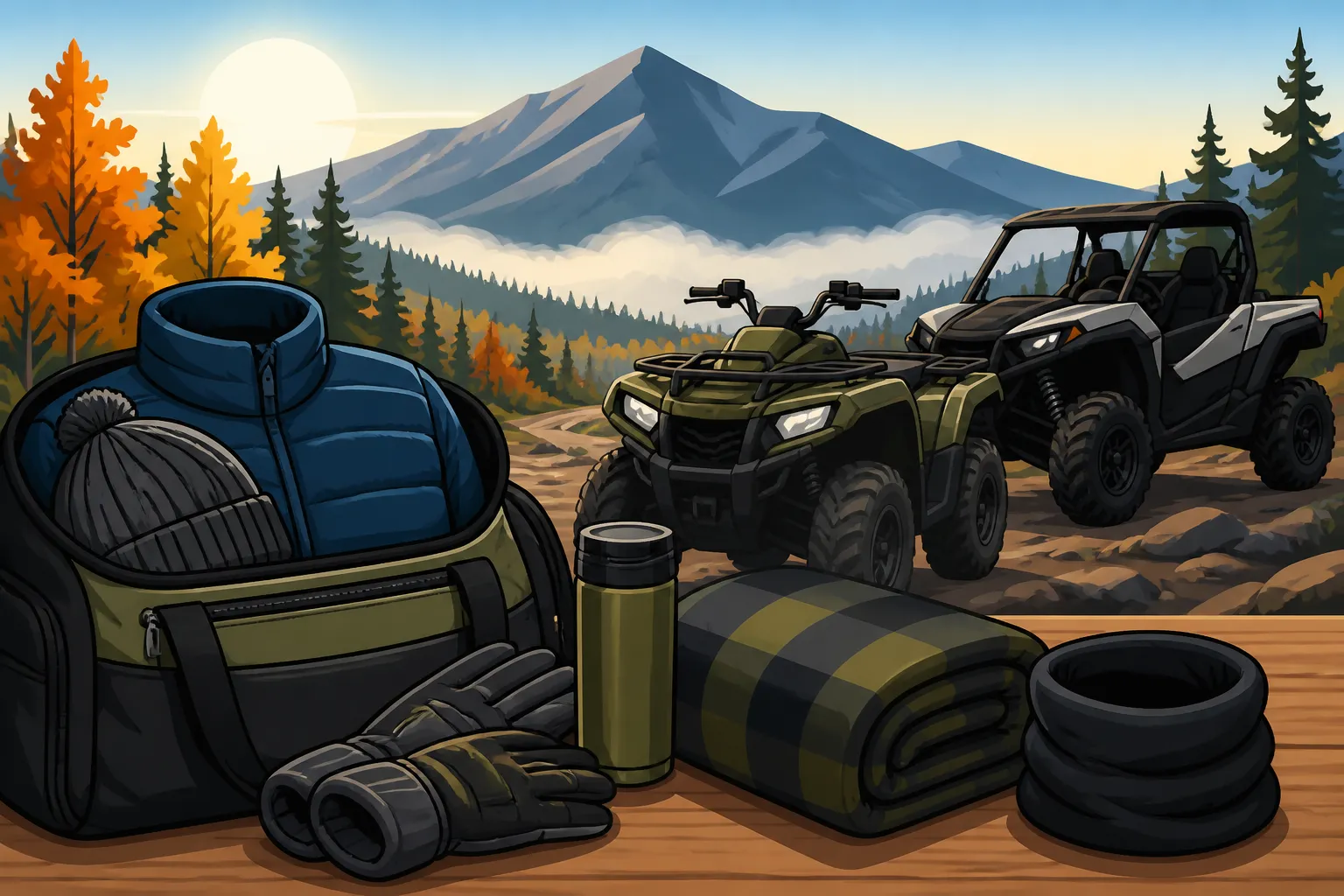
Start with a comfortable base layer that sits close to your skin and helps manage sweat. Add a warm midlayer, such as a fleece or light insulated jacket, then finish with a wind-resistant outer layer. The outer layer matters on an ATV or UTV because moving air can make a cool morning feel colder, even when you’re not riding particularly fast.
Choose clothes that let you move freely when you climb on, shift your weight, or reach for controls. Avoid loose hems or dangling drawstrings that could catch on equipment. If your ride includes a long stop for a trail check or lunch, keep a warmer layer accessible rather than buried at the bottom of a packed bag.
A simple test before leaving home: stand outside in your riding clothes for a few minutes. If you’re already uncomfortably cold while standing still, you may need a warmer midlayer. If you feel perfectly warm and cozy, you may be overdressed once you start moving.
Protect your hands, feet, and neck
Cold hands can make a ride unpleasant and can make it harder to use the controls comfortably. Bring riding gloves suited to the conditions, and consider packing a second pair in a waterproof bag. Gloves can get damp from handling wet straps, muddy equipment, or cold metal. Having a dry backup can make a real difference on a longer outing.
For footwear, choose sturdy boots that are comfortable for walking as well as riding. A trail may include a muddy pull-off, a slippery rock, or a short walk to check a route. Wool or synthetic socks can be more comfortable than cotton if your feet get damp. Pack an extra pair if you expect wet ground or a long day.
A neck gaiter or similar close-fitting layer can help block cold air without adding much bulk. Keep it secure and out of the way of your helmet and other equipment. Your helmet should fit properly and meet the applicable requirements; extra warmth should never interfere with its fit or fastening. For Massachusetts helmet rules, see Massachusetts ATV Helmet Law and Massachusetts Helmet Standards.
Pack for the ride you expect, not just the forecast
A forecast gives you a starting point, but it can’t tell you exactly how exposed or sheltered a particular trail will feel. A shaded forest road may stay cool after the sun comes out, while an open section can warm quickly. Hills, wind, cloud cover, and damp ground all affect comfort.
Think about your planned route and how long you expect to be away from the trailer. A short ride close to the trailhead may call for less spare clothing than a full day exploring a remote loop. If you’re riding with a group, agree on a plan for stops and regrouping before you set off. That way, one rider’s need to add a layer doesn’t turn into a stressful mid-trail scramble.
Check the relevant riding-area information before you load up. Conditions, access, and closures can change, and a route that looks appealing on a map may not be open to your machine. Guides such as Massachusetts Trail Conditions Before You Tow and Checking Rules Before a Long Drive to the Berkshires can help you build that check into your trip planning.
Build a practical cold-morning packing checklist
Use a simple clothing and comfort list
Packing is easier when you separate what you’ll wear from what you’ll carry as a backup. Lay out your riding clothes the night before, then check the weather and adjust in the morning. This avoids the familiar trailhead problem of realizing that your warm layer is still on a chair at home.
| Pack category | What to bring | Why it helps |
|---|---|---|
| Base layer | Comfortable, close-fitting shirt and pants | Adds warmth without excess bulk |
| Midlayer | Fleece or light insulated layer | Provides adjustable warmth during stops |
| Outer layer | Wind-resistant jacket or shell | Reduces the chill from moving air |
| Hands | Riding gloves and a dry spare pair | Helps with comfort if gloves get damp |
| Feet | Sturdy boots and extra socks | Supports walking and helps manage wet conditions |
| Head and neck | Helmet-compatible neck layer | Adds warmth without interfering with helmet fit |
| Rain protection | Packable rain shell and waterproof bag | Keeps spare clothing and essentials dry |
| Comfort items | Water, snacks, sunscreen, and a small towel | Useful as the day warms or conditions change |
Keep the spare clothing in a sealed bag inside your pack or storage compartment. A dry layer is only useful if it stays dry. For a group ride, it can also help to tell everyone what you’re carrying, especially if one person is responsible for shared supplies.
Prepare for damp trails and sudden showers
Cool mornings often come with dew, wet leaves, or damp brush along the trail. A water-resistant outer layer can help, but it’s worth packing a lightweight rain shell if showers are possible. Put it somewhere you can reach without unpacking everything.
Use a separate waterproof bag for your spare socks, gloves, and warm layer. If you stop for lunch, avoid placing dry clothing directly on wet ground or on a muddy machine. A small towel can be handy for drying your hands, wiping a seat, or cleaning moisture from gear before putting it away.
Don’t assume that a clear morning guarantees a dry afternoon. If the forecast suggests changing conditions, plan your route and turnaround time accordingly. When you ride in a group, decide in advance where you’ll regroup if someone needs to stop and put on rain gear.
Bring food and water that work in cool weather
It’s easy to drink less when the air feels cold, but riding still takes effort. Bring water in a container you can reach safely when stopped, and take regular breaks to drink. A snack that’s easy to open with gloves off can help during a longer outing.
Pack food in a way that won’t get crushed or soaked. A small insulated container can be useful if you want something warm, but keep food and drink secured so they don’t shift around while you ride. If you’re planning a full-day trip, check what facilities are available rather than assuming you’ll find food or water near the trail.
For more ride-day preparation, Packing for a Cool Mountain Morning is the focus here, while Hydration on a Summer Berkshire Ride offers a useful reminder that changing temperatures don’t make hydration irrelevant.
Get your machine and route ready before leaving
Do a quick pre-ride check
A cold morning is not the best time to discover that a strap is missing, a tire looks low, or your lights don’t work. Before loading, check the machine’s basic condition and make sure the items you rely on are secure. Bring the owner’s manual if you’re unfamiliar with the controls or have recently changed machines.
Check that your helmet and riding gear fit properly, and confirm that necessary equipment is in working order. Massachusetts has equipment rules that apply to off-highway vehicles, so review Massachusetts Equipment Requirements rather than treating a packing checklist as a substitute for legal requirements. Keep your registration card with the machine as required; Why Your Registration Card Must Ride With the Machine explains why it’s important not to leave it at home.
Secure bags and loose gear so they can’t shift or fall off. A packed storage box should close fully, and any item carried outside the machine should be fastened securely. If you’re hauling the ATV or UTV on a trailer, check the tie-downs before driving and again after the first short stretch of road.
Check access, trail rules, and navigation
A map can help you understand where you’re going, but it doesn’t grant permission to ride a route. Check official riding-area information, posted signs, and any restrictions that apply to the machine you’re using. In the Berkshires, trail access can be specific to the area and vehicle type, so don’t assume every route shown on a general map is open to ATVs or side-by-sides.
You can use onX Offroad to help plan and follow a route, but treat it as one planning tool rather than the final word on access. Check for current information before the trip, then follow posted signs and any instructions at the trailhead. If using onX Offroad, prepare your route before you lose reliable cell service and make sure you know how to use the map without depending on a live connection.
Carry a paper map or write down key directions if you’re unfamiliar with the area. Cell service can be unreliable in parts of the Berkshire hills, so don’t make your entire plan depend on being able to load a route once you’re already on the trail. Resources such as Carrying a Paper Map in a State Forest and Cell Dead Zones in the Berkshire Hills can help you plan for that possibility. onX Offroad may help you organize your route, but it shouldn’t replace checking local access rules.
Plan for a safe return
Tell someone where you plan to ride and when you expect to be back. Choose a turnaround time that leaves room for slower-than-expected trail conditions, a clothing adjustment, or a minor mechanical issue. If the morning starts colder or wetter than expected, it’s reasonable to shorten the ride rather than pushing ahead just because you made the drive.
Keep essential items easy to reach: water, a snack, a phone, a small first-aid kit, and an extra warm layer. Store valuables and dry clothing where they’re protected from mud and moisture. If you ride with others, agree on a meeting point in case the group gets separated, and don’t leave someone behind without checking that they’re safe and able to continue.
Before leaving the trailhead, take a final look at your load and your route plan. Make sure everyone has the right clothing for the conditions, understands where the group is going, and knows what to do if weather or trail conditions change. A few minutes of preparation can make a cool Berkshire morning much more comfortable—and help prevent a small inconvenience from becoming the main event of the day.
Disclaimer
This article is for general informational purposes only and does not constitute professional advice. Laws, prices and regulations vary by location and change over time. Consult a qualified professional for guidance on your specific situation.