Rain Gear in the Berkshires
Rain in the Berkshires can turn a comfortable ATV ride into a cold, muddy slog faster than you expect. A jacket that works for a walk may soak through on a long forest trail, while bulky rainwear can make it harder to move. This guide explains what to wear, what to pack, and how to adjust your ride when wet weather rolls in.
Choose Rain Gear for Riding, Not Just for Standing Around
Start with a waterproof outer layer
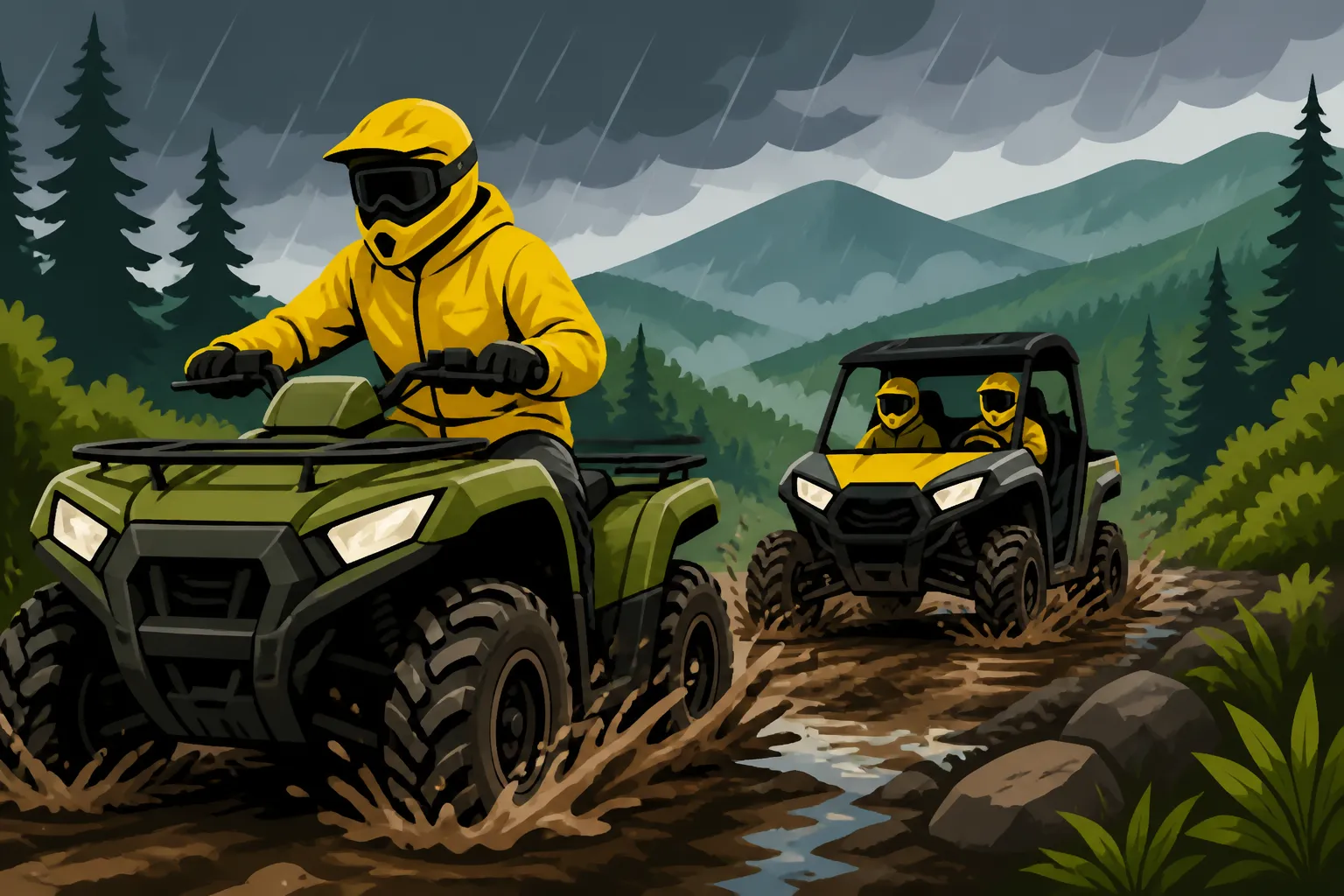
For ATV and UTV riding, your outer layer needs to handle more than falling rain. Water can come from wet brush, muddy spray, and the machine itself. A waterproof shell with a hood that fits over your helmet or can be tucked away is more practical than a jacket designed mainly for casual wear. Look for closures that cover the front zipper and cuffs you can secure over gloves.
A rain jacket and rain pants offer flexibility: you can put them on when the weather turns and take them off when the sun returns. A one-piece rainsuit can block water well, but it may feel restrictive when you climb on and off your machine or need to move around at a trailhead. Either option should leave enough room for a warm layer underneath without making it hard to steer or reach controls.
Before a ride, test the full outfit at home. Sit on your ATV or UTV, reach forward as if holding the handlebars, and crouch as if checking a tire. A jacket that rides up across your back or pants that pull tight at the knees can become uncomfortable over several miles. For a broader layering plan, see What to Wear on a Cold Berkshire Morning and Packing for a Cool Mountain Morning.
Keep warmth and breathability in balance
Waterproof clothing can trap sweat as well as rain. If you start a ride wearing too many heavy layers, you may become damp from the inside even when the rain is light. A moisture-wicking base layer, a removable insulating layer, and a waterproof shell give you more control than one thick sweatshirt under a raincoat.
Choose layers you can adjust without a complicated wardrobe change. For example, if you arrive at a trailhead in cool, drizzly weather, start with a light base layer and a mid-layer under your shell. If you warm up on a climb, unzip vents or remove the mid-layer during a safe stop. Avoid cotton next to your skin on a wet, cool day; once damp, it can stay uncomfortable and make it harder to retain warmth.
Think about how long you may be exposed if you get delayed. A short shower near the parking area is different from hours of steady rain, a mechanical problem, or a slow ride over slick ground. Pack an extra dry insulating layer in a waterproof bag, even if the forecast looks manageable. It gives you a backup if your first layer becomes soaked or the temperature drops.
| Gear | Best use | What to check before riding |
|---|---|---|
| Waterproof jacket | Blocking rain and wet brush | Secure cuffs, covered zipper, comfortable reach |
| Waterproof pants | Keeping legs dry from rain and spray | Room to bend, secure ankle closures |
| Base layer | Moving sweat away from skin | Comfortable when damp, not restrictive |
| Insulating layer | Adding warmth during stops or colder spells | Packs down and stays dry in a sealed bag |
| Waterproof gloves or shells | Protecting hands from rain and wind | Grip and control feel on the handlebars |
| Waterproof footwear | Keeping feet dry in mud and puddles | Ankle support, tread, and secure fit |
| Neck gaiter or buff | Reducing wind and rain exposure | Does not interfere with helmet fit or breathing |
Protect the Parts That Get Wet First
Plan for hands, feet, and lower legs
Hands often get cold before riders realize their jacket is failing. Wet gloves can make controls feel less comfortable and can leave your fingers chilled during a long ride. Choose gloves that allow a secure grip and enough feel to operate the controls confidently. If you use waterproof over-mitts or glove shells, test them on the machine first; a setup that is too bulky can interfere with dexterity.
Feet and lower legs take a steady beating from puddles, mud, and water thrown up by the tires. Waterproof boots with supportive soles are useful, but the fit matters. Boots that are too tight leave little room for warm socks, while loose boots may rub or make it harder to place your feet securely. Tuck rain pants over the tops of your boots when appropriate, and check that the cuffs do not catch on foot controls.
Bring a spare pair of socks in a sealed bag. This small backup can make a big difference if water gets into a boot at a crossing or through a damaged seam. If your ride includes a wet-weather forecast, consider packing a second pair of gloves too. Keep dry items separate from muddy gear rather than tossing everything into one bag at the end of the day.
Carry a dry kit and protect your essentials
A small dry kit is worth preparing before you leave home. Put spare socks, a base layer, and any personal essentials in a waterproof stuff sack or sealed dry bag. Keep it secured to the machine so it cannot shift into a wheel, exhaust, or moving part. If you are riding in a group, tell someone where the kit is so you can find it quickly during a stop.
Protect phones, keys, wallets, and paper maps from water, even if you expect to use a mounted device. A waterproof case or sealed pouch helps, but it is still sensible to carry a backup way to find your route. Riders using onX Offroad can download the area they plan to navigate before leaving service, then keep the phone protected in a secure mount or dry pouch. Check that the screen remains usable with your gloves before setting out.
Small accessories can be just as important as a rain jacket. A microfiber cloth helps clear water from eyewear or a screen, while a brim that fits beneath your helmet can reduce rain hitting your face. Pack a compact towel for drying hands before handling food, maps, or your phone. For a complete wet-weather packing list, First Aid on a Remote Berkshire Loop offers useful context for preparing for a ride where help may not be close by.
Adjust Your Ride When the Berkshires Turn Wet
Check conditions before towing to a trailhead
Rain can change the feel of a trail, reduce visibility, and make some surfaces more slippery. Before loading up, check the trail and access information for your destination rather than assuming that a route you rode last weekend will be in the same condition. A wet forecast is a good reason to confirm whether the area is open and whether recent storms have affected access.
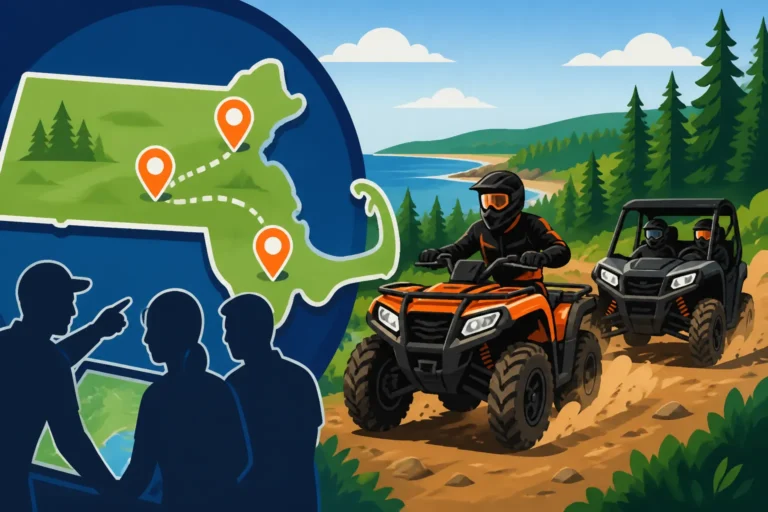
Use a map to understand the route and nearby alternatives before you arrive. onX Offroad can help with route planning and offline navigation, which is useful when cell service is unreliable. Download what you need before departure, and do not rely on a phone alone: tell someone where you plan to ride and carry a backup navigation option. For local preparation, read Massachusetts Trail Conditions Before You Tow and Massachusetts Trail Closures After a Storm.
If heavy rain is expected, consider shortening the ride or choosing a plan with an easy way back to the staging area. A long loop may sound appealing at home, but slick ground, reduced visibility, and extra stops can make it take much longer. Let your group know that turning around is an acceptable choice, not a failure to finish the route.
Ride smoothly and avoid making wet ground worse
Wet surfaces can reduce traction, especially on roots, rocks, and slopes. Slow down, leave extra room between machines, and use smooth inputs rather than sudden acceleration or braking. If the tires begin to spin, adding more throttle can dig a rut and make the situation worse. Pause, assess the line, and choose a safer route if one is available.
Mud can hide holes, loose stones, and changes in the trail surface. Keep your eyes ahead, but avoid staring only at the machine in front of you; leave enough space to see what is coming. In a group, agree on a simple way to communicate stops and hazards. Wet helmets and rain hoods can make it harder to hear, so check in regularly rather than assuming everyone has understood a hand signal.
There is also a difference between riding through ordinary damp conditions and pushing onto a trail that is becoming damaged. If tires are cutting deep ruts or water is running across the route, consider turning around. Responsible decisions help preserve access for other riders and reduce the risk of getting stuck. Massachusetts Trail Etiquette Locals Expect and Massachusetts Mud Season and Trail Damage provide more guidance on sharing and protecting trail areas.
Dry Out, Clean Up, and Prepare for the Next Ride
Take care of wet clothing and equipment
When you return, separate wet clothing from dry gear as soon as you can. Hang rainwear open so air can circulate, and follow the garment’s care instructions instead of applying high heat that could damage coatings or seams. Check gloves, boots, and jacket cuffs for trapped grit. Mud left in closures or zippers can make rainwear harder to use next time.
Inspect your gear before putting it away. Look for torn seams, damaged closures, worn boot soles, and rain pants that have developed leaks. A small repair made at home is less frustrating than discovering a failure halfway through a ride. If a garment’s waterproofing seems less effective, clean and maintain it according to the maker’s instructions rather than assuming the item is permanently ruined.
Clean the machine with care after a muddy ride. Remove packed mud from areas where it could interfere with moving parts, and avoid directing high-pressure water at seals, electrical connections, or bearings. Give the machine time to dry before storing it. For a fuller post-ride routine, see Washing a Machine After a Berkshire Ride.
Learn from the day and refine your kit
After each wet ride, note what worked and what did not. Maybe your jacket kept your torso dry but your gloves soaked through. Maybe your rain pants were warm enough but restricted movement when you had to shift position. These small observations help you make targeted changes instead of buying a whole new set of gear.
Think about the conditions as well as the clothing. A cool, steady rain calls for more insulation than a brief summer shower, while warm weather can make a heavy waterproof layer uncomfortable. On hot, humid days, focus on hydration and take breaks before you feel depleted; Hydration on a Summer Berkshire Ride covers planning for that side of the ride. If your trip falls in bug season, What Bug Spray to Pack for a Berkshire June can help you prepare for the conditions beyond the rain.
A reliable wet-weather setup is not necessarily the most expensive or elaborate one. It is the clothing you can move in, the dry backup you remember to pack, and the route plan that leaves room to turn around. Before the next outing, check your gear, check access conditions, and make sure everyone in your group is comfortable changing the plan if the weather or trail surface calls for it.
Disclaimer
This article is for general informational purposes only and does not constitute professional advice. Laws, prices and regulations vary by location and change over time. Consult a qualified professional for guidance on your specific situation.