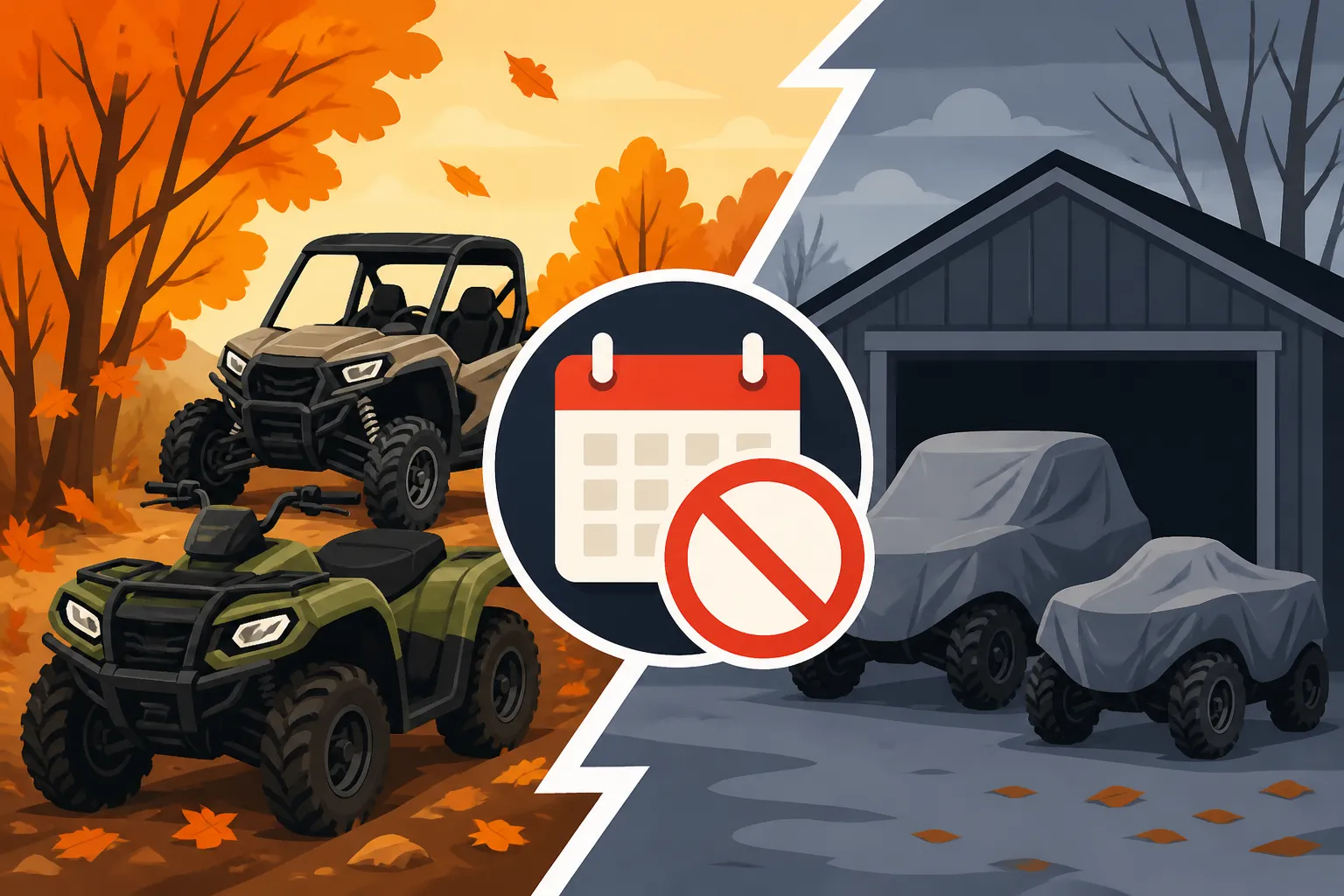
Why the DCR Riding Season Ends in November
When the Massachusetts DCR riding season ends in November, it can feel abrupt—especially if a dry fall weekend finally lines up with your schedule. The cutoff is a seasonal boundary for designated riding areas, not a promise that every trail stays open until the same day. Here’s why the season closes, what that means for Berkshire rides, and how to plan around the change.
What the November riding season cutoff means
A seasonal boundary, not a guarantee of open trails
Massachusetts DCR riding areas have a defined riding season that generally runs from May through November. That boundary helps riders understand when motorized trail use is permitted at designated state forest locations. It does not mean every trail will be open every day during those months: weather, trail conditions, maintenance, or other management needs can affect access before the season’s end.
The designated OHV areas commonly associated with the Berkshire riding season include Beartown, October Mountain, and Pittsfield State Forests. Each has its own trail network and practical considerations, so don’t assume that a closure or condition at one forest applies identically to the others. For a broader look at the calendar, see [Massachusetts DCR Season From May to November] and [Massachusetts ATV Trails: Three Berkshire Forests].
The distinction matters if you’re planning a long drive with a trailer. A trail being within the seasonal window is not the same as confirmation that it is open and suitable for your machine that day. Before heading out, check current DCR notices and local forest information. You can also use onX Offroad to help organize route ideas, but treat it as a planning aid rather than a substitute for official closure information.
The season does not apply everywhere
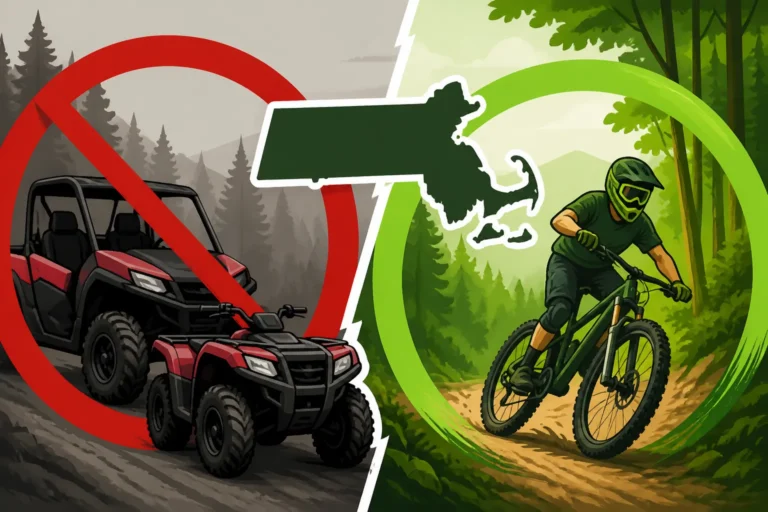
The DCR season concerns designated riding opportunities on state land. It should not be read as a general permission to ride anywhere in Massachusetts from May through November, or as a statewide ban on all off-road riding once December arrives. Private riding parks, private property, municipal land, and other public lands may have separate rules, operating schedules, or restrictions.
That distinction can prevent a frustrating mistake: seeing a trail on a map and assuming it is open to ATVs or UTVs. Land ownership, permitted vehicle types, and access rules all matter. A route can be visible and physically passable while still being closed to motorized use. Start with the land manager’s rules, then verify the specific location and machine type before you unload.
If you’re considering a different area after the state forest season ends, look into that property’s own access rules rather than relying on the DCR calendar. The same care applies to out-of-state destinations. A Massachusetts registration sticker does not automatically give you access everywhere, and other states may have their own requirements. [Massachusetts Trails Closed in Winter] is useful context when you’re comparing seasonal access options.
Why November is a sensible stopping point
Wet ground can take lasting damage
Late autumn in the Berkshires can bring a mix of rain, cold nights, thawing conditions, and early snow. A trail that looks firm at the entrance may become soft, slick, or deeply rutted farther along. Repeated vehicle traffic on saturated soil can widen ruts, push mud and sediment toward drainage areas, and make a route harder to maintain.
The risk is not limited to a dramatic storm. A few wet days followed by frequent riding can leave damage that persists after the trail dries. A rut can channel later rain, and riders trying to avoid it may spread traffic onto the trail edge. That creates a wider disturbed area and can make the route more difficult for other permitted users.
Closing a seasonal riding area can give land managers a chance to protect vulnerable surfaces and address maintenance needs without continued vehicle pressure. It also gives riders a clear seasonal boundary instead of asking each visitor to judge soil conditions across a large trail network. For the same reason, it’s worth checking [Massachusetts Mud Season and Trail Damage] and [Massachusetts Trail Riding After Heavy Rain] before riding earlier in the season.
Freeze-thaw weather makes conditions unpredictable
November conditions can change quickly. A cold morning may leave the ground firm, while afternoon temperatures soften exposed areas. Rain can then leave low spots and shaded sections slick, and an early snowfall may hide rocks, drainage channels, or trail edges. Those changes can make a familiar route feel very different from one ride to the next.
The changing surface can also raise the chance of getting stuck or damaging equipment. A UTV or ATV may carry enough weight to sink into soft ground where a lighter machine would pass, while hidden rocks and washouts can put added strain on tires, suspension, and skid plates. A route that was manageable in dry weather may become a poor choice when wet leaves cover uneven ground.
For riders, the practical takeaway is not to treat a calendar date as a trail-condition report. If you are riding before the season closes, check the forecast and any local notices, and be prepared to turn around rather than push through a soft section. If a trail is closed, don’t use an alternate route that crosses land or a road without permission. [Massachusetts Trail Closures After a Storm] offers more on why conditions can change access plans.
How the closure supports land and trail management
A break for maintenance and recovery
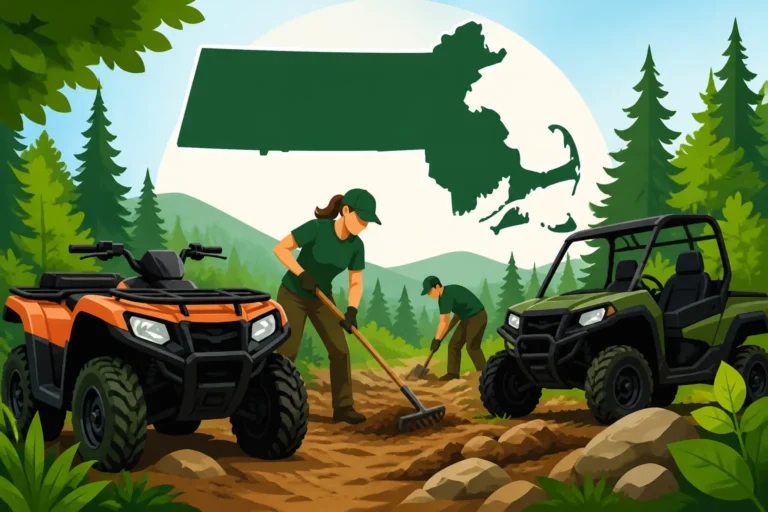
A seasonal pause gives land managers and trail partners an opportunity to inspect routes, identify erosion or drainage problems, and plan work without the same level of motorized traffic. Maintenance might involve addressing water flow, clearing downed branches, repairing damaged sections, or assessing where use has created trouble. The exact work varies by location and condition; a closure does not mean that every trail receives the same treatment.
Trail work is easier to plan when there is a period with reduced vehicle use. If an area remains busy during wet conditions, crews may have to address fresh damage while also managing ongoing traffic. A seasonal boundary helps create a predictable window for recovery and maintenance, though weather and staffing can affect what work is possible.
Riders can help protect that investment by staying on marked, permitted routes during the open season and avoiding the temptation to ride around a closure. Going around a barrier can create a new track, disturb vegetation, or lead into an area that was closed for a specific reason. For a closer look at how local groups and land managers contribute, see [How the Berkshire Trails Council Works With Rangers] and [Massachusetts Clubs That Maintain Trails].
Shared use requires clear limits
State forests are not used by riders alone. Hikers, campers, hunters, and other visitors may be using nearby areas, especially during a popular fall weekend. A clear riding season helps organize motorized access within a broader set of recreation and land-management needs.
The November cutoff also gives visitors and managers a predictable point to plan around. Without a defined season, riders might reasonably assume that a trail remains open whenever the ground looks passable. But the decision to allow motorized use involves more than whether a machine can physically travel the route. It can include trail condition, safety, maintenance, and the needs of other forest visitors.
Respecting the end date is part of keeping riding access workable over the long term. If people repeatedly ride after a seasonal closure, that can create conflict with land managers and other users, as well as damage that affects future access. A good ride ends at the marked boundary or closure point—not by finding a way around it. Review [Massachusetts Trail Etiquette Locals Expect] and [Sharing a State Forest Trail With Hikers] for more on being a considerate visitor.
Planning a ride before the season ends
Check access and conditions before you tow
A little research before departure can save a long, disappointing drive. Confirm that the forest you plan to visit is within its riding season, check for notices about closures or restrictions, and verify that your specific machine type is allowed on the intended routes. Pay attention to details such as parking access and trailhead conditions, since a trail may be open while a particular access point is affected.
Use maps to prepare, but cross-check them against official information. onX Offroad can help you review route options and keep a ride plan organized, especially if you are comparing trail areas or planning with a group. Still, a mapped route is not proof that the route is currently open, legal for your vehicle, or appropriate for the day’s conditions. Confirm the rules with the relevant land manager before you set out.
If conditions have been wet, be honest about whether the trip is worth making. A plan that includes a backup date is often less stressful than trying to force a ride into the only available weekend. You can also check [Massachusetts Trail Conditions Before You Tow] and [Calling Beartown State Forest Before You Tow] for practical ways to verify conditions and access.
Choose a late-season ride with a conservative plan
If the area is open and conditions are suitable, plan a route that leaves room to adjust. Tell your group where you intend to ride, agree on a turnaround point, and avoid stretching a short daylight window into a longer ride than everyone can comfortably manage. November days are shorter, and cooler weather can make a delay feel more serious than it would in summer.
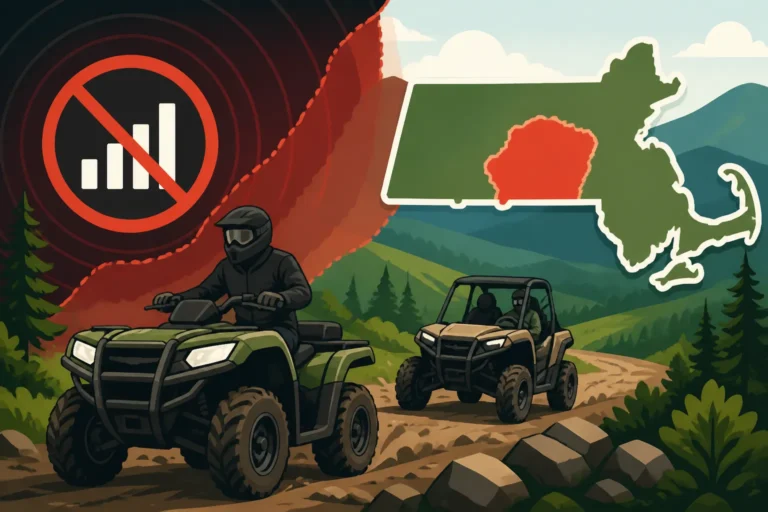
Pack for changing conditions rather than the forecast alone. Bring layers, rain protection, water, food, a basic first-aid kit, and any tools or recovery gear appropriate for your machine and route. Keep your phone charged, but don’t rely on uninterrupted service in wooded or hilly areas. A paper map or offline route information can be helpful when a signal is weak.
A late-season ride should also end with a clean exit: stay on approved trails, leave gates and barriers as you found them, and pack out any rubbish. If a route becomes muddy or unsafe, turn back rather than cutting a new line around the problem. onX Offroad may help with route planning and orientation, but the land manager’s posted rules and closure notices always take priority. For more preparation ideas, see [Massachusetts Trail Conditions Before You Tow] and [Massachusetts Riding in Late Season].
What to do after the DCR season closes
Don’t assume a nearby route is an alternative
When a DCR riding season ends, it can be tempting to look for an unmarked woods road, conservation area, or trail that appears open on a map. That can lead to trespassing or riding in a place where motorized access is not allowed. A visible track is not necessarily a legal OHV trail, and a gate or seasonal sign should be treated as meaningful even when the route looks usable.
Before switching locations, identify who manages the land and confirm the rules directly. Private property requires permission, while public properties can have specific restrictions on vehicle access. Do not rely on another rider’s old post or an outdated map as proof that access is permitted. [Massachusetts Forests That Ban ATVs] and [Massachusetts Rules for Riding Town Land] can help explain why land status matters.
If you want to keep riding during winter, look for a facility or property that explicitly allows your type of machine and is operating during that period. Ask about seasonal hours, vehicle restrictions, trail conditions, and any required paperwork before making plans. A short phone call can prevent a wasted trip—and helps avoid putting future access at risk.
Use the off-season to prepare for the next opening
The months without DCR trail riding can be useful preparation time. Clean mud and leaf debris from the machine, inspect tires and brakes, and take care of maintenance that is easier to handle before the next riding season. If your machine needs repairs, addressing them now can make spring planning less rushed.
It is also a good time to review your paperwork and riding kit. Check that your registration information is in order, replace worn safety equipment, and make sure your maps and emergency supplies are ready. If you’re new to the area or returning after a long break, revisit the rules for the specific forest you hope to ride. Seasonal access is only one part of a legal ride; the permitted route and vehicle requirements matter too.
Finally, keep an eye on official announcements as the next season approaches. Opening dates and access conditions can depend on land-management decisions and trail conditions, so don’t assume that a past year’s pattern guarantees the same experience next time. Planning early gives you more flexibility to choose a suitable day, confirm access, and arrive ready to ride responsibly.
Disclaimer
This article is for general informational purposes only and does not constitute professional advice. Laws, prices and regulations vary by location and change over time. Consult a qualified professional for guidance on your specific situation.