First Aid on a Remote Berkshire Loop
A minor injury can become a serious problem when your group is miles from a trailhead, cell service drops out, and the nearest road is hard to reach. This guide helps you prepare a practical ATV or UTV first-aid kit, respond calmly to common trail injuries, and make a clear plan for getting help on a remote Berkshire ride.
Plan before you leave the trailhead
Know your route and likely exit points
Before unloading, make sure everyone knows where you plan to ride, how long you expect to be out, and which trailhead or access point you intend to return to. In the Berkshires, a short loop can feel much longer when someone is hurt, the weather changes, or a machine can no longer move. Share your route and expected return time with someone who is staying home. Tell them when to start checking in and whom to contact if you are overdue.
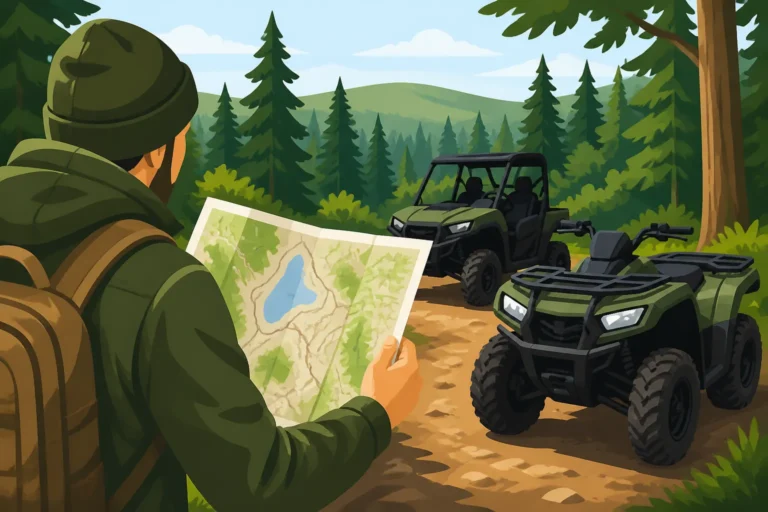
Study the route before you ride, not while trying to make a decision under stress. Note major junctions, nearby roads, parking areas, and landmarks such as a bridge, a signed intersection, or a distinct trail feature. A map app such as onX Offroad can help you review a route and save map information for offline use, but don’t make a phone your only navigation tool. Confirm that you understand the route and can describe your location without relying on a live signal.
Conditions can change, and a route shown on a map may not be open or suitable for your machine. Check current access and trail information before making the drive; Massachusetts Trail Conditions Before You Tow is a useful reminder to do that planning before you arrive. For rides in state forests, also check the relevant land manager’s rules and posted signs. If a route is closed, damaged, or beyond your group’s ability, change the plan rather than pressing on.
Prepare for poor reception and a delayed response
Cell coverage can be unreliable in hilly, wooded areas. Don’t assume that a phone will connect just because it worked at home or at the parking area. Before setting out, make sure each phone is charged, save essential contact information, and tell your group how you’ll communicate if riders become separated. A battery pack can help, but it cannot solve a lack of signal.
Offline navigation is worth setting up before you lose service. Download the map area you need, confirm that the app displays your position without a connection, and carry a paper map as a backup. Cell Dead Zones in the Berkshire Hills and Carrying a Paper Map in a State Forest cover two problems that are easy to underestimate until you’re stopped at a trail junction with no bars.
Agree on a simple response if someone does not return at the planned time. The person at home should have the group’s names, vehicle and trailer details, planned area, and the time you expect to be back. On the ride, establish a regrouping point and make sure nobody rides off alone after an incident. If you do have to seek help, one person can stay with the injured rider while another goes to a location where a call can be made, provided that doing so is safe and the group can still be accounted for.
Build a first-aid kit you can actually use
Pack for the injuries you might face
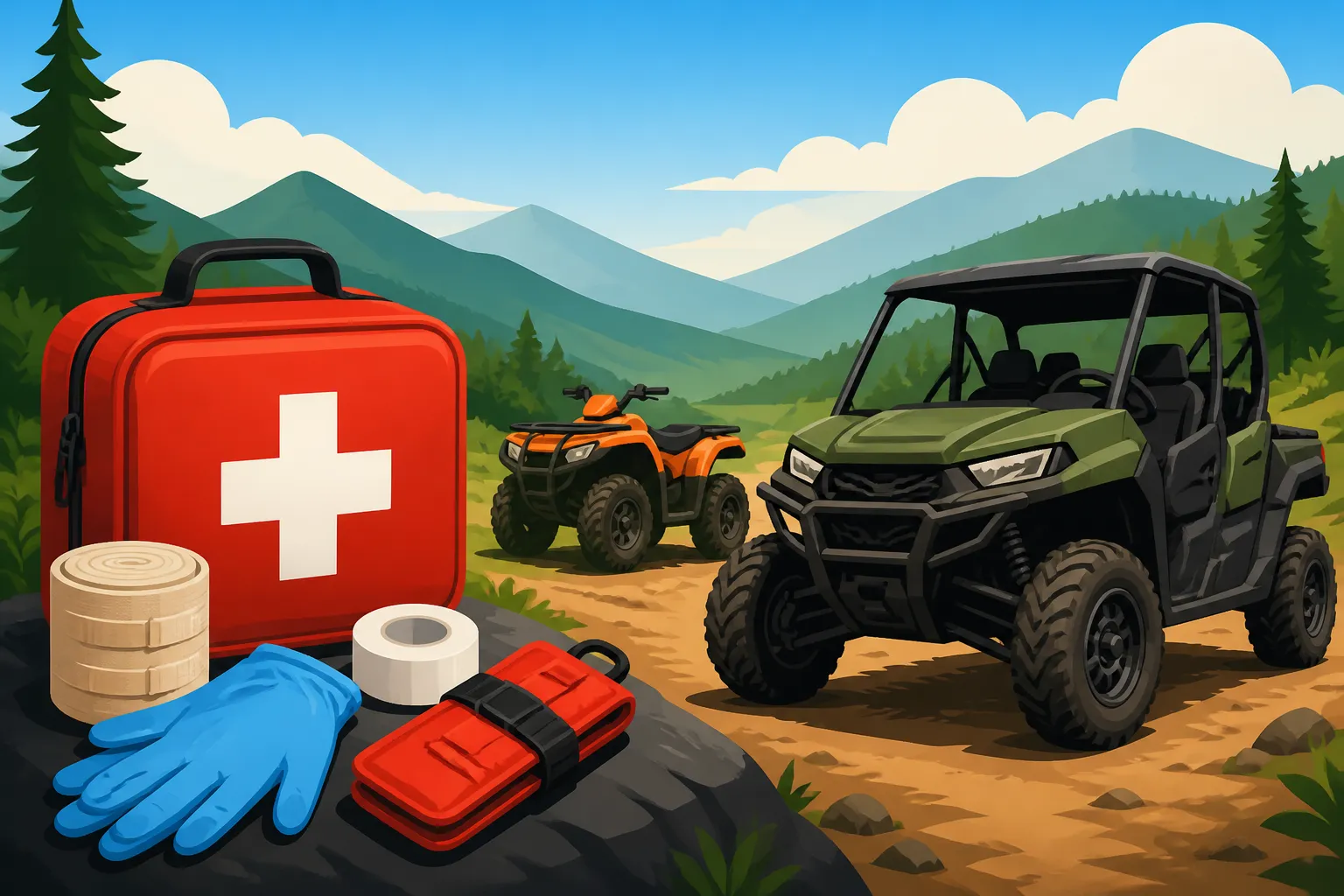
A trail kit should be compact enough to carry and organized so you can find supplies quickly. A basic kit can include disposable gloves, gauze pads, roller bandages, adhesive bandages, medical tape, antiseptic wipes, a triangular bandage, trauma shears, tweezers, and a few dressings for larger wounds. Add a small emergency blanket, a flashlight or headlamp, and a whistle. Keep medication in its original packaging and bring only what you or your group know how to use safely.
Think about the setting as well as the injury. Mud, dust, rain, and cold can complicate even a small cut. Pack supplies in a waterproof pouch, and keep the kit where it can be reached without unloading cargo or digging under riding gear. If you’re travelling in a UTV, secure the kit so it won’t slide around or become buried. On an ATV, place it where the rider can access it while stopped without creating a hazard.
Your kit should reflect the riders and the length of the outing. A group with children, someone with a known allergy, or a rider who needs regular medication may need additional personal supplies. Everyone should know where those items are stored. First Aid on a Remote Berkshire Loop is not a substitute for a first-aid course; if you ride regularly, consider taking recognized training so you can practice using your supplies before an emergency.
Keep warmth, water, and communication in the plan
An injured rider who is wet, cold, or exhausted may need attention even if the injury looks minor. Carry an extra insulating layer and a way to keep someone sheltered from wind and rain while the group decides what to do. A small emergency blanket is light, but it does not replace appropriate clothing. Packing for a Cool Mountain Morning is a helpful prompt to plan for temperature changes rather than dressing only for the conditions at the parking lot.
Bring enough water for the planned ride, with some reserve in case you are delayed. Don’t wait until someone is dizzy, unusually tired, or developing a headache to take a break and drink. Hydration on a Summer Berkshire Ride has practical reminders for hot-weather outings. In cold or wet conditions, make regular stops to check that riders are staying comfortable and alert.
Keep a phone accessible, protected from weather, and charged. If your group uses onX Offroad for navigation, set up the route and offline map before leaving service, and make sure more than one person knows how to use it. The app can support route awareness, but it does not provide emergency care or guarantee that rescuers can locate you. Carry a backup map, know your landmarks, and be ready to give a clear description of where you are.
| Kit item | What it may help with | Practical packing note |
|---|---|---|
| Gloves and gauze | Protecting hands and covering wounds | Keep several pairs of gloves together in a sealed pouch |
| Roller bandage and medical tape | Securing a dressing | Pack tape that can be used with gloves and in damp conditions |
| Triangular bandage | Supporting or securing an arm | Learn its basic uses before the ride |
| Trauma shears and tweezers | Cutting fabric or removing small debris | Store safely so sharp edges are covered |
| Emergency blanket and spare layer | Reducing exposure while waiting | Keep dry and easy to reach |
| Water and snacks | Supporting the group during a delay | Carry more than the minimum needed for the planned loop |
| Phone, battery pack, and paper map | Communication and navigation | Do not rely on a live app signal alone |
Respond calmly when someone is injured
Stop, secure the scene, and assess the situation
When someone gets hurt, first make sure the scene is safe enough to approach. Stop other machines, move riders away from traffic or an unstable slope, and watch for hazards such as moving vehicles, loose equipment, smoke, or a machine that could roll. Put on gloves before providing care when possible. Don’t create a second injury by rushing into an unsafe position.
Talk to the injured person and ask what happened, where they hurt, and whether they can breathe and respond normally. Look for heavy bleeding, trouble breathing, confusion, severe pain, or signs that the person may have injured their head, neck, or back. If the situation appears serious, call 911 as soon as you can reach service and follow the dispatcher’s instructions. If you cannot make a call from your location, send a capable group member to find service or reach help, while another person stays with the injured rider if it is safe.
For heavy bleeding, use firm, direct pressure with clean gauze or cloth while waiting for help. If an object is embedded in a wound, do not pull it out; apply pressure around it and get emergency assistance. For a suspected head, neck, or back injury, encourage the person to remain still and avoid moving them unless staying in place creates an immediate danger. Keep them warm and continue to observe their breathing and responsiveness. Don’t give food or drink to someone who is confused, very drowsy, or seriously injured.
Decide when the ride ends and help is needed
A rider who feels embarrassed may downplay an injury because the group has planned the day or driven a long way. Make the decision based on the person’s condition, not the inconvenience of turning back. Severe bleeding, difficulty breathing, loss of consciousness, confusion, a possible serious head injury, or worsening symptoms call for urgent medical help. When in doubt, contact emergency services and describe what you see rather than trying to diagnose the injury yourself.
For a less serious injury, stop riding and reassess before moving. A twisted ankle, painful wrist, or deep cut can become harder to manage if the rider tries to finish a loop. Don’t ask an injured person to operate a machine if pain, dizziness, limited movement, or medication could affect their control. The safest choice may be to turn around slowly, have another rider accompany them, or arrange help from the trailhead, depending on the injury and terrain.
Use clear roles so the group does not crowd the injured rider or leave someone unsupported. One person can provide basic first aid, another can manage the other riders and machines, and a third can communicate with the dispatcher or seek service if needed. Keep track of who has left and where they are going. When riders do need to travel for help, give them a precise description of the location, the route they should take, and any landmarks that will help them explain the situation.
Make the ride easier to manage in an emergency
Keep the group together and ride within its limits
A first-aid plan works best when the group behaves in ways that reduce preventable incidents. Choose a pace that matches the least experienced rider, keep enough distance to react to stops, and pause at junctions so nobody is left guessing which way to go. Agree that riders will not leave the group without telling someone. These habits matter on unfamiliar terrain, where a wrong turn or a separation can make it harder to find an injured person.
Be considerate of other forest users and avoid riding in a way that creates extra risks. Slow down where visibility is limited, use caution around hikers, and stop safely before discussing directions or checking a map. Massachusetts Trail Etiquette Locals Expect can help set expectations for sharing busy trails. If the trail is muddy, badly damaged, or difficult for your group, turning around is a sensible decision, not a failed ride.
Before you go, check that each machine is in suitable working order and that riders have the required protective gear for their outing. A minor mechanical problem can become a safety issue if it strands the group or forces riders onto an unsuitable route. Keep your first-aid kit, navigation tools, and emergency layer accessible rather than packed where they can only be reached after unloading. For a final pre-ride check, What an Environmental Police Officer Checks at a Trailhead offers a useful reminder to think about readiness as well as the route.
Make a simple emergency plan everyone understands
A good plan is short enough that every rider can remember it. Before starting, identify the lead rider and the sweep rider, choose a place to regroup, and agree on what happens if someone is injured or a machine breaks down. Make sure the youngest or least experienced rider knows whom to stay with. If anyone has a medical condition or allergy that could affect emergency care, discuss the relevant information privately before the ride.
Use your navigation app as one tool, not the whole plan. onX Offroad may help you review a route and see your position when you have prepared the map for offline use, but every rider should also know a nearby trailhead name, an access road, or another recognizable landmark. Put those details in a place that can be read aloud over a phone call. A dispatcher or responding team will need plain-language directions, not just a screen full of map markers.
Finally, set a realistic return time and stick to it. If weather deteriorates, a rider becomes tired, or trail conditions are worse than expected, shorten the ride. Before heading out, review Massachusetts Trail Closures After a Storm and other current notices that may affect access. The most useful first-aid decision is often the one made early: choosing a safer route, carrying what the group needs, or turning back before a small problem becomes a remote emergency.
Disclaimer
This article is for general informational purposes only and does not constitute professional advice. Laws, prices and regulations vary by location and change over time. Consult a qualified professional for guidance on your specific situation.