Do You Need a Snorkel for Berkshire Brook Crossings?
A Berkshire brook can look shallow from the trail and still hide a deep hole, slick rocks, or a strong current. A snorkel may help protect an ATV or UTV’s air intake during some water crossings, but it does not make the machine waterproof or make an unsafe crossing safe. This guide explains when a snorkel helps, what it cannot protect, and how to decide whether to turn around.
What a snorkel does and does not do
How an ATV or UTV snorkel works
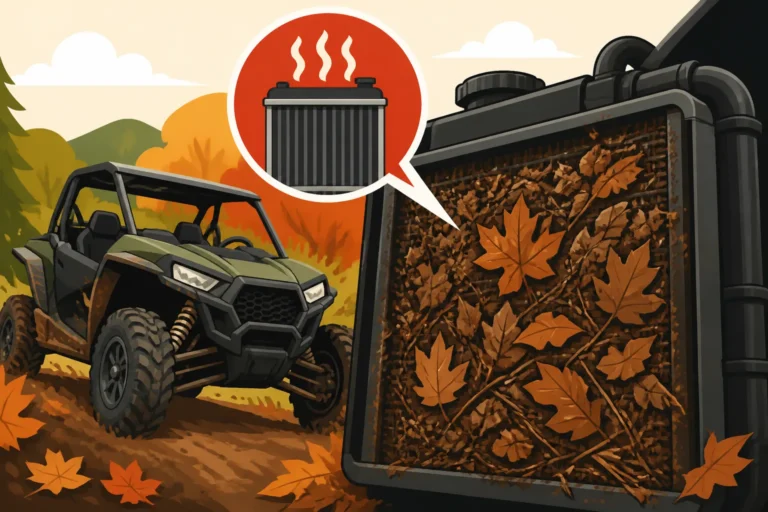
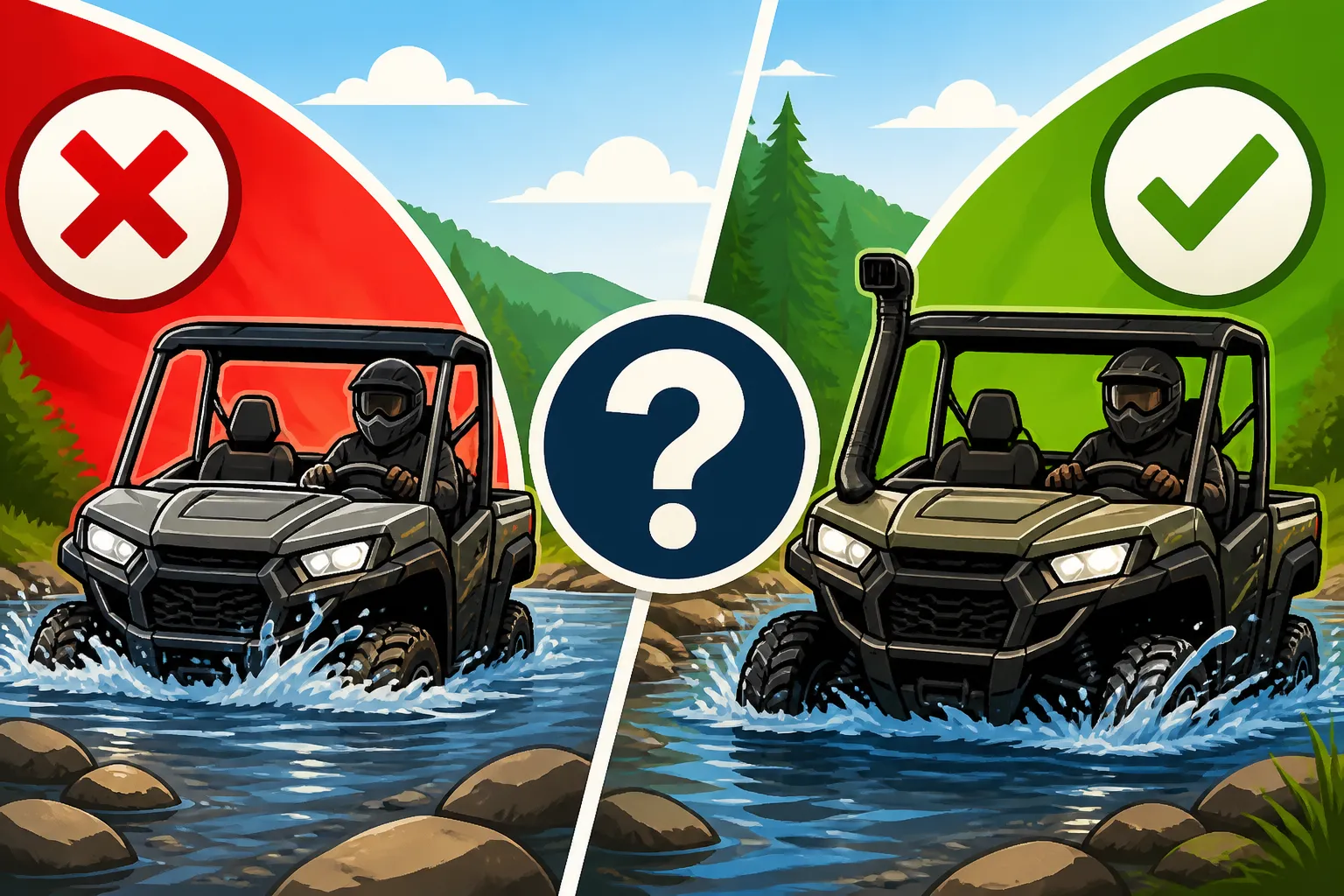
A snorkel relocates an intake opening higher on the machine, usually to reduce the chance of water entering the engine through the original low-mounted air intake. Some snorkel kits also extend transmission or differential breather hoses, which can help reduce water entering those components when they are submerged.
That protection is limited to the parts the system is designed to serve. A snorkel does not raise the whole machine, seal the electrical system, make the exhaust waterproof, or prevent water from entering through seals and vents. It also does not improve traction or keep a vehicle upright in a current.
The setup varies by model and kit. Before buying or installing one, check the machine’s manual and the kit’s instructions to learn which components are addressed and whether the installation affects service, warranty, or maintenance requirements. A poorly fitted intake extension can create problems of its own, including leaks, restricted airflow, or openings positioned where spray and debris can still reach them.
Why a snorkel is not permission to ride deeper
Water can damage an engine quickly if it reaches the intake. It can also contaminate lubricants, soak electrical connections, or cause a belt-driven transmission to slip. Even if the engine keeps running during a crossing, water exposure may lead to trouble later.
A snorkel does not tell you how deep the water is, how firm the bottom feels, or whether the current is pushing harder than it appears. Nor does it provide a reliable universal depth limit. The safe water depth depends on the specific machine, its setup, the water’s movement, the bottom, and the operator’s skill. Check the manufacturer’s guidance rather than relying on a generic depth figure or another rider’s experience.
The same principle applies to aftermarket modifications: more equipment does not necessarily mean more safety. A snorkel can make a machine better suited to certain conditions, but it cannot turn a flooded trail, an unknown crossing, or a prohibited route into an appropriate place to ride.
How to assess a Berkshire brook crossing
Check whether the route is open and authorized
First, establish that the crossing is part of an open, authorized riding route. Do not assume that a visible track through water is a designated trail, or that a route shown on an app is open to motorized use. Access and trail conditions can change, and storm damage may make a previously passable section unsuitable.
Before hauling out, review Massachusetts Trail Conditions Before You Tow and the broader overview of Massachusetts ATV Trails: Three Berkshire Forests. For a trip focused on a particular area, check the information for Beartown State Forest Riding in Massachusetts, October Mountain State Forest Riding in Massachusetts, or [Pittsfield State Forest Riding in Massachusetts). Confirm access and any posted directions with the relevant land manager before riding.
Navigation tools, including onX Offroad, can help you understand your location and plan a route, but a map should not be treated as confirmation that every line is open or legal to ride. Look for current official notices and posted signs, and turn back if the route is closed or the crossing appears to leave the authorized trail.
Read the water and the terrain, not just the surface
A brook’s surface can conceal a sudden drop, loose stones, branches, mud, or a washed-out bank. A clear-looking crossing is not automatically a safe one. Walk the approach and exit only where it is safe and permitted to do so, and avoid entering if you cannot judge the depth, bottom, current, or exit.
The conditions around the water matter as much as the water itself. Recent rain can change the current and soften trail edges. A narrow channel may push a machine sideways, while wet rocks can reduce traction just when you need it to climb out. If the crossing has a steep bank, no firm exit, or a current that makes you hesitate, do not attempt it.
Never use another rider’s successful crossing as your safety test. Their vehicle may have a different setup, they may have crossed under different conditions, or they may simply have taken a risk you do not want to take. If you cannot confidently assess the route, turn around. That can be frustrating after towing into the Berkshires, but it is far better than recovering a submerged machine or damaging a trail.
| Crossing condition | Practical decision |
|---|---|
| Route is closed, unmarked, or not clearly authorized | Do not enter; verify access with the land manager |
| Depth or bottom is difficult to judge | Turn around rather than guessing |
| Current is visibly moving the water or debris | Do not attempt the crossing |
| Recent rain has altered the bank or trail | Check current conditions and avoid the crossing if uncertain |
| Firm approach, visible exit, and an authorized route | Proceed only within the machine maker’s guidance and your ability |
| Water reaches a level that concerns you, even with a snorkel | Stop; a snorkel does not make the crossing safe |
Decide whether a snorkel makes sense for your riding
Consider your typical rides and the machine’s limits
For a rider who sticks to open, maintained routes and avoids deep water, a snorkel may add little practical value. A machine used for work or recreation in places where water exposure is a recurring, lawful part of the route may benefit from a properly designed system—but only if the rider also follows the manufacturer’s operating guidance and inspects the vehicle after wet rides.
Think about the crossings you actually encounter. Are they shallow, authorized trail crossings with a firm bottom, or are you trying to prepare for water of unknown depth? A snorkel is not a substitute for choosing a conservative route. If your reason for considering one is that you expect to push through deeper water, it may be safer to revise the route or riding plan instead.
Also consider the full setup, not just the intake pipe. Ask a qualified mechanic or the kit maker whether the proposed system addresses the relevant breathers and whether installation and maintenance requirements fit your machine. After any water exposure, follow the manufacturer’s inspection and service instructions; do not assume that a snorkel means the machine needs no attention.
Weigh benefits against trade-offs
A well-matched snorkel system can help reduce the risk of water entering an intake during some exposures. But installation can involve modifications, additional inspection, and the possibility of fitment or maintenance issues. It may also encourage a rider to attempt a crossing that would otherwise be avoided.
For many riders, thoughtful route planning is the more useful first step. onX Offroad can help with navigation and trip planning, but compare the route with current official information and signs at the trail. Treat the app as one planning aid—not an authority on trail status or a guarantee that a water crossing is safe.
If your riding plans include Beartown, October Mountain, or Pittsfield, read area-specific guidance such as Massachusetts Trail Closures After a Storm and Massachusetts Trail Etiquette Locals Expect. Conditions and access are not interchangeable between places. A machine setup that suits one ride does not automatically make a different route suitable.
A safer approach before, during, and after a crossing
Before you ride
Start with the route. Check that the trail is open, that motorized riding is permitted, and that any crossing is part of the authorized route. Look for notices about storms, closures, or damaged sections. onX Offroad may help you orient yourself and keep track of a planned route, but verify details through official postings and on-site signs.
Next, check the machine’s manual for water-operation guidance and inspect the vehicle before loading it. Make sure the intake and any installed snorkel components are secure, and understand how to respond if the machine stalls or takes on water. Bring a way to contact help where service is available, but do not count on cell coverage in the hills. A map and a turnaround plan are sensible additions to your trip preparation.
If the water is higher or moving faster than expected when you arrive, change the plan. A long drive does not obligate you to cross. For more trip-planning context, see Massachusetts Trail Conditions Before You Tow and Massachusetts ATV Trails: Three Berkshire Forests.
If you cross, keep the decision conservative
Only consider a crossing when it is permitted, the route is clear, and you can evaluate the approach, water, bottom, and exit. Follow the machine manufacturer’s instructions and avoid sudden inputs that could upset traction or balance. Never enter water simply because a snorkel is installed.
If the machine stalls or behaves unusually after water exposure, do not keep trying to start it. Follow the manufacturer’s guidance and get qualified assistance. Starting an engine after water may have entered the intake can worsen damage. Once back at a safe location, inspect and service the machine as directed; water in fluids or components may not be obvious from a quick glance.
Respect the trail and the people sharing it. Avoid widening the route around a wet section, creating a new bypass, or disturbing stream banks. If a crossing appears damaged or unsafe, report the concern through the appropriate land-management channel rather than making a new path around it.
Ultimately, a snorkel is a protective modification with specific limits—not a promise that an ATV or UTV can safely cross any Berkshire brook. The best decision may be to avoid the water, choose a different authorized route, or return another day when conditions are suitable.
Disclaimer
This article is for general informational purposes only and does not constitute professional advice. Laws, prices and regulations vary by location and change over time. Consult a qualified professional for guidance on your specific situation.