Riding a Berkshire Trail With a Dog Aboard
Bringing your beloved dog along for an ATV or UTV adventure on Massachusetts' beautiful Berkshire trails sounds like a dream for many off-road enthusiasts. But before you load up your furry co-pilot, there's a lot to consider regarding their safety, the rules of the trail, and ensuring a fun experience for everyone involved. This guide will walk you through everything you need to know to safely and legally enjoy a trail ride with your dog in Massachusetts, addressing common concerns and outlining essential preparations.
Understanding Massachusetts Rules for Dogs on Trails
One of the biggest questions people have is whether dogs are even allowed on OHV trails in Massachusetts, and specifically, if they can ride on the ATV or UTV. The regulations surrounding off-highway vehicles in Massachusetts, particularly under Chapter 90B, primarily focus on rider safety, registration, and permissible riding areas. While the law doesn't explicitly prohibit dogs from being passengers on an OHV, it places a heavy emphasis on responsible operation and safety, which implicitly extends to any passenger, human or animal.
State Forests and Dog Policies
Massachusetts has a fantastic network of state forests, and three in the Berkshires—Beartown, October Mountain, and Pittsfield State Forests—offer designated ATV and UTV trails. Generally, dogs are welcome in Massachusetts state forests and parks, but almost always on a leash. The challenge for OHV riders is reconciling the "on-leash" requirement with having a dog ride on the machine itself. While you might not be walking your dog on a leash while operating your UTV, the spirit of the rule is about control and preventing your dog from disturbing wildlife or other trail users. Always check the specific DCR (Department of Conservation and Recreation) guidelines for the individual forest you plan to visit, as rules can sometimes vary or be updated. For instance, [Massachusetts Rules for Riding a Woods Road] often specify general conduct for all users, including those with pets.
Beyond state forest rules, remember that written landowner permission is required for riding on private land in Massachusetts. If you're on a private trail system, the landowner's specific rules about dogs (and their presence on an OHV) will dictate what's permissible. Always secure that [Massachusetts Landowner Permission in Writing] before venturing onto any non-public land. Even if a landowner allows your dog, their safety and your control over them remain paramount.
What the Law Implies for Canine Passengers
Since Massachusetts law doesn't have a specific "dog on ATV" clause, we look to broader regulations. Operating an OHV "negligently so as to endanger" is illegal. Having a dog unrestrained, causing a distraction, or at risk of falling off could easily be interpreted as negligent operation. This means that while not explicitly banned, you are absolutely responsible for ensuring your dog's safety and that they do not interfere with your ability to operate the machine safely. Just like you wouldn't let a child ride unrestrained, the same common sense applies to your dog. The Environmental Police, who enforce OHV laws, would certainly consider a dog's safety when assessing responsible operation. Think about what an [Environmental Police Officer Can Ask] you during a trailside stop, and be prepared to explain how your dog is safely secured.
It’s also crucial to remember that your ATV or UTV still needs to be properly registered and your decals correctly placed. While not directly related to your dog, ensuring your machine is legal is the first step before any adventure. For residents, this usually means a [Massachusetts Two-Year OHV Registration], while visitors from out of state will need a [Massachusetts Non-Resident OHV Registration].
Essential Safety Measures for Your Canine Co-Pilot
Your dog's safety is non-negotiable when hitting the trails. Unlike humans who can understand instructions and hold on, dogs rely entirely on your preparation and equipment. Ruts, sudden stops, bumps, and even wildlife encounters can quickly turn an exciting ride into a dangerous situation if your dog isn't properly secured.
Secure Restraints and Carriers
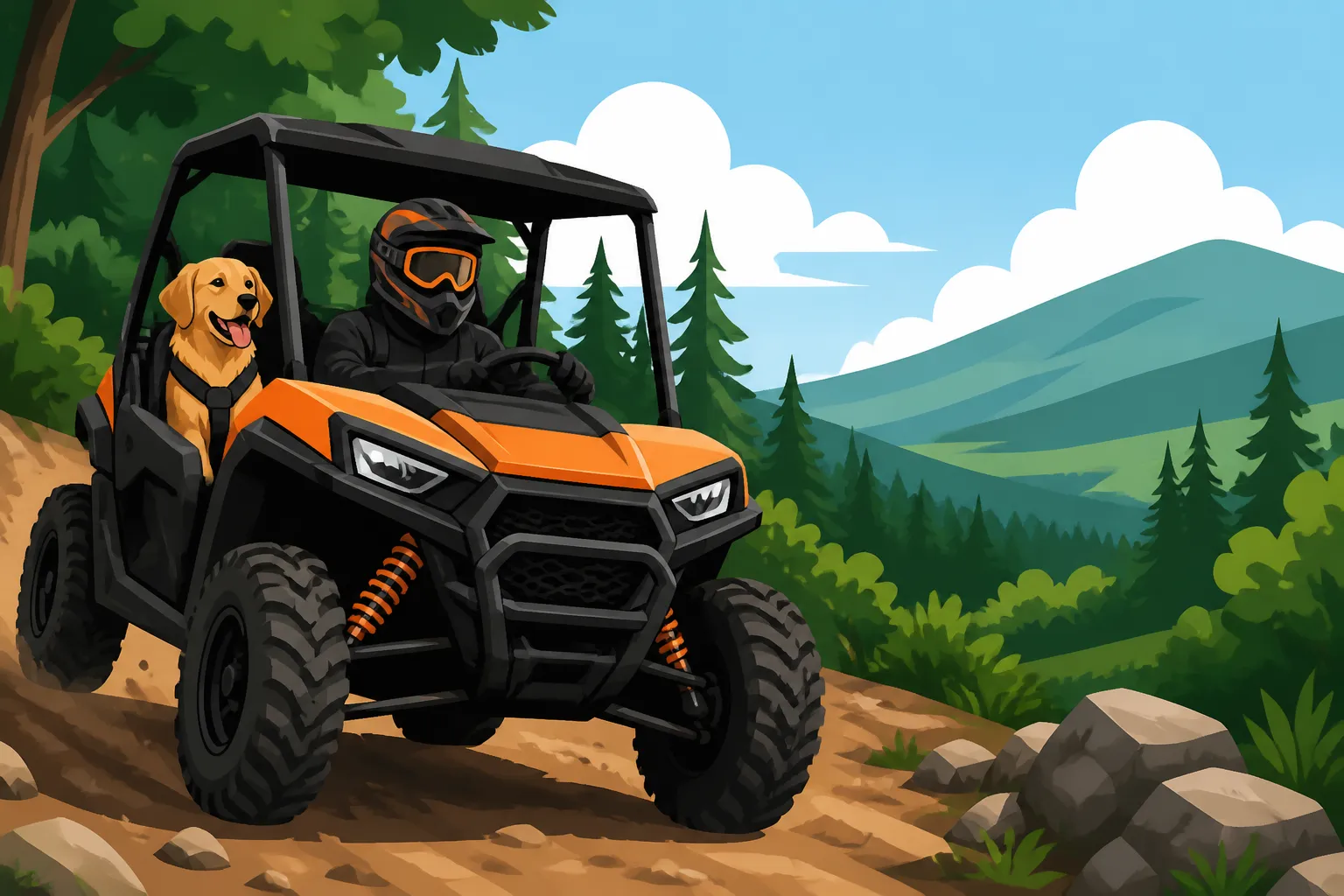
The absolute first priority is a secure way to transport your dog. Letting them ride loose in the bed of a UTV or simply sitting on the seat of an ATV is incredibly risky. For UTVs, a specialized dog carrier or kennel that can be securely strapped into the cargo bed is ideal. Look for carriers designed for vehicle transport, offering good ventilation and impact resistance. These should be strapped down using heavy-duty tie-downs, ensuring they won't shift or tip, even during aggressive maneuvers or bumps. Some riders opt for a sturdy dog seatbelt harness that clips into existing seatbelt receivers, keeping the dog on the seat, but this still might not offer enough protection from impacts or being jostled if they are not fully enclosed. Products from brands like SuperATV offer robust cargo management solutions and accessories that can often be adapted for securely anchoring pet carriers, providing peace of mind as you navigate varied terrain.
For ATVs, carrying a dog is generally much more challenging and often not recommended unless it's a very small dog in a purpose-built, highly secure, front or rear rack-mounted carrier. The inherent instability of an ATV, especially when encountering uneven terrain or making turns, makes it difficult to maintain a dog's balance and safety. If you absolutely must take a dog on an ATV, a hard-sided, enclosed carrier, specifically designed for ATV racks, is the only safe option, and even then, it requires extreme caution and a very calm, accustomed dog. Never, ever allow a dog to simply sit or stand on an ATV rack without a secure, enclosed carrier.
Eye and Ear Protection
Just like you wouldn't ride without a helmet or eye protection, your dog needs protection too. Dust, debris, branches, and even insects can cause serious eye injuries at trail speeds. Dog goggles (often called "Doggles") are a real product and a wise investment. They're designed to fit a dog's face comfortably and protect their eyes from foreign objects and windburn. Similarly, the constant noise of an engine, especially during long rides, can be damaging to a dog's sensitive hearing. Special dog ear protection, similar to ear muffs or noise-canceling headsets for humans, can help mitigate this. Imagine riding [October Mountain State Forest Riding in Massachusetts] with its winding trails; the wind and engine noise would be constant companions, making ear protection for your dog a thoughtful choice.
Consider the potential for unexpected wildlife encounters. A sudden deer sighting or a small animal darting across the trail could spook your dog, even if they are usually calm. Eye and ear protection can help keep them focused and prevent them from reacting impulsively to sights and sounds that might otherwise cause distress or an unsafe movement within their carrier.
Hydration and Temperature Control
Overheating and dehydration are serious risks for dogs, especially during physical activity or prolonged exposure to sun and engine heat. Always carry plenty of fresh water for your dog, along with a portable bowl. Offer water frequently, even if the ride isn't strenuous. On hot days, consider cooling vests or bandanas. If your UTV has a roof, that's a good start, but ensure air circulation is adequate within their carrier. Never leave your dog in a stationary UTV or carrier on a warm day, even for a short time, as temperatures can climb rapidly. During the cooler [Massachusetts DCR Riding Season] from May to November, hypothermia might be a concern on a rainy, chilly day, so pack a blanket or a warm coat for your dog if needed.
Paying attention to your dog's breathing, tongue color, and overall demeanor is crucial. If they appear lethargic, pant excessively, or show any signs of distress, stop immediately, find shade, and offer water. Sometimes, even with the best intentions, a day on the trail might be too much for your dog, and knowing when to call it quits is part of being a responsible owner.
Preparing for Your Adventure: Gear and Training
Taking your dog on an OHV trail isn't just about strapping them in; it requires thoughtful preparation of both gear and behavior. A well-prepared dog is a safe and happy dog.
Essential Gear Checklist
Beyond the carrier and protective wear, a few other items are critical for any trail ride with your dog:
- First-Aid Kit for Dogs: Just like your human first-aid kit, a specialized dog kit should include bandages, antiseptic wipes, tweezers (for ticks or splinters), paw balm, and any specific medications your dog requires.
- Leash and Collar/Harness: Even if your dog is in a carrier, you'll need these for rest stops, bathroom breaks, or if you encounter other trail users. A strong, comfortable harness is often better than a collar for control.
- Waste Bags: Pack plenty. "Leave No Trace" applies to pet waste too, especially in state forests.
- Food and Treats: Bring enough food for the day and some high-value treats for positive reinforcement, especially if your dog is new to riding.
- Proof of Rabies Vaccination: While not usually checked at trailheads, it's a good practice to carry proof of current vaccinations, especially if you ever have an incident or need veterinary care while away from home.
- Identification: Ensure your dog wears tags with your current contact information, and consider microchipping if you haven't already.
For items like storage or specialized racks to carry all this gear, companies like SuperATV offer a variety of options that can enhance your UTV's utility, making it easier to transport everything you need for both you and your dog without cluttering the cabin or obstructing your view.
Acclimation and Training
Before you ever hit a technical trail in [Pittsfield State Forest Riding in Massachusetts], introduce your dog to the ATV or UTV in a calm, stationary environment. Let them sniff around the machine, get comfortable with the sounds it makes (engine running), and practice getting into and out of their carrier or harness. Start with very short, slow rides around your property or a quiet field. Gradually increase the duration and speed, observing your dog for any signs of stress or anxiety.
Positive reinforcement with treats and praise is key. You want your dog to associate the machine and riding with positive experiences. If your dog seems overly stressed or anxious, it might be that OHV riding isn't for them, and that's okay. Their comfort and safety should always take precedence over your desire to bring them along. A dog that is constantly stressed during a ride can become a distraction, compromising your safety and theirs.
Responsible Trail Etiquette with a Dog Aboard
Sharing the trails means being mindful of others, and that includes managing your dog's presence responsibly. Good etiquette ensures everyone has a pleasant experience and helps maintain access for OHV riders with dogs.
Respecting Wildlife and Other Users
Massachusetts trails are shared spaces. You'll encounter hikers, mountain bikers, and sometimes even horseback riders. Always keep your dog under control and on a leash when outside their carrier, especially during stops or when passing other trail users. Many people are not comfortable around unfamiliar dogs, and it’s important to respect their space. A friendly dog can still be intimidating to someone who isn't a dog person. Furthermore, your dog, even if well-behaved, can frighten wildlife or disrupt their natural habitats. Remember, [Massachusetts Rules for Riding a Woods Road] and other regulations are often about preserving the natural environment and ensuring peaceful coexistence.
Consider the noise your dog might make, especially if they bark frequently. A barking dog can disturb the peace and quiet that other trail users seek. If your dog is prone to barking, training to reduce this behavior, or choosing a different activity, might be necessary.
Handling Breaks and Waste
Regular breaks are essential for your dog to stretch their legs, relieve themselves, and rehydrate. Choose safe, clear spots off the main trail for these breaks. Always pick up your dog's waste and pack it out. Leaving dog waste, even in remote areas, is not only unsightly but can also introduce pathogens into the environment. It's a fundamental part of [Leaving a Forest Trailhead Tidy] and respecting the natural spaces we get to enjoy.
During these breaks, be mindful of your surroundings. Check your dog for ticks, especially after walking through tall grass. Offer water and allow them to rest in the shade if possible. These small acts of care contribute significantly to a positive experience for your dog and for other trail users.
Massachusetts Trail Etiquette Table
Here’s a quick summary of key etiquette points when riding with your dog on Massachusetts OHV trails:
| Aspect | Best Practice for Dog Owners on OHV Trails |
|---|---|
| Control | Keep dogs securely restrained in a carrier while riding. Use a leash during all breaks and encounters with others. |
| Waste Management | Always pick up and pack out all dog waste. |
| Interaction with Others | Yield to hikers and equestrians. Pull over, turn off the engine, and keep your dog leashed and close. |
| Wildlife | Prevent your dog from chasing or disturbing wildlife. Keep a respectful distance. |
| Noise | Minimize dog barking, especially near campsites or other quiet areas. |
| Hydration/Breaks | Offer water frequently. Plan regular stops for bathroom breaks and stretching. |
| Personal Space | Assume others may not want to interact with your dog; maintain distance. |
By following these guidelines and always prioritizing your dog's safety and comfort, you can create wonderful memories exploring the scenic Berkshire trails together. It takes a little extra planning and gear, but the joy of sharing the outdoors with your canine companion is absolutely worth it.
Disclaimer
This article is for general informational purposes only and does not constitute professional advice. Laws, prices and regulations vary by location and change over time. Consult a qualified professional for guidance on your specific situation.