Massachusetts Riders 10 to 14 in Races
It can be incredibly frustrating for parents in Massachusetts who want their children to enjoy the thrill of ATV or UTV riding, especially when they hear about the state's famously strict youth riding laws. Many believe that riders between 10 and 14 years old are entirely prohibited from operating these machines, which isn't quite true. This guide will meticulously break down the specific, limited circumstances under which young riders in Massachusetts, aged 10 to 14, can legally participate in competitive events and what parents need to know to navigate these rules.
The Strict Landscape for Young ATV Riders in Massachusetts
Massachusetts has some of the most stringent laws regarding youth operation of ATVs and UTVs in the entire country, and for good reason. These laws were put in place to protect young riders, but they can certainly feel restrictive to families eager to participate in the sport. Understanding the baseline prohibitions is key to appreciating the narrow exceptions.
Sean's Law: The Foundation of Youth Riding Restrictions
The cornerstone of Massachusetts's ATV and UTV youth riding laws is often referred to as [Sean's Law and Massachusetts Youth Riders]. This legislation, passed in 2010, significantly tightened the reins on who could ride and where. Before Sean's Law, regulations were less comprehensive, but a tragic accident involving a young rider underscored the need for stricter guidelines. The law primarily restricts anyone under the age of 14 from operating an ATV or UTV on public or private land, with very few, specific exceptions. This means that for the vast majority of recreational riding – casually exploring trails, riding on private property, or joining family outings – a 10, 11, 12, or 13-year-old simply cannot legally be behind the handlebars. This blanket restriction is what often leads to the widespread misconception that this age group is entirely barred from the sport, which isn't quite the full story when it comes to structured, competitive events.
The spirit of Sean's Law is undeniably focused on safety, aiming to reduce serious injuries and fatalities among young riders. It acknowledges that operating these powerful machines requires a certain level of physical and cognitive maturity that many younger children have not yet developed. While this can be a tough pill to swallow for parents whose children are passionate about riding, the law's intent is to prevent devastating outcomes. So, when you're thinking about a child in this age bracket, the default assumption should always be that riding is prohibited, until you can confirm they meet one of the highly specific exemptions.
Why the 10-14 Age Group is Particularly Challenging
The age range of 10 to 14 years old sits in a peculiar spot within Massachusetts's ATV regulations. While riders under 10 are almost universally restricted to highly controlled environments like sanctioned events, and riders 14 and above begin to have more pathways to legal riding (albeit with engine size restrictions for 14-16 year olds, as detailed in [The 90cc Engine Cap for Riders 14 to 16]), the 10-14 bracket faces the most significant hurdles for general recreational use. This age group is often caught in a developmental middle ground; they might have the physical strength to manage a machine, but their judgment, risk assessment, and quick decision-making skills might still be developing. The law reflects this concern.
For a child aged 10, 11, 12, or 13, simply going out to a friend's property or a family woodlot for a ride is illegal, even if they're supervised by an adult. The law makes no allowances for private land riding in this age group for general recreational purposes. This specific restriction is what makes participation in sanctioned competitive events the only viable and legal avenue for these young enthusiasts to engage with the sport. It emphasizes that for this particular demographic, any riding must occur within a highly structured, controlled, and formally approved environment, distinct from casual recreational activities.
The Critical Exemption: Sanctioned Competitive Events
Despite the strict rules, there's a ray of hope for young riders aged 10 to 14: the exemption for sanctioned competitive events. This is the legal pathway that allows them to experience the thrill of racing in a structured and supervised environment. It's not a free pass, however; there are very specific conditions that must be met.
What Defines a "Sanctioned Competitive Event" in Massachusetts
The term "sanctioned competitive event" is crucial here, and it's not interchangeable with any organized ride or casual gathering. In Massachusetts, a sanctioned competitive event, for the purposes of allowing riders 10 to 14, generally refers to a formally organized race or competition that has received specific approval and operates under strict guidelines set forth by a recognized governing body or a municipality. These events are not ad-hoc get-togethers; they are professional or semi-professional races that adhere to a specific set of rules, safety protocols, and often have official event permits. This distinction is paramount because it ensures a heightened level of oversight and safety that wouldn't be present in a less formal riding scenario.
For an event to qualify, it must typically involve actual competition, with defined start and finish lines, scoring, and a clear objective for participants to compete against each other or a clock. It will also have dedicated staff, emergency services on standby, and clearly marked courses designed for competitive riding. Simply participating in an organized group ride, even one with a fee, does not meet the criteria of a "sanctioned competitive event" that would exempt a 10 to 14-year-old from the general prohibitions. The key is the competitive nature and the sanctioning by an appropriate authority, such as an approved racing organization or through a [Massachusetts Municipal Approval for a Rally] or race.
Differentiating Races from Casual Riding
It’s vital to understand that the legal framework for a sanctioned race is entirely different from that of casual, recreational riding. When your child is on the starting line of an approved race, they are operating under a specific set of rules and a controlled environment that is designed to mitigate risks inherent in competitive motorsports. This is a stark contrast to casual trail riding, where variables like unpredictable terrain, encounters with other trail users, and varied levels of supervision are much harder to control.
For instance, in a race, the course is often pre-inspected, riders wear mandatory safety gear (like a helmet meeting [Massachusetts Helmet Standards]), and there are usually marshals positioned along the track to ensure safety and enforce rules. The focus is on a contained, time-limited competitive activity. Casual riding, on the other hand, might involve longer durations, diverse and potentially unknown terrain, and less immediate medical support. Massachusetts law makes this distinction precisely because the risks can be managed and mitigated much more effectively in a controlled competitive setting. Therefore, a race allows for the participation of younger riders because the environment is specifically engineered for that purpose, whereas general riding on public or private lands for this age group is deemed too risky without such controls.
Navigating the Specific Requirements for 10-14 Year Old Racers
If your child, aged 10 to 14, is keen on participating in sanctioned competitive events, there are several strict requirements you, as a parent or guardian, must absolutely adhere to. These are non-negotiable legal mandates designed to ensure the safety and legal compliance of young racers.
The Mandatory OHV Safety Certificate
One of the most critical requirements for any young rider in Massachusetts, even within the confines of a sanctioned event, is the completion of an approved Off-Highway Vehicle (OHV) safety course. For riders under 18, possessing a valid OHV safety certificate is generally mandatory for riding on public lands. While a sanctioned race might be on private land, the state's overarching safety requirements often extend to such activities. This means your child will need to take and pass both parts of the state-approved course. [Massachusetts Two-Part Safety Course] involves an online or classroom component, followed by a mandatory in-person skills test.
Furthermore, for riders under the age of 16, a parent or legal guardian is not just encouraged, but legally required to attend the classroom portion of the safety course with their child. This rule, highlighted in [Massachusetts Parents Must Attend Under 16], ensures that parents are fully informed of the risks, rules, and responsibilities associated with OHV operation, especially when their child is involved. This isn't just a hoop to jump through; it's an educational opportunity for both parent and child to learn about safe operating practices, environmental responsibility, and the specific laws governing ATVs and UTVs in Massachusetts. Without this certificate, your child cannot legally participate, even in a sanctioned race.
Engine Size Limits and Machine Suitability
While the specific rules for a 10-14 year old participating in a sanctioned event might differ slightly from the general recreational engine size restrictions, event organizers will almost certainly have their own strict classes and guidelines based on age and engine displacement. Generally, for younger riders, less powerful machines are always recommended to match their skill level and physical capabilities. For example, while the state specifies a [Massachusetts Age and Engine Size Ladder] for general riding, focusing on the 90cc cap for 14-16 year olds, race organizers will categorize their youth classes (e.g., 50cc, 70cc, 90cc) to ensure fair and safe competition.
It is absolutely crucial that the machine your child uses is appropriate for their size, strength, and experience. Even if an event allows a larger machine for their age group, if your child struggles to control it, it's an accident waiting to happen. The machine should be well-maintained, with properly functioning brakes, tires, and all other safety components. Many parents look to trusted brands like SuperATV for parts and accessories that can enhance safety and performance, ensuring the machine is truly race-ready and capable of handling the demands of competition. This might include reinforced components, enhanced suspension for better handling, or specialized tires designed for race conditions. Always double-check the event's specific machine requirements before investing in or modifying an ATV or UTV for competition.
Direct Adult Supervision and Event Responsibilities
In any sanctioned competitive event involving riders aged 10 to 14, stringent adult supervision is not just expected, but legally mandated. The supervising adult, often a parent or guardian, must be present at the event and maintain [Massachusetts Supervising Adult Defined] contact and oversight of the child. This usually means being within continuous visual contact and able to communicate verbally with the child at all times, even during the race itself. This adult is ultimately responsible for the young rider's adherence to all rules and safety protocols.
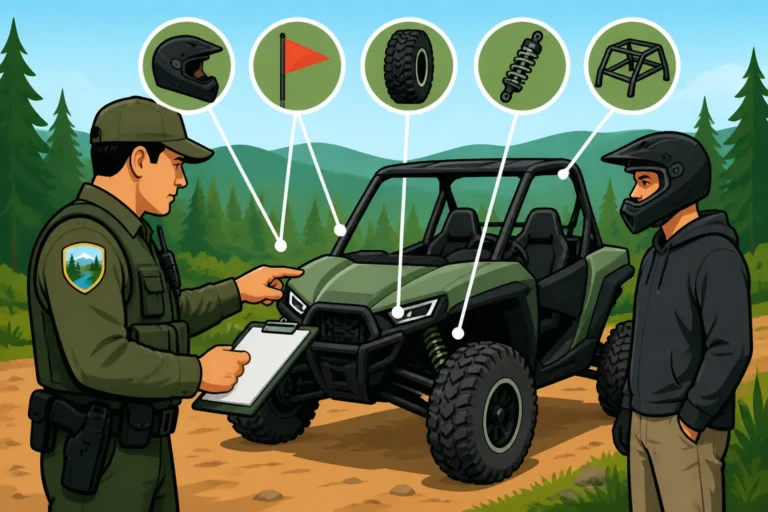
Beyond direct supervision, the parent or guardian will also be responsible for ensuring all event-specific requirements are met. This often includes signing waivers, providing proof of safety certification, ensuring the child has the correct [Massachusetts Equipment Requirements] (such as an approved helmet, eye protection, gloves, boots, and long sleeves/pants), and understanding all track rules. Parents are often expected to be actively involved in supporting their young racer, from pre-race checks of their machine to post-race debriefs. The legal liability for the young rider's actions or any violations ultimately rests with the supervising adult, underscoring the seriousness of this responsibility.
| Age Group | General Riding (Public/Private Land) | Sanctioned Competitive Events | Engine Size (General) | Safety Certificate | Parent Attendance |
|---|---|---|---|---|---|
| Under 10 | Generally Prohibited | Allowed (Very Specific Rules) | N/A (Event Rules Apply) | Yes | Yes (Under 16) |
| 10-14 | Generally Prohibited | Allowed (Specific Rules) | N/A (Event Rules Apply) | Yes | Yes (Under 16) |
| 14-16 | Allowed (90cc Max, Supervised) | Allowed | 90cc Max | Yes | Yes (Under 16) |
| 16-17 | Allowed (Supervised) | Allowed | No Max | Yes | No |
| 18+ | Allowed | Allowed | No Max | No | No |
Note: "Generally Prohibited" implies exceptions may exist in very rare, highly controlled circumstances outside of typical recreational riding that are not competitive events. "Allowed (Specific Rules)" means strict adherence to additional event, machine, and supervision rules.
Practical Steps for Parents and Young Racers
Deciding to enter your child into ATV or UTV racing is a significant commitment, and there's a good deal of preparation involved beyond just showing up on race day. Taking a systematic approach will help ensure both safety and compliance.
Acquiring the Massachusetts OHV Safety Certificate
The first, non-negotiable step is to get that safety certificate. This typically involves two distinct phases. Phase one is the classroom or online course, which covers basic OHV operation, safety principles, environmental responsibility, and Massachusetts-specific laws. For parents of children aged 10 to 14, remember that [Massachusetts Parents Must Attend Under 16] is a firm requirement, meaning you'll need to complete this part alongside your child. This ensures everyone is on the same page regarding safety and legal obligations.
Once the classroom portion is complete, the second phase is the hands-on [Massachusetts In-Person Skills Test]. This is where your child will demonstrate their ability to safely operate an ATV or UTV under the watchful eye of a certified instructor, typically an Environmental Police trainer. They'll practice starting, stopping, turning, maneuvering, and responding to various simulated trail conditions. Booking these courses can sometimes take time, especially during peak seasons, so it's wise to plan well in advance. Information on course schedules and registration can usually be found through the Massachusetts Environmental Police or the Department of Conservation and Recreation (DCR) websites. Completing this certificate early removes a major hurdle and allows you to focus on other aspects of race preparation.
Choosing the Right Machine and Gear for Racing
Selecting the appropriate ATV or UTV for your young racer is paramount. It needs to be sized correctly for their stature and strength, and the engine displacement must align with the specific class they will be entering in the sanctioned event. While a general-purpose recreational quad might suffice for practice, competitive racing puts unique demands on a machine. You might find yourself upgrading certain components for performance or durability. For example, enhancing suspension, upgrading tires for specific track conditions, or adding protective elements like skid plates and nerf bars are common modifications for youth racing.
This is where exploring options from companies like SuperATV can be incredibly beneficial. They offer a wide range of aftermarket parts and accessories designed to improve safety, durability, and performance, which can be crucial for competitive use. Beyond the machine itself, investing in high-quality personal protective equipment (PPE) is critical. This includes a properly fitting, DOT-approved helmet, eye protection, gloves, over-the-ankle boots, and durable riding pants and jersey. Don't skimp on safety gear; it's the primary line of defense in the event of a fall or collision. Proper gear should be comfortable, allow for full range of motion, and be specifically designed for off-road riding.
What to Expect on Race Day
Race day is an exciting time, but it also comes with a distinct set of procedures and expectations. Arrive early to allow ample time for registration, machine inspection, and rider briefing. Most sanctioned events will have a thorough check-in process where you'll need to present your child's OHV safety certificate, sign liability waivers (again, emphasizing the supervising adult's responsibility), and possibly provide proof of club membership or race entry fees. Your child's ATV or UTV will likely undergo a technical inspection to ensure it meets the event's safety standards and class specifications. This is where well-maintained parts from reputable brands can ensure you pass inspection quickly.
Before the race starts, there will typically be a mandatory rider's meeting. Both you and your child should attend this. Important information regarding track conditions, specific race rules, flag signals, and any last-minute changes will be covered. Pay close attention, as understanding these details is crucial for both safety and fair play. During the race itself, remember your role as a supervising adult: stay visible, be prepared to offer encouragement, and be ready to assist if needed, all while adhering to the track's designated spectator areas and safety zones. The atmosphere at these events is usually very supportive, with a strong emphasis on sportsmanship and safety for all participants.
Locating Approved Race Venues and Organizations
Finding legitimate, sanctioned competitive events for your 10 to 14-year-old rider in Massachusetts requires a bit of research, as these are not as common as general trail networks. You need to ensure the event truly qualifies under the state's exemptions.
Types of Organizations that Host Sanctioned Events
In Massachusetts, sanctioned competitive events for ATVs and UTVs are typically hosted by dedicated off-road racing clubs, private tracks, or occasionally by larger event promotion companies. These organizations are generally well-versed in the state's stringent laws and work closely with local authorities to ensure their events are fully compliant. You're unlikely to find these events simply popping up in state forests or on casual private land. Instead, look for established groups with a track record of hosting youth motorsports.
These might include motocross tracks that also cater to ATV racing, or specific off-road parks that have designated areas for competitive events. Often, these organizations are affiliated with larger national or regional racing associations, which adds another layer of oversight and standardized rules. Some examples might be local chapters of national ATV racing organizations or regional motorsports clubs that have a youth racing division. Building connections within these communities, attending events as a spectator first, and speaking with other parents can be invaluable for finding legitimate opportunities.
Researching and Verifying Event Compliance
Before committing to an event, it is absolutely essential to thoroughly research and verify that it is indeed a "sanctioned competitive event" in the eyes of Massachusetts law. Do not rely solely on an event's marketing. Contact the event organizers directly and ask specific questions about their permitting, their compliance with Massachusetts youth riding laws (especially for the 10-14 age group), and their safety protocols. Ask to see proof of any municipal or state approvals they claim to have. A legitimate event organizer should be transparent and able to provide this information readily.
You can also reach out to the Massachusetts Environmental Police's Boat and Recreation Vehicle Safety Bureau, which oversees OHV safety and registration. They can often confirm whether a particular event or venue operates under the necessary state approvals for youth participation. Check for any online reviews or forums where other parents discuss their experiences with specific events or clubs. A lack of clear information or reluctance from organizers to provide details should be a red flag. Remember, the legal responsibility for your child's participation rests with you, so due diligence in verifying compliance is paramount to avoid potential fines or penalties under [Massachusetts Penalties Under Sean's Law].
Beyond the Race Track: Maintaining Safe and Legal Riding Habits
While sanctioned competitive events offer a legal avenue for 10-14 year old riders in Massachusetts, it's crucial for parents and children to understand that these exemptions apply only to those specific, controlled environments. The moment you leave the race track, the general, highly restrictive laws of Massachusetts for youth riders immediately come back into full effect.
The Strict Rules for Riding Outside of Sanctioned Events
This point cannot be stressed enough: the exemption for sanctioned races does not extend to any other form of riding for children aged 10 to 14. This means that:
- No Recreational Trail Riding: Your child cannot join you on state forest trails, DCR lands, or any other public trail system, regardless of supervision.
- No Private Property Riding: Even if you own extensive private land in Massachusetts, your 10 to 14-year-old cannot legally ride an ATV or UTV there for recreational purposes. The law prohibits it. This includes family farms, large backyards, or shared community properties.
- No Road Crossings: Without meeting the very specific age and certification requirements for road crossings (which are generally higher than 14, as detailed in [Massachusetts Rules for Crossing a Road]), a child in this age group cannot legally cross a public way, even from one section of private land to another.
Ignoring these rules can lead to serious legal consequences, including significant fines for the supervising adult, and potential seizure of the ATV or UTV. Environmental Police officers actively patrol and enforce these regulations, particularly those related to youth riders. It's a tough reality, but one that every parent of a young Massachusetts rider must internalize to protect their child and themselves. Even if you've invested in top-tier safety gear and machine upgrades from SuperATV for racing, those benefits don't circumvent the law for casual riding.
Promoting a Culture of Safety and Responsibility
Beyond simply following the law, instilling a strong culture of safety and responsibility in your young rider is perhaps the most important long-term lesson. Racing teaches discipline, skill, and sportsmanship, but true responsibility extends beyond the race track. Discuss the importance of wearing proper gear at all times, understanding machine limits, respecting the environment, and always seeking permission before riding on private land (even if the law generally prohibits it for their age, the principle of permission is vital).
Encourage your child to always be mindful of their surroundings, to practice safe riding techniques, and to understand the power and potential risks of their machine. This might mean practicing drills in a controlled, legal environment or reviewing safety videos. Even though they may only be able to race, their enthusiasm for the sport can translate into responsible conduct and good judgment when they are older and have more opportunities to ride. By fostering this mindset now, you're not just preparing them for the next race, but for a lifetime of safe and responsible enjoyment of off-highway vehicles, both in Massachusetts and wherever their future rides may take them.
Disclaimer
This article is for general informational purposes only and does not constitute professional advice. Laws, prices and regulations vary by location and change over time. Consult a qualified professional for guidance on your specific situation.