The ATV Law Lives in Chapter 90B
If you've ever found yourself scratching your head, wondering exactly where you can legally ride your ATV or UTV in Massachusetts, especially concerning public roads, you are absolutely not alone. It's a common point of confusion and frustration for many riders in the Bay State, often leading to misunderstandings and sometimes even tickets. This guide is here to untangle the complexities of Massachusetts General Law Chapter 90B, which governs off-highway vehicles, and clarify once and for all what it means for hitting the trails – and staying off the pavement.
Understanding Massachusetts General Law Chapter 90B
Massachusetts has very specific laws concerning ATVs and UTVs, and they're all primarily housed under Chapter 90B of the General Laws. This isn't just a random set of rules; it's a comprehensive framework designed to manage where and how these powerful machines can be operated, with a strong emphasis on safety and environmental protection. For anyone looking to enjoy the thrill of off-road riding, understanding 90B isn't just helpful, it's absolutely essential to avoid costly mistakes and legal trouble.
The Core Premise: Off-Highway, Not On-Road
At its heart, Chapter 90B defines ATVs and UTVs as "Off-Highway Vehicles" (OHVs). This distinction is incredibly important because it immediately tells you these machines are not designed or intended for public road use. Unlike cars, trucks, or motorcycles, which are titled and registered for highway travel, ATVs and UTVs have a different purpose and a different legal classification. This fundamental difference is often the first hurdle for new riders or those moving from states with more lenient laws.
The state's approach is rooted in safety and the inherent differences in vehicle design. OHVs lack many of the safety features, like sealed cabins, seatbelts (beyond lap belts in some UTVs), crumple zones, and specific lighting, that make on-road vehicles safe for interaction with cars and trucks. They also handle differently on paved surfaces, with high-pressure knobby tires and suspension systems optimized for uneven terrain, not smooth asphalt. The Massachusetts Environmental Police are the agency tasked with OHV registration and enforcement, underscoring their role in managing these machines in natural environments rather than on city streets. [Why the Environmental Police Register ATVs, Not the RMV]
Many riders, understandably, look at the robust construction of a UTV, perhaps even equipped with turn signals, mirrors, and a horn, and think, "This must be street legal!" However, in Massachusetts, it's not about the accessories you add; it's about the vehicle's fundamental classification under state law. The law is clear: OHVs are for off-highway use. This core premise shapes every other regulation you'll encounter and dictates where your riding adventures can truly begin.
What Chapter 90B Doesn't Allow on Public Roads
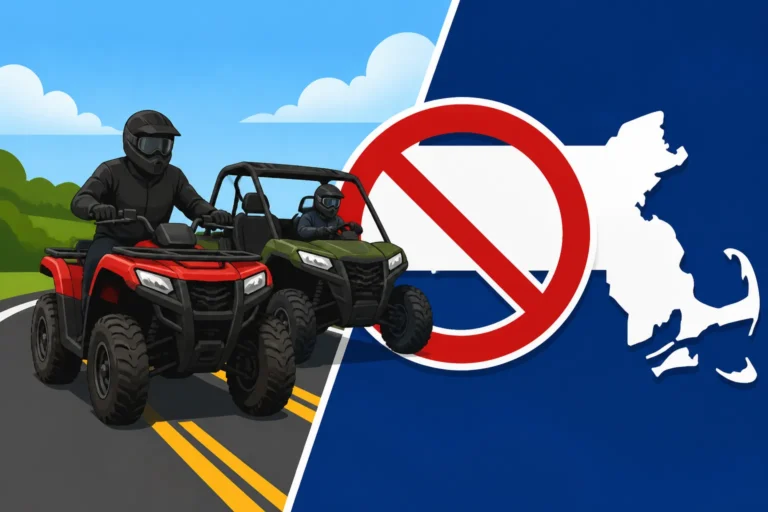
This is often where the biggest frustrations and misunderstandings arise. Massachusetts General Law Chapter 90B very explicitly prohibits the operation of ATVs and UTVs on public roads, streets, highways, and even most public ways. This isn't a grey area; it's a hard and fast rule. While you might see riders in other states using their UTVs to cruise through town, that is simply not the reality here in the Bay State. Trying to replicate that experience on Massachusetts public roads can lead to severe penalties, including hefty fines and the impoundment of your machine.
The reason for this strict prohibition is multi-faceted. Primarily, it's a safety issue, as OHVs are not engineered for the speeds, traffic, and hazards of public roads. Their handling characteristics on pavement, braking distances, and visibility to other motorists are simply not up to the standards required for highway safety. Furthermore, the state wants to protect its infrastructure and ensure that vehicle types are used in their appropriate environments. [Can You Ride an ATV on the Road in Massachusetts?] It's a challenging reality for many, especially those who invested in machines with the hope of using them for utilitarian tasks or short commutes on paved roads.
It’s important to understand that no amount of aftermarket modifications can change this fundamental legal status. Even if you install a full kit from a company like SuperATV that includes turn signals, mirrors, and a horn – excellent additions for safety and visibility off-road or in private riding parks – these do not magically transform your ATV or UTV into a street-legal vehicle in Massachusetts. The state does not provide a pathway or conversion process for OHVs to obtain a standard motor vehicle registration for road use. You might have the best, safest, most visible off-road machine money can buy, but if it's on a public road, it's likely breaking the law.
Navigating Limited Road Crossings and Private Property Rules
While the general rule is "no public roads," Massachusetts law does make very limited exceptions for crossing public ways. These exceptions are often misunderstood and are a common source of violations, so it's critical to know the exact parameters. Beyond road crossings, the rules surrounding private property are also essential for legal and responsible riding, preventing trespass and potential conflicts with landowners.
When a Road Crossing Is Permitted Under 90B
Chapter 90B does allow for specific, highly restricted scenarios where an ATV or UTV can cross a public way. This is not for traveling on the road, but merely for getting from one legal riding area to another. The law is very precise about how this must be done. You must bring your machine to a complete stop, yield to all vehicular and pedestrian traffic, and then proceed directly across the public way at a right angle. You absolutely cannot travel along the road, even for a short distance, to find a better crossing point.
This limited permission comes with significant caveats. The crossing must be made at a location where the operation of OHVs is otherwise permitted on both sides of the public way, or where official signs designate a crossing. This means you can't just pick any road to cross. Riders under a certain age (currently 16.5 years old) also have additional restrictions and requirements regarding adult supervision or a valid driver's license for these crossings. [Massachusetts Rules for Crossing a Road] It's a common mistake to assume that a brief jaunt down a paved street to reach another trail is acceptable, but it is unequivocally not.
Furthermore, these crossings must be done safely and without creating a nuisance. Environmental Police officers frequently patrol popular riding areas, and they are well-versed in these specific crossing rules. A momentary lapse in judgment, a shortcut taken on the pavement, or a failure to yield can result in a ticket and put a damper on your riding day. It’s always best to scout your route beforehand and know exactly where legal crossings are, if any exist, rather than improvising on the fly.
The Critical Role of Private Land Permission
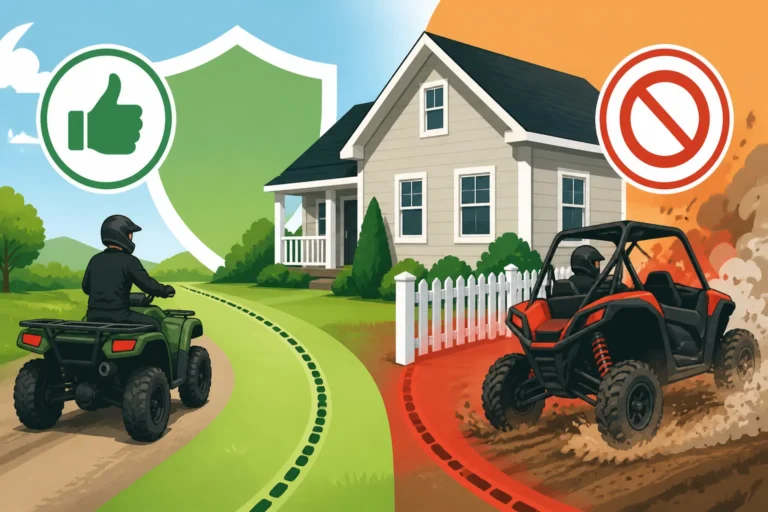
Just because you've registered your ATV or UTV with the state doesn't mean you have carte blanche to ride anywhere you please. A significant portion of legal riding in Massachusetts occurs on private land, and the law is very clear on one crucial point: you must have written permission from the landowner to ride on their property. This isn't just a suggestion; it's a legal requirement designed to protect private property rights and prevent trespass.
Failing to secure written permission can lead to serious legal consequences, including fines and potential civil actions from the landowner. A simple verbal agreement isn't enough; the Environmental Police will expect to see a signed document if they ask. This also helps foster a positive relationship between riders and landowners, ensuring that access can continue for future generations. [Massachusetts Requires Written Permission] Many local ATV clubs work hard to establish these relationships and secure permission for their members, making club membership a smart move for accessing private trails.
Beyond general permission, there's also the "150-foot dwelling rule." This regulation states that you cannot operate an ATV or UTV within 150 feet of a dwelling without the written permission of the owner or occupant of that dwelling. Even if you have permission to ride on a large tract of land, if a portion of your route brings you close to someone's home, you need specific permission for that proximity. [Massachusetts's 150-Foot Dwelling Rule] This rule is a direct response to noise complaints and ensures that private property owners have peace and quiet. Understanding and respecting these boundaries is crucial for responsible riding and maintaining access to valuable private lands.
| Rule Category | Legal Status in MA (Chapter 90B) | Key Takeaway |
|---|---|---|
| Public Roads | Generally Prohibited | ATVs/UTVs are Off-Highway Vehicles, not for public road travel. |
| Road Crossings | Extremely Limited and Specific | Only direct crossings at right angles, yielding to all traffic, no traveling on roads. |
| Private Land | Permitted with Written Permission | Always obtain and carry written permission from the landowner. |
| 150-Foot Rule | Specific Permission Needed Near Dwellings | Requires separate written permission from dwelling owners if riding within 150 feet. |
| Age Restrictions | Strict limits for youth riders (Sean's Law) | Under 14 generally banned; 14-16 with engine limits & supervision. [Sean's Law and Massachusetts Youth Riders] |
| Helmet Law | Required for All Riders | Every rider, regardless of age, must wear a DOT-approved helmet. [Massachusetts ATV Helmet Law] |
Key Laws and Penalties That Riders Face
Massachusetts General Law Chapter 90B isn't just about where you can ride; it also contains a host of other regulations designed to promote safety and responsible operation. These include specific rules for young riders, equipment requirements, and, importantly, the penalties for non-compliance. Ignoring these laws not only puts you at risk but also jeopardizes the future of ATV and UTV riding access in the state.
Sean's Law and Youth Rider Restrictions
One of the most impactful pieces of legislation for ATV and UTV riders in Massachusetts is "Sean's Law," enacted in 2010. This law significantly tightened restrictions on youth riders, making Massachusetts one of the strictest states in the nation regarding age and engine size limits. The law was a direct response to tragic accidents involving young riders, and its aim is to prevent similar incidents by ensuring that riders have the necessary maturity and skill for their machines.
Under Sean's Law, riders under the age of 14 are generally prohibited from operating ATVs or UTVs, even on private land with parental supervision, unless it's a sanctioned race or event with specific permits. For riders between 14 and 16 years old, there are strict engine size limitations (typically under 90cc) and requirements for direct adult supervision. [Massachusetts Age and Engine Size Ladder] This means an adult, defined as someone 18 years or older who holds a valid driver's license, must be in continuous visual contact and able to communicate verbally with the young rider. [Massachusetts Supervising Adult Defined]
These rules often cause confusion, especially for families who might be used to more relaxed regulations in other states or even just a few years ago. Parents are held liable for violations committed by their children, underscoring the serious nature of these laws. It's not enough to simply buy a youth quad; you must also ensure your child meets all the age, engine size, and supervision requirements, and for public lands, they'll need to have completed an approved safety course. The intent is to safeguard young riders, but it requires diligent adherence from parents and guardians.
Other Important Regulations and Consequences
Beyond age restrictions, Chapter 90B outlines several other crucial regulations that every ATV and UTV rider must follow. One of the most fundamental is the helmet law: every person operating or riding as a passenger on an ATV or UTV in Massachusetts must wear a helmet that meets federal Department of Transportation (DOT) standards. This applies to all ages, on all types of land, without exception. [Massachusetts ATV Helmet Law] It’s a simple, non-negotiable safety measure that saves lives and prevents serious injuries.
Equipment requirements also feature prominently. Your machine must have a working brake system, a muffler that keeps noise levels within acceptable limits, and, if you're riding after sunset or before sunrise, working headlights and taillights. These aren't just suggestions; they are enforceable laws. The Environmental Police routinely conduct equipment checks at trailheads, and failing to meet these standards can lead to citations. Maintaining your machine isn't just good practice; it's a legal obligation.
The consequences for violating Chapter 90B can be significant. Operating an unregistered OHV, for example, can lead to fines and potentially having your machine impounded. Violations of age restrictions, helmet laws, or improper road crossings also carry penalties. [Massachusetts Penalties for Riding Unregistered] These fines can quickly add up, and the inconvenience of recovering an impounded machine is a significant deterrent. It's far better to invest the time in understanding and following the rules, ensuring your machine is properly registered and equipped, and always riding responsibly on approved trails with proper permissions.
What This Means for Your ATV/UTV Riding Experience
So, what does all this legal talk boil down to for the everyday rider in Massachusetts? It means approaching your ATV or UTV adventures with a clear understanding of the rules, focusing your efforts on designated legal riding areas, and embracing the off-highway nature of your machine. It's about safety, respect for the law, and preserving access for all responsible riders.
Focusing on Designated Trails and Off-Highway Use
Given the strict restrictions on public road use, the most logical and legal place to enjoy your ATV or UTV in Massachusetts is on designated off-highway vehicle trails and private land with explicit permission. Massachusetts has several state forests, particularly in the western part of the state, that offer miles of trails for OHV enthusiasts. Places like Beartown State Forest, October Mountain State Forest, and Pittsfield State Forest are excellent examples of where you can legally ride and experience the beauty of the Bay State's natural landscape. [Massachusetts ATV Trails: Three Berkshire Forests] These areas are maintained for off-road use, providing a safe and regulated environment for riding.
Always ensure your machine is properly registered with the Massachusetts Environmental Police before heading out. An up-to-date registration decal shows that you're playing by the rules and helps fund trail maintenance and improvements. [Massachusetts Registration Fees Fund Trails] Getting your machine registered is the first step to ensuring you can legally access these fantastic riding opportunities. [How to Register an ATV in Massachusetts] Remember, these trails are shared with hikers, mountain bikers, and sometimes even horseback riders, so good trail etiquette, including yielding to others and keeping speeds appropriate, is always important.
Embrace the spirit of off-highway riding! Your ATV or UTV is built for conquering rough terrain, splashing through mud, and navigating winding woodland paths. Focus on enhancing your machine for these conditions. Components from manufacturers like SuperATV, such as lift kits, heavy-duty axles, or upgraded suspension, can significantly improve your off-road experience and machine durability. While these modifications don't grant street legality, they make your time on the trails safer, more enjoyable, and more capable, allowing you to truly leverage your machine for its intended purpose.
The Reality of "Street Legal" in Massachusetts
Let's cut right to the chase: there is no legal path to making an ATV or UTV "street legal" for general road use in Massachusetts. No matter what modifications you make, what lights you install, or what mirrors you attach, state law views these machines as off-highway vehicles, and they cannot be registered for use on public roads. This is a crucial point that many riders, especially those new to Massachusetts or coming from other states, find incredibly frustrating.
This means that any "street legal kit" you might see advertised online or at an aftermarket parts store, while potentially useful for improving visibility or compliance in other states, will not change your ATV or UTV's legal status in Massachusetts. You cannot register it with the Registry of Motor Vehicles (RMV) as you would a car or motorcycle. The legal framework is simply not designed to allow these vehicles on public roadways, except for the very specific, momentary crossings previously discussed.
It's important to accept this reality when planning your riding activities and considering machine modifications. Instead of investing in components designed to make your machine "street legal," focus your budget on enhancements that genuinely improve your off-road experience, safety, and durability for the trails you can ride. This might include better tires for specific terrain, winches for recovery, or protective armor for those challenging Massachusetts trails. By understanding and respecting the legal limitations, you can avoid disappointment, potential fines, and focus on enjoying your ATV or UTV where it's truly meant to be ridden: off-highway.
Disclaimer
This article is for general informational purposes only and does not constitute professional advice. Laws, prices and regulations vary by location and change over time. Consult a qualified professional for guidance on your specific situation.