Massachusetts Rules Riders Get Wrong
It’s easy to feel utterly confused by the rules and regulations surrounding ATV and UTV riding here in Massachusetts. Many riders, even seasoned ones, often find themselves scratching their heads over what’s allowed and what’s absolutely not, especially when comparing our state’s laws to those in neighboring New England states. This guide aims to clear up some of the most common misconceptions and set the record straight on key rules that riders often get wrong, helping you avoid fines and keep your off-road adventures safe and legal.
The Myth of "Street Legal" ATVs and UTVs in Massachusetts
One of the biggest areas of confusion, and frankly, frustration, for many ATV and UTV enthusiasts in Massachusetts revolves around riding on public roads. You'll hear all sorts of rumors and stories at trailheads or online, from "my buddy rides his on back roads all the time" to "if it has a horn and blinkers, it's street legal." The truth, however, is much simpler, and unfortunately, often disappointing for those hoping to commute or connect trails by road.
Why Massachusetts Bans ATVs and UTVs from Public Ways
Let's cut right to the chase: Massachusetts explicitly prohibits ATVs and UTVs from operating on any public street or highway. This isn't just a suggestion; it's a fundamental aspect of [Massachusetts ATV Laws Under Chapter 90B]. The state views these machines as off-highway vehicles (OHVs) designed for unpaved terrain, not for mixing with cars, trucks, and motorcycles on the asphalt. This rule applies uniformly, whether it's a quiet residential street, a major state highway, or even dirt roads that are legally classified as public ways. The spirit of the law is rooted in safety, as OHVs lack many of the safety features, like crumple zones or specific braking systems, that are standard on street-legal vehicles and are designed for higher-speed, multi-lane traffic environments.
Many riders, especially those new to the state or coming from areas with more lenient laws, often believe that if they just add enough "street legal" accessories—like turn signals, a horn, a rearview mirror, or even a windshield—they can magically transform their quad or side-by-side into a road-worthy machine. This simply isn't the case in Massachusetts. There is [No Conversion Path to a Plate] for these vehicles. No amount of aftermarket modification, whether you're adding a full lighting kit from SuperATV or upgrading your tires for better pavement grip, will make your ATV or UTV legal for public road use. This often comes as a shock, especially for those who see street-legal side-by-sides in other states and assume Massachusetts has a similar provision.
Crossing Public Ways: A Limited Exception
While riding on public ways is strictly forbidden, there is a very narrow and specific exception for crossing them. This is often where riders get into trouble because they misinterpret the conditions under which a crossing is permitted. You can't just zip across a road whenever you feel like it. [Massachusetts Crossings Require a Full Stop] and are only allowed at approximately a 90-degree angle to the road. This means no riding alongside the road for any distance, even if you’re just trying to get a better angle for a crossing.
Furthermore, riders under the age of 16 and a half face even stricter rules regarding road crossings. They must be under the direct supervision of an adult and possess a valid safety certificate to make such a crossing. Imagine you're on a trail in October Mountain State Forest and it's bisected by a public road. You must come to a complete stop, look both ways, and proceed directly across the shortest possible distance to the next section of trail. Any deviation, like driving down the shoulder to a more convenient crossing point, could lead to a citation from the Environmental Police. It’s a moment of transit, not an extension of the trail system.
Youth Rider Rules: More Than Just an Age Limit
Massachusetts has some of the strictest youth ATV laws in the nation, often leading to significant confusion and accidental violations. Many parents, with the best intentions, might believe that if their child is big enough to handle a machine, they're old enough to ride it. Or, they might think that riding on their own private land grants them total freedom from state regulations. Both are common and potentially costly misunderstandings.
Sean's Law: The Strict Reality for Young Riders
The bedrock of youth ATV laws in Massachusetts is [Sean's Law: The 2010 Ban Named for a Boy]. This legislation dramatically changed the landscape for young riders, primarily banning anyone under the age of 14 from operating an ATV on any land, public or private, with very limited exceptions. This is the rule most often "gotten wrong," as many parents believe "private land" is a free-for-all. It's not. The law was enacted to prevent serious injuries and fatalities among young riders, a tragic reality that prompted lawmakers to take a firm stance.
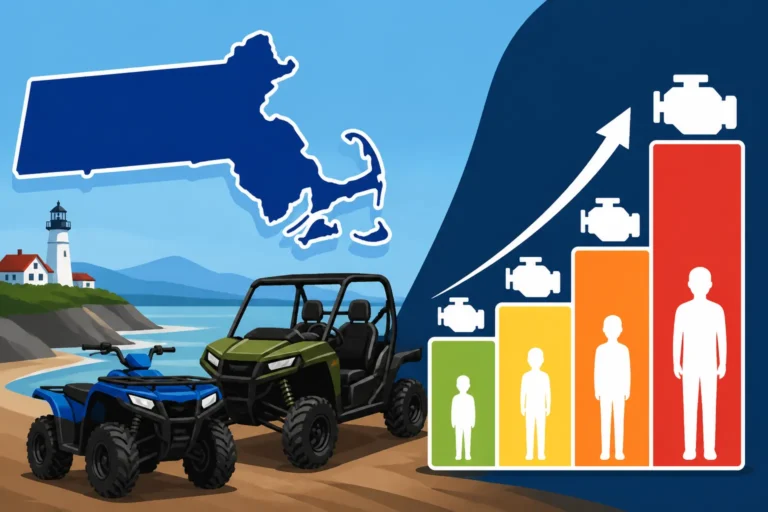
For riders aged 10 to 14, the only legal way to operate an ATV is within the confines of a sanctioned, organized race or event. These events require specific permits and supervision. You cannot simply take your 12-year-old out to your backyard to practice; if an Environmental Police officer observes this, you, as the supervising adult, could face penalties. Beyond age, there are engine size restrictions. Riders aged 14 to 16 are generally limited to machines with an engine displacement of 90cc or less. This engine size cap is often overlooked, with parents sometimes providing larger machines to younger teens, inadvertently putting them in violation of the law.
The Importance of Safety Certificates and Supervision
Beyond age and engine size, Massachusetts mandates specific safety training for young riders. Anyone under 18 operating an ATV or UTV on public land, or even crossing a public way, must possess an OHV Safety Certificate. This isn't just a piece of paper; it involves a two-part course: a classroom component and an in-person skills test. [Massachusetts Parents Must Attend Under 16] with their children, underscoring the state's emphasis on comprehensive safety education. Even on private land, while the certificate isn't strictly required for all riding, it's highly recommended and promotes safer habits.
Supervision rules are also frequently misunderstood. When an adult is required to supervise a young rider (e.g., for certain ages or activities), that supervision isn't just about being in the same general area. Massachusetts law implies "continuous visual contact" and often "verbal communication" if practical. This means the adult isn't just at the campsite while the child is out of sight on a trail. They need to be actively monitoring the young rider. [Supervising Adults Are Liable for a Rider's Violation], which is a significant detail many parents aren't aware of. This liability means that if your child breaks an ATV law while under your supervision, you could be the one facing the fines or other legal repercussions.
Land Access: Permission, Boundaries, and Environmental Responsibility
Another major source of confusion for ATV and UTV riders in Massachusetts revolves around where they can actually ride legally. The misconception often boils down to "if it's not posted, I can ride it," or "I'm just on a dirt path, so it must be okay." Unfortunately, this optimistic interpretation can lead directly to trespassing charges or significant environmental damage.
The Critical "Written Permission" Rule
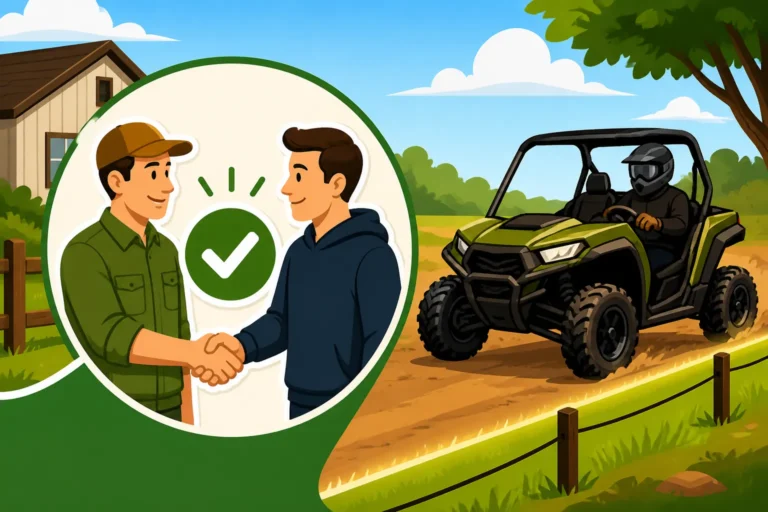
Massachusetts operates under a strict "permission first" principle when it comes to riding OHVs on private land. This means you must have written permission from the landowner to ride on their property. It's not enough to assume, or to have a verbal agreement, or to just ride where you don't see "No Trespassing" signs. [Massachusetts Requires Written Permission] for any riding on private land. This is a crucial distinction from many other states where "implied consent" or simply the absence of prohibitive signage might be interpreted differently.
Think about the vast expanses of privately owned timberland or agricultural fields in the Berkshires. Just because there isn't a fence or a clearly visible "No ATVs" sign every 50 feet doesn't mean you have the right to ride there. Landowners in Massachusetts are often sensitive to land use, property damage, and liability concerns. Riding without permission can lead to serious legal consequences, not to mention a damaged reputation for the entire OHV community. Always seek [Written Permission From a Bay State Owner] before you ever put a tire on private ground.
The 150-Foot Dwelling Rule and Environmental Protection
Massachusetts also has a specific rule that often catches riders off guard: the [Massachusetts's 150-Foot Dwelling Rule]. This law prohibits operating an ATV or UTV within 150 feet of any dwelling or occupied building without the written permission of the owner or occupant. This means even if you have permission to ride on a large tract of private land, you need separate, specific permission to ride too close to a house on that property, or even a neighbor's house if your path takes you within that 150-foot buffer. This rule is designed to protect residents from noise and disturbance, and it's strictly enforced. Imagine riding a new SuperATV exhaust system on your UTV that's designed for optimal performance; while great for the trails, that extra rumble could quickly become a problem if you’re too close to a residential area.
Furthermore, environmental protection laws are intertwined with OHV regulations. [Massachusetts Bans Beach and Dune Damage] and generally prohibits riding on coastal beaches or ecologically sensitive areas. These restrictions are in place to protect fragile ecosystems, wildlife habitats, and the natural beauty of the state. Even in designated riding areas like our state forests, riders are expected to stay on marked trails and avoid creating new ones or damaging vegetation. Understanding these nuances isn't just about avoiding a ticket; it's about being a responsible rider and preserving access for everyone.
Here's a quick look at some of the common misconceptions versus the actual Massachusetts rules:
| Misconception | Actual Massachusetts Rule |
|---|---|
| If it has lights, it's street legal. | ATVs/UTVs are never street legal in Massachusetts; no conversion path. |
| I can ride my ATV on a quiet dirt road. | Any road classified as a public way is off-limits; only direct crossings permitted. |
| My child can ride on our private land. | Riders under 14 are banned on ALL land (public/private) except sanctioned events. |
| As long as I don't see a "No Trespassing" sign. | Written permission is required from the landowner to ride on private property. |
| I can ride anywhere in a state forest. | You must stay on marked, designated OHV trails; certain areas ban ATVs entirely. |
| My 15-year-old doesn't need a safety course. | Riders under 18 need a safety certificate for public land/road crossings. |
| I can ride within 150 feet of my friend's house. | Separate written permission is needed to ride within 150 feet of any dwelling. |
| My out-of-state registration is fine. | Out-of-State OHV Stickers Are Not Valid in Massachusetts; you need a Massachusetts sticker. |
Registration and Identification: What You Need to Know
Finally, let's talk about registration and how your machine needs to be identified. This seems straightforward, but there are nuances that riders often miss, leading to issues with the Environmental Police. Many assume a simple plate or a sticker on one side is enough, or they don't realize the specific way their machine's identity needs to be displayed.
Decal Placement and Card Carrying Requirements
First and foremost, your ATV or UTV must be registered in Massachusetts to be ridden on public land or used to cross public ways. This applies to both residents and visitors from other states. If you're coming from out of state, you'll need to acquire a [Massachusetts Non-Resident OHV Registration], as your home state's sticker isn't valid here. Once registered, you'll receive specific decals and a registration card.
The placement of these decals is critical and often done incorrectly. [Massachusetts Decals on Both Sides] of the machine are required, typically on the forward half. These decals must be clearly visible. On top of that, you'll get a separate expiration decal which has its own specific spot: [Where the Expiration Decal Goes on Your Quad] (or side-by-side). Furthermore, your registration number needs to be displayed prominently, with specific [Massachusetts Number Height Requirements] (at least three inches high with a half-inch stroke). This isn't just aesthetic; it's how law enforcement identifies your machine from a distance.
Beyond the physical decals, you must always carry your [Massachusetts Registration Cards Carried on Board] your machine whenever you're riding. This means having the actual physical card on your person or securely on the machine itself. Don't leave it in your truck at the trailhead; if an Environmental Police officer stops you, they'll want to see that card immediately. It's your proof that the machine is legally registered and belongs to you. This might seem like a small detail, but forgetting it can lead to delays, frustration, and potential fines.
Understanding these rules, from road prohibitions and youth rider limitations to land access and proper registration display, is essential for a safe and enjoyable riding experience in Massachusetts. While some of our laws may seem stringent, they are in place to protect riders, landowners, and our environment. Always double-check the current regulations, especially before venturing into new areas.
Disclaimer
This article is for general informational purposes only and does not constitute professional advice. Laws, prices and regulations vary by location and change over time. Consult a qualified professional for guidance on your specific situation.