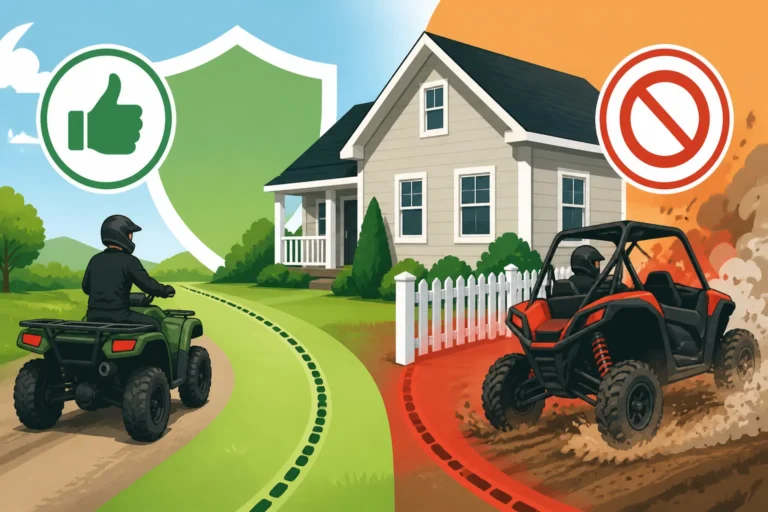
How Close a Supervising Adult Has to Stay
It's no secret that riding ATVs and UTVs in Massachusetts comes with a unique set of rules, and for parents with young riders, one of the biggest head-scratchers is often about supervision: how close do you really need to be? This isn't just a casual guideline; it's a critical safety and legal mandate that many seasoned riders still find confusing. This guide will unravel the specifics of what "supervising adult" truly means in the Bay State, ensuring you understand your responsibilities and how to keep your young adventurers safe and legal on the trails.
Understanding Massachusetts's Strict Youth ATV Laws
Massachusetts has some of the most stringent laws regarding youth ATV operation in the entire country, and for good reason. These laws are designed to protect young riders, who might not fully grasp the risks involved or possess the experience to handle every trail condition. As a parent, you're not alone if you feel these rules are a bit overwhelming; many of us navigate that feeling of wanting our kids to enjoy the outdoors while keeping them safe and within legal boundaries.
The Foundation: Sean's Law
The cornerstone of Massachusetts's youth ATV regulations is known as [Sean's Law: The 2010 Ban Named for a Boy]. This law came into effect after a tragic accident and fundamentally changed how minors can operate off-highway vehicles (OHVs) in the state. Prior to Sean's Law, the rules were less defined, but the incident highlighted the critical need for clearer guidelines and increased adult responsibility. It essentially bans riders under the age of 14 from operating ATVs under almost all circumstances, even on private land.
I know, it can be incredibly frustrating for parents, especially those who have acres of their own private property and just want their kids to learn safely. You might think, "It's my land, why can't my child ride there?" But the law's intent is to prevent tragedies by setting a hard age limit, recognizing that young children lack the cognitive development, physical strength, and judgment needed for safe ATV operation. This applies whether you're in a vast state forest or just a small backyard track. It's a tough pill to swallow for many, but it's the reality of riding in Massachusetts, even when it means [Why Under-14 Riders Are Banned on Private Land Too].
Age and Engine Size Restrictions Overview
Beyond the outright ban for those under 14, Massachusetts implements a progressive system for older youth riders, combining age with engine displacement. It's not a one-size-fits-all approach, and understanding the nuances is crucial for legal and safe riding. The [Massachusetts Age and Engine Size Ladder] is quite specific.
For example, riders aged 14 and 15 are permitted to operate ATVs, but only if the engine displacement is 90cc or less. Once they turn 16, they can ride machines with larger engine sizes, as long as they hold a valid motor vehicle operator's license or have successfully completed an approved OHV safety course. These restrictions are designed to match a child's developing physical capabilities and judgment with the power and speed of the machine. The goal is to prevent a younger, less experienced rider from accidentally getting on a powerful quad that could easily get away from them. This layering of rules means that simply being "old enough" isn't enough; the machine itself must also be age-appropriate.
Defining "Supervising Adult" and Proximity
This is where many parents really start to scratch their heads. The law doesn't just say "an adult must be present"; it specifies how close that adult needs to be. This isn't about arbitrary rules; it's about ensuring immediate intervention is possible in case of an emergency or a young rider making a mistake. The exact wording is important, and its practical application is even more so.
What "Continuous Visual Contact" Really Means
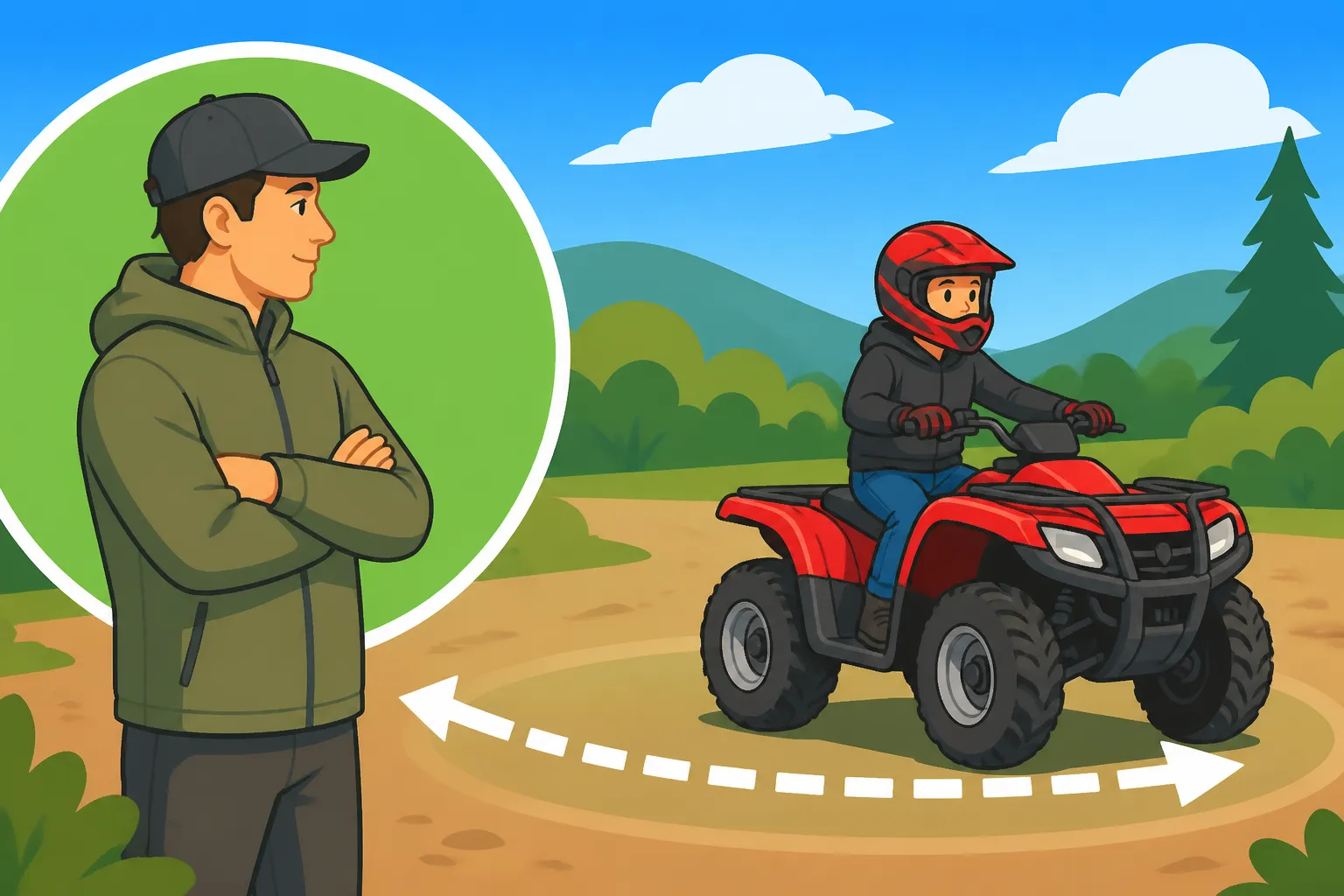
When the law talks about a supervising adult maintaining [What Continuous Visual Contact Means in Massachusetts], it's not simply about being in the general vicinity. It means you, as the supervising adult, must be able to see the young rider at all times. Think about it: if they go around a blind corner, over a rise, or into a patch of dense woods where you can't see them, you've broken continuous visual contact. This is a common trap for parents who assume that as long as they're on the same trail, they're fine.
In practical terms, this often means the supervising adult must be riding behind the youth rider, or at least very close alongside them, on a similar type of machine that allows for matching pace. If your child is on a smaller, slower youth quad, you should be on a machine that can comfortably ride at their speed, ensuring you don't outpace them and lose sight. It's not just about seeing their machine; it's about observing their riding, their body language, and being ready to respond. If your child suddenly swerves, gets stuck, or falls, you need to see it happen immediately to react. That momentary loss of sight around a bend could be the difference between a minor incident and a serious injury.
"Within Earshot" and Verbal Communication
Beyond visual contact, the law also implies that the supervising adult should be [Verbal Communication on the Trail]. This means being close enough to verbally communicate with the young rider without the aid of electronic devices. While helmet communication systems or two-way radios are fantastic tools for safety and group riding, the core intent of this particular rule emphasizes a natural, unassisted ability to speak to and hear the child.
Imagine trying to yell "slow down!" or "watch that root!" if your child is too far ahead or there's too much engine noise or wind. Being within earshot means you can give immediate instructions, warnings, or encouragement without delay. This proximity also allows the child to call out to you if they need help, are confused, or have an issue. It's a two-way street of communication that relies on close physical proximity, reinforcing the idea that you are actively engaged in their ride, not just passively observing from a distance.
Practical Considerations for Maintaining Proximity
Achieving and maintaining both visual contact and earshot can be challenging, especially on varied terrain. One of the best strategies is for the supervising adult to ride a machine that can easily keep pace with the youth quad. If your child is on a 90cc youth quad, you riding a 1000cc side-by-side might make it difficult to maintain the required proximity without either pushing them too hard or going so slow that it's uncomfortable for you.
Consider a lead-follow arrangement, with the adult typically following the child. This allows the adult to monitor the child's riding technique, anticipate potential hazards the child might miss, and react instantly to any issues. Aftermarket accessories can really help here. For example, installing wider rearview mirrors on your side-by-side or ATV, perhaps from a brand like SuperATV, can significantly improve your field of vision, allowing you to keep a better eye on your child even if they're slightly to the side or behind you in a staggered formation. Also, ensure both machines are in top working order so you don't have unexpected breakdowns that separate you. Good tires for the terrain, proper brakes, and clear visibility are all part of the equation.
The Legal Ramifications of Inadequate Supervision
Massachusetts takes the supervision of youth riders very seriously, and the consequences for failing to adhere to these rules can be substantial. It's not just a slap on the wrist; there are real legal and financial penalties that can impact the supervising adult. Understanding this side of the law underscores the importance of strict compliance.
Why Supervising Adults Are Held Liable
The core principle here is that children, especially those under a certain age, are not deemed fully capable of making safe decisions or understanding the full scope of risks when operating powerful machinery. Therefore, the responsibility for their actions and safety falls squarely on the shoulders of the [Supervising Adults Are Liable for a Rider's Violation]. This means if a child under your supervision violates any part of Massachusetts's ATV laws – whether it's riding in a prohibited area, failing to yield, or not wearing a helmet – you, the adult, can be held accountable.
This isn't just about direct supervision; it extends to ensuring the child meets all other legal requirements, such as having the appropriate safety certificate. The law views the supervising adult as the ultimate guardian of safety for the young rider. It's a heavy burden, but it's designed to ensure that an experienced and responsible individual is always present to guide and intervene, preventing incidents that could lead to serious injury or property damage.
Penalties for Non-Compliance
The penalties for failing to adequately supervise a young rider in Massachusetts can be significant. These are not minor infractions. An Environmental Police Officer, who is specifically tasked with enforcing OHV laws, can issue citations carrying substantial fines. [Massachusetts Penalties Under Sean's Law] include fines that can quickly add up, and in some cases, can involve the temporary seizure of the ATV itself.
Beyond the immediate financial hit, there can be broader implications. Repeat offenses or particularly egregious violations could lead to more severe penalties, including mandatory court appearances. This is why understanding and strictly following the "continuous visual contact" and "within earshot" rules is not just good practice, but a legal imperative. It's far better to err on the side of caution and maintain a closer proximity than to risk a citation and the stress of dealing with legal consequences.
| Rider Age | Engine Size Limit | Supervision Requirement | Safety Certificate |
|---|---|---|---|
| Under 14 | None (Prohibited) | Not Applicable | Not Applicable |
| 14-15 | 90cc maximum | Continuous visual contact & within earshot of adult (18+) | Required |
| 16-17 | No limit (with conditions) | Continuous visual contact & within earshot of adult (18+) OR valid driver's license | Required if no driver's license |
| 18+ | No limit | Not Applicable | Not Applicable |
Different Scenarios and Their Supervision Needs
The rules for supervision remain largely consistent across various riding environments in Massachusetts, but certain scenarios demand heightened vigilance and specific considerations. It's not just about knowing the rule; it's about applying it intelligently to different situations.
Public Lands vs. Private Property
A common misconception among ATV enthusiasts is that the strict youth riding and supervision laws only apply when on designated public trails, such as those in state forests like October Mountain or Pittsfield State Forest. However, this is absolutely not the case. [Massachusetts Bans Riders Under 14] on any land, public or private, with very limited exceptions for sanctioned events. Furthermore, the requirement for a supervising adult to maintain continuous visual contact and be within earshot applies universally, whether you're in a state forest or on your own private five-acre lot.
The legal framework doesn't differentiate between your backyard and a public trail when it comes to youth safety. If a young rider is operating an ATV, an adult must be supervising them appropriately. For private land, remember that while you might not need a trail pass, you absolutely still need [Massachusetts Requires Written Permission] from the landowner (even if it's yourself!) for certain activities, and all age and supervision laws still apply. An Environmental Police Officer has the authority to investigate incidents on private land if a complaint is made or if they observe violations.
Sanctioned Events and Supervised Practice
While the general rules are very strict, Massachusetts does provide specific, limited exceptions for youth riders participating in sanctioned events. These events are highly structured and typically take place on closed courses with medical personnel and experienced organizers present. For instance, [Massachusetts Riders 10 to 14 in Races] are allowed, but even then, there are strict engine size limits (usually 90cc or less), and the event itself must be officially approved.
Similarly, [Massachusetts Riders Under 10 and Sanctioned Events] might be allowed in highly controlled environments, like specific practice days or very beginner-level competitions, but again, these are not casual rides. These exceptions are meticulously regulated precisely because the state recognizes the inherent risks but also the value of organized sports. If your child participates, the event organizers will have very clear rules about where parents can be, and supervision is still paramount, albeit within the confines of a controlled setting. It's crucial to understand that these exceptions are narrow and don't apply to general recreational riding.
Road Crossings and Increased Vigilance
One of the most dangerous, and therefore most heavily regulated, aspects of ATV riding is crossing a public way. Even if you're riding legally on a trail system, there will inevitably be times when you need to cross a paved or dirt road that is open to public vehicle traffic. For youth riders, these moments demand an even higher level of supervision and caution. [You Must Stop Before Crossing Any Public Way] is not just a suggestion; it's a critical safety rule.
When a young rider approaches a public road crossing, the supervising adult must ensure they come to a complete stop, look both ways thoroughly, and proceed only when absolutely clear. The supervising adult should be right there, guiding them. It's not the time to be 50 yards behind them. The law further specifies that [Road Crossings Change at 16 and a Half]: once a rider is 16 and a half years old and possesses a valid motor vehicle operator's license, they can cross public ways without direct adult supervision, but they still must follow all other crossing protocols. Until then, that close, direct supervision is non-negotiable for safety and legality.
Essential Gear and Preparation for Supervised Rides
Beyond knowing the rules and staying close, equipping yourself and your young rider with the right gear and preparing properly can significantly enhance safety and make the supervised riding experience much more enjoyable. It's about creating an environment where both learning and safety can thrive.
Communication Devices and Visibility Aids
Maintaining "continuous visual contact" and being "within earshot" is easier with a few helpful accessories. While the law implies unassisted verbal communication, a two-way radio system or helmet communicators can be invaluable for non-legal-mandated but practical communication over longer stretches or noisy terrain. This allows for clear, calm instruction without yelling, which can stress a young rider.
Visibility is also key. Brightly colored riding gear for both the adult and child makes them easier to spot, especially in varied lighting or dense foliage. Consider adding flags to both ATVs, particularly if riding in open areas or places with varying topography. These can be easily mounted and provide an extra layer of visibility. For side-by-sides, additional lighting or whips, potentially from a manufacturer like SuperATV, can really make a difference, ensuring that not only can you see your child, but other trail users can also see both of you. Reflective elements on helmets and clothing are also critical, especially if there's any chance of riding near dusk or in low-light conditions, reinforcing the advice in [Reflective Gear Worth Adding to Your Quad].
Safety Certificates and Parent Attendance
The requirement for an OHV Safety Certificate for young riders is another layer of protection that reinforces the need for adult involvement. In Massachusetts, riders under 18 must complete a two-part safety course before operating an ATV on public lands, and even on private property if they are under the age limits for unsupervised riding. Crucially, if the rider is under 16, a parent or legal guardian [Massachusetts Parents Must Attend Under 16] the classroom portion of the course with them.
This attendance requirement isn't just about chaperoning; it's about ensuring the supervising adult fully understands the rules, responsibilities, and safety principles taught in the course. It creates a shared understanding between parent and child, reinforcing the lessons learned and empowering the parent to enforce those safety practices on the trail. This active participation from parents is a testament to the state's commitment to youth rider safety and ensures that [Parents Must Attend With Students Under 16] so everyone is on the same page when it comes to safe OHV operation. It’s an investment in safety that pays dividends for years.
Disclaimer
This article is for general informational purposes only and does not constitute professional advice. Laws, prices and regulations vary by location and change over time. Consult a qualified professional for guidance on your specific situation.