Massachusetts Supervising Adult Defined
Navigating the world of off-highway vehicle (OHV) riding with younger family members in Massachusetts can feel like trying to untangle a particularly stubborn fishing line. You want to foster a love for the outdoors and responsible riding, but the rules, especially around adult supervision, often leave parents and guardians scratching their heads. This guide is here to untangle those knots, clearly defining what Massachusetts law means by a "supervising adult" and how those rules impact your family's trail adventures.
What Does "Supervising Adult" Mean in Massachusetts ATV Law?
Massachusetts takes its OHV safety very seriously, especially when it comes to youth riders. This isn't just about good parenting; it's enshrined in state law, specifically Chapter 90B, which governs ATVs and snowmobiles. The term "supervising adult" isn't just a suggestion; it's a legal designation with very specific requirements that impact who can ride, where they can ride, and under what conditions. Understanding this definition is the first step toward ensuring a safe and legal riding experience for everyone.
The Chapter 90B Definition
Under Massachusetts General Laws, Chapter 90B, a "supervising adult" is defined as a person at least 18 years of age who has a valid motor vehicle operator's license. This adult must also be the parent or legal guardian of the child being supervised, or someone expressly authorized by the parent or legal guardian to supervise that child. This isn't just any adult; it's someone with a direct, legally recognized responsibility for the minor rider. The law aims to ensure that the person in charge isn't just present, but genuinely accountable and capable of acting in the child's best interest.
This legal framework is crucial because it sets a high bar for who can take on this responsibility. It prevents a younger, less experienced relative or friend from acting as the primary supervisor, even if they're over 18, if they don't have that direct parental authorization or legal guardianship. The intent is clear: the safety and conduct of the minor rider fall squarely on the shoulders of a responsible, licensed, and authorized adult. It means that Aunt Susie, who loves to ride, can't supervise your 12-year-old on her own without your explicit permission and her own valid driver's license.
Who Qualifies as a Supervising Adult
So, beyond the basic legal definition, let's look at who practically qualifies. First and foremost, you need to be 18 years of age or older. Secondly, you absolutely must possess a valid motor vehicle operator's license. This isn't an OHV permit; it's your standard driver's license for cars or trucks. The state sees this as a fundamental indicator of responsible operation of a motorized vehicle. Thirdly, you must either be the parent or legal guardian of the young rider, or have explicit written authorization from them. This authorization isn't something to take lightly; it should clearly state your permission for the designated adult to supervise your child's OHV operation.
Consider a scenario where you're sending your 15-year-old son, who loves his quad, to visit his grandparents in the Berkshires for the summer. If his grandfather plans to take him riding, the grandfather needs to be 18+, hold a valid driver's license, and you, as the parent, should provide written consent for him to supervise your son's OHV activities. Without that, even with the best intentions, the grandfather wouldn't legally qualify as a "supervising adult" under Massachusetts law. This layer of legal backing ensures that the person supervising is not only mature but also officially sanctioned to make decisions regarding the child's safety and adherence to the rules.
Why the Definition Matters
The strict definition of a "supervising adult" isn't there to make life harder; it's a cornerstone of youth OHV safety in Massachusetts, primarily driven by laws like [Sean's Law: The 2010 Ban Named for a Boy]. This law came into being after tragic accidents involving young riders, highlighting the need for robust oversight. Without a clear definition, the responsibility for a minor's actions could become nebulous, potentially leading to increased risks and confusion on the trails. It ensures that there's always a specific, accountable individual who can intervene, guide, and enforce safety rules.
Think about it: if any adult could simply say they were "supervising," it would open doors for inexperienced or less responsible individuals to be in charge of vulnerable young riders. The legal definition creates a chain of responsibility, making the supervising adult directly accountable for the minor's compliance with all OHV laws, including age restrictions, helmet use, and safe operating practices. It acts as a protective barrier, pushing parents and guardians to be intentional about who they entrust with their child's safety during OHV activities, whether on a busy state forest trail or a quiet private woodlot.
Age Restrictions and Supervision Requirements
Massachusetts has some of the most stringent age restrictions for OHV riders in the country, all designed to protect young people. These rules aren't arbitrary; they're based on safety data and a commitment to preventing accidents. The supervising adult's role changes significantly depending on the age bracket of the young rider, making it essential for parents and guardians to understand these distinctions thoroughly before heading out to the trails.
Riders Under 14: The Strict Ban
For children under the age of 14, Massachusetts law is unequivocally clear: they are generally banned from operating ATVs, UTVs, or dirt bikes, even on private property, except under very specific, controlled circumstances. This means no casual riding in the backyard or on a family farm if the rider is under 14, unless it's a "sanctioned event" explicitly approved by the town and taking place on a designated closed course. [Why Under-14 Riders Are Banned on Private Land Too] explains this in more detail. In essence, the concept of a "supervising adult" doesn't even come into play for general riding for this age group, because the riding itself is prohibited.
This strict prohibition highlights the state's deep concern for the safety of its youngest riders. The motor skills, judgment, and physical strength required to safely operate an OHV are simply not considered developed enough in children under 14 for unsupervised or even typically supervised riding. Any attempt to skirt this rule puts both the child and any accompanying adult at significant legal risk, facing substantial penalties and fines. If you have a child under 14 who is passionate about riding, their avenues are strictly limited to organized, professionally supervised events on closed courses, where the rules of supervision and safety are managed by event organizers.
Riders 14 to 16: The 90cc Limit and Supervision
Once a rider turns 14 but is not yet 16, the law slightly relaxes, but stringent conditions still apply, especially regarding the machine itself and the required adult supervision. Riders in this age group are permitted to operate an OHV only if its engine size does not exceed 90 cubic centimeters (cc). This is a critical detail; anything larger, even a standard entry-level adult quad, is off-limits. Beyond the machine's specifications, these riders must be under the direct supervision of a qualified "supervising adult" as defined earlier.
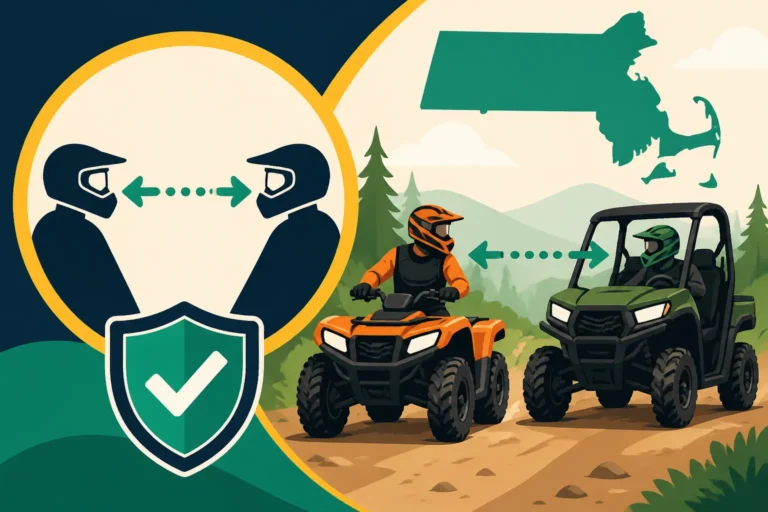
This supervision isn't passive. The supervising adult must maintain "continuous visual contact" and "verbal communication" with the rider at all times. This means riding alongside, or directly behind, the young rider, never letting them out of sight or earshot. Imagine trying to keep up with a fast-moving 14-year-old on an overgrown trail – it requires active, engaged supervision. This rule is particularly important as these riders are gaining confidence and speed, making the 90cc limit a crucial safety buffer. A SuperATV speed limiter or throttle control kit could be helpful on a youth machine to ensure the 90cc limits are respected and the young rider doesn't outpace their supervisor, emphasizing control and safety.
Riders 16 to 18: Certification and Supervision Flexibility
For riders who are 16 or 17 years old, the requirements shift once more. At this age, the engine size restriction of 90cc is lifted, meaning they can ride larger, more powerful machines. However, a crucial requirement kicks in: these riders must possess a valid OHV safety certificate. This certificate demonstrates that they have completed an approved safety course, which typically includes both a classroom and a hands-on skills test. [Massachusetts Safety Certificates Under 18] covers this in more detail.
While a "supervising adult" is still technically required for riders under 18 on public lands, the nature of that supervision becomes less about continuous visual contact and more about being readily available. If the 16 or 17-year-old rider holds a valid motor vehicle operator's license (their regular driver's license), they are exempt from the requirement for continuous direct adult supervision. They must still carry their OHV safety certificate and be able to produce it upon request. This recognizes their increased maturity and demonstrated competence in operating motorized vehicles, but still acknowledges they are minors by requiring the certificate.
| Rider Age | Engine Size Limit | Supervision Requirement | Safety Certificate | Notes |
|---|---|---|---|---|
| Under 14 | Any | Generally Prohibited | Not applicable | Only in approved sanctioned events on closed courses. |
| 14-15 | Max 90cc | Continuous visual/verbal contact with supervising adult | Required | Supervising adult must be 18+, licensed, parent/guardian or authorized. |
| 16-17 | No limit | Supervising adult must be present (less strict if rider has driver's license) | Required | Rider must carry valid OHV safety certificate. |
| 18+ | No limit | None | Not required (but recommended) | Can ride independently, subject to all other OHV laws. |
The Importance of Continuous Visual and Verbal Contact
The concept of "continuous visual contact" and "verbal communication" isn't just legal jargon; it's a critical safety measure designed to ensure immediate intervention if a young rider encounters trouble. It means the supervising adult can't just be "in the vicinity" or waiting at the trailhead. They need to be actively engaged in the riding experience, able to see and speak to the child at all times, making real-time adjustments and offering guidance.
Interpreting "Continuous Visual Contact"
For riders aged 14 to 16, "continuous visual contact" means precisely what it sounds like: the supervising adult must be able to see the young rider at all times. This typically means riding immediately ahead of or behind the child, ensuring there are no blind turns, dense foliage, or significant distances that break the line of sight. This isn't always easy on winding, wooded Massachusetts trails. It requires a mindful approach to trail selection and a commitment from the supervising adult to prioritize the child's visibility.
Consider a trail that has several short, steep climbs and descents. If the supervising adult is too far behind, they might lose sight of the child as they crest a hill, potentially missing a stall, a fall, or an unexpected obstacle. Similarly, if the adult rides too far ahead, they might not see a child struggle with a technical section or take a wrong turn. This level of supervision also implies monitoring the child's riding technique, their adherence to trail rules, and their overall well-being. Keeping a vigilant eye is paramount, so consider having bright flags or distinctively colored gear, perhaps even a SuperATV whip flag, on the child's machine to aid visibility in dense areas.
Maintaining "Verbal Communication" on the Trail
Alongside visual contact, maintaining "verbal communication" is equally vital for riders aged 14 to 16. This means the supervising adult must be able to speak to the child and be heard clearly, and vice-versa, without significant delay or misunderstanding. On noisy ATVs, this can be a challenge. It often necessitates riding close enough for natural conversation or, more practically, using communication devices such as helmet-to-helmet communicators. Simply shouting or hoping the child hears you isn't sufficient.
Imagine navigating a tricky rock garden or a muddy section. The ability to calmly and immediately advise the young rider on line choice, throttle control, or braking technique can prevent an accident. Or, if the child suddenly feels unwell or needs to stop, they must be able to communicate that instantly. This two-way communication channel allows for continuous instruction, feedback, and crisis management, ensuring that the supervising adult is not just present but actively coaching and supporting the young rider throughout the journey.
Practical Challenges and Best Practices
Achieving continuous visual and verbal contact on dynamic OHV trails presents several practical challenges. Terrain can be unpredictable, dust can obscure vision, and engine noise can drown out voices. One best practice is to select trails that are appropriate for the child's skill level and the demands of close supervision. Avoid overly complex or high-speed trails where maintaining proximity is difficult. Riding slower and deliberately is often necessary.
Investing in communication technology, like helmet-mounted radios or intercoms, can significantly enhance verbal communication. These systems allow for clear, consistent dialogue even over engine noise and varying distances. Additionally, the supervising adult should always ride their own OHV that is capable of keeping pace with, or slightly ahead of, the child's machine, enabling immediate response and positioning. Regular stops to check in, discuss upcoming terrain, and reiterate safety rules also reinforce the spirit of continuous supervision. It's about being a guide, not just a distant observer, and ensuring that the young rider feels supported and understood every mile of the way.
Legal Liabilities for Supervising Adults
It's not enough to simply meet the definition of a "supervising adult" and maintain contact. Massachusetts law places significant legal responsibility and potential liability on these adults. Understanding these liabilities is crucial, as a lapse in judgment or an unforeseen incident can have serious consequences beyond a simple warning or a minor fine.
Supervisors Held Liable for a Rider's Violation
One of the most sobering aspects of being a supervising adult in Massachusetts is the direct legal liability for the minor's actions. If a child under your supervision (aged 14 to 17) violates any OHV law – whether it's riding without a helmet, operating an unregistered machine, trespassing, or riding outside approved areas – the supervising adult can be held directly responsible. This means you, as the supervisor, could face the same fines and penalties that the minor would if they were an adult. [Massachusetts Parent Liability for a Young Rider] makes this clear.
This liability isn't just theoretical; it's actively enforced by the Massachusetts Environmental Police, who are responsible for OHV regulations. Imagine your 15-year-old takes a shortcut across a prohibited section of land, or exceeds the 90cc engine limit. As the supervising adult, you could be cited and fined for that violation. This underscores why choosing an appropriate trail, ensuring the child's machine is compliant, and maintaining that continuous visual and verbal contact are not just suggestions, but legal imperatives to protect both the child and yourself from costly consequences.
Penalties for Non-Compliance
The penalties for violating Massachusetts OHV laws, whether by a minor or their supervising adult, can range from significant fines to more severe legal repercussions. Fines can quickly add up, especially if there are multiple violations. For instance, operating an unregistered OHV, riding in a prohibited area, or failing to wear a helmet each carry their own set of penalties. These fines are often substantial enough to deter casual disregard for the rules.
Beyond monetary penalties, repeated or severe violations can lead to the suspension or revocation of OHV registration privileges, for both the adult's and the minor's machines. In cases involving property damage or injury due to negligence, the supervising adult could face civil lawsuits. While Massachusetts does not mandate OHV insurance, these potential liabilities make [Massachusetts Insurance Worth Buying Anyway] a prudent choice for many riders, as it can help cover legal fees and damages in the event of an accident where negligence is alleged.
Understanding Civil vs. Criminal Liability
It's important for supervising adults to differentiate between civil and criminal liability. Criminal liability arises when a specific law is broken, leading to fines, citations, or, in very severe cases, even arrest. This is what you face when cited by the Environmental Police for a violation. Civil liability, on the other hand, comes into play when someone suffers harm or damages due to another's negligence. If your supervised minor causes an accident that injures another person or damages property, you, as the supervising adult, could be sued in civil court.
For example, if a 14-year-old under your supervision negligently collides with a hiker on a designated OHV trail, causing injury, that hiker could pursue a civil claim against you for medical expenses, lost wages, and pain and suffering. This is where personal liability insurance, even if optional for OHVs, becomes incredibly valuable. It can provide a defense and financial protection against such claims. The supervising adult's responsibility therefore extends beyond simply preventing legal infractions to actively fostering safe, respectful riding habits that prevent harm to others and their property.
Public vs. Private Land: Does Supervision Change?
A common question among OHV enthusiasts is whether the rules for adult supervision change when moving from state-managed trails to private property. While the spirit of safety remains the same, there are subtle yet important distinctions in how supervision is enforced and what permissions are required depending on where you choose to ride.
Supervision on State-Managed Trails
When riding on public land, specifically Massachusetts' state forests that allow OHVs – like Beartown State Forest, October Mountain State Forest, or Pittsfield State Forest – the rules for supervising adults are rigorously enforced. These are areas with clear boundaries, designated trails, and regular patrols by the Environmental Police. The legal definitions of "supervising adult" and the requirements for continuous visual and verbal contact, as well as age and engine size limits, are strictly applied here. [Massachusetts Riding Areas With Parking Fees] often have rangers or staff who can provide information on current regulations.
Before heading to a state forest, it's vital to ensure all your machines are properly registered, all riders have the required safety certificates, and your designated supervising adult meets all the legal criteria. Officers at trailheads often conduct equipment checks and may ask for documentation. Any deviation from the supervision requirements for minors on these public lands will almost certainly result in a citation for the supervising adult. The public nature of these trails means a higher expectation of compliance, not only for safety but also to maintain access for all users.
Supervision on Private Property
Riding on private property offers a bit more flexibility, but it absolutely does not negate the need for responsible adult supervision, especially for younger riders. While some specific state statutes regarding permits or trail types might not apply, the fundamental requirements for a "supervising adult" – age, license, and relationship to the minor – generally remain relevant, particularly if an incident were to occur. Most importantly, you must have [Massachusetts Landowner Permission in Writing] to ride on private land. Without this, you are trespassing, regardless of supervision.
Even on private land, if a minor under your supervision causes an accident or injury, the supervising adult could still face civil liability. The fact that it's private land doesn't exempt you from negligence claims. Therefore, even in a seemingly relaxed private setting, the best practice is to adhere to the same high standards of supervision as you would on public trails. This includes ensuring the child has appropriate safety gear, their machine is suitable for their age, and you are actively monitoring their riding. Many components from SuperATV, like protective guards or reinforced bumpers, can add an extra layer of safety to machines used on private land, where obstacles might be less predictable than groomed trails.
Landowner Permission and Supervising Adults
The role of the supervising adult extends to securing and respecting landowner permission. Riding on private land without explicit, written permission is trespassing, a serious offense in Massachusetts. A supervising adult should not only obtain this permission but also ensure the minor understands and adheres to any specific rules or restrictions the landowner has imposed. This might include speed limits, designated riding areas, or specific times of day for riding.
Failure to secure permission, or allowing a supervised minor to violate those permissions, reflects poorly on the supervising adult and can lead to legal consequences for both the adult and the landowner, as well as eroding trust and future access for all riders. It's a fundamental part of teaching responsible OHV use: demonstrating respect for property rights is just as important as demonstrating safe riding techniques.
Beyond the Basics: Equipment, Safety Certificates, and the Supervising Adult's Role
The role of a supervising adult goes far beyond simply being present and meeting legal definitions. It encompasses a holistic approach to youth rider safety, including ensuring proper equipment, verifying certifications, and being prepared for emergencies. It's about being a true mentor and guardian on the trail.
Ensuring Proper Equipment and Safety Gear
A supervising adult is responsible for ensuring that the young rider is equipped with all the necessary safety gear, and that their OHV is in safe operating condition. This means checking that the child wears an approved helmet that fits properly, eye protection, gloves, long pants, and sturdy over-the-ankle boots. [Massachusetts Helmet Standards] are specific and must be met. This isn't optional; it's a critical first line of defense against injuries.
Furthermore, the supervising adult should routinely inspect the child's ATV or UTV. Are the brakes working? Are the tires in good condition? Is the throttle operating smoothly? Are all the lights functioning, especially if riding near dusk? Ensuring the machine itself is well-maintained and safe minimizes the risk of mechanical failure contributing to an accident. This vigilance forms a crucial part of the supervising adult's responsibility, turning simple checks into life-saving habits.
The Safety Certificate Requirement
For riders aged 14 to 17, possessing an OHV safety certificate is a non-negotiable requirement. While the young rider is responsible for completing the [Massachusetts Two-Part Safety Course], the supervising adult often plays a key role in facilitating this, from enrollment to ensuring the certificate is carried on board during rides. For riders under 16, a parent or legal guardian is often required to attend the classroom portion of the safety course with them, reinforcing the adult's direct involvement.
The supervising adult should verify that the certificate is current and accessible, as Environmental Police officers may ask to see it during a stop. This certificate signifies that the rider has received formal training in safe operation, rules of the trail, and environmental responsibility. It's a foundational component of youth rider safety and a testament to the commitment of both the rider and their supervising adult to responsible OHV use in Massachusetts.
Supervising Adult's Role in Incident Management
Even with the best preparation and supervision, incidents can happen. A supervising adult needs to be prepared to manage these situations effectively. This includes carrying a basic first-aid kit, knowing how to contact emergency services, and understanding how to assess and respond to minor injuries or mechanical breakdowns. The ability to remain calm and take decisive action is paramount.
In the event of an accident, the supervising adult is responsible for assessing the situation, providing immediate aid, and securing the scene. They would also be the primary contact for reporting the incident to the appropriate authorities, such as the Environmental Police, especially if serious injury or significant property damage occurred. This comprehensive responsibility means that the "supervising adult" isn't just a legal figure; they are the frontline safety manager, educator, and first responder for any young rider under their care.
Disclaimer
This article is for general informational purposes only and does not constitute professional advice. Laws, prices and regulations vary by location and change over time. Consult a qualified professional for guidance on your specific situation.