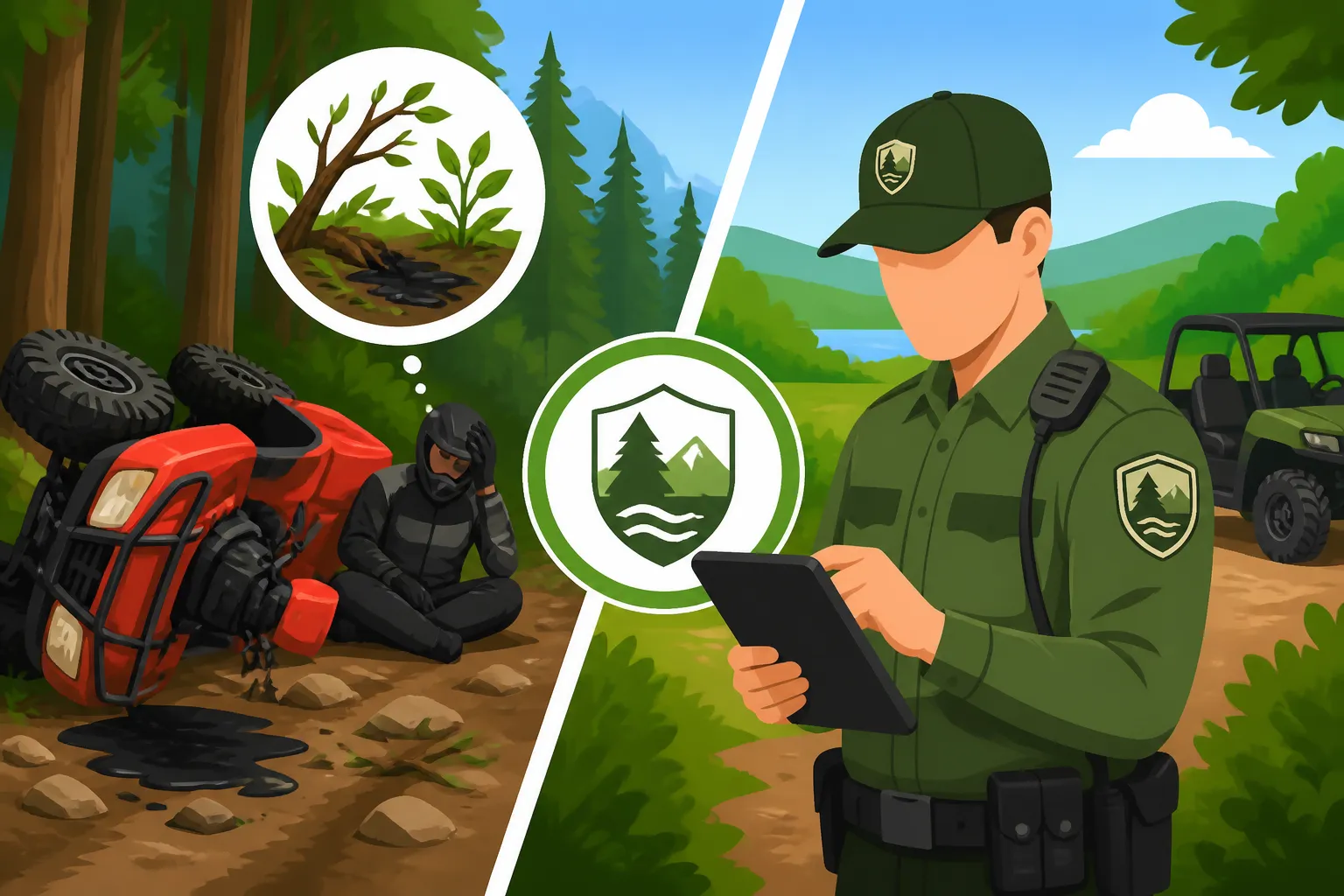
Reporting an ATV Crash to the Environmental Police
Picture this: you're out enjoying a beautiful Massachusetts day on your ATV or UTV, cruising through a state forest, when suddenly, something goes wrong. Maybe you hit an unexpected rock, or perhaps another rider misjudged a turn. In that heart-stopping moment, your first thoughts are likely about yourself and anyone else involved. But once the immediate adrenaline subsides, a wave of confusion often hits: what do I do now? Who do I even call? This guide is here to walk you through the essential steps of reporting an ATV or UTV crash to the Massachusetts Environmental Police, ensuring you understand your obligations and how to protect yourself in a stressful situation.
When is a Crash Report Absolutely Necessary?
It’s easy to think a minor fender-bender on a trail doesn’t warrant an official report, especially if everyone seems okay and the machines still run. But in Massachusetts, the rules for off-highway vehicles (OHVs) are pretty specific, and understanding when you must report a crash can save you a lot of headaches down the line.
Understanding Massachusetts Accident Reporting Rules
Massachusetts takes OHV safety seriously, and that extends to crash reporting. The general rule of thumb is that if an accident results in injury to any person, or causes property damage over a certain threshold (which can change, so always check the most current regulations), you are legally required to report it to the Environmental Police. This isn't just about serious collisions; even a tip-over that leaves you with a sprained wrist or a bent frame on your buddy's machine might meet the reporting criteria. Ignoring what seems like a minor incident could lead to legal repercussions later on, especially if injuries or damages turn out to be more severe than initially thought. It's always better to err on the side of caution and make that call.
Beyond the legal mandate, there's a practical side. Imagine a scenario where you've had a seemingly minor tumble, only to wake up the next morning with significant pain or discover a hidden structural issue with your machine. Without an official report, proving the incident occurred and was accidental can become incredibly difficult. The Environmental Police are the primary agency responsible for enforcing [Massachusetts ATV Laws Under Chapter 90B] and investigating these types of incidents, making them your first point of contact. They're equipped to handle off-road situations and understand the unique challenges these environments present.
Why Reporting Protects You and Others
Making an official report isn't just a bureaucratic hurdle; it’s a crucial step in protecting everyone involved. From a legal standpoint, a police report creates an objective record of the event. This documentation can be invaluable if there are any disputes about fault, liability, or the extent of injuries or damages. Even if you don't carry specific ATV insurance—which [Does Massachusetts Require Insurance on a Registered ATV?] clarifies is generally optional—having a report can be essential if you need to file a claim against another party's general liability or homeowner's policy, or if someone else tries to make a claim against you.
Furthermore, reporting accidents contributes to overall trail safety. Each report provides data points that the state can use to identify hazardous areas, implement new safety regulations, or allocate resources for trail maintenance. For instance, if a particular section of a trail consistently shows up in accident reports, the Department of Conservation and Recreation (DCR) might investigate and make improvements. Your report isn't just about your incident; it helps paint a broader picture that benefits the entire riding community. It’s about taking responsibility not just for your own actions but for contributing to a safer riding environment for everyone who enjoys Massachusetts's beautiful OHV trails.
The Step-by-Step Process for Reporting an OHV Crash
When an accident happens, it's easy to feel overwhelmed. Knowing the exact steps to take can help you maintain composure and ensure you handle the situation effectively and legally.
Immediate Actions After a Crash
Your absolute first priority after any crash is safety. Check for injuries to yourself and any passengers or other riders. If anyone is seriously hurt, call 911 immediately. Don't try to move anyone with suspected head, neck, or back injuries unless absolutely necessary to prevent further harm. Once immediate medical needs are addressed, secure the scene to prevent further accidents. If your machine is blocking a trail, try to move it to a safe spot if it's safe to do so. Otherwise, make it visible to other riders.
Documentation is critical. In the moments after a crash, try to take as many photos as possible from various angles. Capture the machines, the surrounding terrain, any visible damage, and any factors that might have contributed to the accident, like an unmarked obstacle or a slippery patch. Get contact information from any witnesses, including their names, phone numbers, and email addresses. If another rider was involved, exchange names, contact information, and OHV registration details. Remember, [Massachusetts Registration Cards Carried on Board] states you must carry your registration card while riding, so ensure you have it accessible. This immediate information gathering will be incredibly helpful when you make your official report.
Contacting the Massachusetts Environmental Police
Once you've ensured everyone's immediate safety and gathered initial information, your next call (after 911 if injuries are severe) should be to the Massachusetts Environmental Police. They are the specific law enforcement agency responsible for off-highway vehicle incidents, not the local police or State Police, unless you are on a public road or highway. You can find their dispatch number on the Mass.Gov website, usually under the "Environmental Police" or "OHV Program" sections. Be prepared to clearly and calmly explain what happened, where it happened, and the extent of any injuries or damage.
When you call, they will ask you for specific details about the location. This is where those hyper-local details come in handy. If you were in October Mountain State Forest, for example, try to provide a specific trail name, a numbered marker, or even a description of nearby landmarks like a distinctive rock formation or a stream crossing. The more precise you can be, the faster officers can respond to your location, which is especially important if someone is injured or if the conditions are hazardous. They understand that getting an exact address in the woods isn't always possible, so do your best with what you have.
What Information You'll Need to Provide
When the Environmental Police officer arrives, or when you're speaking to them on the phone, they'll need a comprehensive set of details to complete their report. This isn't just casual conversation; they're building a formal record of the event. Expect to provide your full name, contact information, and operator license details if you have one (remember, [Do You Need a License for an ATV in Massachusetts?] confirms a standard driver's license isn't required for OHV operation, but they'll want to know if you possess one). You’ll also need to give them detailed information about your OHV, including the make, model, year, and its Vehicle Identification Number (VIN). Having your current registration card handy is crucial, as it contains much of this information.
You'll also need to recount the incident itself: the date and time of the crash, the exact location, a detailed description of how the crash occurred, and what you believe contributed to it. They'll ask about any injuries sustained by anyone involved, as well as a thorough accounting of all property damage. Don't hold back on details, even if they seem minor; a bent tie rod or a cracked plastic fender might seem inconsequential at the moment, but they contribute to the full picture of the damage. If you have photos or witness statements, make sure to offer them to the investigating officer. This thoroughness ensures the report is accurate and complete, which is vital for any potential follow-up actions like insurance claims or enforcement actions.
| Category | Details to Provide |
|---|---|
| Your Information | Full Name, Contact Number, Address, Date of Birth. Operator license (if applicable). |
| OHV Information | Make, Model, Year, Color, VIN, [Massachusetts Registration Cards Carried on Board] details (registration number, expiration date). |
| Incident Details | Date and Time of Crash, Specific Location (trail name, nearest landmark, GPS coordinates if possible). Detailed description of how the crash happened. |
| Involved Parties | Names and contact information of other riders/passengers, their OHV details (if applicable). |
| Witnesses | Names, contact numbers, and brief statements from any eyewitnesses. |
| Injuries | Description of any injuries to yourself or others, even if seemingly minor. Medical treatment sought or planned. |
| Property Damage | Detailed description of damage to your OHV, other OHVs, or any other property (e.g., trail signs, fences). Estimates of repair costs if available. |
| Contributing Factors | Any conditions that might have led to the crash (e.g., trail hazard, weather, equipment malfunction). |
| Photos/Evidence | Offer any photos, videos, or other documentation you collected at the scene. |
What Happens After You Report a Crash?
Reporting the crash is often just the beginning of a process. Understanding what typically comes next can help manage expectations and ensure you're prepared for any follow-up actions.
The Environmental Police Investigation Process
Once the Environmental Police have been contacted and potentially arrived at the scene, their primary role is to investigate the incident. This involves assessing the crash site, much like any other accident investigation. They'll look at the lay of the land, any skid marks or debris, and the positions of the machines involved. They will interview everyone who was present, including riders, passengers, and any witnesses you might have gathered information from. Their goal is to understand the sequence of events, identify any contributing factors, and determine if any violations of OHV laws occurred, such as those covered by [Massachusetts Penalties for Illegal Riding].
The officer will then compile all this information into an official crash report. This report is a crucial document that details the facts of the accident, often including diagrams and officer observations. It serves as the official state record of the incident. While they are not there to assign blame in a civil sense, their findings can certainly point to actions that might have violated state statutes, which could lead to citations for individuals involved. Their report becomes a foundational piece of evidence for anything that follows, whether it’s an insurance claim or legal proceedings.
Potential Outcomes and Follow-Up
After the investigation, several outcomes are possible. If the officer finds that an OHV law was violated (for example, operating too fast for conditions, or [Massachusetts Age and Engine Size Ladder] violations), they might issue citations to the responsible parties. These citations can carry fines and potentially other consequences. Even if no direct violation led to the crash, the report itself is still valuable.
For you, the report becomes a critical tool for dealing with insurance companies. Even though ATV insurance isn't mandatory in Massachusetts, many riders wisely choose to carry it for liability or comprehensive coverage. If you need to file a claim for damage to your machine or for injuries, the Environmental Police crash report will be one of the first documents your insurance adjuster asks for. It provides an objective third-party account that helps expedite the claims process. You'll typically be able to request a copy of the report once it's finalized, though there might be a waiting period. Remember that cooperation with the investigating officer throughout this process is key to ensuring a smooth resolution.
Dealing with Damage and Repairs
Discovering your beloved OHV is damaged after a crash is a tough pill to swallow. After the Environmental Police complete their report, your next steps will likely involve assessing the damage and planning for repairs. If you have insurance, this is when you'll contact your provider and submit the crash report. They'll likely send an adjuster to evaluate the damage and determine the cost of repairs or if the machine is a total loss. Be prepared to get estimates from qualified repair shops, as insurance companies often require multiple quotes.
If you don't have insurance, or if the damage falls below your deductible, you'll be footing the bill yourself. This is where you might start looking for parts. Many riders turn to aftermarket suppliers for high-quality, durable replacement parts, especially if original equipment manufacturer (OEM) parts are hard to find or too expensive. Companies like SuperATV, for instance, offer a wide range of parts from axles and suspension components to protection gear like skid plates and bumpers, which could be useful if you're rebuilding your machine or want to beef it up against future incidents. Remember, a thorough inspection by a reputable mechanic is essential to ensure all damage, seen and unseen, is addressed before you head back out on the trails.
Common Misconceptions and Proactive Measures
The aftermath of a crash is a difficult time, and it's easy to fall into traps of misinformation or neglect proper safety. Let's clear up some common misunderstandings and talk about how to minimize your risk moving forward.
Debunking Myths About Minor Crashes
One of the biggest misconceptions riders have is that if a crash seems minor, or if "no one saw it," there's no need to report it. This couldn't be further from the truth. As we discussed, legal reporting thresholds exist for a reason. What appears to be a minor injury at the scene could develop into something much more serious days later. Imagine a scenario where you bump your head, feel fine, but then experience symptoms of a concussion a few days later. Without an official report, proving the incident occurred and was related to your OHV ride can be incredibly difficult, complicating any medical claims or potential legal action.
Furthermore, if your machine sustained damage that wasn't immediately apparent, an official report provides documentation of when and where that damage occurred. This is crucial for insurance claims or even for future resale if a buyer questions the machine's history. It’s also about accountability. Even a small incident can highlight a problem on a trail or with a piece of equipment, and reporting it contributes to a safer riding community. Don't let the thought of bureaucracy deter you; a quick call to the Environmental Police now could save you significant headaches and expenses in the future.
Essential Gear and Preparedness to Minimize Risk
While crashes can happen to even the most experienced riders, there's a lot you can do to minimize your risk and the severity of injuries. First and foremost, proper protective gear is non-negotiable. This includes a DOT-approved helmet—which [Massachusetts Helmet Law for Every Rider] absolutely requires for every rider, regardless of age—eye protection, gloves, long pants, and sturdy over-the-ankle boots. This gear is your first line of defense against scrapes, breaks, and head injuries. Don't skimp on quality here; your safety is worth the investment.
Beyond personal gear, regularly maintaining your OHV is paramount. Before every ride, conduct a thorough pre-ride inspection: check tire pressure, brakes, fluid levels, lights, and steering components. Ensure all bolts are tight and nothing is loose. Consider adding aftermarket protection like skid plates, A-arm guards, or a robust front bumper from a brand like SuperATV, which can absorb impacts and protect vital components during an unexpected hit. Taking an OHV safety course, like those offered through the state, is also highly recommended, even for seasoned riders, as it reinforces safe riding practices and helps you anticipate hazards. [Massachusetts Safety Course Cost] provides information on what to expect.
Post-Crash Support and Resources
After a crash, especially a serious one, you might find yourself needing more than just a police report. If you sustained significant injuries or psychological trauma, seeking support is crucial. Your medical doctor can recommend specialists or therapists if needed. For legal questions regarding liability, property damage, or navigating insurance claims, consulting with an attorney experienced in personal injury or recreational vehicle law can be invaluable. They can help you understand your rights and options in a complex situation.
The Massachusetts Environmental Police can also be a resource for clarifying aspects of their report or providing information on OHV regulations. While they are law enforcement, they also serve to educate the public on safe OHV operation. Don't hesitate to reach out to them if you have follow-up questions about your report or general safety concerns. Remember, the OHV riding community in Massachusetts is often a tight-knit one. Local clubs and organizations can also offer support, advice, or even help with repairs or finding reliable mechanics after a difficult incident.
Disclaimer
This article is for general informational purposes only and does not constitute professional advice. Laws, prices and regulations vary by location and change over time. Consult a qualified professional for guidance on your specific situation.